Chords & Harmony
Chord Progression
A chord progression is a series of chords played one after another, such as C–G–Am–F. Progressions give a piece its harmonic shape, moving away from the home chord and back again.
A chord progression is a series of chords played one after another. C – G – Am – F is a chord progression; so is the twelve-bar blues, and so is the whole harmonic plan of a symphony. Progressions give music its sense of direction: they move away from the home chord, build tension and come back.
Writing progressions down
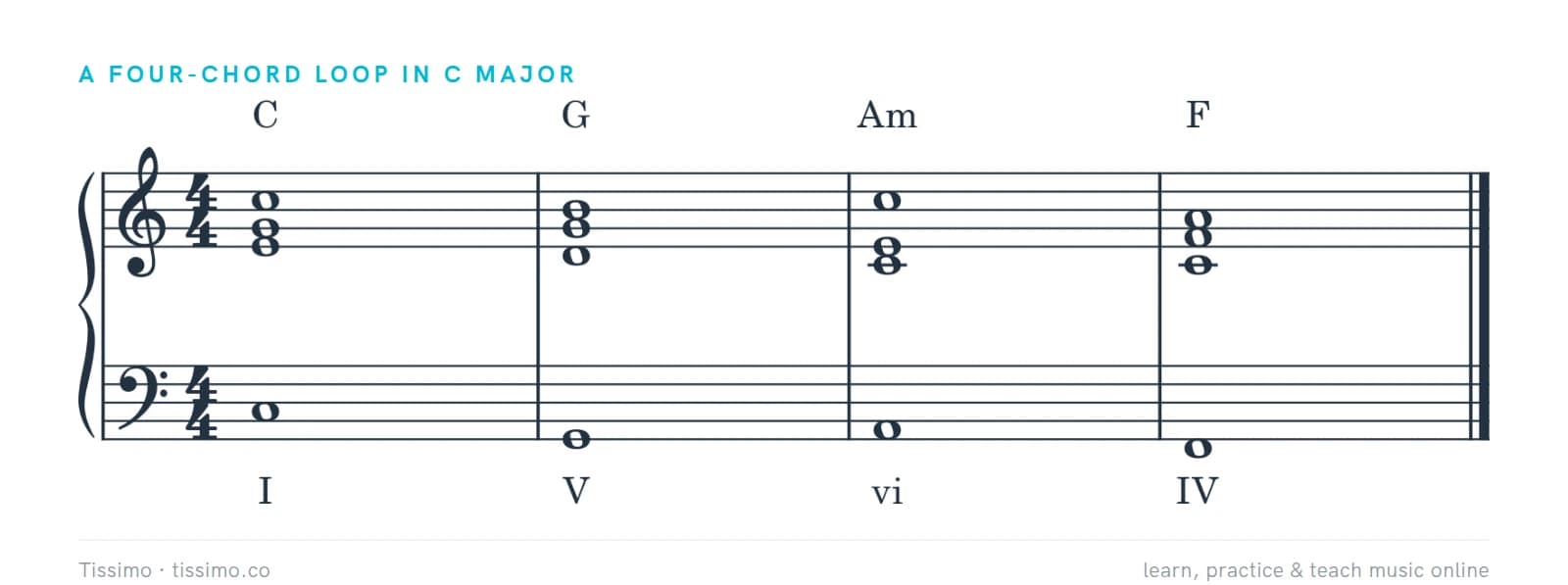
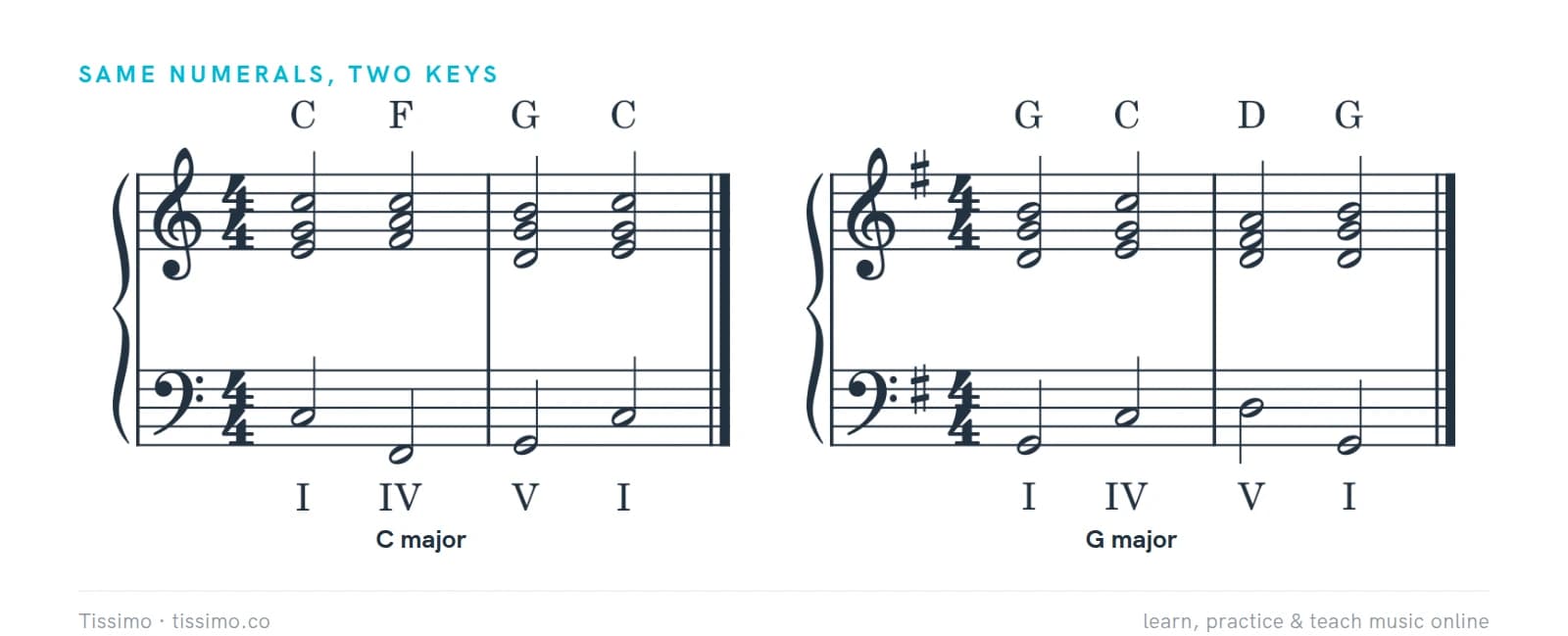
On a lead sheet a progression is written as chord symbols: C – G – Am – F. To talk about it in any key, musicians use Roman numerals instead, counting each chord's root from the key's tonic: I – V – vi – IV. The numerals stay the same when you move the progression to another key (transposition); only the letter names change.
Some common progressions
- I – IV – V – I: the basic progression of hymns, folk songs and early rock and roll.
- I – V – vi – IV: a loop behind a great many pop songs.
- I – vi – IV – V: the "fifties" or doo-wop progression.
- ii – V – I: the core of jazz harmony (ii–V–I progression).
- The twelve-bar blues: I, IV and V spread over twelve bars.
What makes a progression work
Most progressions in tonal music follow a simple plan: start at home (the tonic), move to a chord that leads away (such as IV or ii), reach the dominant, and return home. Theorists call these roles harmonic function. Roots that move by a fifth (G to C, D to G) give the strongest pull; moves by a step (F to G) or a third (C to Am) sound smoother. The progression that ends a phrase is a cadence, and the speed at which the chords change is the harmonic rhythm.
Learning progressions
Learn a progression by its numerals and play it in several keys. Listen for the bass line, which usually shows you the chord roots. Then try writing your own: pick three or four chords from the key and loop them under a melody. Chords & Progressions in Every Key gives you the common loops in all 24 keys, and Ear Training: Cadences & Progressions helps you recognize them by ear.
Common questions
What is the most common chord progression?
There is no single answer, but I–IV–V–I, I–V–vi–IV and ii–V–I are among the most widely used progressions in Western music.
What do the Roman numerals in a progression mean?
Each numeral is the scale degree of the chord's root: in C major, I is C, IV is F, V is G and vi is A minor. Capital letters mean major chords and small letters minor; see roman numeral analysis.
Practice it: free worksheets
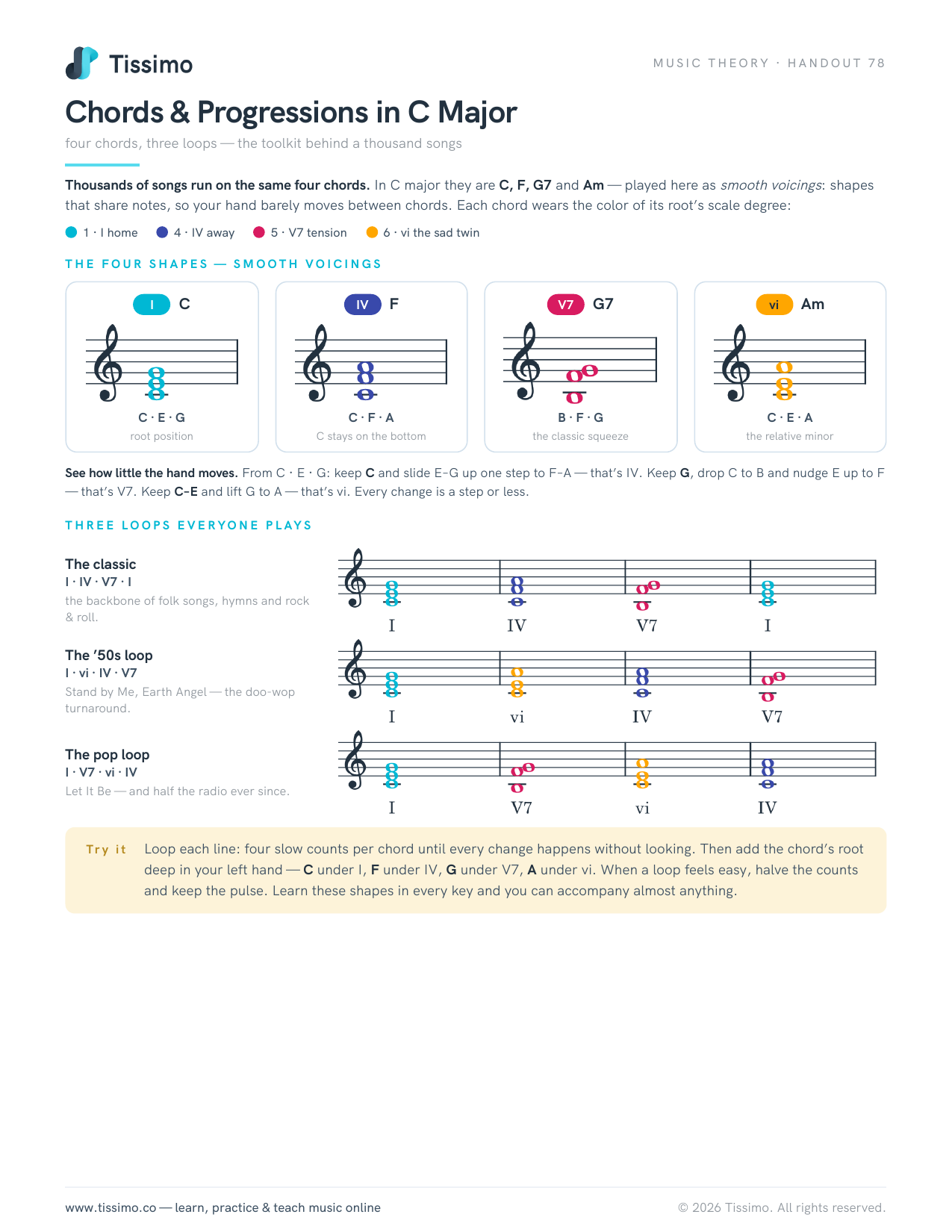 Chords & Progressions in Every KeyFour chords, three loops — the toolkit behind a thousand songs, in all 24 keys.
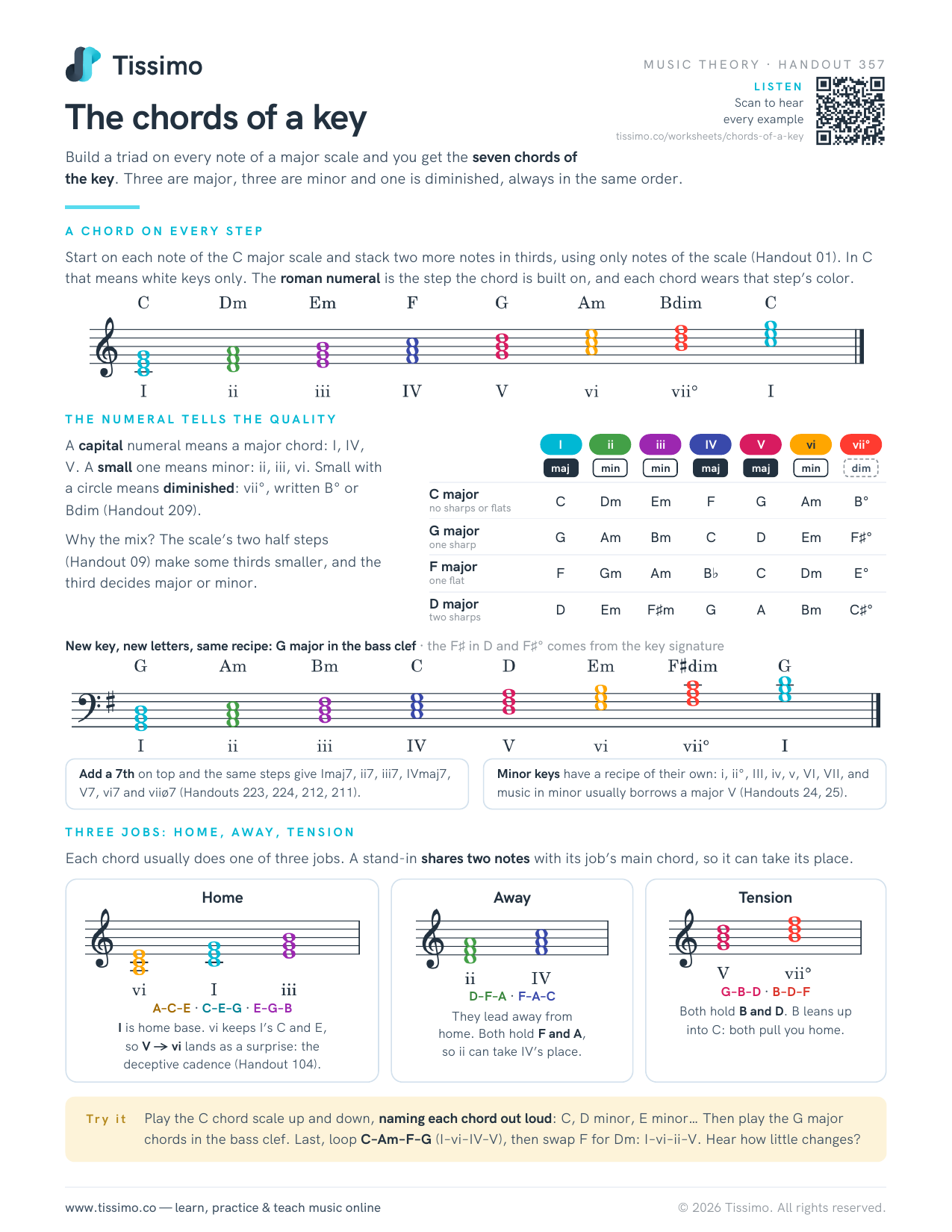 The chords of a keyBuild a triad on every note of a major scale and you get the seven chords of the key. Three are major, three are minor and one is diminished, always in the same order.
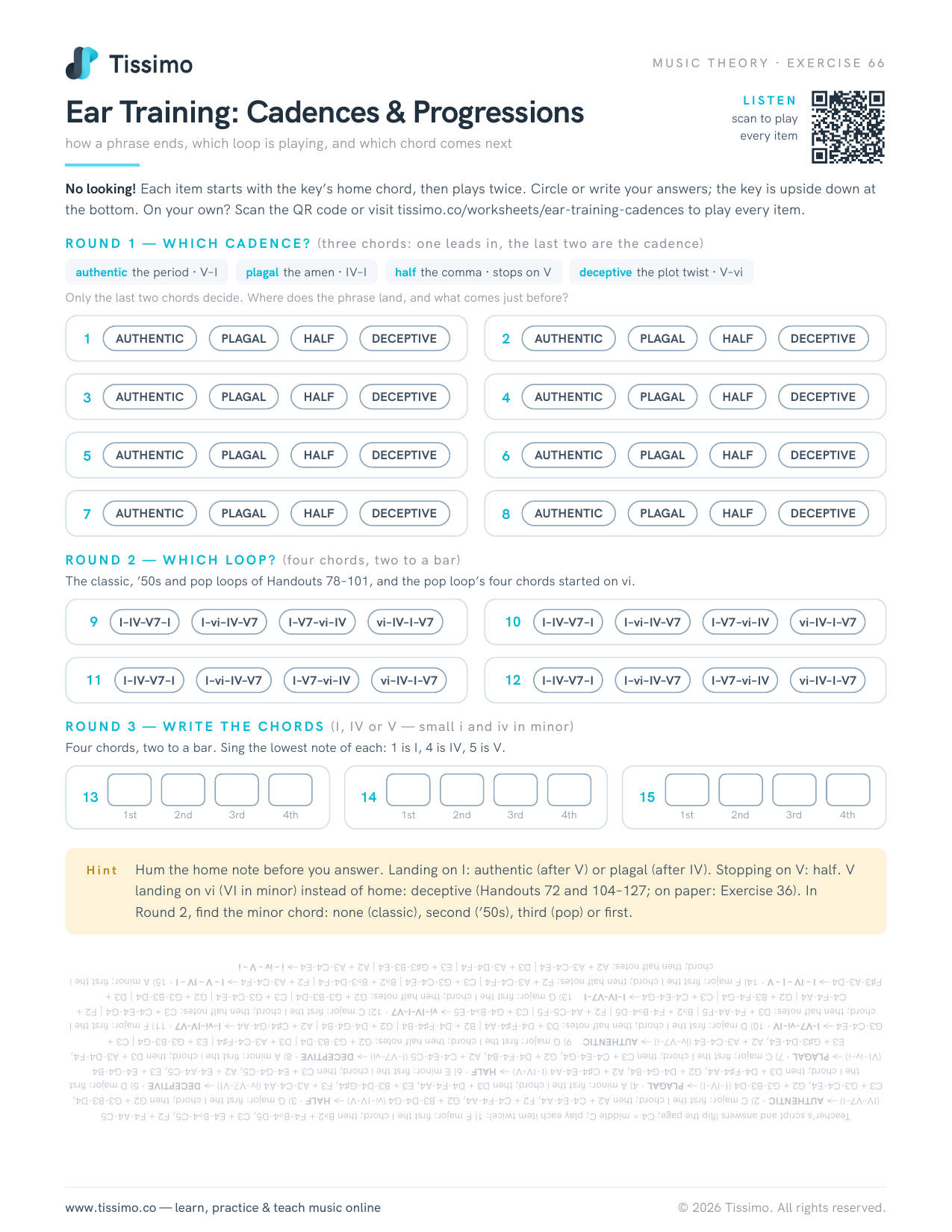 Ear Training: Cadences & Progressionshow a phrase ends, which loop is playing, and which chord comes next
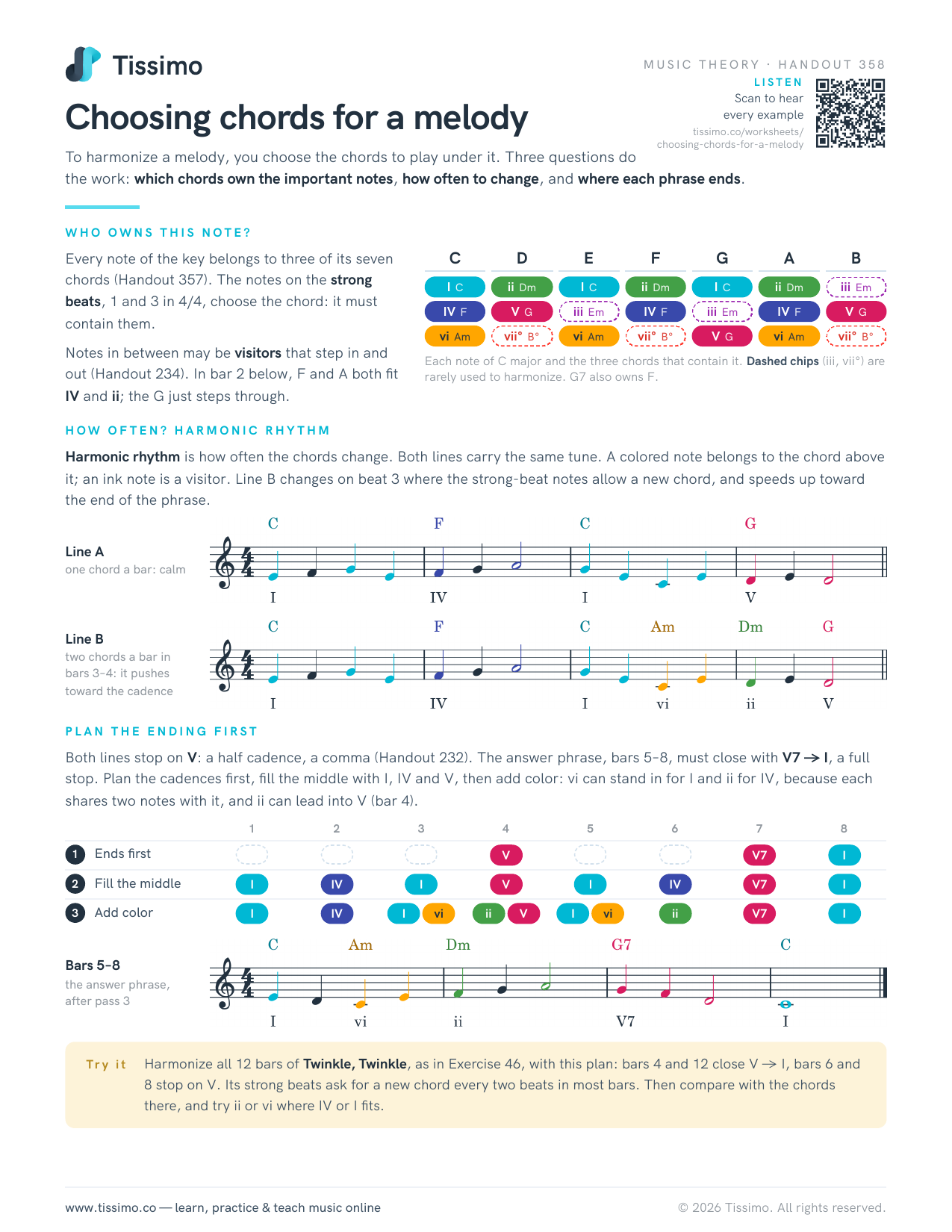 Choosing chords for a melodyTo harmonize a melody, you choose the chords to play under it. Three questions do the work: which chords own the important notes, how often to change, and where each phrase ends.
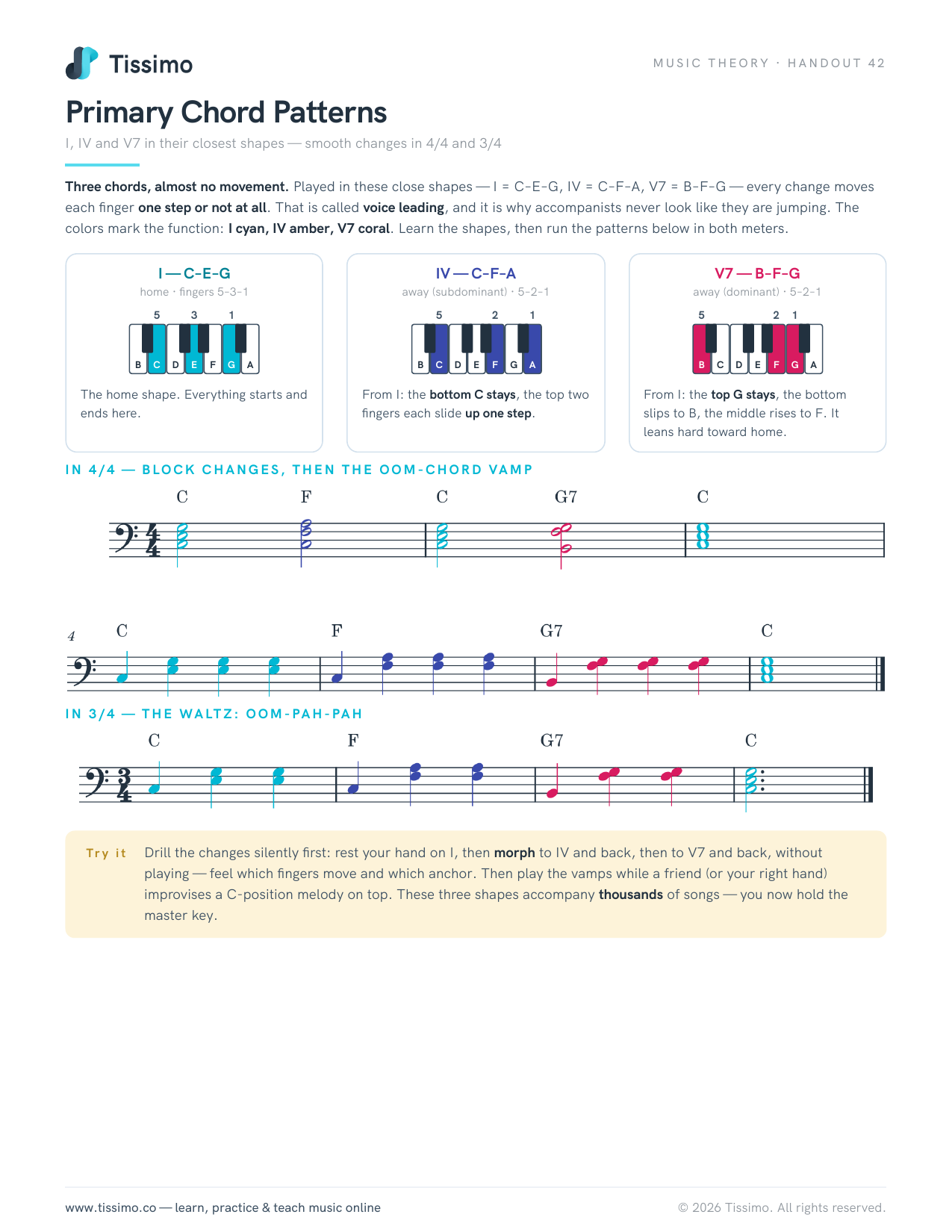 Primary Chord PatternsI, IV and V7 in their closest shapes — smooth changes in 4/4 and 3/4