Scales, Keys & Modes
Dominant
Pronounced DOM-ih-nunt
The dominant is the fifth degree of a scale, a perfect fifth above the tonic: G in C major, E in A minor. Its chord, V or V7, pulls strongly back to the tonic and drives most cadences.
The dominant is scale degree 5: G in C major, E in A minor. In major and do-based minor solfège it is sol (or so); in la-based minor it is mi. After the tonic, it is the most important note of a key, as its name suggests.
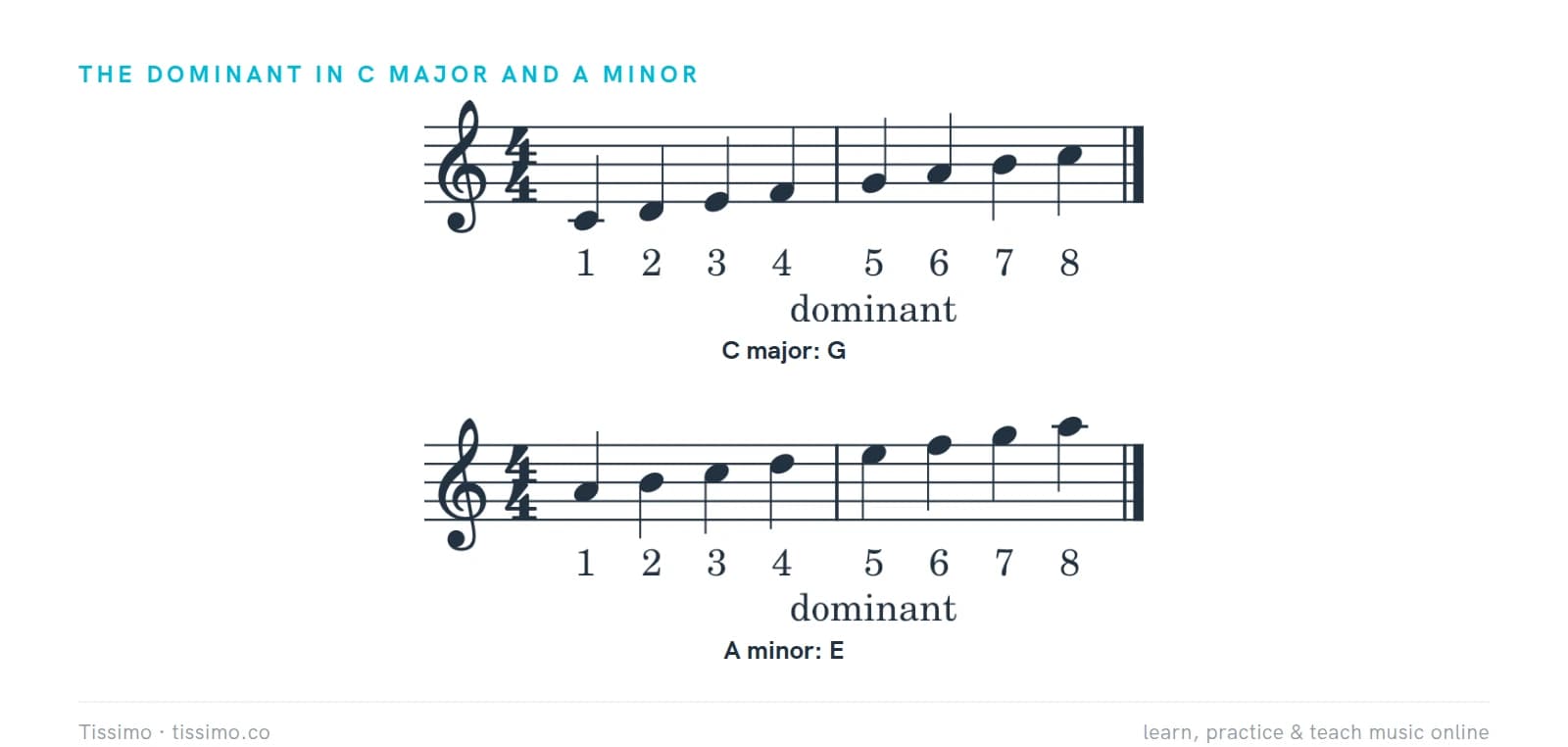
Tonic and dominant
The dominant sits a perfect fifth above the tonic, the most stable interval after the octave. That makes it a strong second pole. Melodies often travel from the tonic out to the dominant and back, and simple bass lines alternate between the two: think of a march or a polka, with the bass going C, G, C, G. The tonic is home; the dominant is the point where you are most clearly away and on your way back.
The dominant chord
The triad on the dominant is G B D in C major, written V. It contains the leading tone (B), which pulls up to the tonic. Add a 7th, F, and it becomes the dominant seventh chord (V7), whose F pulls down to E. Those two tendencies converge on the tonic chord, which is why V7–I is usually heard as the strongest progression in tonal music. It makes the authentic cadence, the musical full stop; a phrase that pauses on V makes a half cadence, a comma.
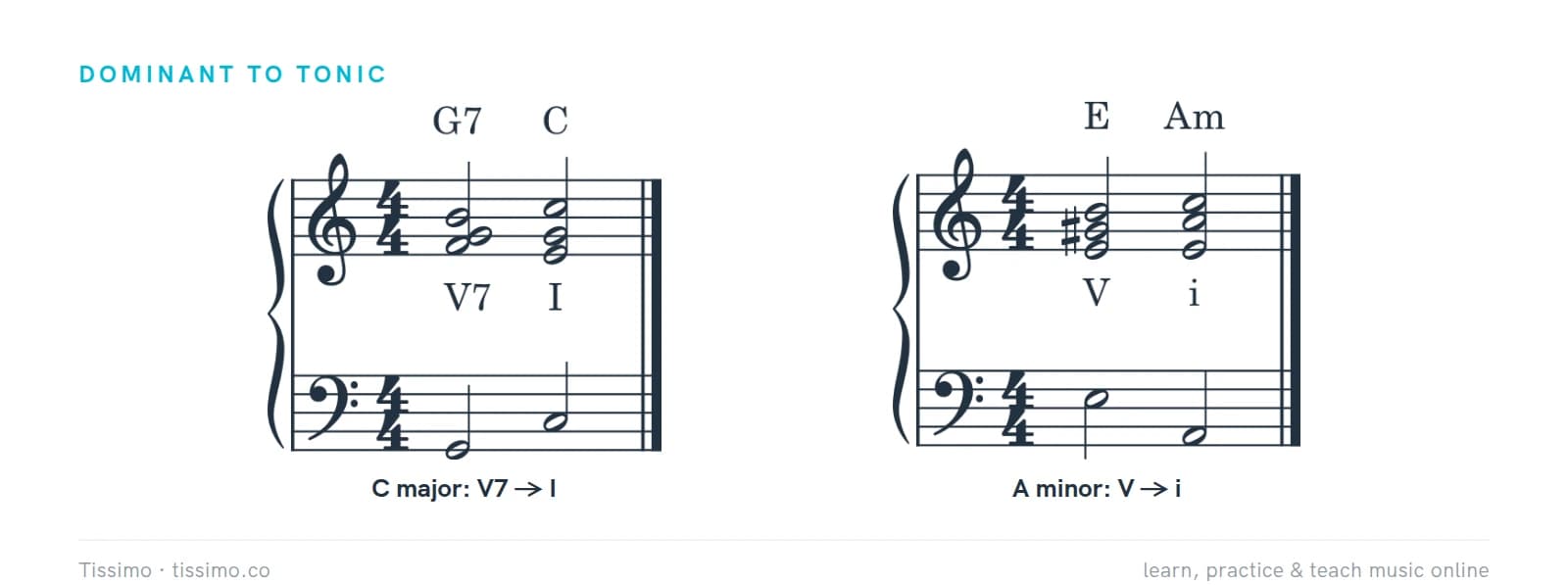
In a minor key, the dominant chord needs a raised 7th degree to be major: E G♯ B in A minor. That is why minor keys take the leading tone from the harmonic minor scale; without it the chord would be E minor (v) and its pull toward the tonic much weaker.
Dominant as a key
The word also names a key. The dominant key of C major is G major, and it is the most common destination when a major-key piece modulates. In sonata form, the second theme of a major-key exposition usually appears in the dominant key.
Dominant as a chord type
In jazz and pop, "dominant" often just means a dominant seventh chord, wherever it appears: C7, A7 and D7 are all called dominant chords, even when they are not built on degree 5. A secondary dominant functions as V or V7 of a temporarily tonicized chord other than the main tonic: D7 leading to G in C major is V7/V. A main-key dominant that resolves deceptively, such as G7 to Am in C major, is still the primary dominant.
Common questions
What is the dominant note of a key?
The 5th degree of its scale, a perfect fifth above the tonic: G in C major, D in G major, E in A minor.
What is the difference between V and V7?
V is the triad on the dominant (G B D in C major). V7 adds a 7th on top (G B D F), which forms a tritone with the leading tone and gives an even stronger pull to the tonic chord.
Practice it: free worksheets
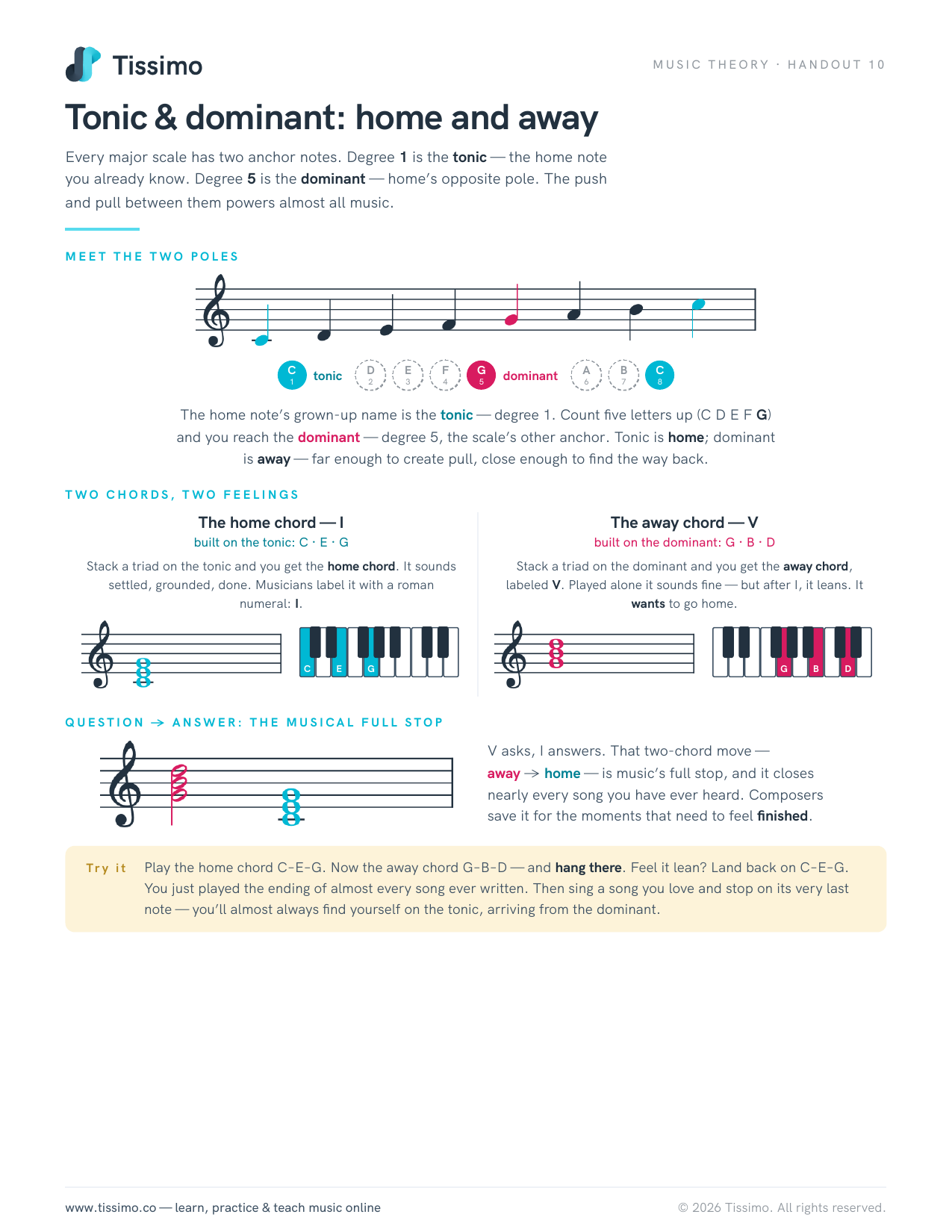 Tonic & dominant: home and awayEvery major scale has two anchor notes. Degree 1 is the tonic — the home note you already know. Degree 5 is the dominant — home’s opposite pole. The push and pull between them powers almost all music.
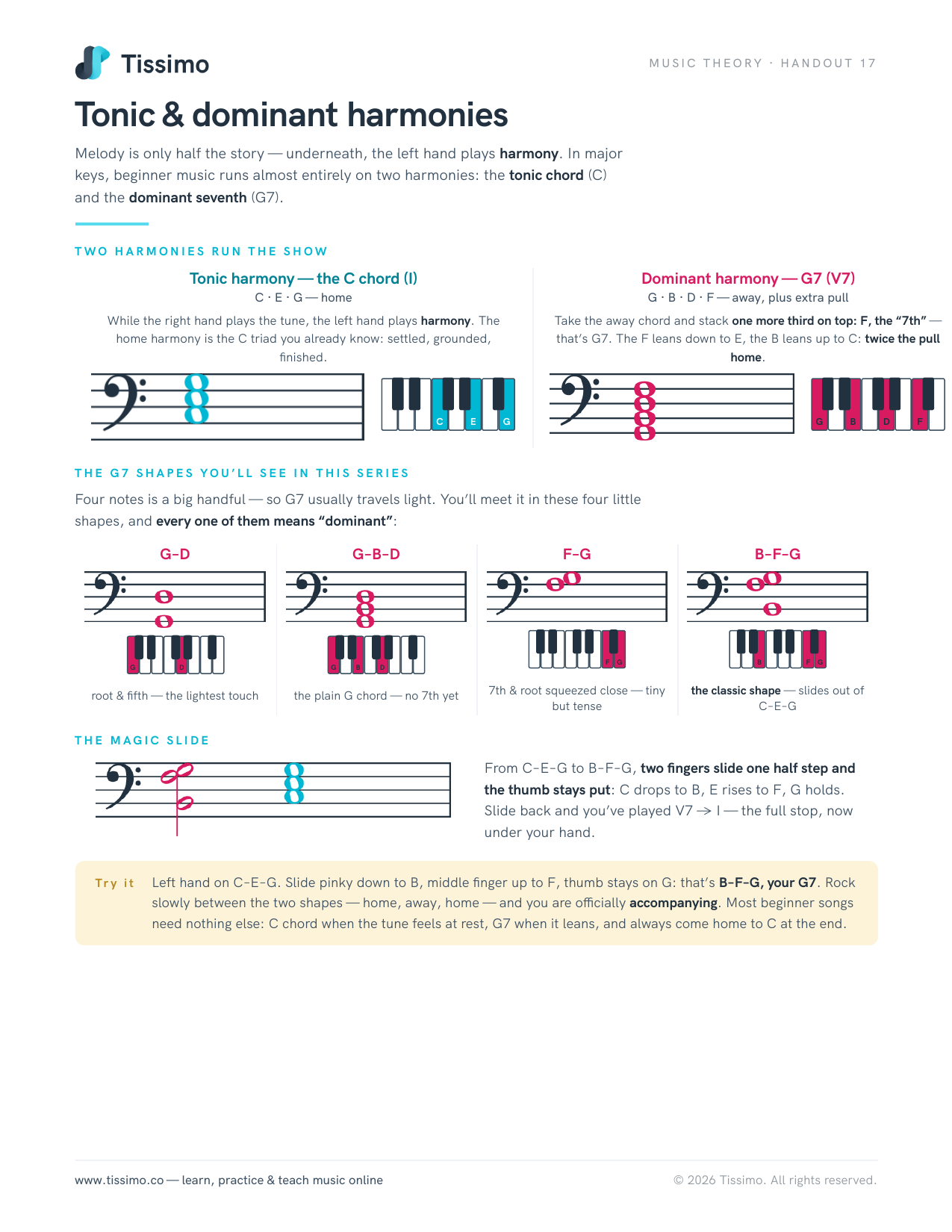 Tonic & dominant harmoniesMelody is only half the story — underneath, the left hand plays harmony. In major keys, beginner music runs almost entirely on two harmonies: the tonic chord (C) and the dominant seventh (G7).
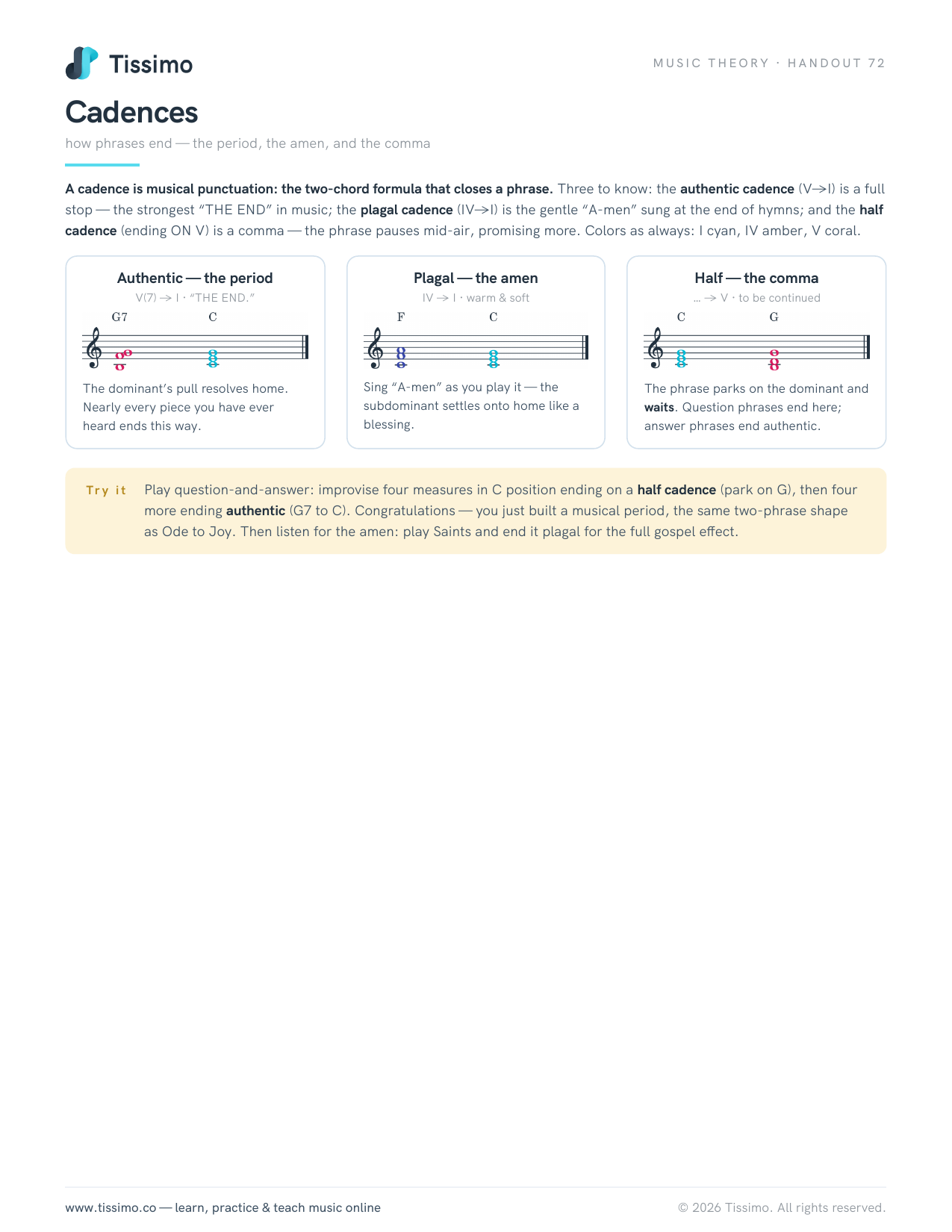 Cadenceshow phrases end — the period, the amen, and the comma
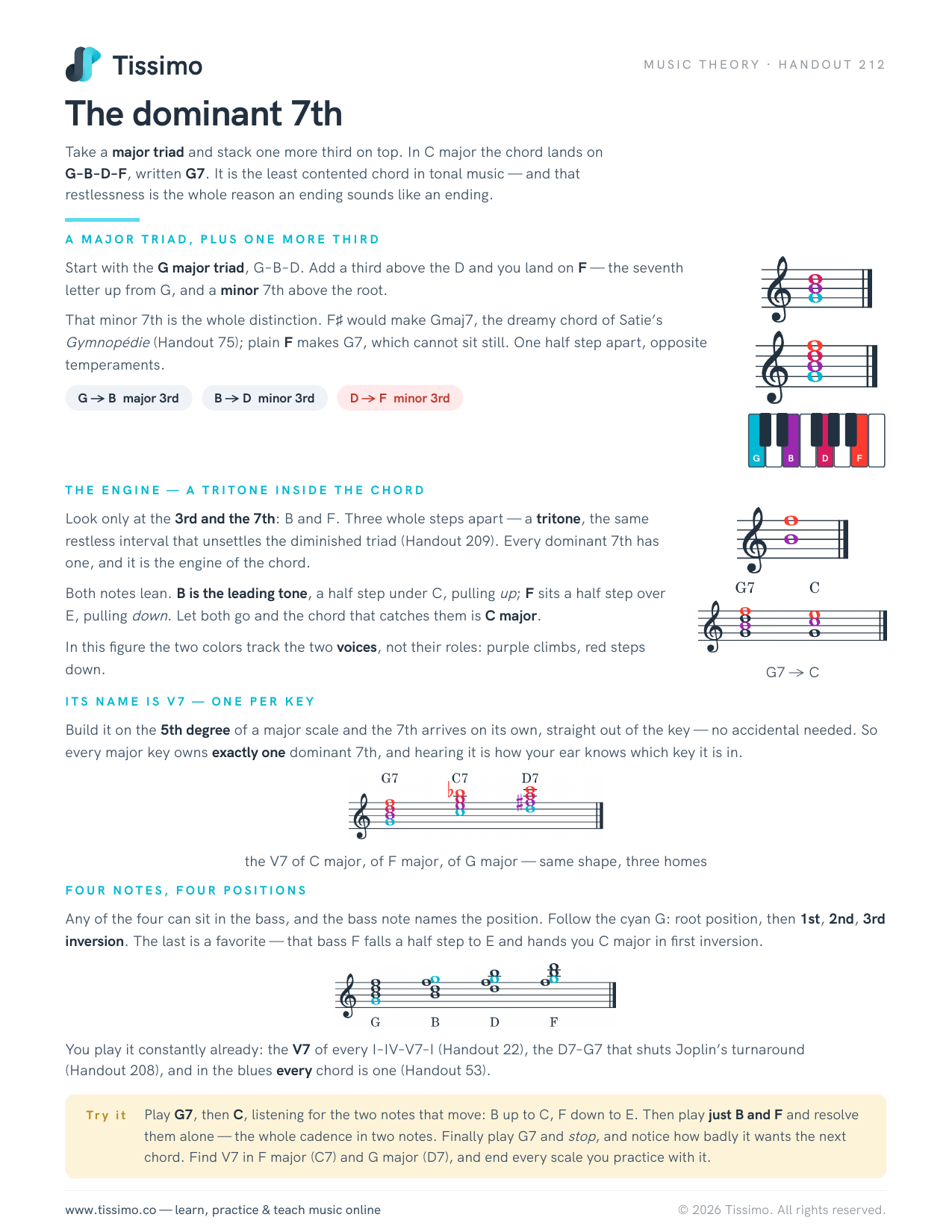 The dominant 7thTake a major triad and stack one more third on top. In C major the chord lands on G–B–D–F, written G7. It is the least contented chord in tonal music — and that restlessness is the whole reason an ending sounds like an ending.
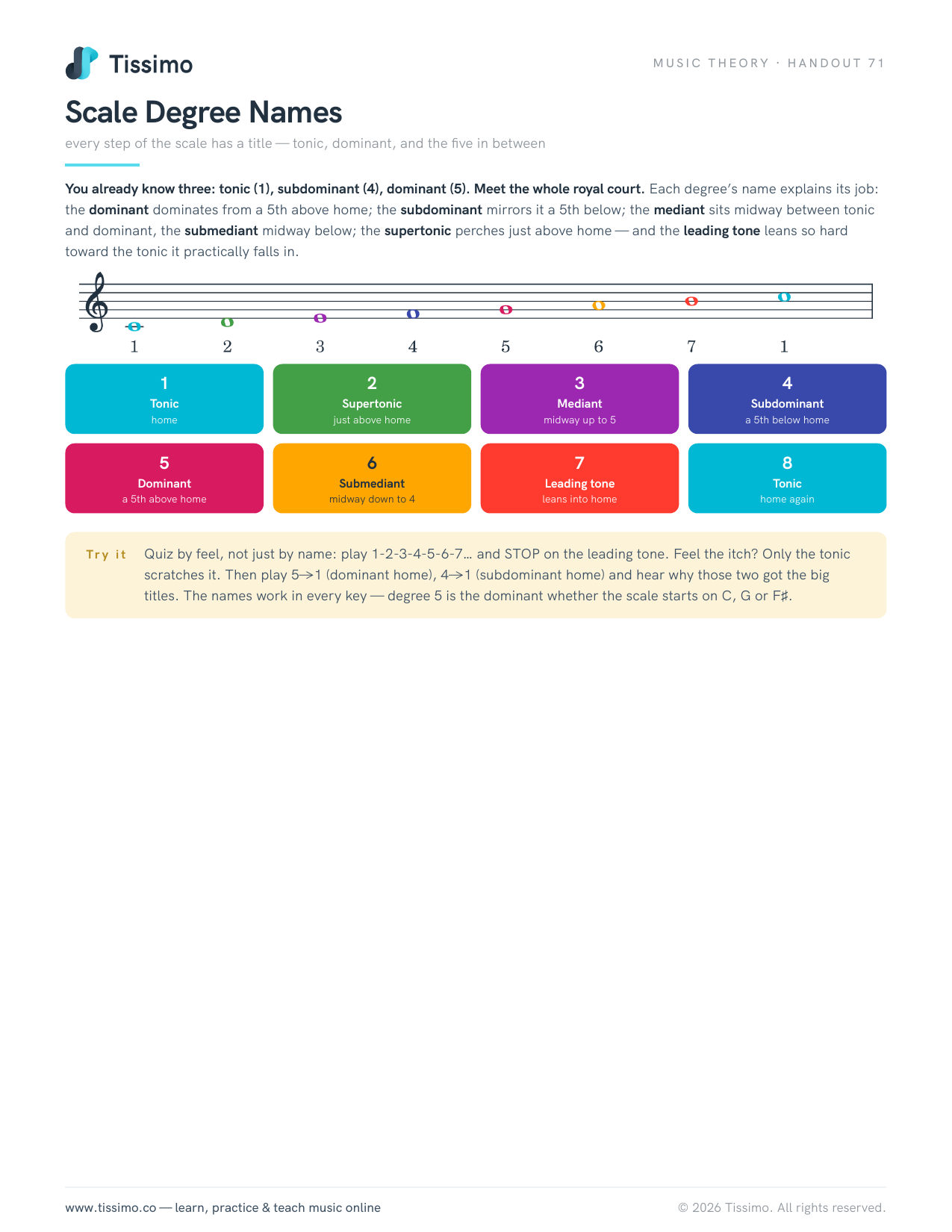 Scale Degree Namesevery step of the scale has a title — tonic, dominant, and the five in between
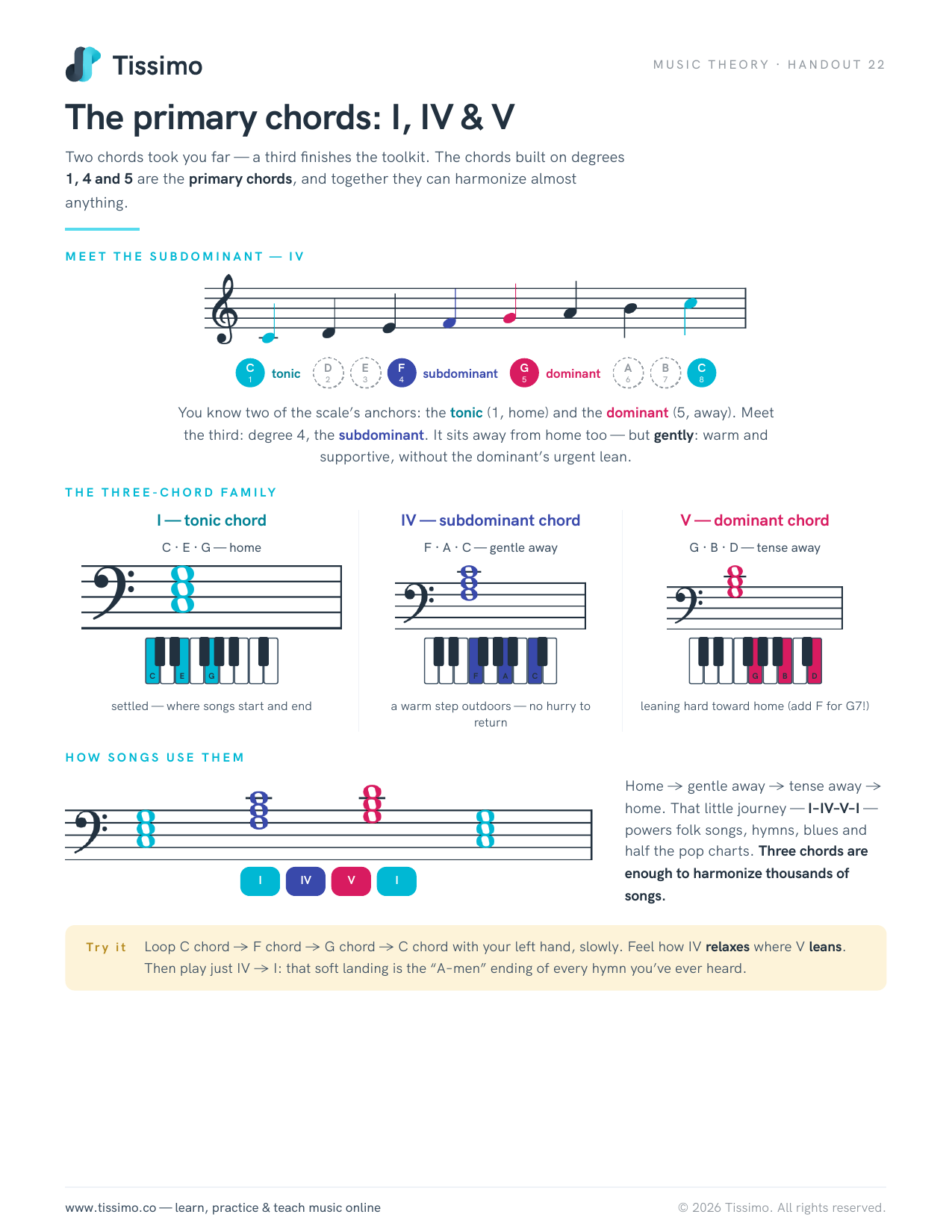 The primary chords: I, IV & VTwo chords took you far — a third finishes the toolkit. The chords built on degrees 1, 4 and 5 are the primary chords, and together they can harmonize almost anything.