Scales, Keys & Modes
Subdominant
Pronounced sub-DOM-ih-nunt
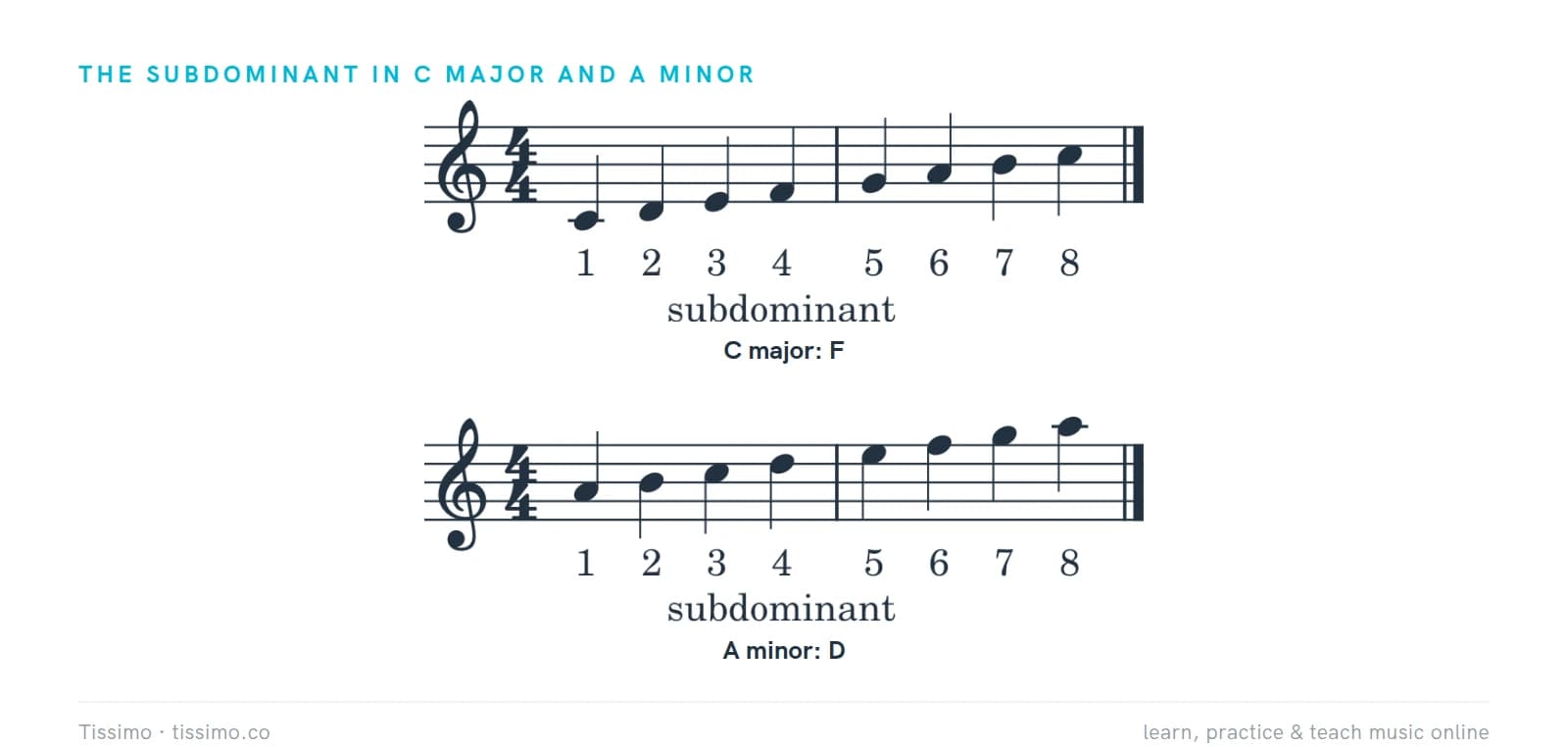
The subdominant is the fourth degree of a scale: F in C major, D in A minor. Its chord, IV (iv in minor), often leads away from the tonic and toward the dominant.
The subdominant is scale degree 4: F in C major, D in A minor. In major and do-based minor solfège it is fa; in la-based minor it is re.
Why "sub" dominant?
The name does not mean "the note below the dominant", even though F does sit just below G. It means the lower dominant: the subdominant is a perfect fifth below the tonic, just as the dominant is a perfect fifth above it. From C, go up a fifth to G (the dominant) or down a fifth to F (the subdominant). The two notes frame the tonic symmetrically, and the other names follow the same logic: the submediant lies halfway between the tonic and the subdominant below it, as the mediant lies halfway up to the dominant.
The subdominant chord
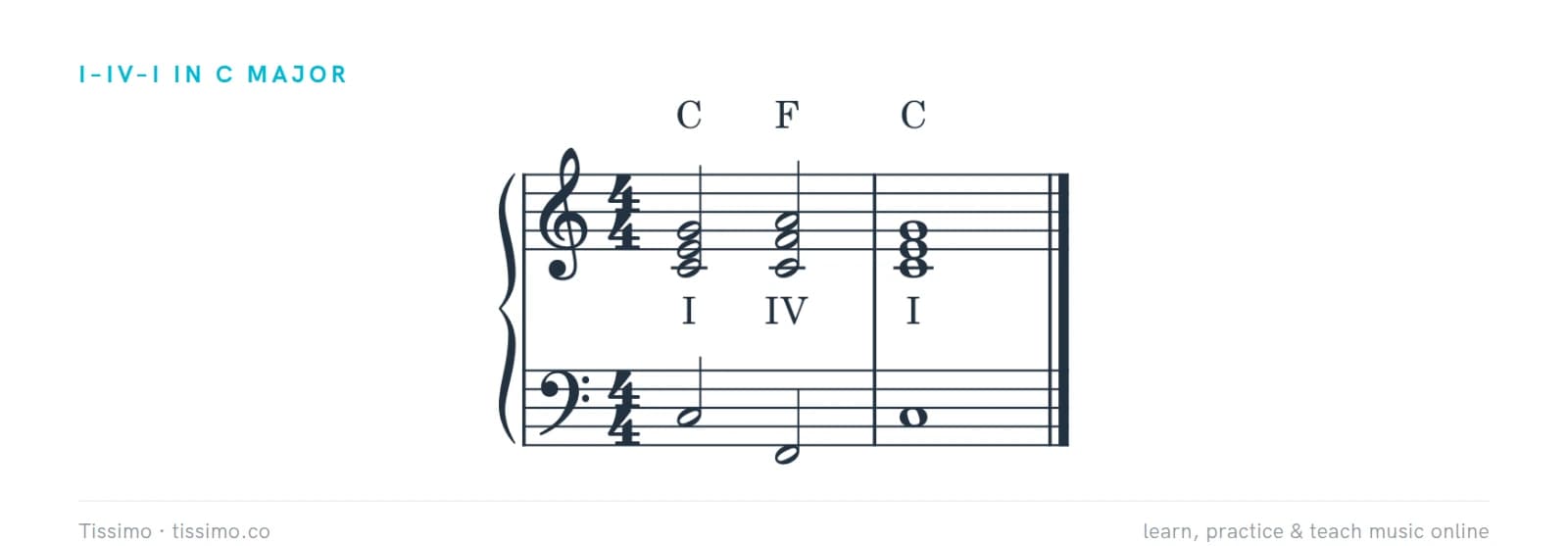
The triad on the subdominant is major in a major key (F A C in C major, written IV) and minor in a minor key (D F A in A minor, written iv). With the tonic and dominant chords it makes up the three primary chords, I, IV and V, which can harmonize a great many simple melodies.
Its usual job is pre-dominant: it moves the music away from the tonic and sets up the dominant, as in I–IV–V–I. It can also go straight back to the tonic. IV–I at the end of a phrase is a plagal cadence, the "Amen" heard at the end of many hymns.
In melodies
In a major key, degree 4 sits only a half step above the mediant, so it tends to fall to 3: F to E in C major. In the dominant seventh chord, G B D F, the subdominant is the 7th, and that same downward pull is why the 7th of a V7 chord resolves down. The Lydian mode raises the 4th degree a half step, and much of that mode's floating quality comes from losing this downward pull.
Common questions
Why is it called the subdominant?
Because it is a perfect fifth below the tonic, just as the dominant is a perfect fifth above. Sub means below: the subdominant is the lower dominant, not the note under the dominant.
What is a plagal cadence?
The subdominant chord moving to the tonic chord, IV–I (F to C in C major). It is often called the Amen cadence because it is the traditional setting of the "Amen" sung at the end of many hymns.
Practice it: free worksheets
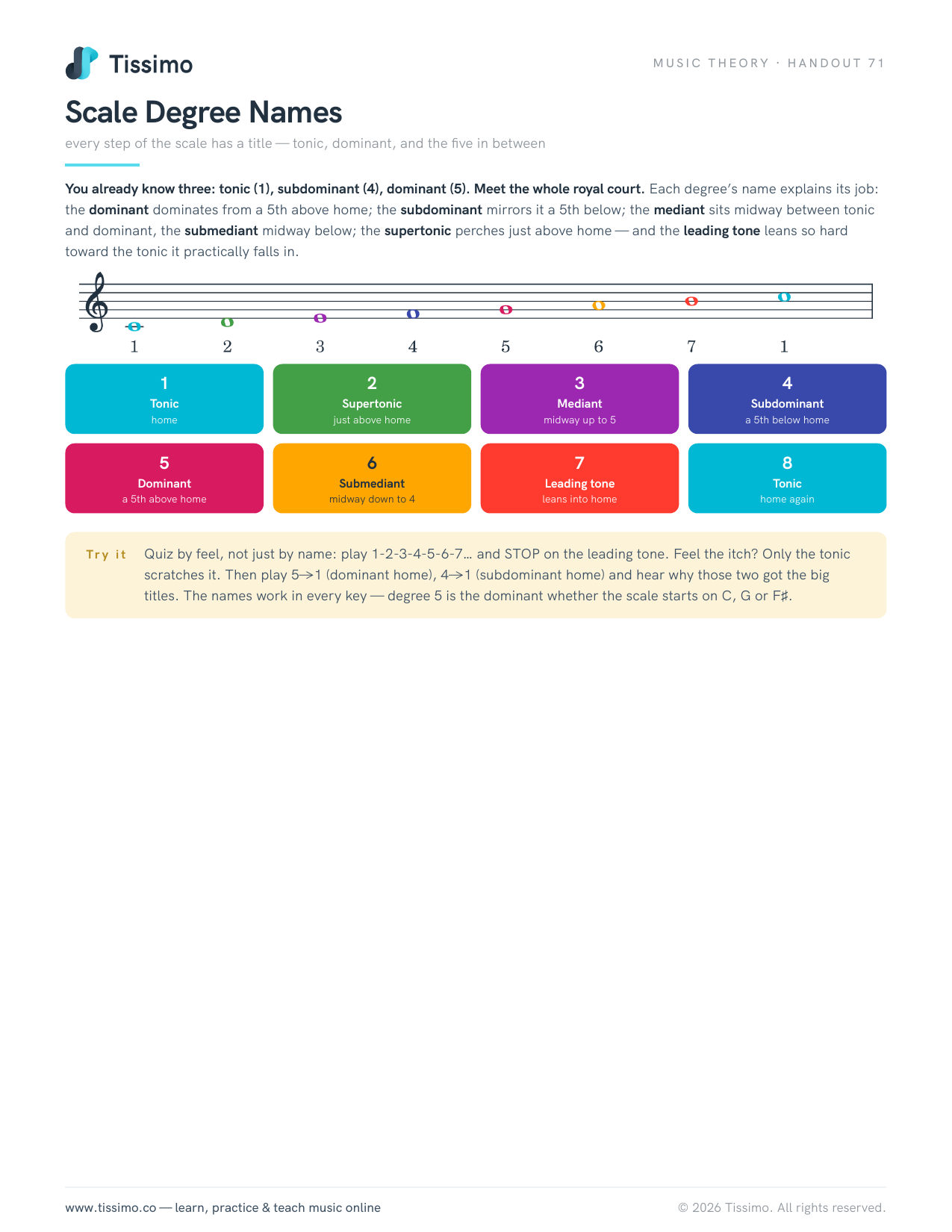 Scale Degree Namesevery step of the scale has a title — tonic, dominant, and the five in between
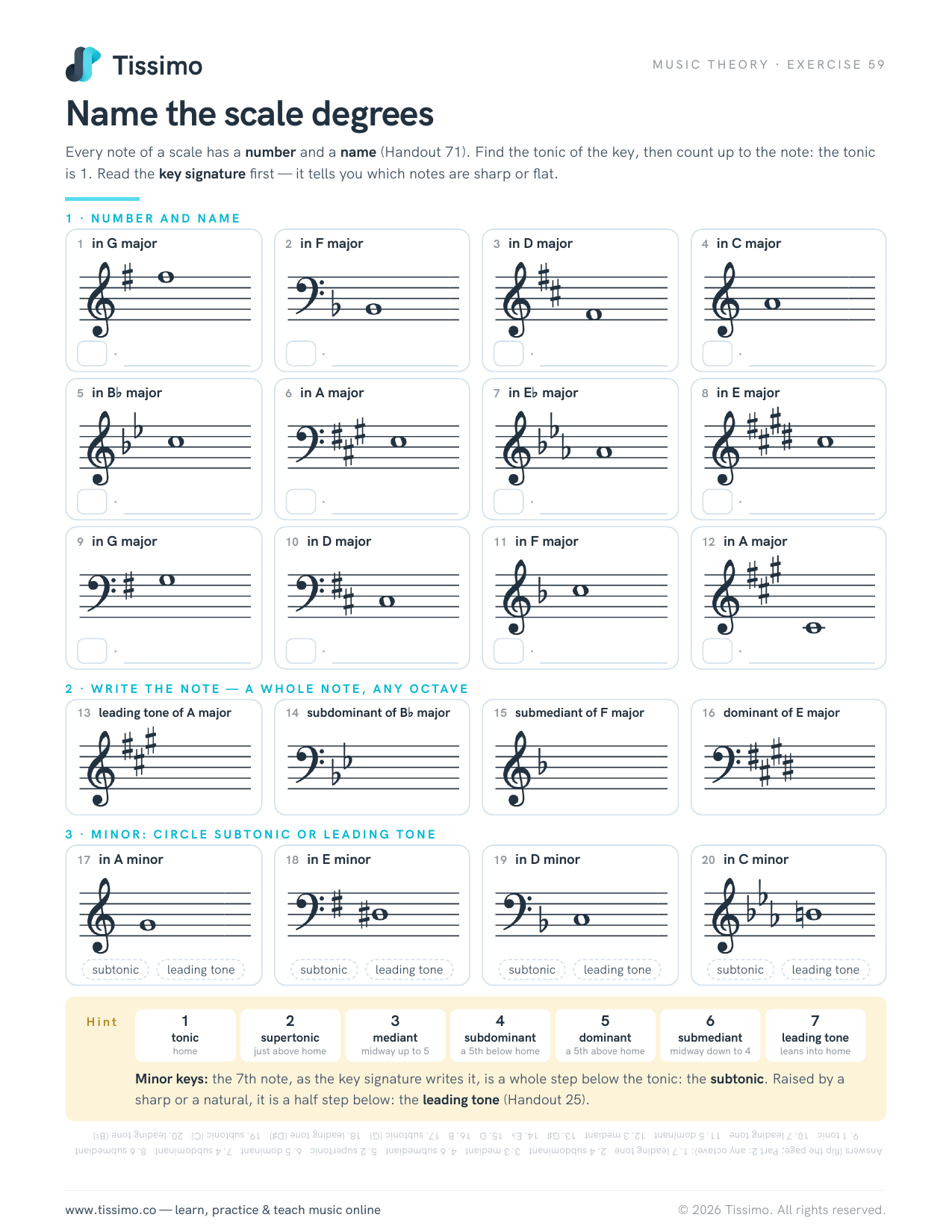 Name the scale degreesEvery note of a scale has a number and a name (Handout 71). Find the tonic of the key, then count up to the note: the tonic is 1. Read the key signature first — it tells you which notes are sharp or flat.
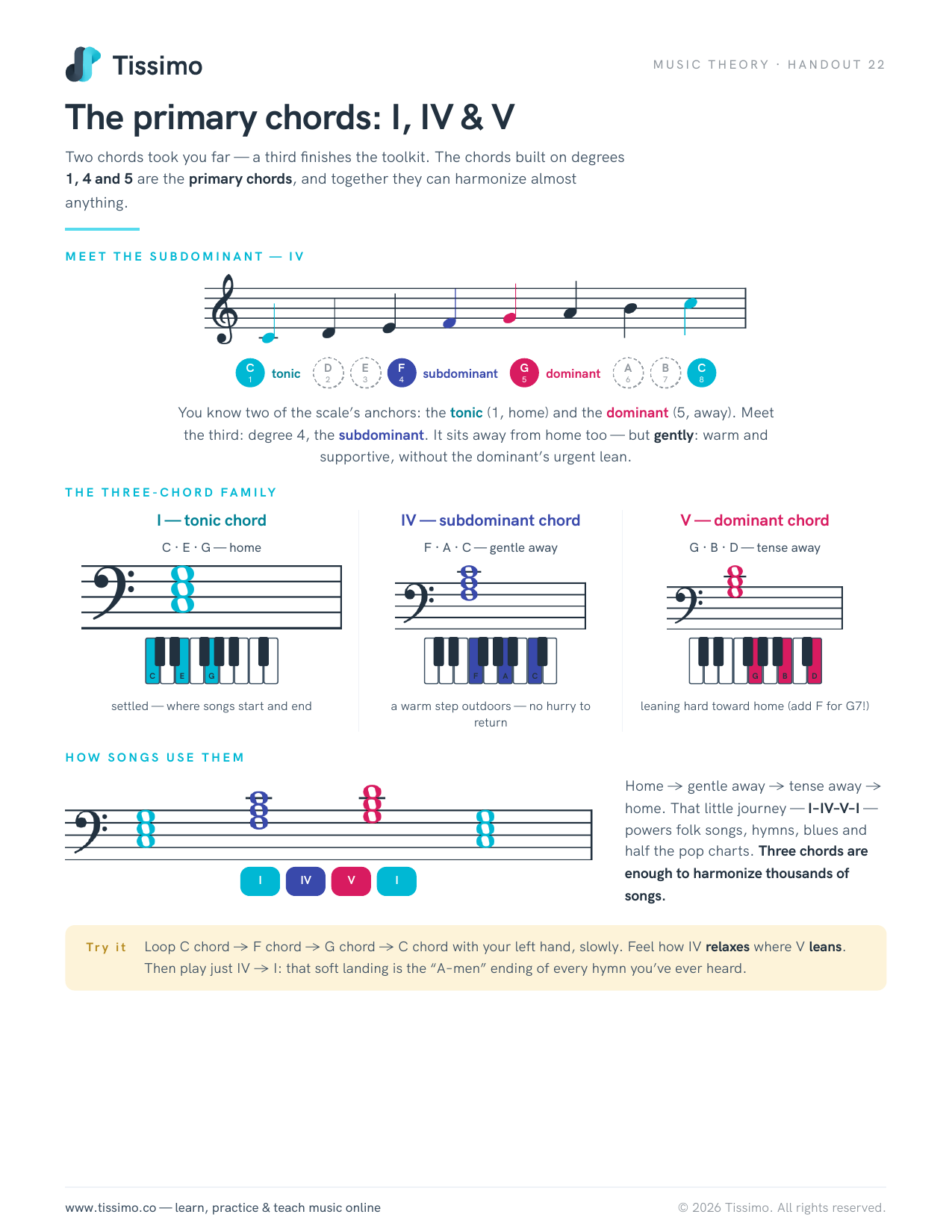 The primary chords: I, IV & VTwo chords took you far — a third finishes the toolkit. The chords built on degrees 1, 4 and 5 are the primary chords, and together they can harmonize almost anything.
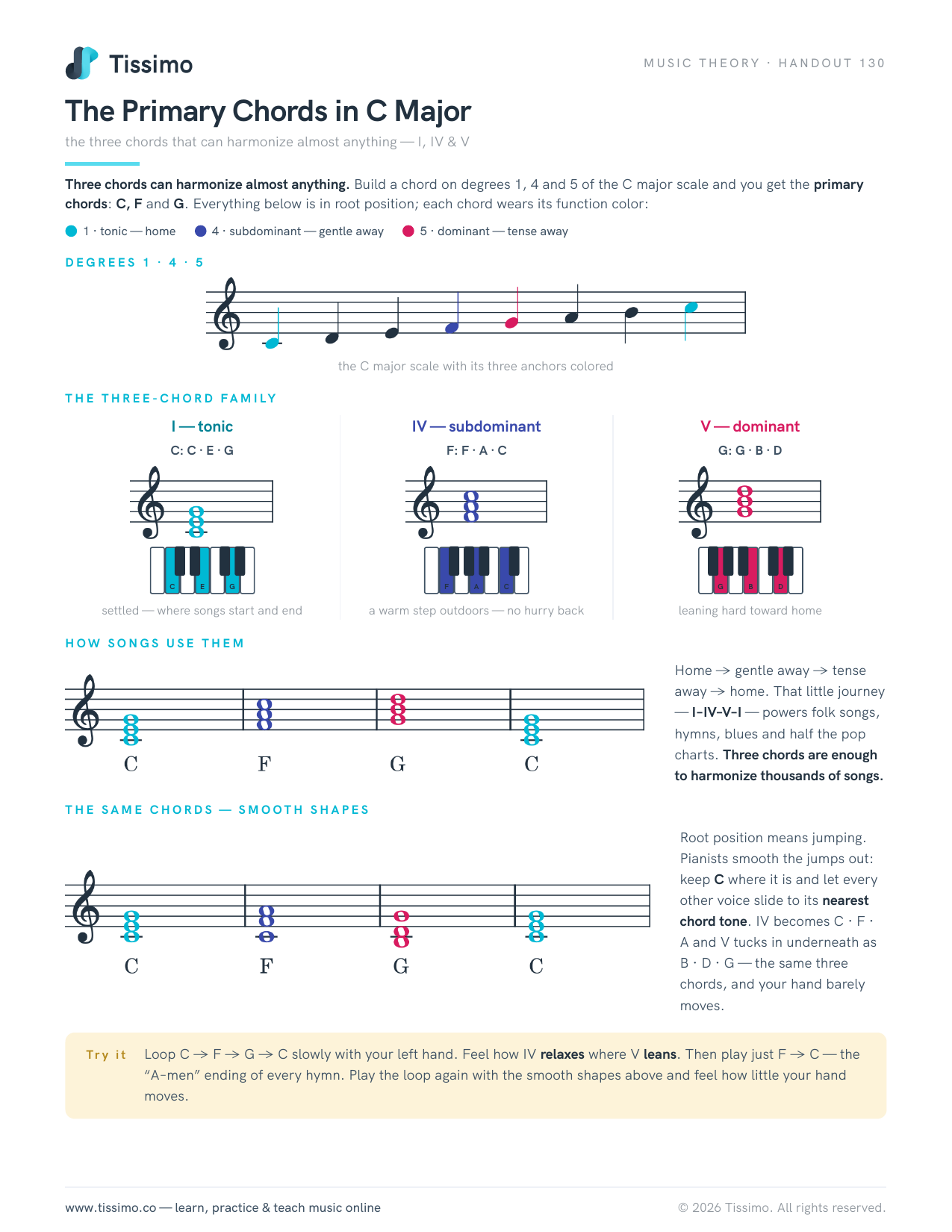 The Primary Chords in Every KeyI, IV and V — the three chords that can harmonize almost anything, in all 24 keys.
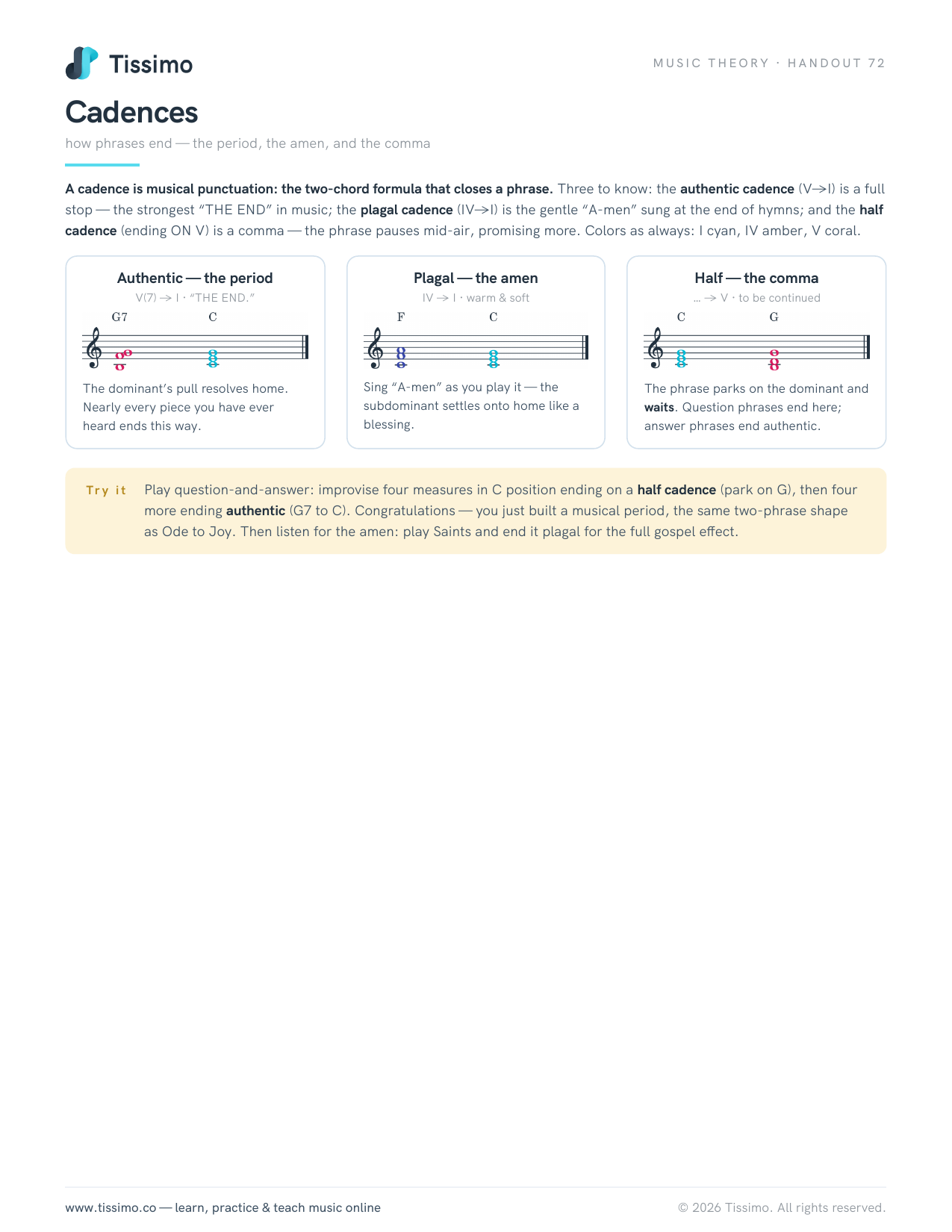 Cadenceshow phrases end — the period, the amen, and the comma