Pitch & Intervals
Solfège
Pronounced sol-FEZH
Solfège is a system of singing the notes of a scale on syllables: do, re, mi, fa, sol, la, ti, do. In movable-do systems, it trains you to hear each note's role in the key. It is a core tool of sight-singing and ear training.
Solfège gives each note of the scale a singable syllable: do, re, mi, fa, sol, la, ti, and do again at the octave. In movable-do major, singing melodies on these syllables helps you hear what each note does in the key: do feels like home and ti leans up toward do. Fixed-do systems instead use the syllables as note names. It is a core tool of sight-singing and ear training.
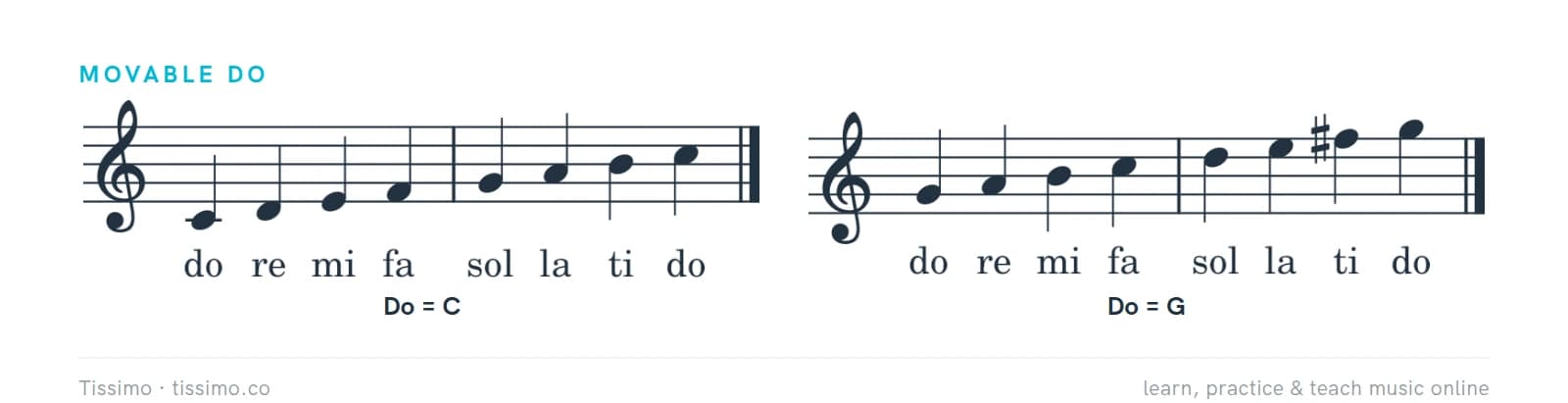
Movable do and fixed do
There are two main systems, and they work differently:
- Movable do: the syllables move with the key. In major, do is the tonic: C in C major, G in G major. Minor can use do or la as its tonic, as explained below. Because the syllables follow the key, mi up to sol is always the same distance, whatever the key. Movable do is widely used in English-speaking countries, and the Kodály approach is built on it.
- Fixed do: do is always C, re is always D, and so on, whatever the key. In France, Italy, Spain, Latin America and many other countries, these syllables are simply the names of the notes.
Movable-do singers handle minor keys in one of two ways. La-based minor starts the minor scale on la (A minor is la–ti–do–re–mi–fa–sol–la), keeping its link to the relative major. Do-based minor keeps do as the tonic and changes the syllables of the lowered notes: do–re–me–fa–sol–le–te–do.
Chromatic syllables
To sing altered notes, movable-do systems change the vowel. Raised notes end in -i (di, ri, fi, si, li) and lowered notes in -e or -a (ra, me, se, le, te). So in C major, F♯ is fi and B♭ is te.
Where the syllables come from
The syllables go back to the 11th-century monk Guido of Arezzo, who took ut, re, mi, fa, sol, la from the opening syllables of the lines of a Latin hymn in which each line starts one note higher than the last. Ut was later replaced by the more singable do in most countries, and si was added for the seventh note. In 19th-century England, the Tonic Sol-fa method changed si to ti, so that every syllable starts with a different letter. Many teachers still use that method's Curwen hand signs, a hand shape for each degree of the scale.
Getting started
Begin with do–re–mi–fa–sol, the first five notes, and sing short melodies on them before adding la and ti. In a new key, always find do before you sing.
Try it with Movable Do: The First Five Notes and Sing Before the Model: Movable Do 1, and for minor keys, Sing Before the Model: Do-Based Minor.
Common questions
Is it ti or si?
Both are used. Si is the older syllable and is still standard in fixed-do countries. Ti was introduced in 19th-century England so that every syllable starts with a different letter, and it is the usual choice in English-language movable-do teaching.
What is the difference between fixed do and movable do?
In fixed do, do is always C, so the syllables work as note names. In movable do, the syllables move with the key: major uses do as tonic, while minor uses either do or la, depending on the system.
How do you pronounce solfège?
sol-FEZH. The Italian form, solfeggio, is pronounced sol-FED-joh.
Practice it: free worksheets
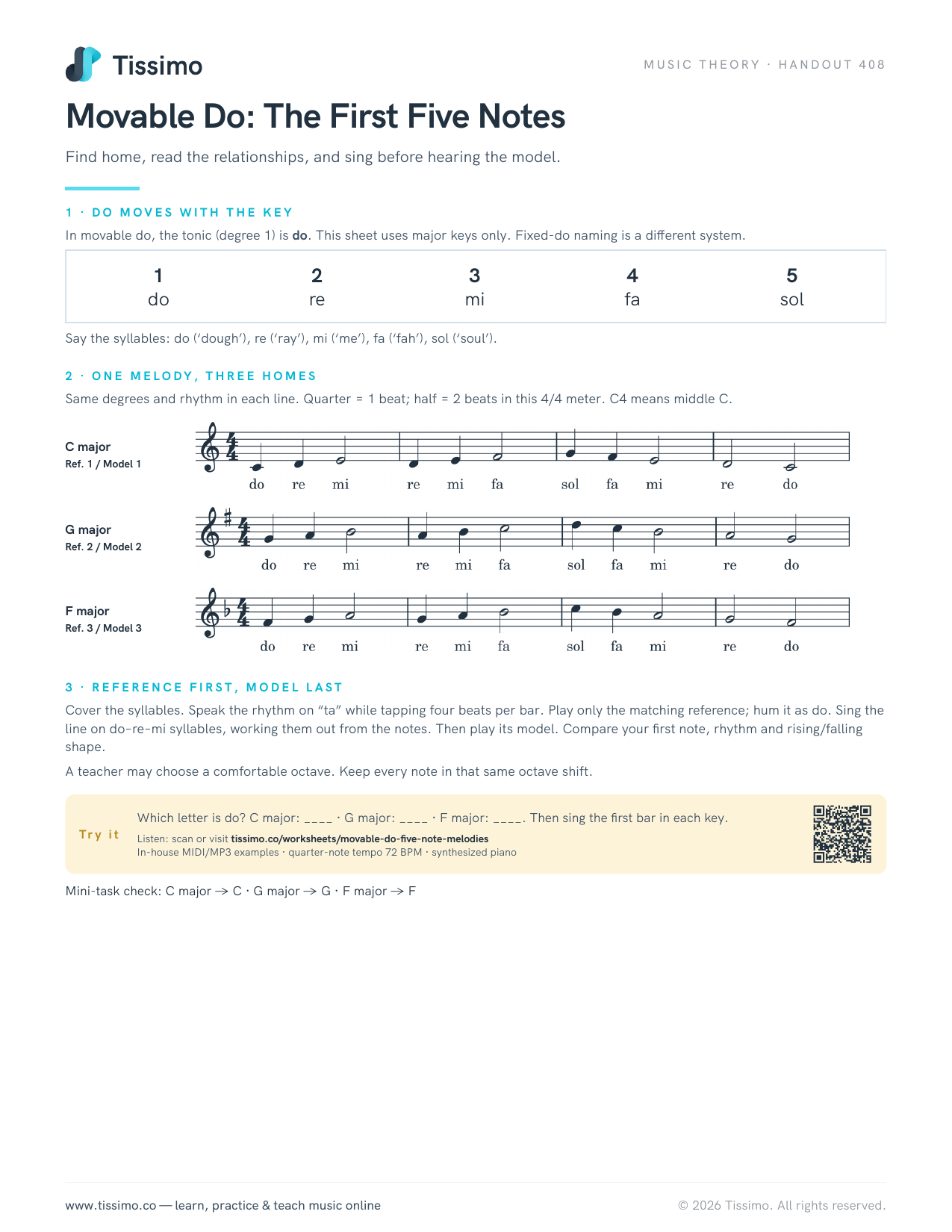 Movable Do: The First Five NotesFind home, read the relationships, and sing before hearing the model.
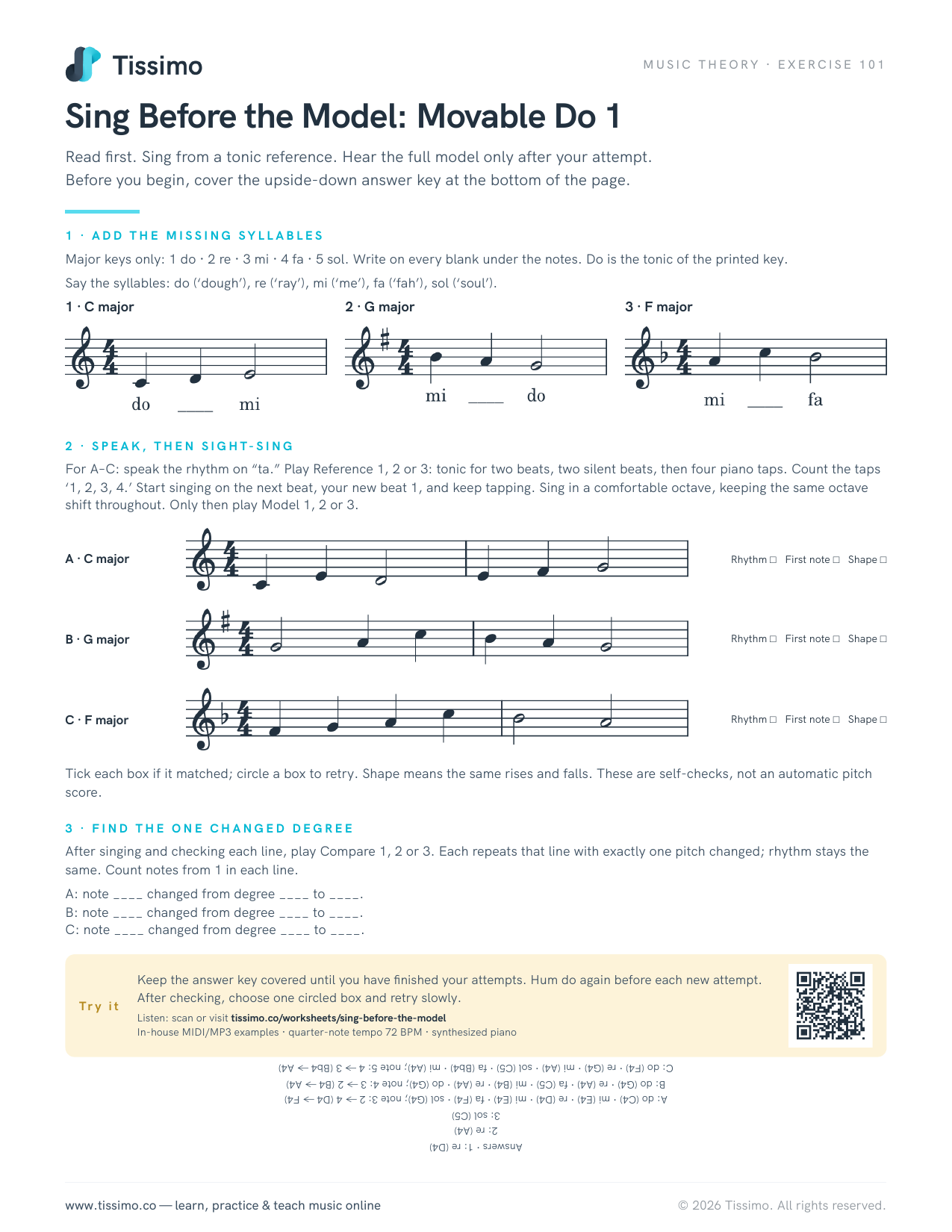 Sing Before the Model: Movable Do 1Read first. Sing from a tonic reference. Hear the full model only after your attempt. Before you begin, cover the upside-down answer key at the bottom of the page.
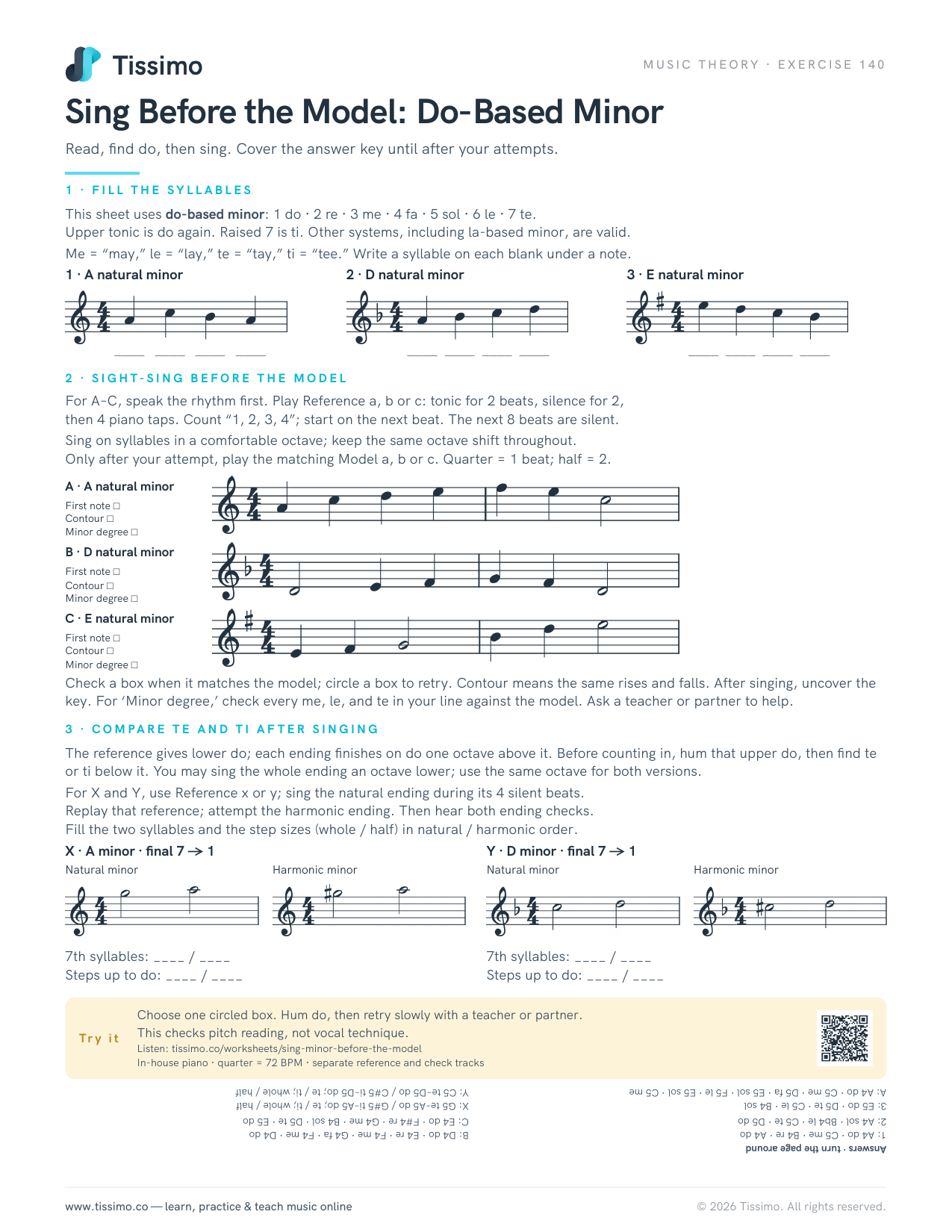 Sing Before the Model: Do-Based MinorRead, find do, then sing. Cover the answer key until after your attempts.