Pitch & Intervals
Octave
Written as P8
An octave is the interval between two notes with the same letter name, eight letter names apart, such as C4 to C5. It spans 12 half steps, and the upper note vibrates exactly twice as fast.
An octave is the distance from one note to the next note with the same letter name: C up to the next C, A down to the next A. Count the letters from the bottom note to the top note, including both, and you get eight: C D E F G A B C. That is where the name comes from (Latin octavus, "eighth").
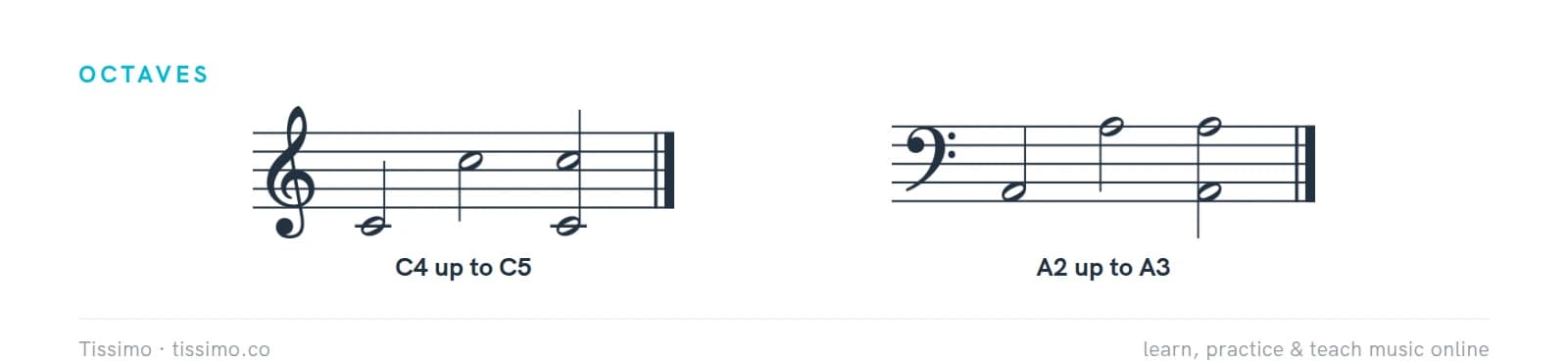
Twelve half steps, twice the frequency
On the piano an octave spans 12 half steps, counting every black and white key on the way. Its acoustic definition is simpler still: the upper note vibrates exactly twice as fast as the lower one. A4 sounds at 440 Hz, A5 at 880 Hz and A3 at 220 Hz. With a 2:1 frequency ratio, many of the overtones of the two notes coincide, and the notes blend so well that you hear them as "the same note, higher or lower". This is called octave equivalence, and it is why the musical alphabet needs only seven letters.
How octaves appear in music
- Pianists double a melody or a bass line in octaves to make it fuller and louder.
- When men and women sing "the same" melody together, they usually sing it an octave apart.
- An 8va sign tells you to play an octave higher than written, so very high notes don't need a ladder of ledger lines.
- Octave numbers say which octave a note is in: middle C is C4 and the C above it C5. The number changes at every C.
Perfect octave and its relatives
In interval names the octave is a perfect interval, written P8. Make it a half step smaller (C up to C♭) and it becomes a diminished octave; a half step larger (C up to C♯) an augmented octave. Intervals wider than an octave are compound intervals: a 9th is an octave plus a 2nd, and two octaves make a 15th.
See The 6th, the 7th & the Octave, and read octave signs with Octave Signs: 8va & 8vb.
Common questions
Why is it called an octave if it has 12 half steps?
The name counts letter names, not keys. From C up to C you pass eight letters (C D E F G A B C), the eight notes of a major scale including the top one. Counting every black and white key gives 12 half steps.
Why do two notes an octave apart sound alike?
The upper note vibrates exactly twice as fast as the lower one, so the two waves line up and many of their overtones coincide. The ear blends them so completely that most musical traditions treat them as the same note in a different register.
Practice it: free worksheets
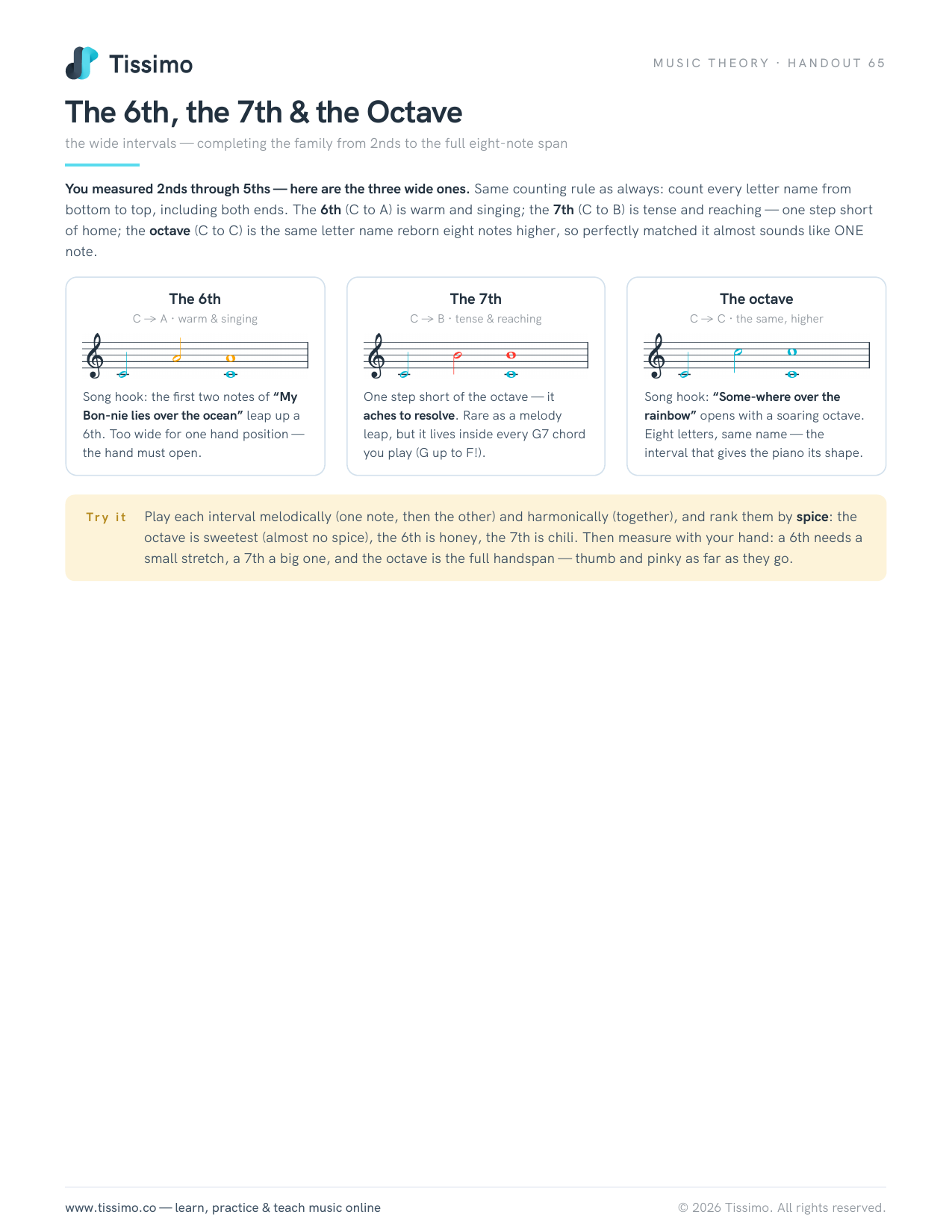 The 6th, the 7th & the Octavethe wide intervals — completing the family from 2nds to the full eight-note span
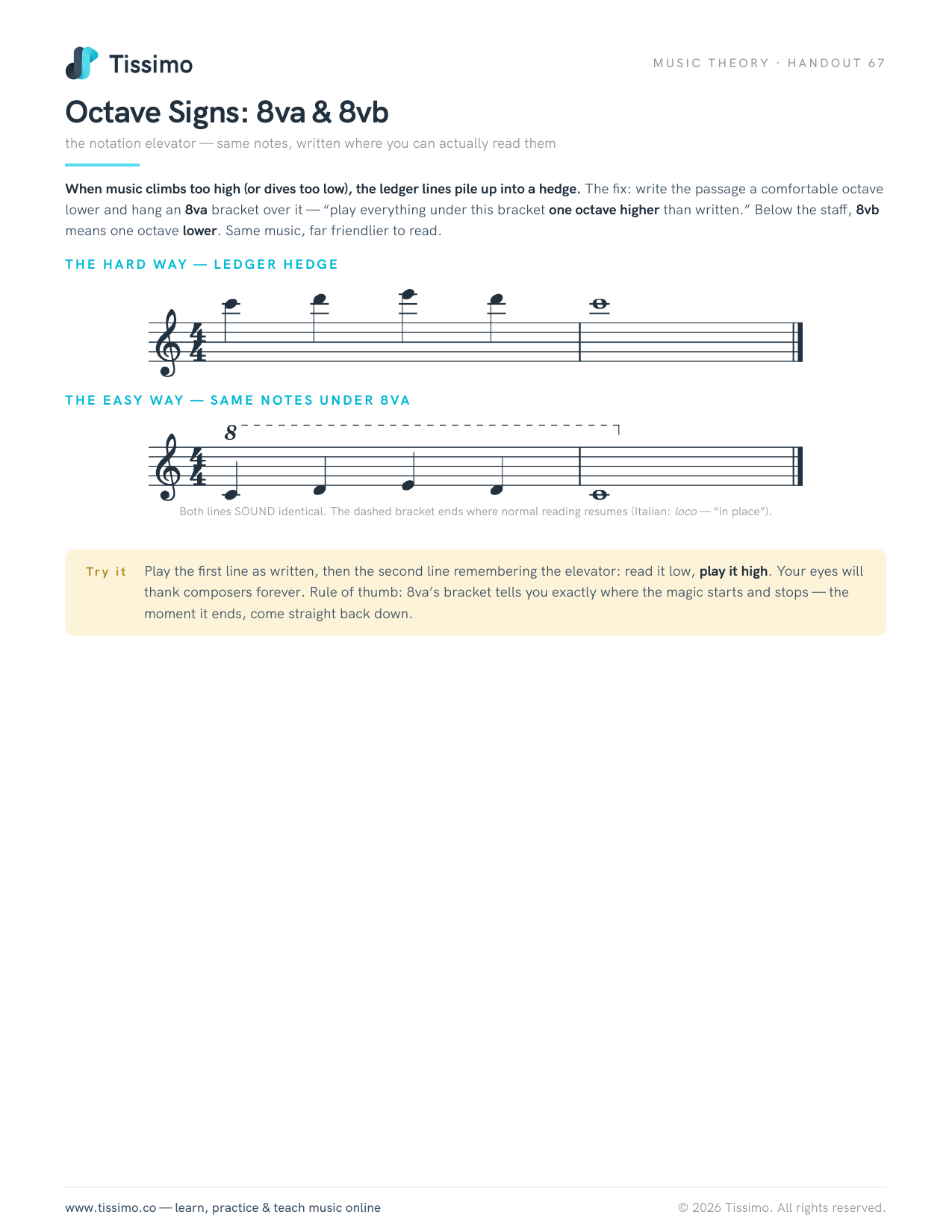 Octave Signs: 8va & 8vbthe notation elevator — same notes, written where you can actually read them
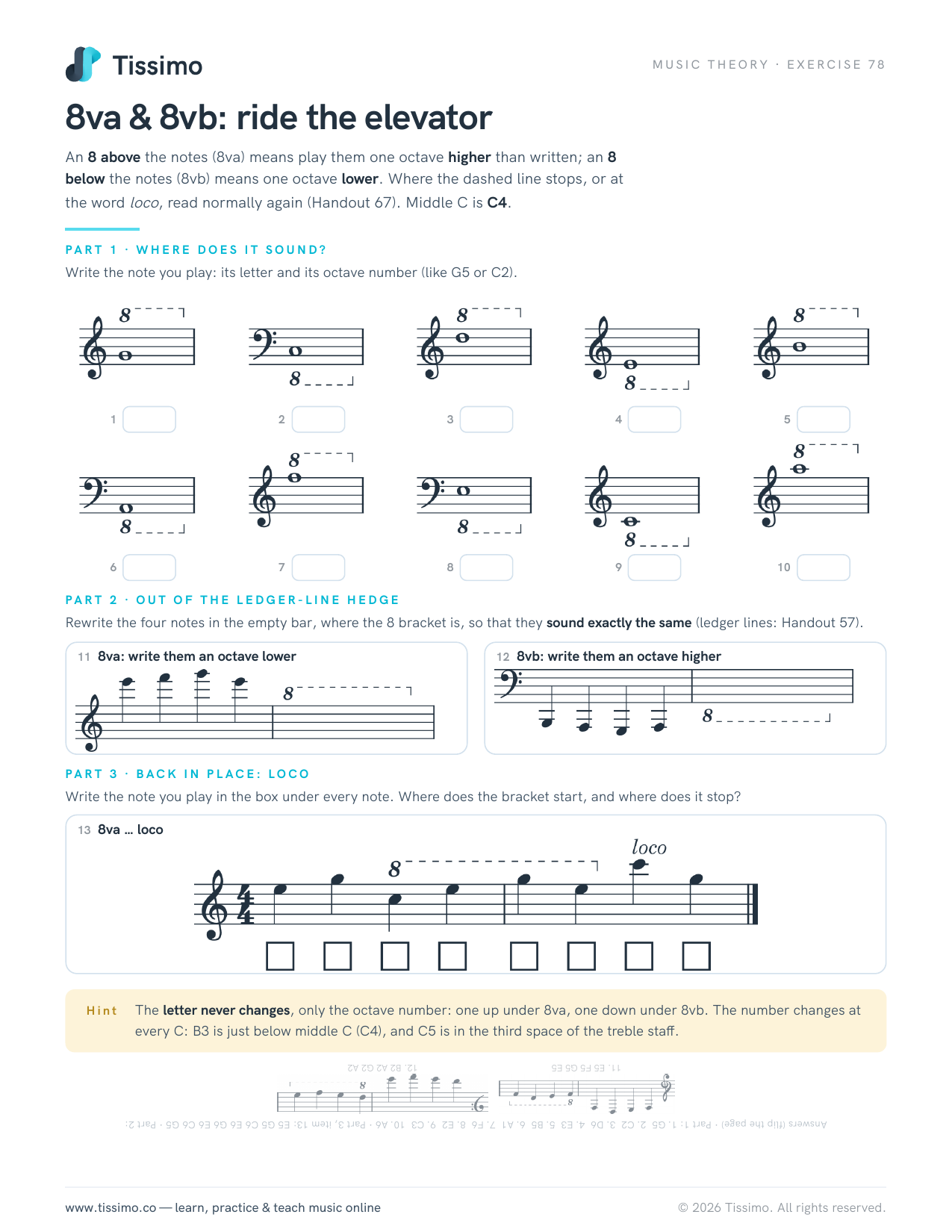 8va & 8vb: ride the elevatorAn 8 above the notes (8va) means play them one octave higher than written; an 8 below the notes (8vb) means one octave lower. Where the dashed line stops, or at the word loco, read normally again (Handout 67). Middle C is C4.
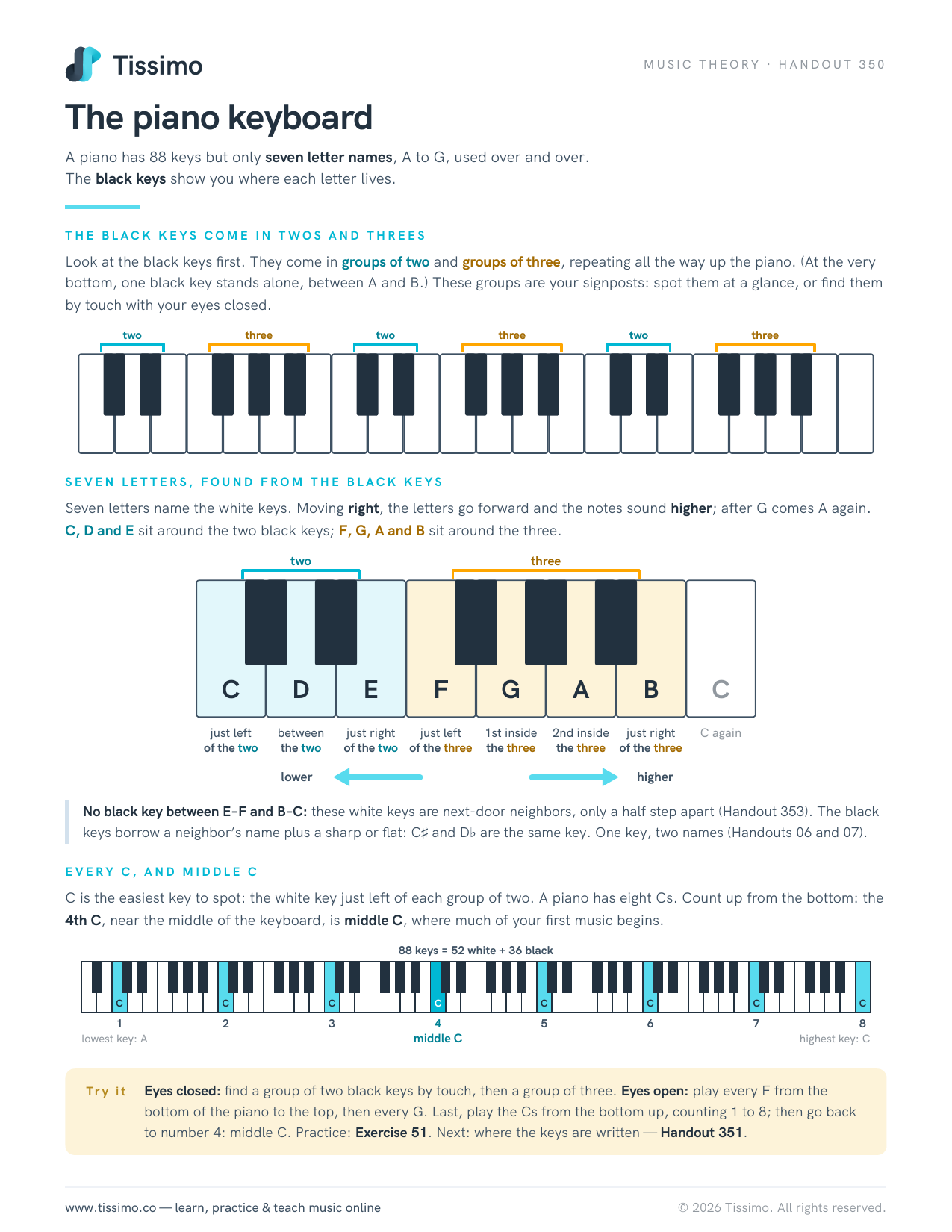 The piano keyboardA piano has 88 keys but only seven letter names, A to G, used over and over. The black keys show you where each letter lives.
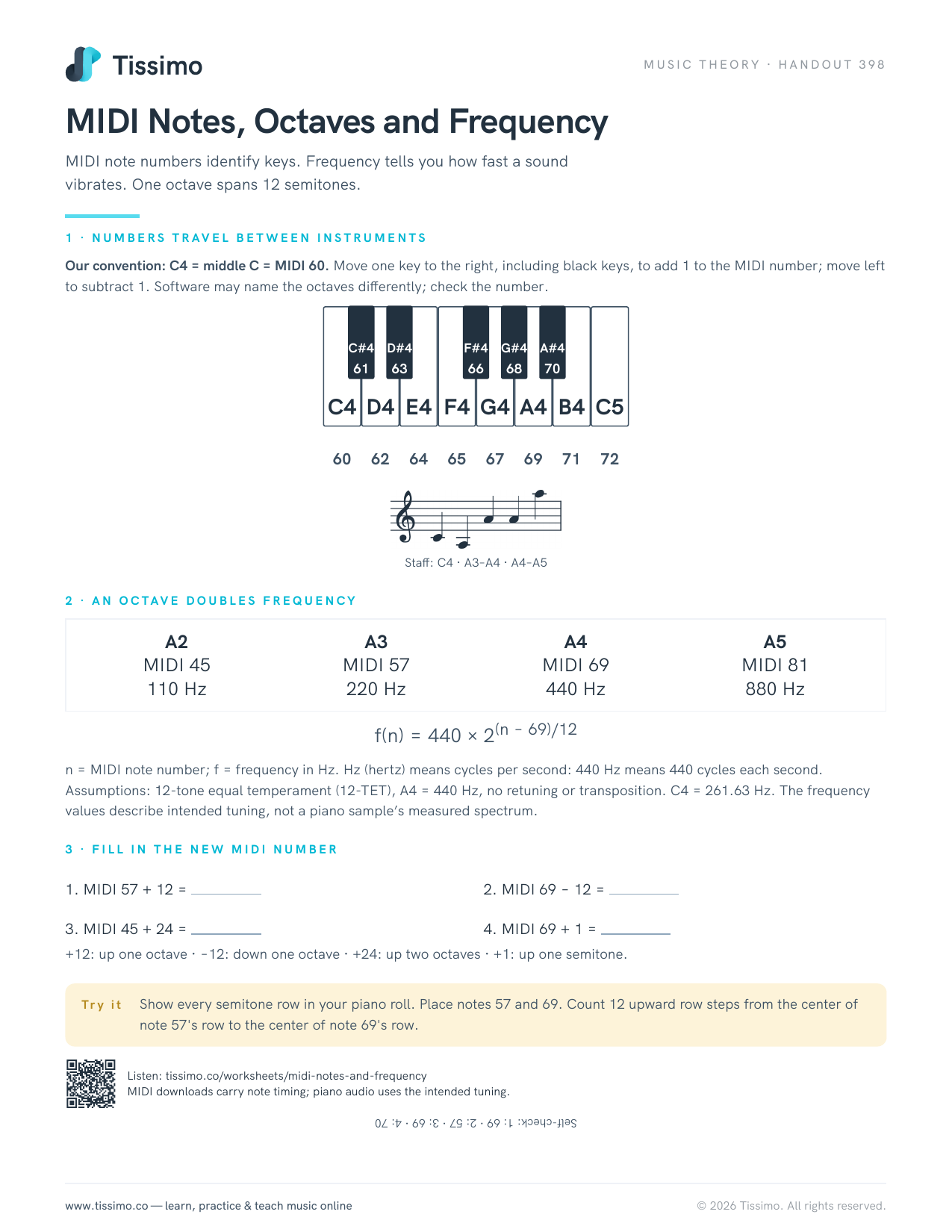 MIDI Notes, Octaves and FrequencyMIDI note numbers identify keys. Frequency tells you how fast a sound vibrates. One octave spans 12 semitones.