Pitch & Intervals
Register
A register is one part of the pitch range of a voice or instrument, such as its low, middle or high notes. Many instruments and voices sound different in each register, like a clarinet's dark low notes.
A register is one part of the range of a voice or instrument: its low, middle or high notes. Musicians say a melody "sits in the upper register" or that a passage "drops into the bass register". The same short figure played in three registers keeps its shape but changes character completely.
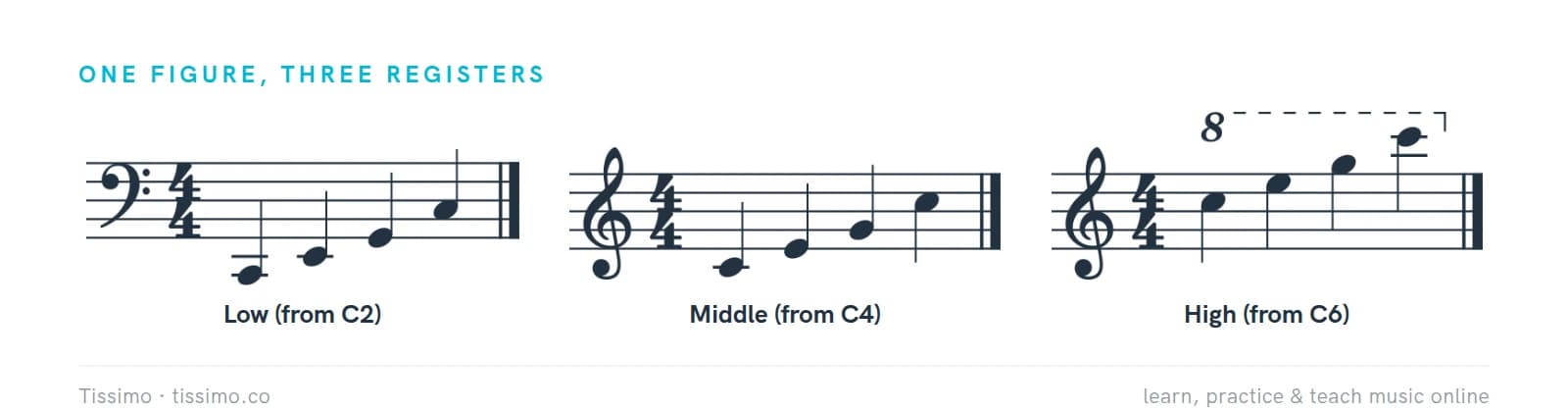
Registers of instruments
On most instruments the timbre changes from one region to the next, and some registers have names:
- The clarinet has a dark, hollow low register called the chalumeau, a brighter clarion register above its "break", and a piercing altissimo register at the top.
- The flute is breathy and soft in its lowest octave and brilliant at the top.
- On the piano, the bass rings long and thick, the middle is warm and clear, and the top is bright, with notes that fade quickly.
Wind players often change register with air speed and embouchure rather than fingers: on a flute, G4 and G5 use the same keys.
Registers of the voice
Singers and voice teachers use register for the different ways the voice produces sound: chest voice (lower and fuller), head voice (higher and lighter) and, for many men, falsetto. The point where one gives way to the next is called a break, or passaggio. Teachers differ in how many registers they count and what they call them.
Register in arranging
Arrangers think in registers all the time. A melody stands out best when no other part crowds its register; the bass line owns the low register; chords voiced too low sound muddy. Repeating a phrase an octave higher is a simple way to build intensity, and octave signs let you write such passages without a ladder of ledger lines.
Registration
On the pipe organ and harpsichord, registration means something related but different: the choice of stops, which sets of pipes or strings sound. See Harpsichord Stops: Predict the Sound.
Explore registers on the flute with Same Keys, Two Gs, and move music between octaves on the page with Octave Signs: 8va & 8vb.
Common questions
What is the difference between register and range?
Range is the whole span from the lowest to the highest note an instrument, voice or piece covers. A register is one part of that range, such as the low register or the high register.
What does upper register mean?
The high part of an instrument's or voice's range. On many instruments it has its own color: brighter on the flute and trumpet, more piercing on the clarinet.
Practice it: free worksheets
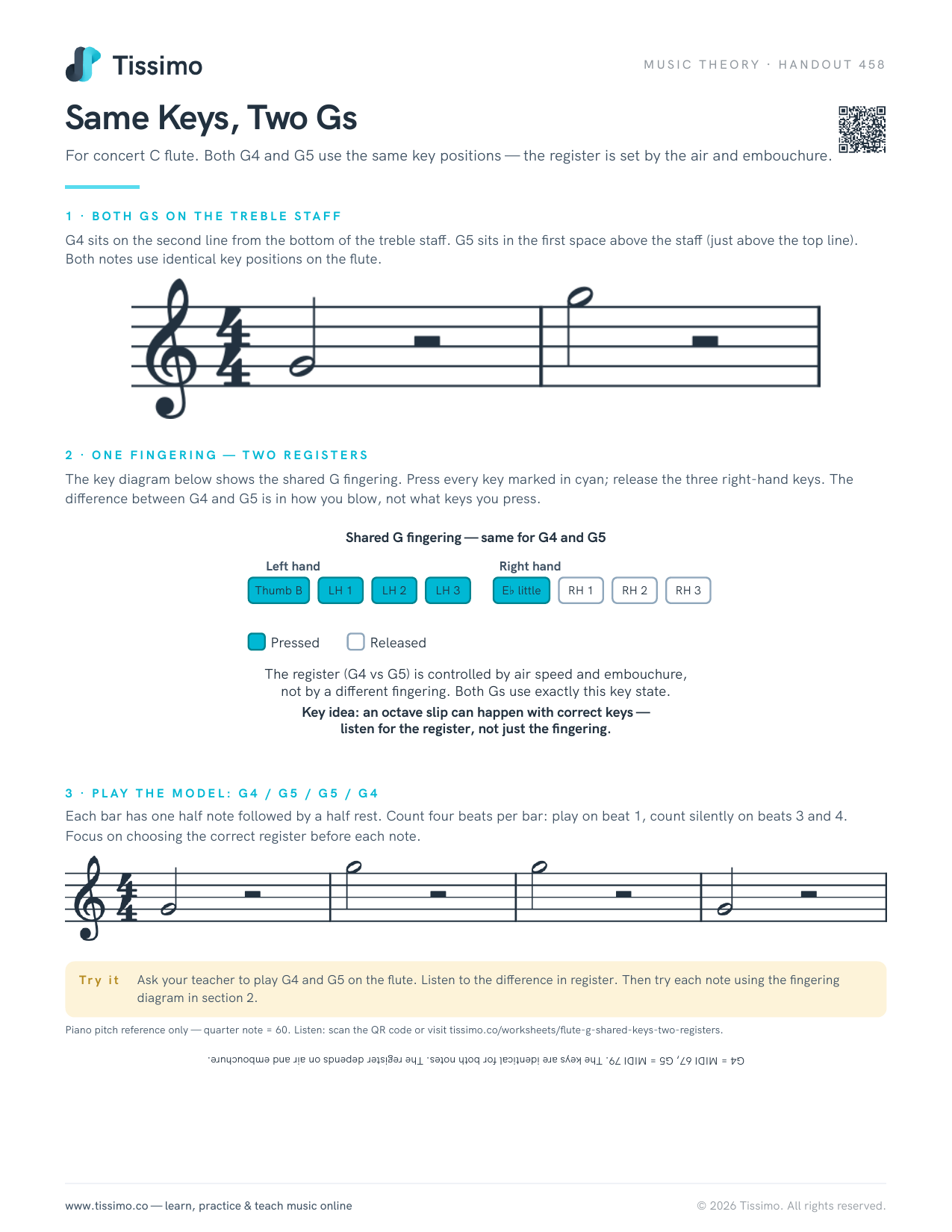 Same Keys, Two GsFor concert C flute. Both G4 and G5 use the same key positions — the register is set by the air and embouchure.
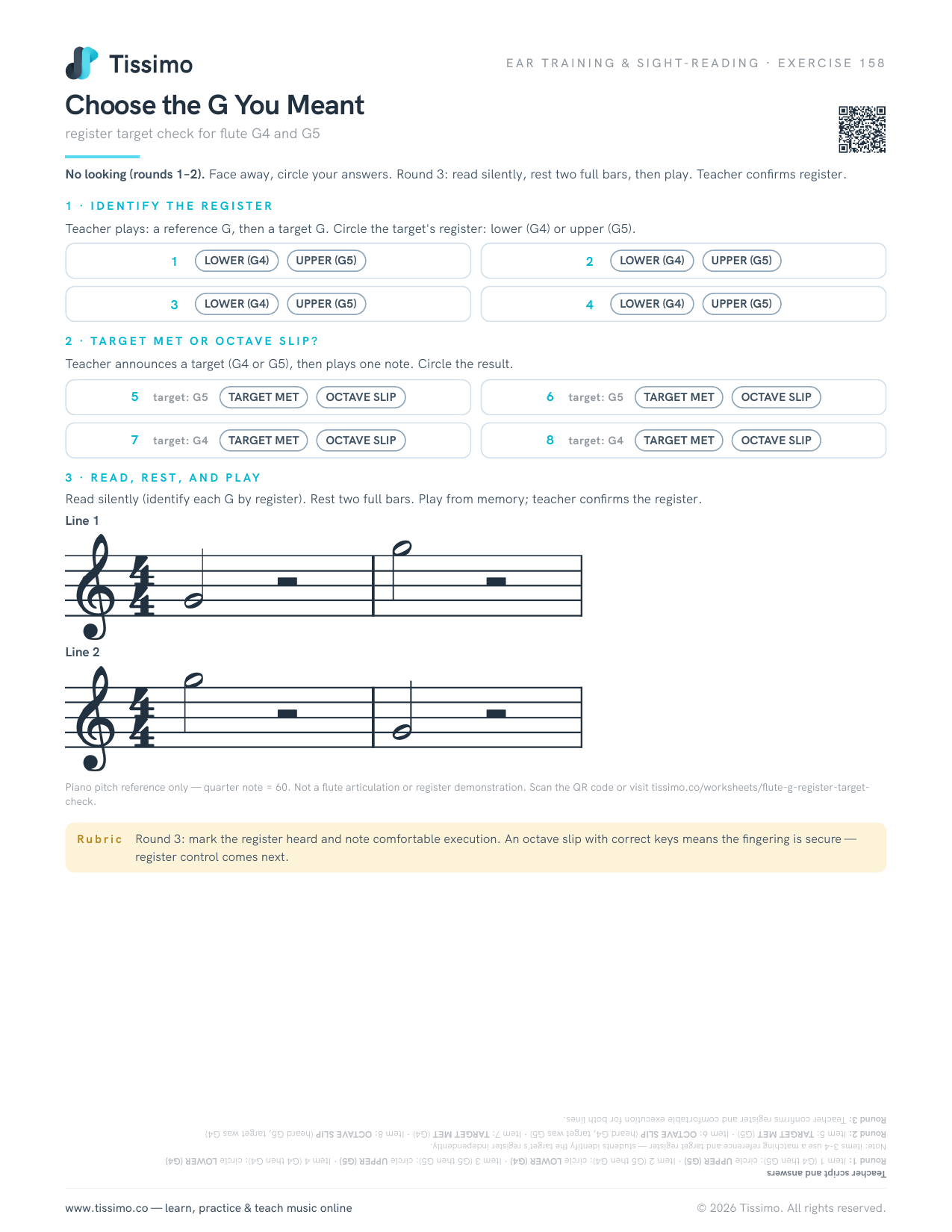 Choose the G You Meantregister target check for flute G4 and G5
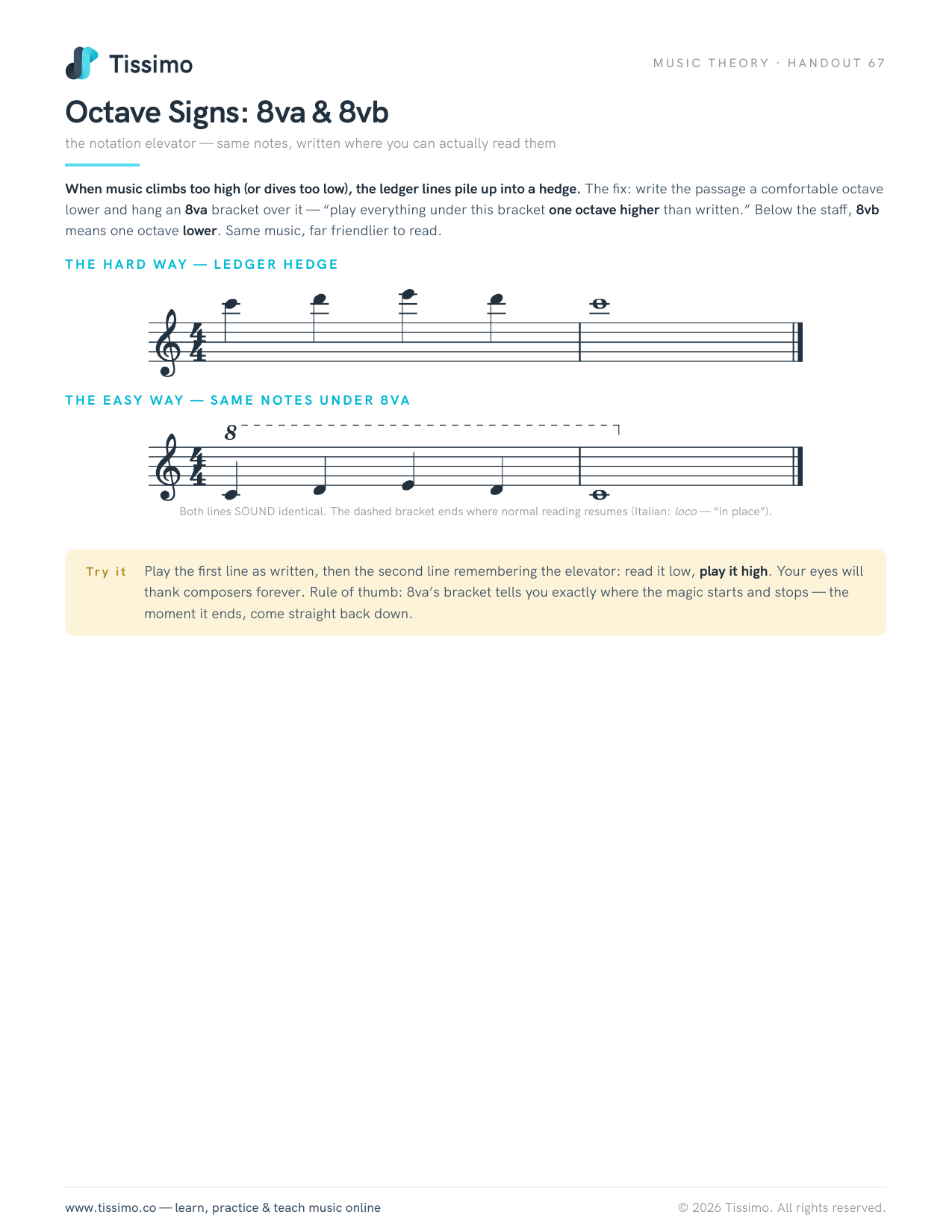 Octave Signs: 8va & 8vbthe notation elevator — same notes, written where you can actually read them
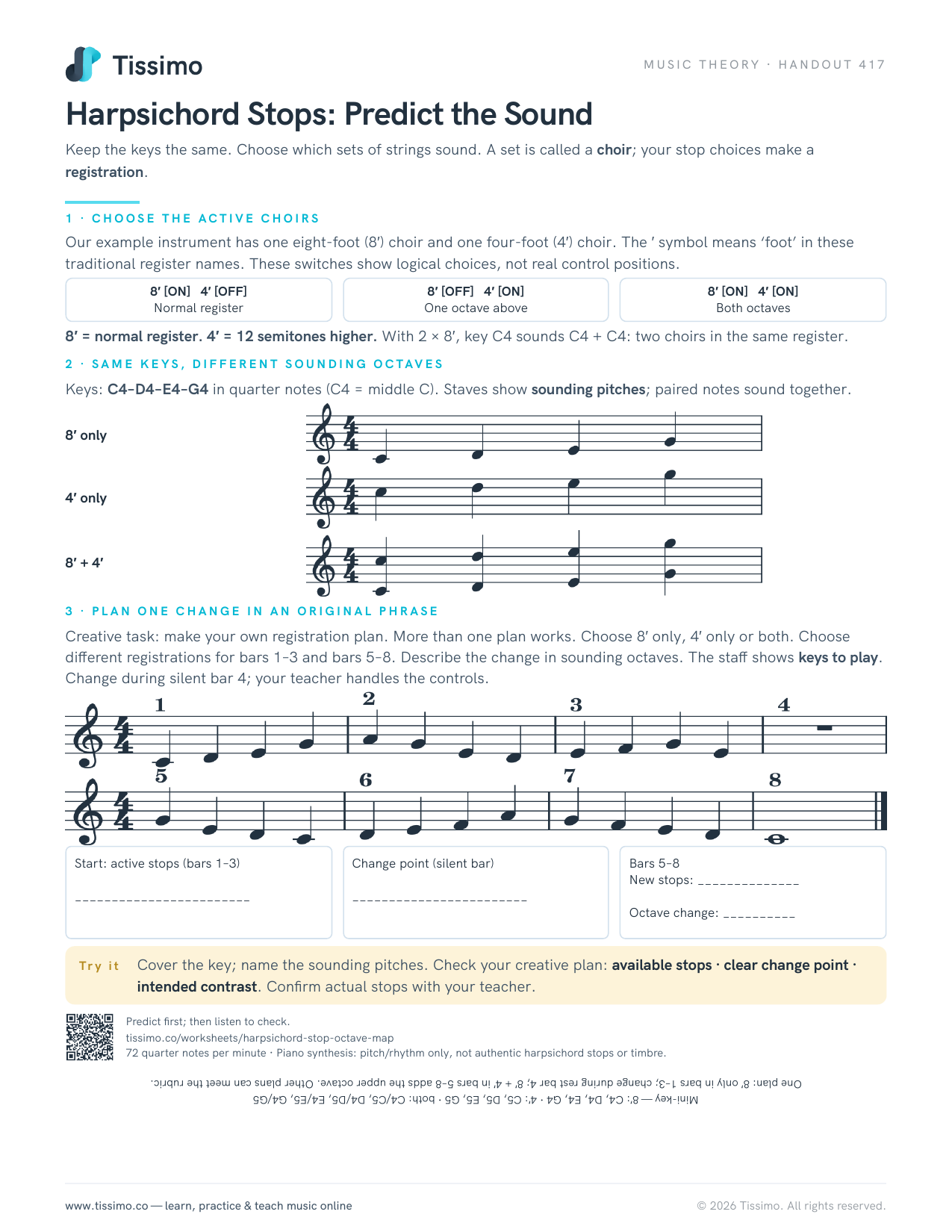 Harpsichord Stops: Predict the SoundKeep the keys the same. Choose which sets of strings sound. A set is called a choir; your stop choices make a registration.
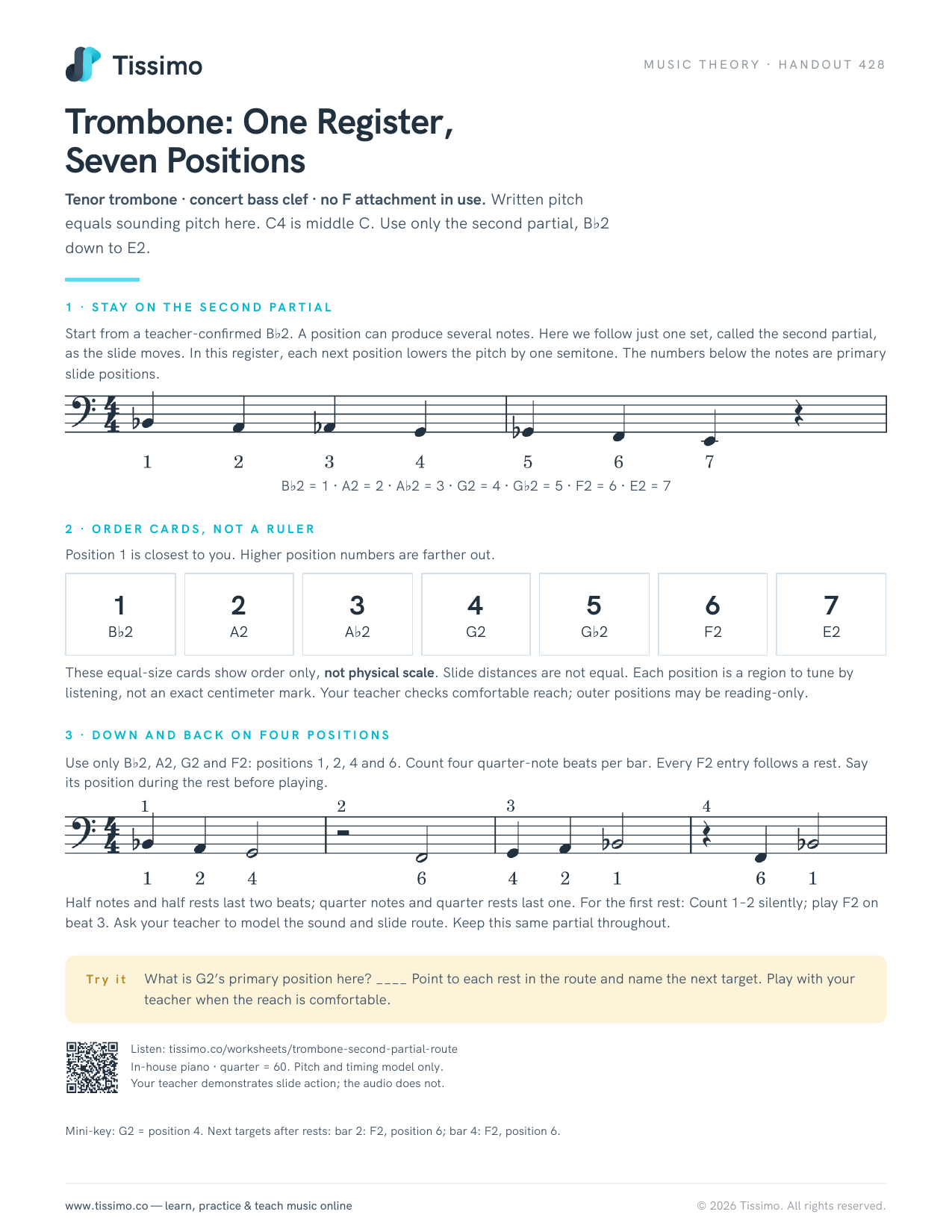 Trombone: One Register, Seven PositionsTenor trombone · concert bass clef · no F attachment in use. Written pitch equals sounding pitch here. C4 is middle C. Use only the second partial, B♭2 down to E2.