Pitch & Intervals
Scientific Pitch Notation
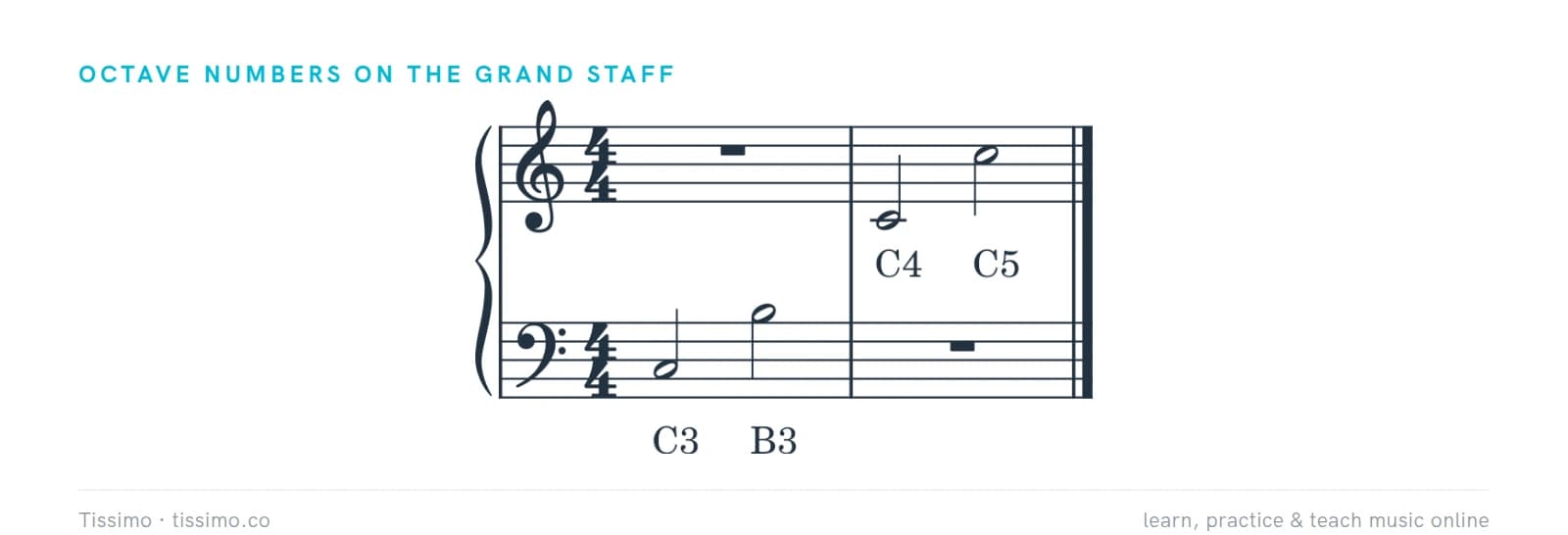
Scientific pitch notation names a pitch with its letter and an octave number, such as C4 for middle C or A4 for the A at 440 Hz. The octave number goes up by one at every C.
Scientific pitch notation adds a number to a note's letter name to show which octave it is in. Middle C is C4, the A above it is A4 (the tuning A, 440 Hz), and the C an octave higher is C5. It is also called American standard pitch notation.
How the numbers work
- Each octave number starts on C and runs up through B. So B3 is the B just below middle C, and the very next key up is C4.
- The number follows the letter, not the key you press. C♯4 is just above C4, and C♭4 is the same key as B3.
- A standard 88-key piano runs from A0 to C8; its lowest C is C1.
Why it helps
Letter names repeat every octave, so "play an E" is ambiguous. With numbers you can say exactly which E: E2 (the lowest string of a guitar), E4 (the bottom line of the treble staff) or E5 (its top space). Octave numbers make it easy to talk about range and register and to connect notes to frequency. In standard tuning, A4 = 440 Hz, A3 = 220 Hz and A5 = 880 Hz: the frequency doubles with each octave number.
Some landmarks:
- C4, middle C: about 261.6 Hz, on the ledger line between the treble and bass staves
- A4: 440 Hz, the orchestra's tuning note
- E2: the lowest open string of a guitar in standard tuning
- C2: two ledger lines below the bass staff
Other systems
- Helmholtz notation uses capital and lowercase letters with tick marks: middle C is c′ ("one-line c"), the C below it is c, and the C below that is C.
- MIDI note numbers count every key: middle C is 60 and A4 is 69. Some keyboards and recording programs label MIDI note 60 "C3" instead of C4, so check the convention before you trust a number.
See how octave numbers, MIDI notes and hertz line up in MIDI Notes, Octaves and Frequency, and practice notes far from the staff with Name the notes: ledger lines.
Common questions
Is middle C C3 or C4?
In scientific pitch notation, middle C is C4. Some keyboard makers and music programs label the same key C3 (a few use C5), so the number depends on the software. The pitch itself does not change: about 261.6 Hz when A4 is 440 Hz.
Why does the octave number change at C and not at A?
It is a convention: each numbered octave runs from C up to B, in line with C major's role as the reference scale of Western notation. That is why the A at 440 Hz is A4 even though it lies above middle C.
Practice it: free worksheets
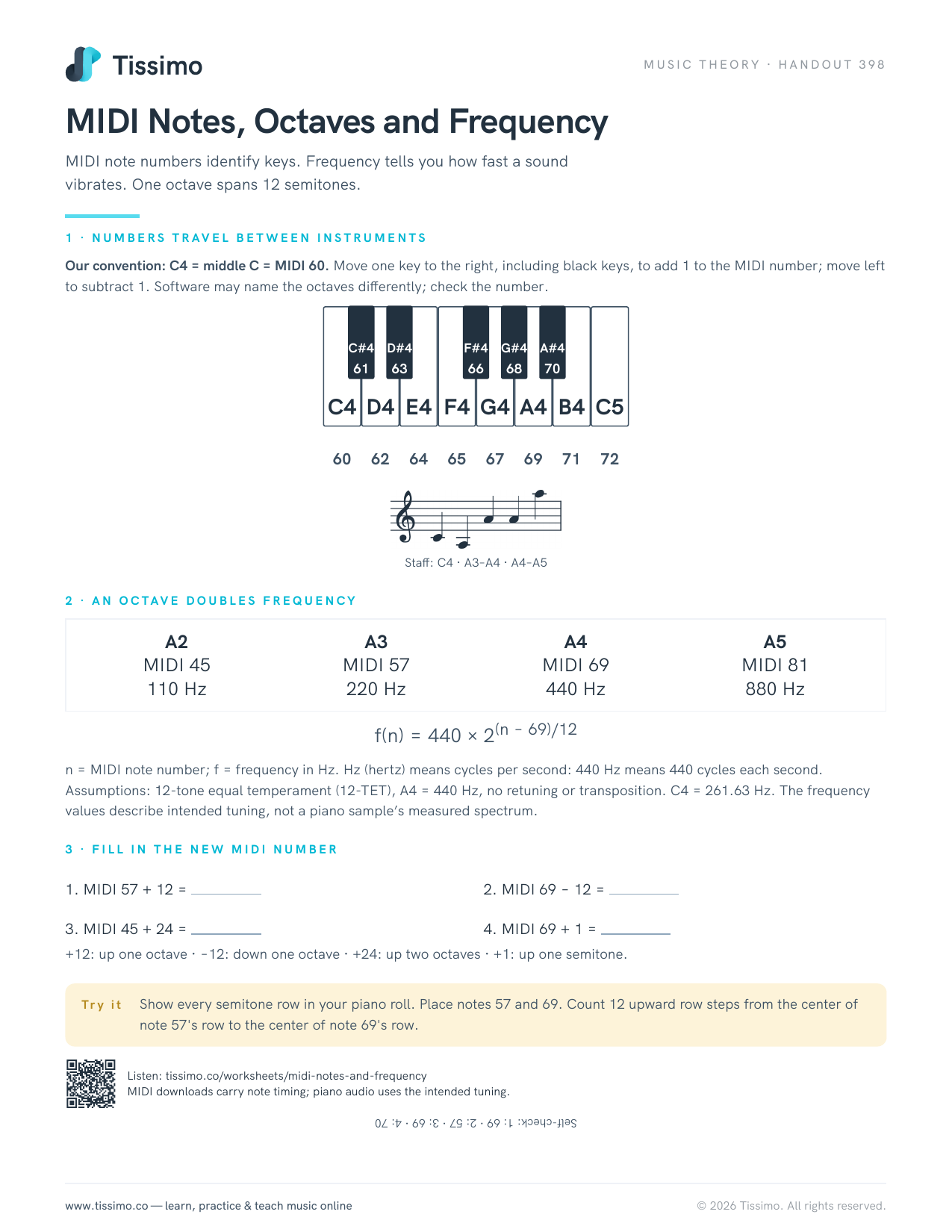 MIDI Notes, Octaves and FrequencyMIDI note numbers identify keys. Frequency tells you how fast a sound vibrates. One octave spans 12 semitones.
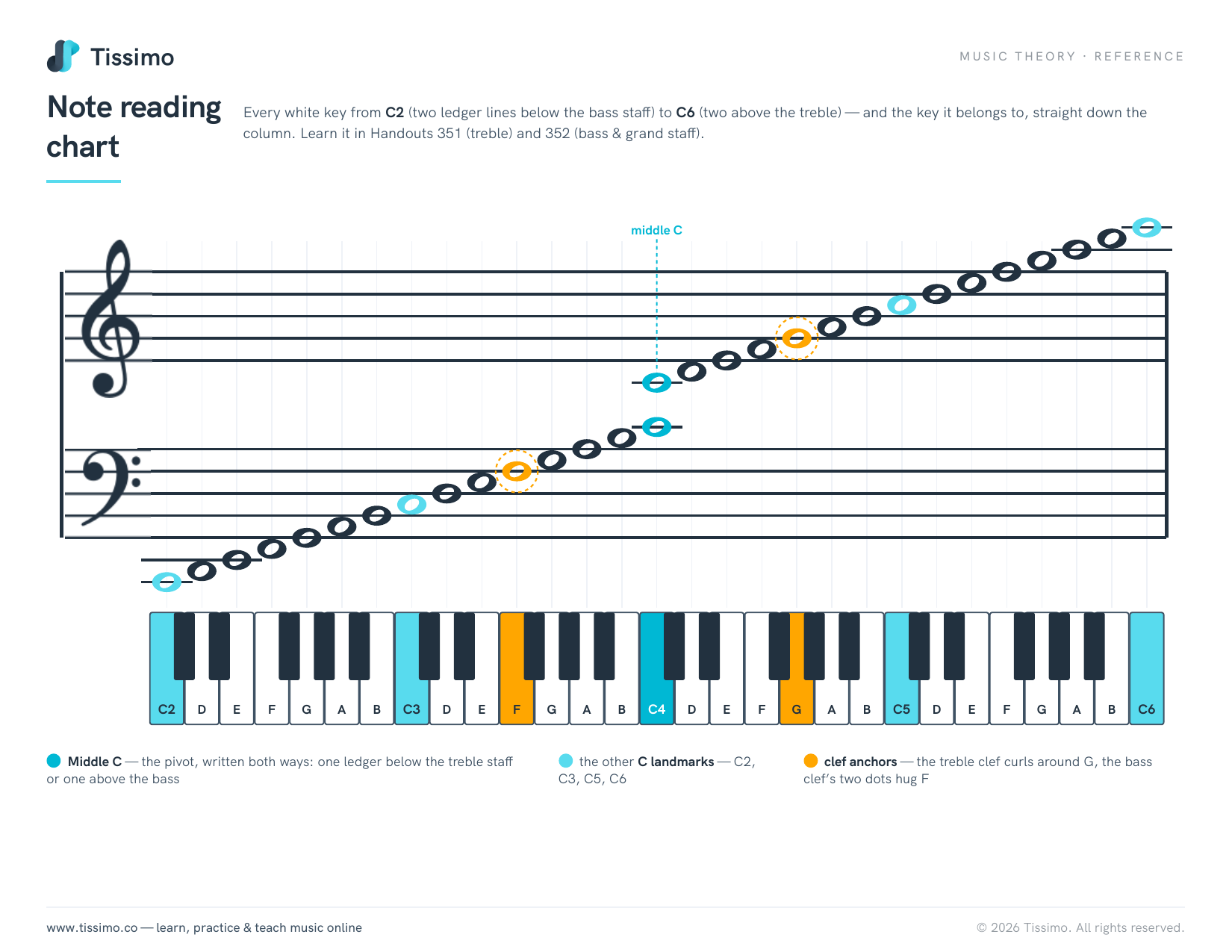 Note reading chartEvery white key from C2 (two ledger lines below the bass staff) to C6 (two above the treble) — and the key it belongs to, straight down the column. Learn it in Handouts 351 (treble) and 352 (bass & grand staff).
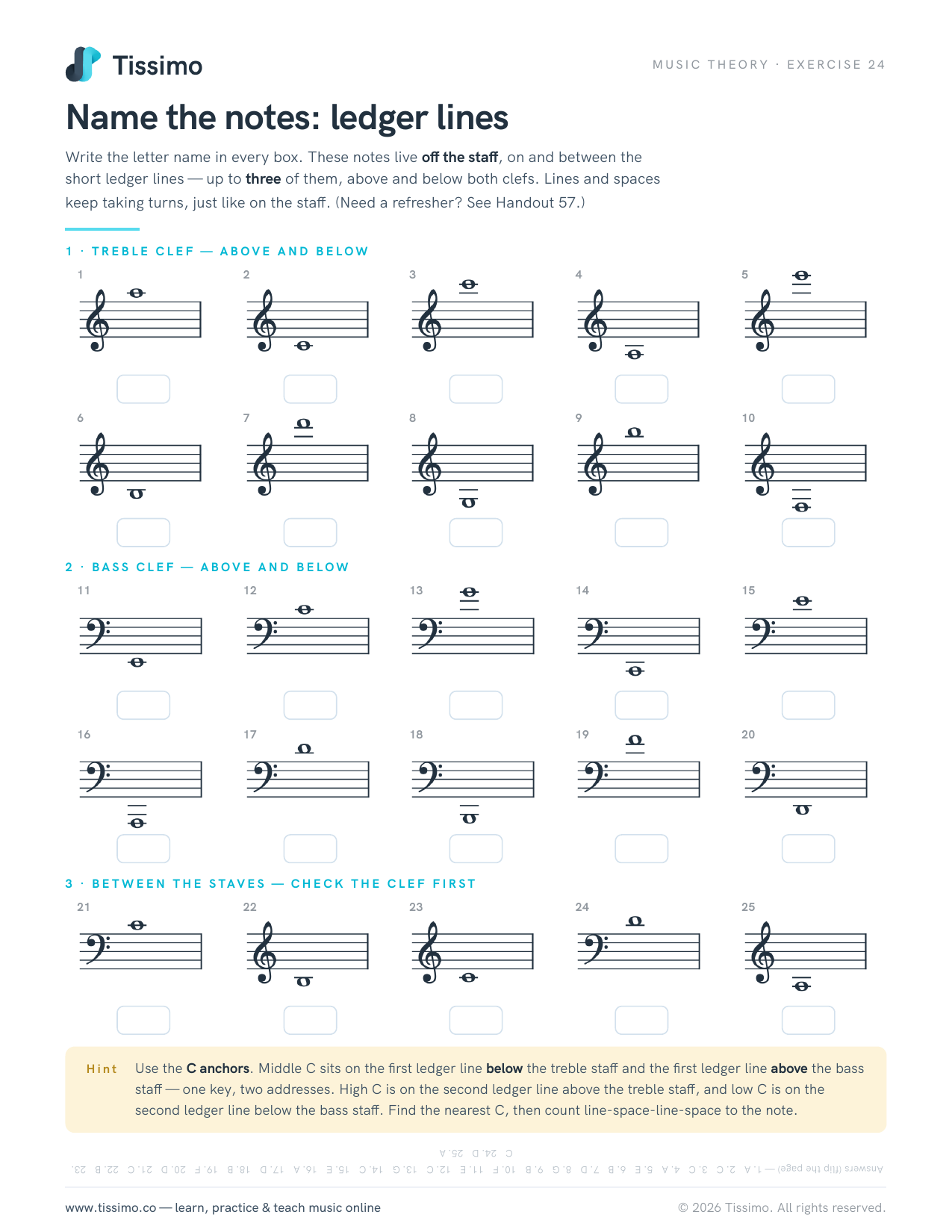 Name the notes: ledger linesWrite the letter name in every box. These notes live off the staff, on and between the short ledger lines — up to three of them, above and below both clefs. Lines and spaces keep taking turns, just like on the staff. (Need a refresher? See Handout 57.)
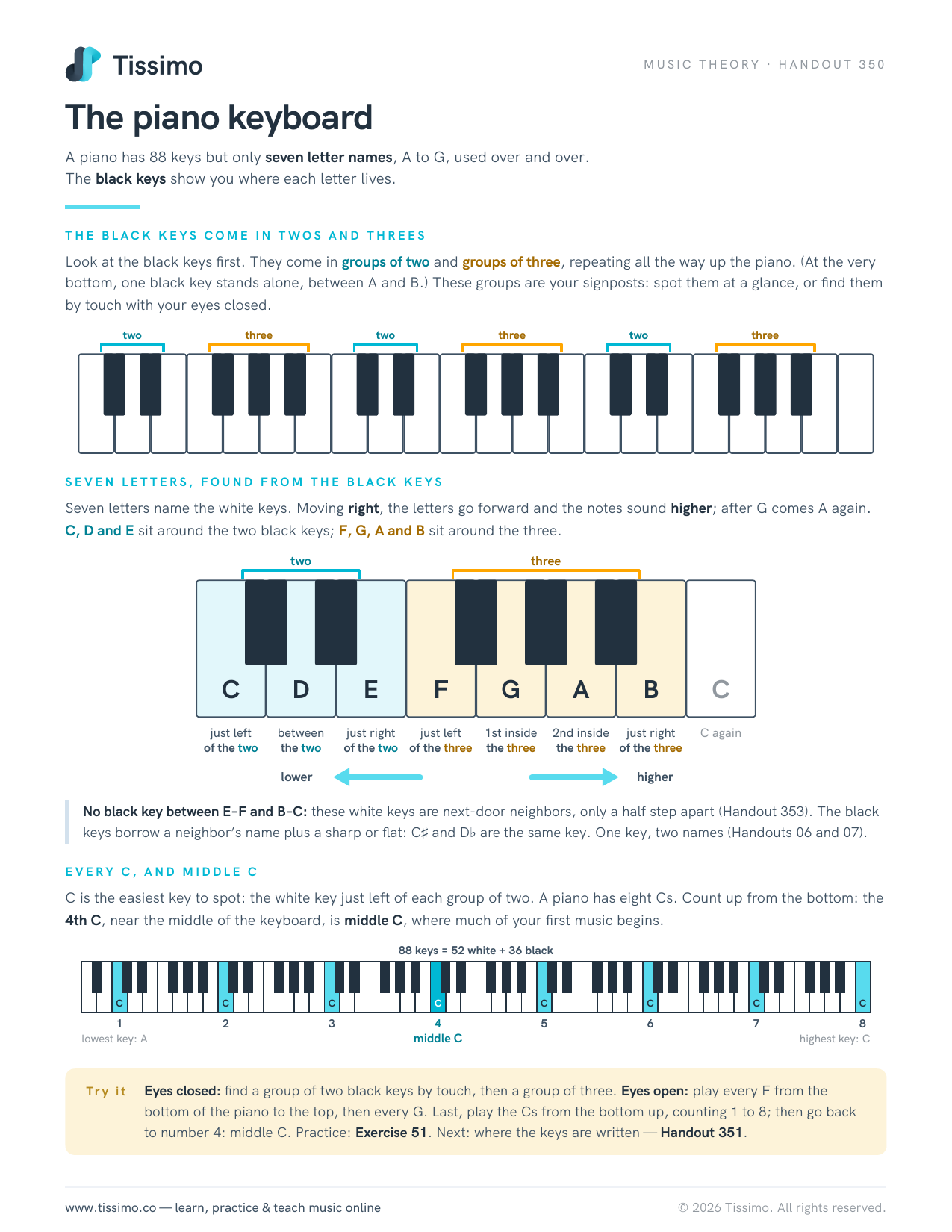 The piano keyboardA piano has 88 keys but only seven letter names, A to G, used over and over. The black keys show you where each letter lives.
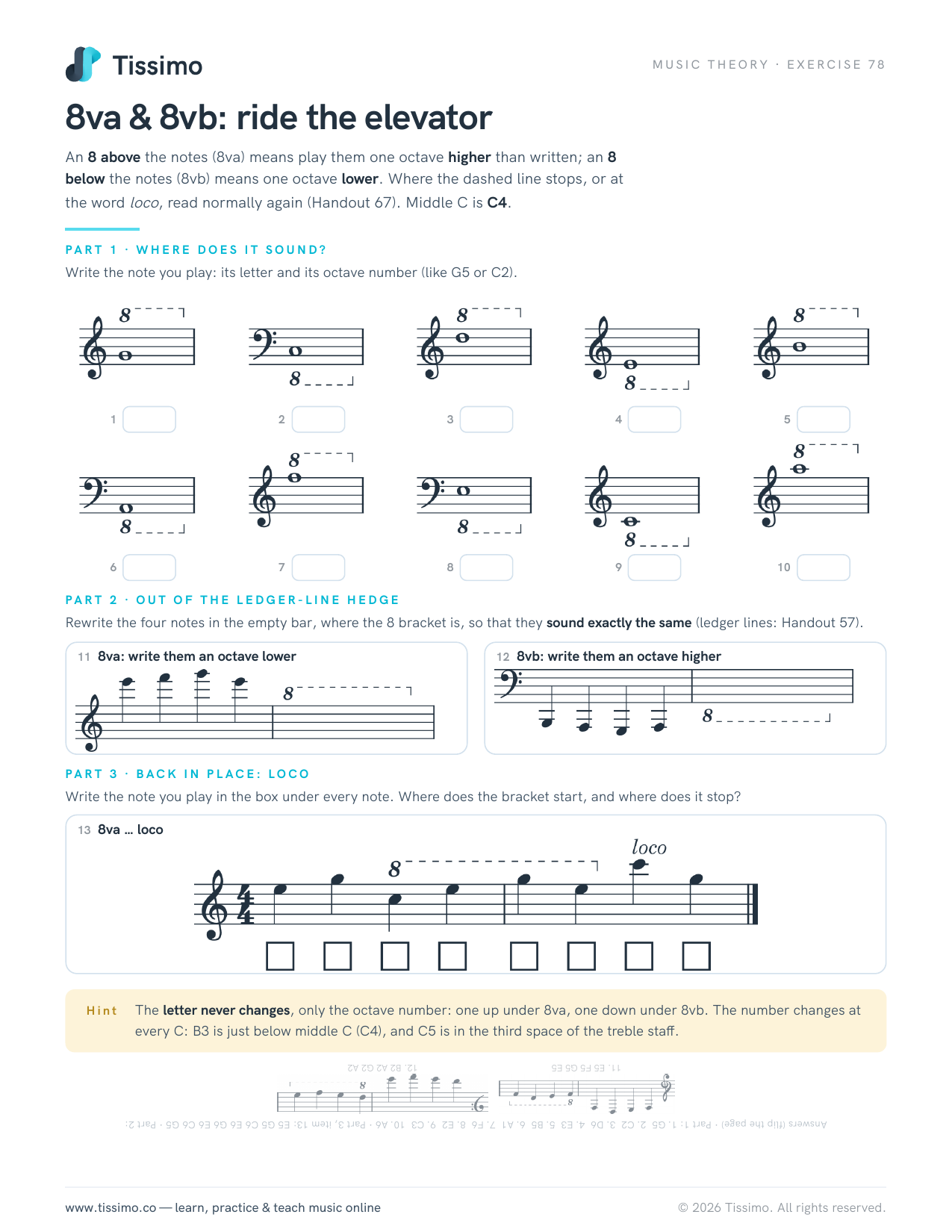 8va & 8vb: ride the elevatorAn 8 above the notes (8va) means play them one octave higher than written; an 8 below the notes (8vb) means one octave lower. Where the dashed line stops, or at the word loco, read normally again (Handout 67). Middle C is C4.