Pitch & Intervals
Range
Range is the span of pitches from the lowest to the highest note that a voice or instrument can produce, or that a piece of music uses. A standard piano's range is A0 to C8, 88 keys.
Range is the distance from the lowest note to the highest. The word describes three things:
- an instrument: everything it can play (a standard piano reaches from A0 to C8, 88 keys);
- a voice: everything a singer can sing, or, more usefully, everything they can sing well;
- a piece or melody: the notes it actually uses, sometimes called its ambitus.
The range of a melody
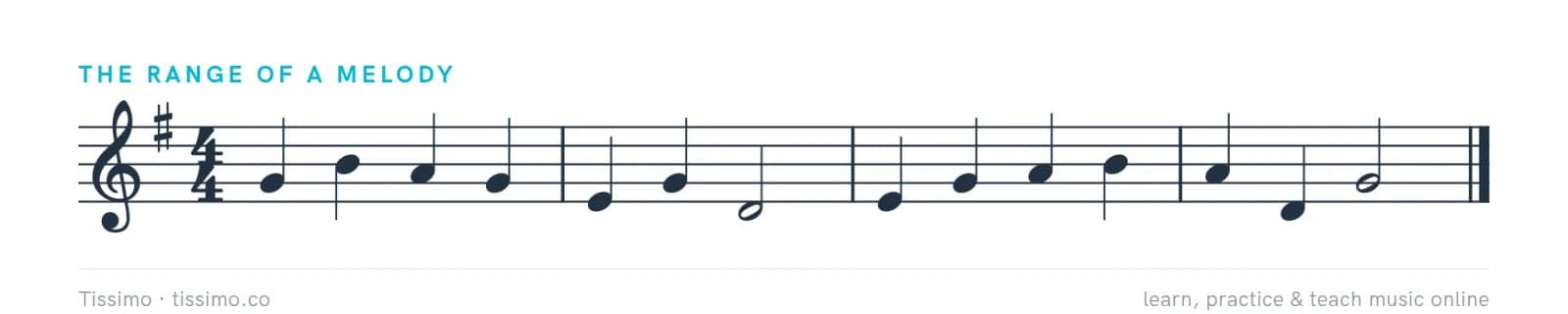
To find a melody's range, look for its lowest and highest notes and name the interval between them. The melody below runs from D4 up to B4, a range of a major sixth. A sixth is a modest span, but D4–B4 is not comfortable for every voice. A singer may need the melody transposed to a different starting pitch; both the span and its position in the voice matter.
Instrument ranges
Every instrument has a lowest possible note, usually fixed by how it is built, and a highest note that depends more on the player. Some lowest notes, in scientific pitch notation:
- Violin: G3, its lowest open string
- Cello: C2
- Guitar: E2 in standard tuning (written an octave higher than it sounds)
- Flute: C4 (B3 with a B foot joint)
- Piano: A0
The top of the range is less fixed. Advanced players reach higher notes than beginners, and composers usually write well inside the extremes.
Voice ranges
Choral writing often uses these approximate ranges as a guide:
Real voices vary a great deal, and trained soloists often go well beyond these. For singing comfort, where the notes cluster matters as much as the extremes: that is the tessitura.
Range, register and tessitura
- Range: the whole span, lowest to highest.
- Register: one part of that span (low, middle or high), often with its own color.
- Tessitura: where most of the notes of a part lie.
Before choosing a song, check its range against your own, then its tessitura. Find a comfortable starting pitch with My Comfortable Warmup, and see the whole piano range in The piano keyboard.
Common questions
What is the range of a piano?
A standard modern piano has 88 keys, from A0 (27.5 Hz) to C8 (about 4,186 Hz): just over seven octaves.
How do I find my vocal range?
Start on a comfortable note, then sing step by step down to the lowest note you can produce clearly, and up to the highest, without straining. Find both notes on a piano or a tuner. Your useful range is usually a little narrower than your extreme notes, and a voice teacher can help you find it safely.
Practice it: free worksheets
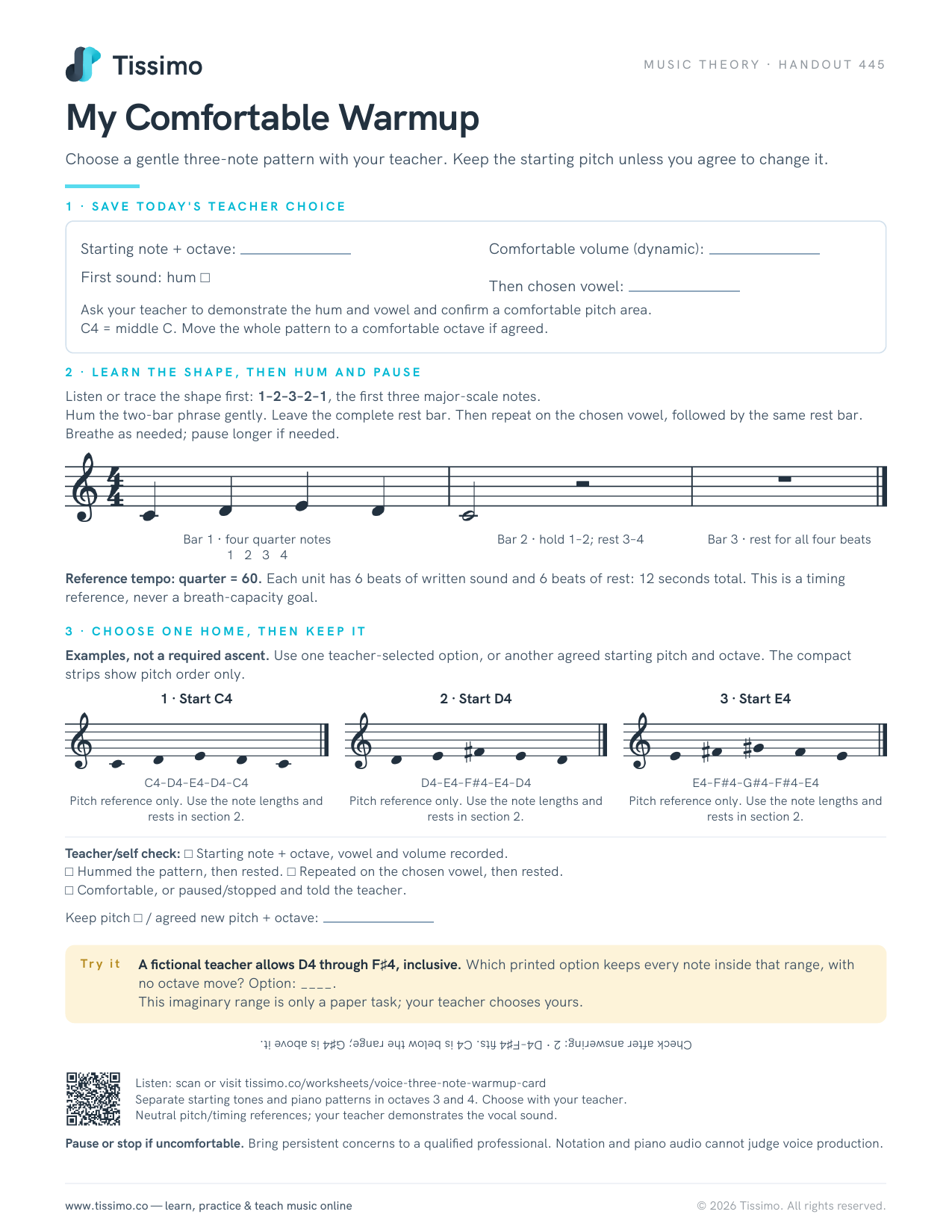 My Comfortable WarmupChoose a gentle three-note pattern with your teacher. Keep the starting pitch unless you agree to change it.
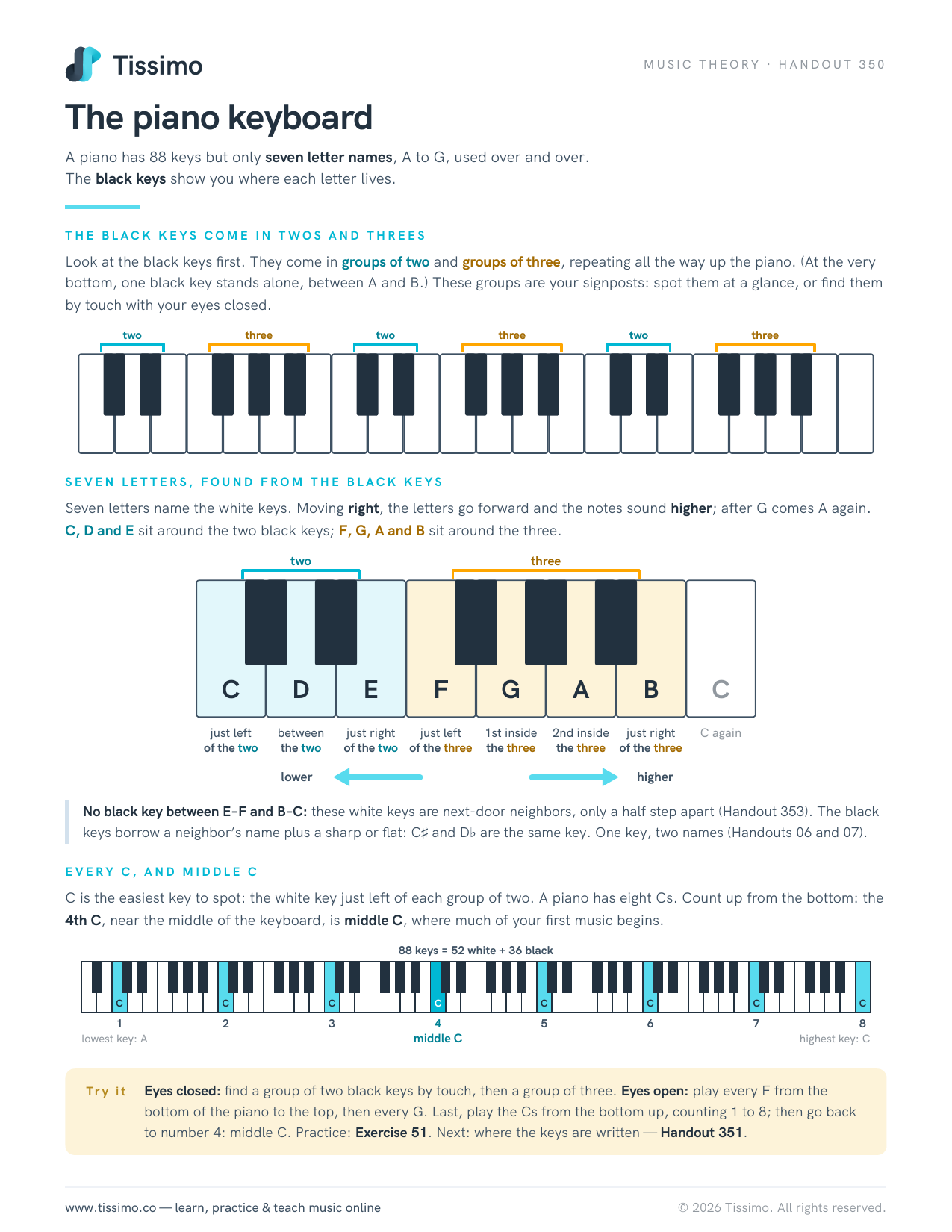 The piano keyboardA piano has 88 keys but only seven letter names, A to G, used over and over. The black keys show you where each letter lives.
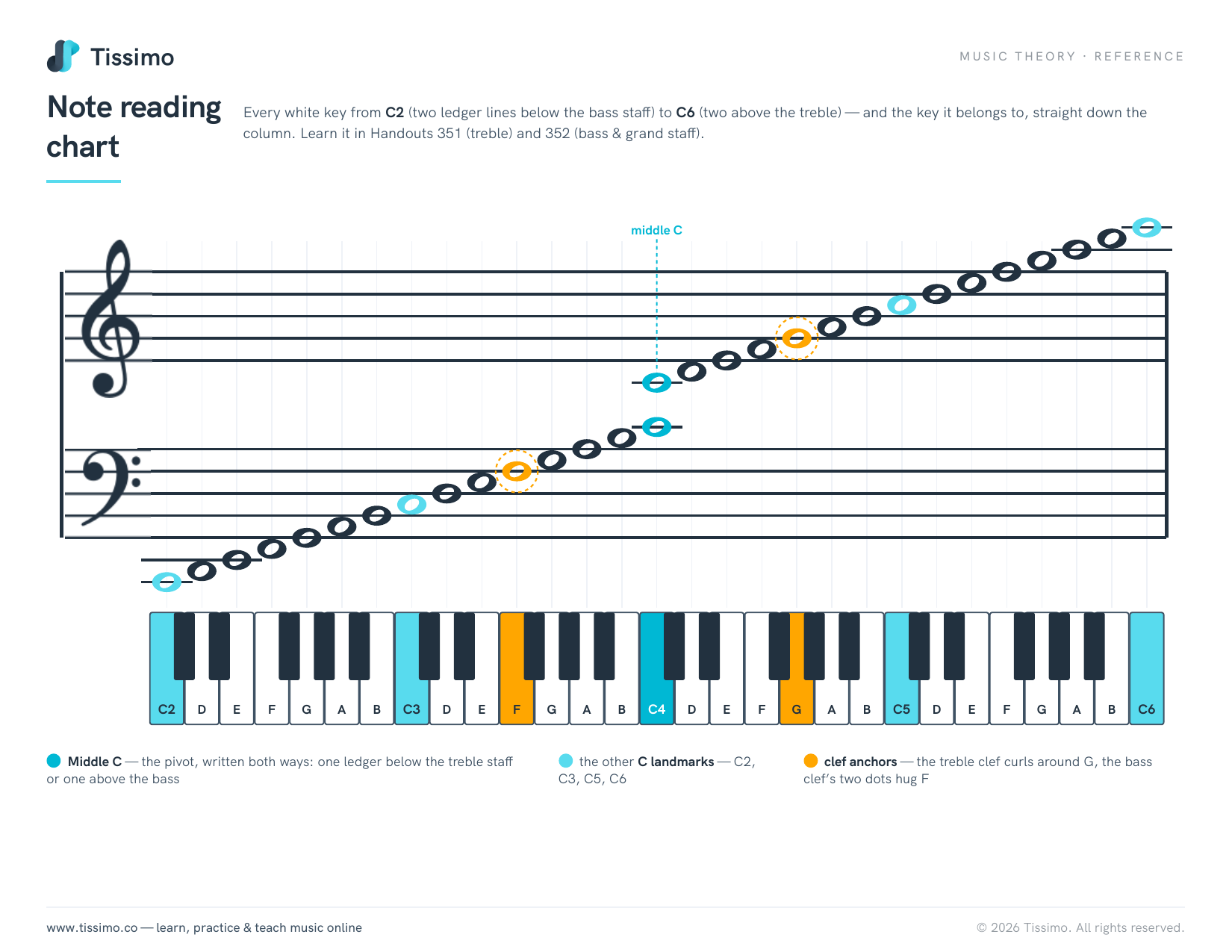 Note reading chartEvery white key from C2 (two ledger lines below the bass staff) to C6 (two above the treble) — and the key it belongs to, straight down the column. Learn it in Handouts 351 (treble) and 352 (bass & grand staff).