Pitch & Intervals
Tessitura
Pronounced tess-ih-TOO-rah
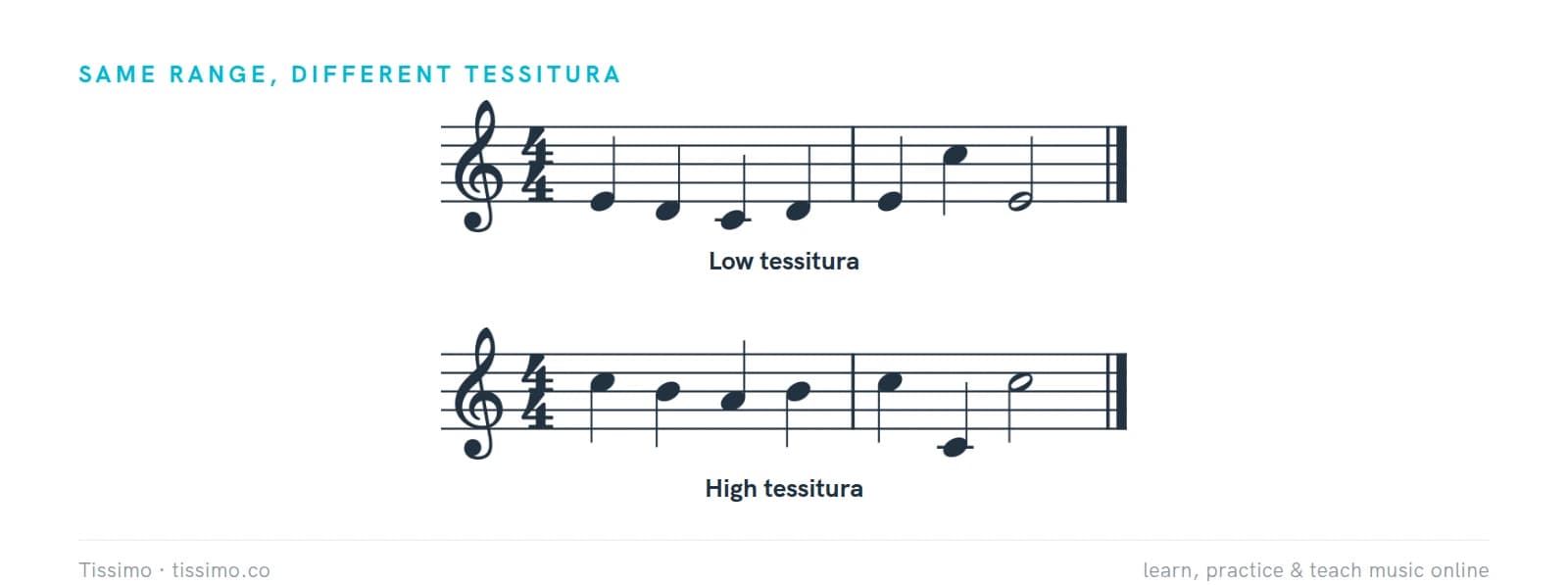
Tessitura is the part of a range where most of the notes of a passage lie, or where a singer sounds and feels most comfortable. Two songs with the same range can have very different tessituras.
Tessitura describes where the notes of a part spend most of their time. The range tells you the extremes, the lowest and highest notes; the tessitura tells you the neighborhood the melody lives in. A song can touch a high note once and otherwise sit low (a low tessitura), or hover near the top of its range for a whole page (a high tessitura).
Why tessitura matters more than range
For singers, one high note is rarely the problem. A long stretch of notes near the top of the voice is what tires it. That is why two songs with exactly the same range can feel completely different to sing: the one with the higher tessitura is harder work, even though it reaches no higher.
Singers also use the word for their own voices. A singer's comfortable tessitura is the zone where the voice sounds best and can stay longest without strain. It is narrower than their full range, and it is one of the main things a teacher weighs when deciding whether someone is a soprano or a mezzo-soprano, a tenor or a baritone.
Using tessitura
- When you choose a song, check where most of its notes lie, not only its highest note.
- If the tessitura is uncomfortable, transpose the song. Moving it down a whole step or two often solves the problem.
- Composers and arrangers watch the tessitura of every part. An alto line that sits very low for a long time will sound weak; a trumpet part that stays high will tire the player.
Instrumentalists use the word too, especially brass and wind players, for whom a high tessitura is physically demanding.
Work out a comfortable starting pitch with your teacher using My Comfortable Warmup.
Common questions
What is the difference between range and tessitura?
Range is the span from the lowest to the highest note. Tessitura is where most of the notes lie. A song with a modest range can still be tiring if its tessitura is high.
How do you pronounce tessitura?
tess-ih-TOO-rah. It is Italian for "texture".