Scales, Keys & Modes
Tetrachord
Pronounced TET-ruh-kord
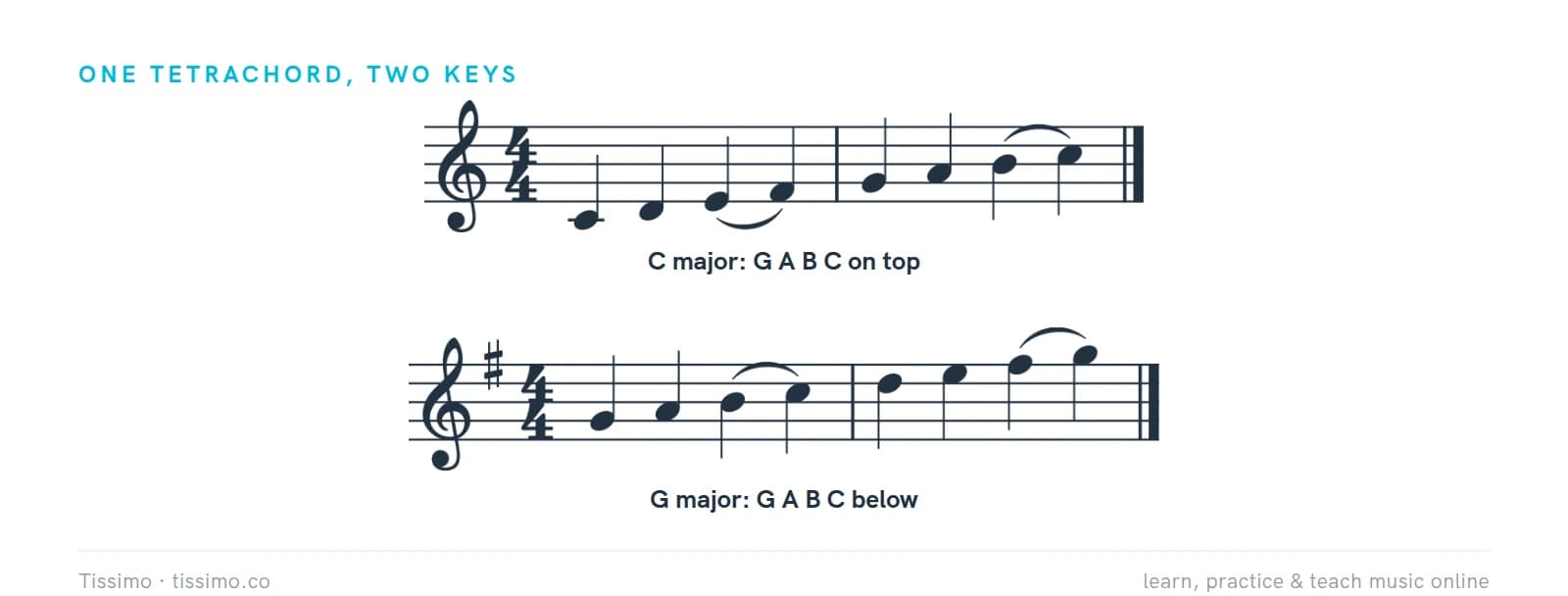
A tetrachord is a group of four notes spanning a perfect fourth. A major scale is made of two identical tetrachords, whole–whole–half, joined by a whole step, such as C D E F and G A B C.
A tetrachord is a four-note segment of a scale whose outer notes are a perfect fourth apart. The name comes from the Greek tetra, four, and chordē, string. Ancient Greek theorists described their scales in tetrachords, four notes spanning a fourth, and classified them by where the two inner notes fell.
The major scale as two tetrachords
The major scale splits neatly into two identical tetrachords, each with the step pattern whole, whole, half, joined in the middle by a whole step:
- Lower tetrachord: C D E F (W–W–H)
- The joining step: F to G (W)
- Upper tetrachord: G A B C (W–W–H)

That gives you a quick way to build and check any major scale: two W–W–H groups, a whole step apart. In D, for example: D E F♯ G, then A B C♯ D.
Tetrachords and the circle of fifths
The upper tetrachord of one major scale is the lower tetrachord of the key a fifth higher. G A B C ends C major and begins G major; G major then needs a new upper tetrachord, D E F♯ G, which in turn begins D major. Each step adds one sharp, exactly as the circle of fifths does. Going the other way, the lower tetrachord of C major, C D E F, is the upper tetrachord of F major, which then needs a B♭ in its new lower half.
Minor scales and other shapes
Other scales combine other tetrachord shapes. The natural minor scale joins W–H–W (A B C D) to H–W–W (E F G A). The harmonic minor scale keeps the same lower tetrachord but has an upper one of half step, augmented second, half step (E F G♯ A), which gives it its distinctive sound. Modes can be described the same way: Dorian is two W–H–W tetrachords, D E F G and A B C D.
Why it helps
Thinking in tetrachords cuts a seven-note scale into two four-note chunks that are easy to remember and that fit naturally under four fingers. One way beginners play their first major scales is to split them between the hands: the left hand takes the lower tetrachord, the right hand the upper one.
Common questions
What is a tetrachord in music?
A group of four notes spanning a perfect fourth, such as C D E F. Scales can be built from two tetrachords; the major scale uses two with the pattern whole, whole, half.
How do you build a major scale from tetrachords?
Write a whole–whole–half tetrachord on the tonic, go up a whole step, and write a second whole–whole–half tetrachord. In D: D E F♯ G, then A B C♯ D.
Practice it: free worksheets
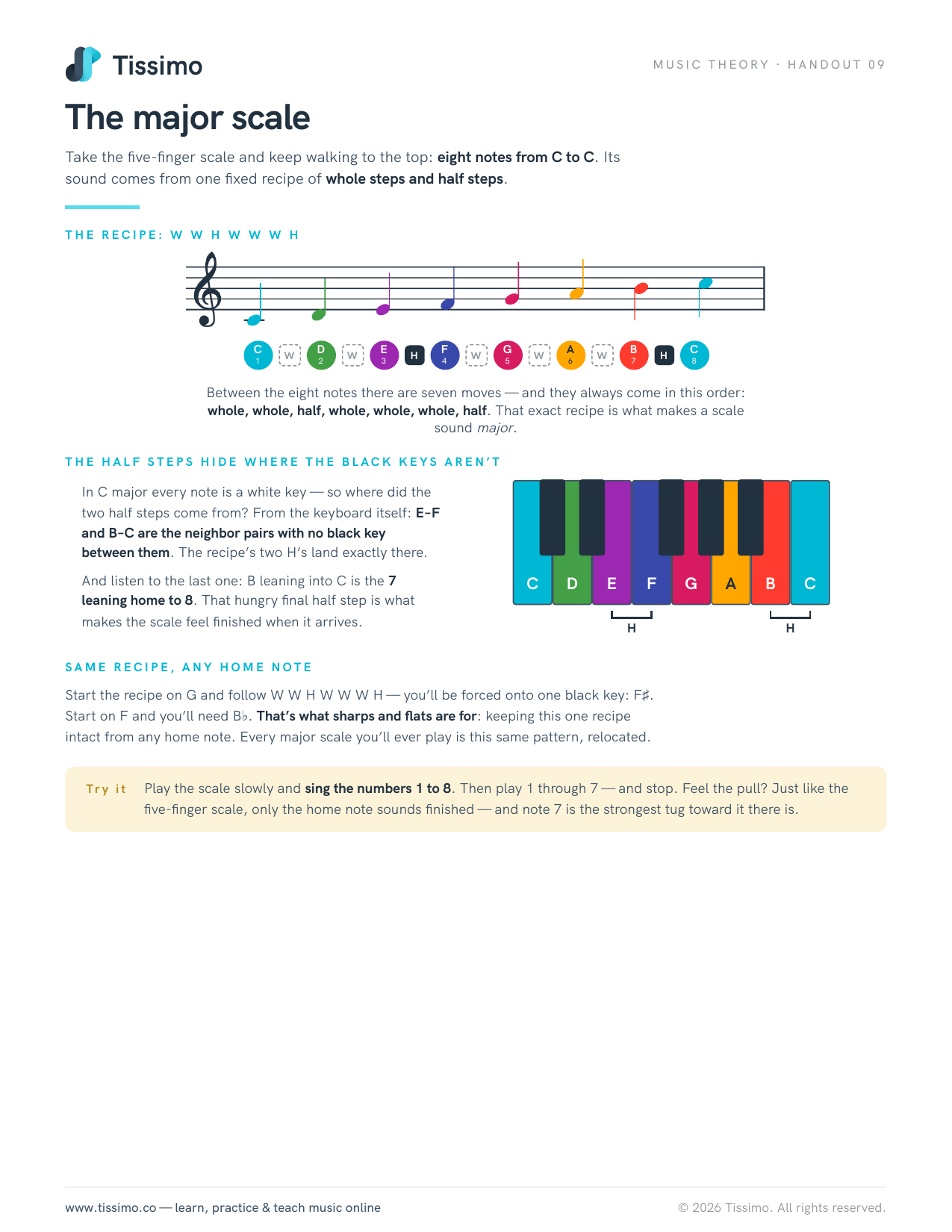 The major scaleTake the five-finger scale and keep walking to the top: eight notes from C to C. Its sound comes from one fixed recipe of whole steps and half steps.
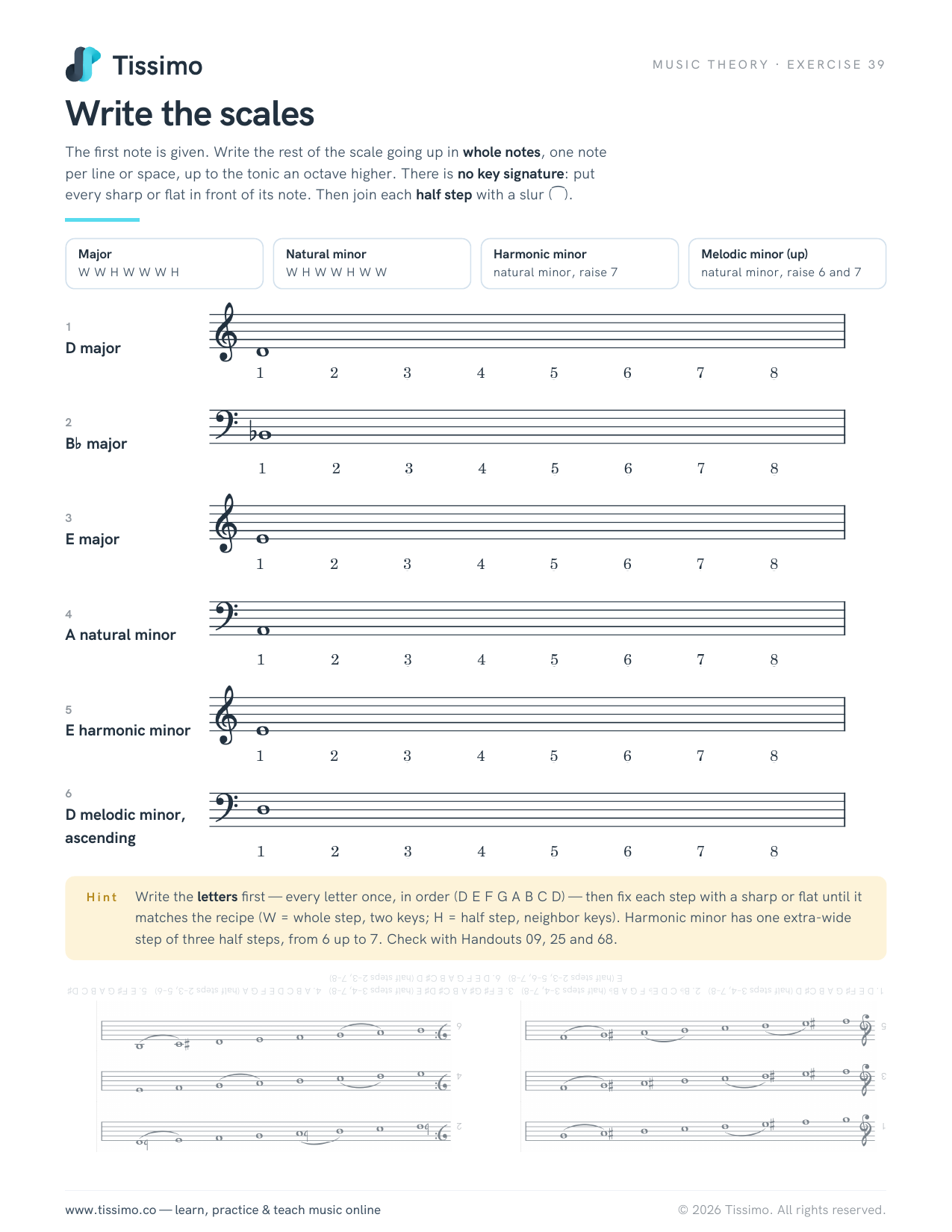 Write the scalesThe first note is given. Write the rest of the scale going up in whole notes, one note per line or space, up to the tonic an octave higher. There is no key signature: put every sharp or flat in front of its note. Then join each half step with a slur (⁀).
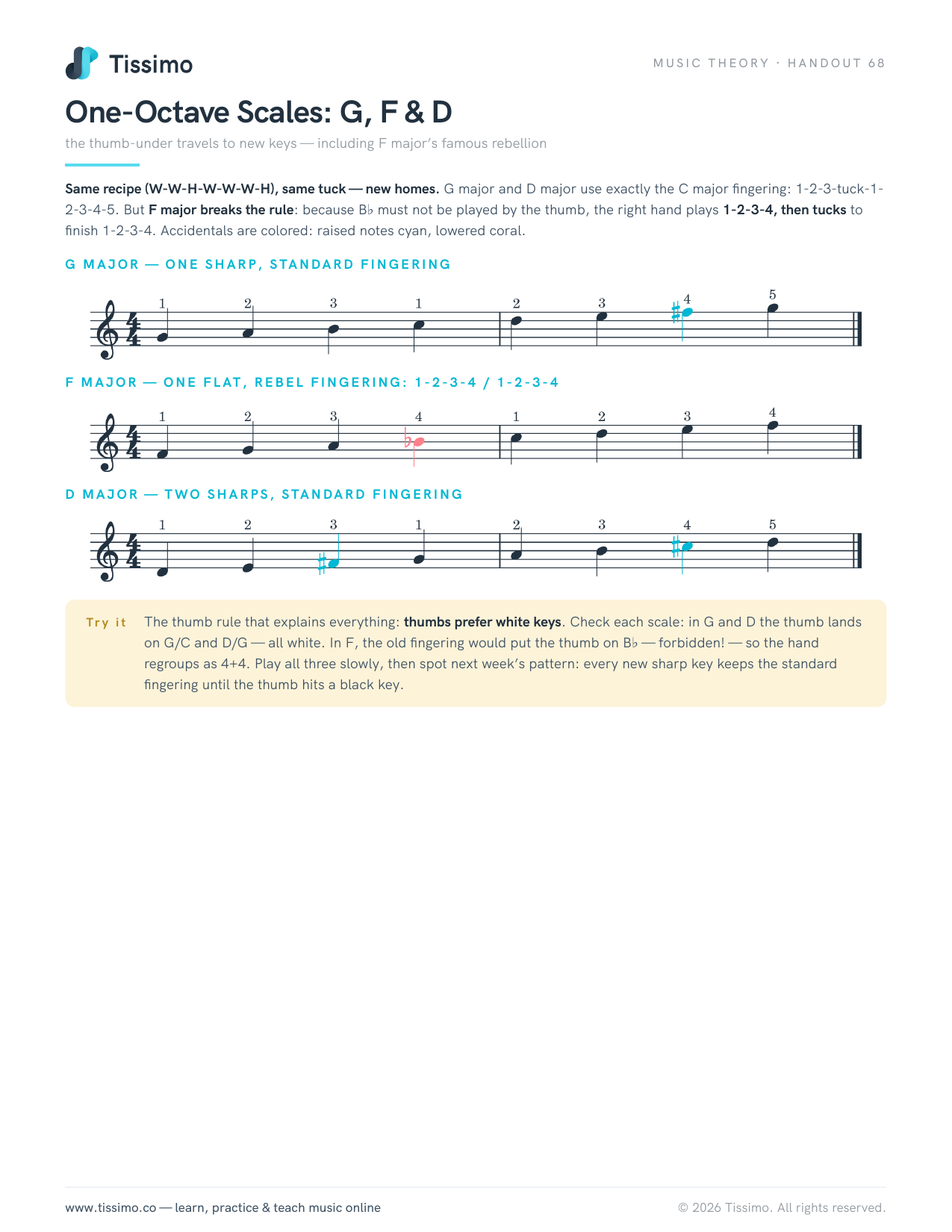 One-Octave Scales: G, F & Dthe thumb-under travels to new keys — including F major’s famous rebellion
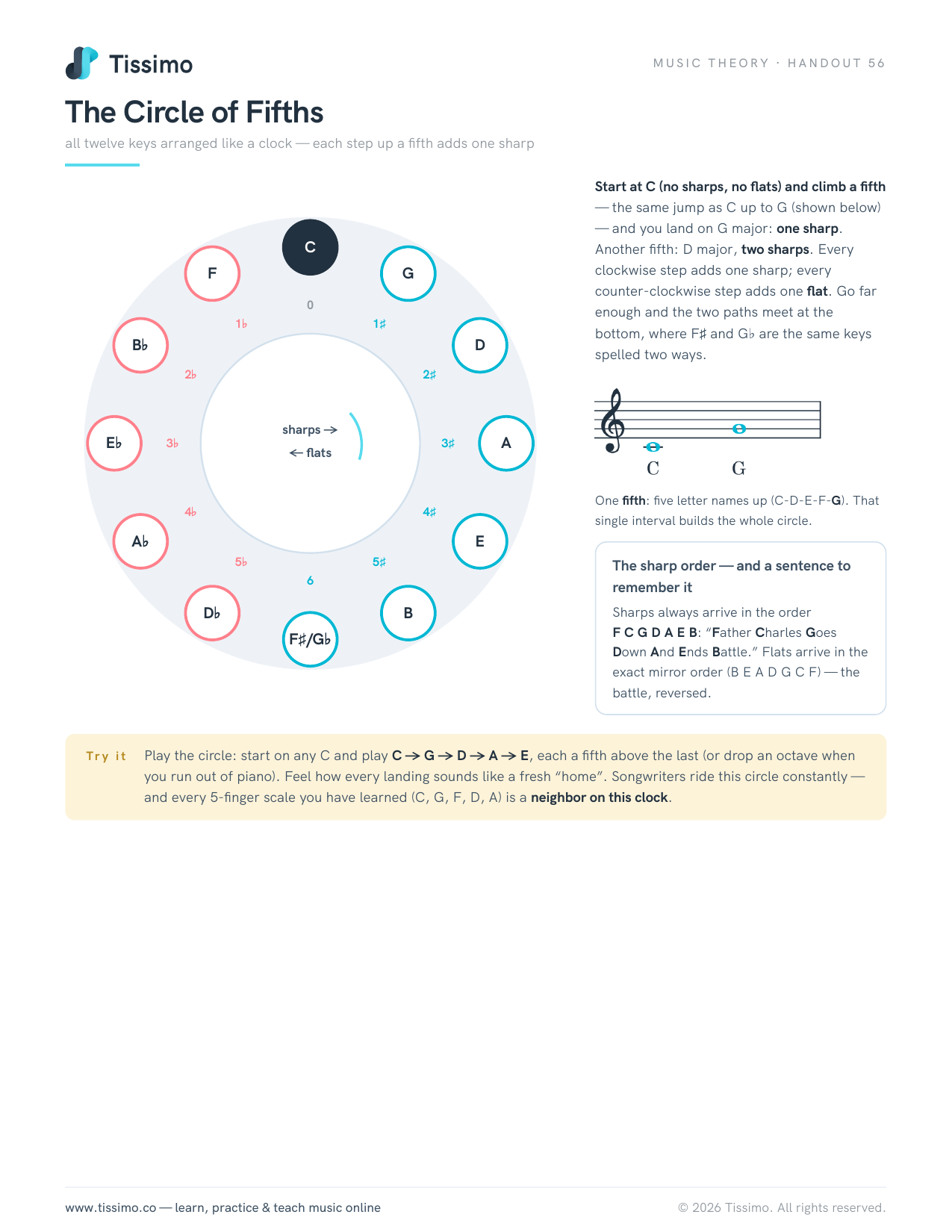 The Circle of Fifthsall twelve keys arranged like a clock — each step up a fifth adds one sharp
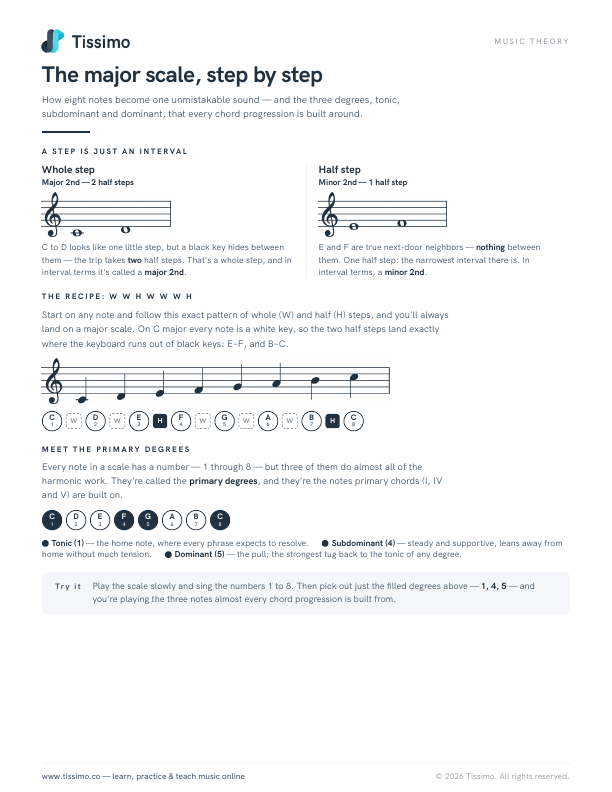 Major Scale Primer