Scales, Keys & Modes
Octatonic Scale (Diminished Scale)
Pronounced ok-tuh-TON-ik
The octatonic scale is an eight-note scale that alternates half steps and whole steps, such as C D♭ E♭ E F♯ G A B♭. Jazz musicians call it the diminished scale.
The octatonic scale has eight different notes per octave (hence the name, from the Greek okto, eight) and one simple rule: half steps and whole steps take turns. There are two ways to start:
- Half–whole: C D♭ E♭ E F♯ G A B♭, then C
- Whole–half: C D E♭ F F♯ G♯ A B, then C
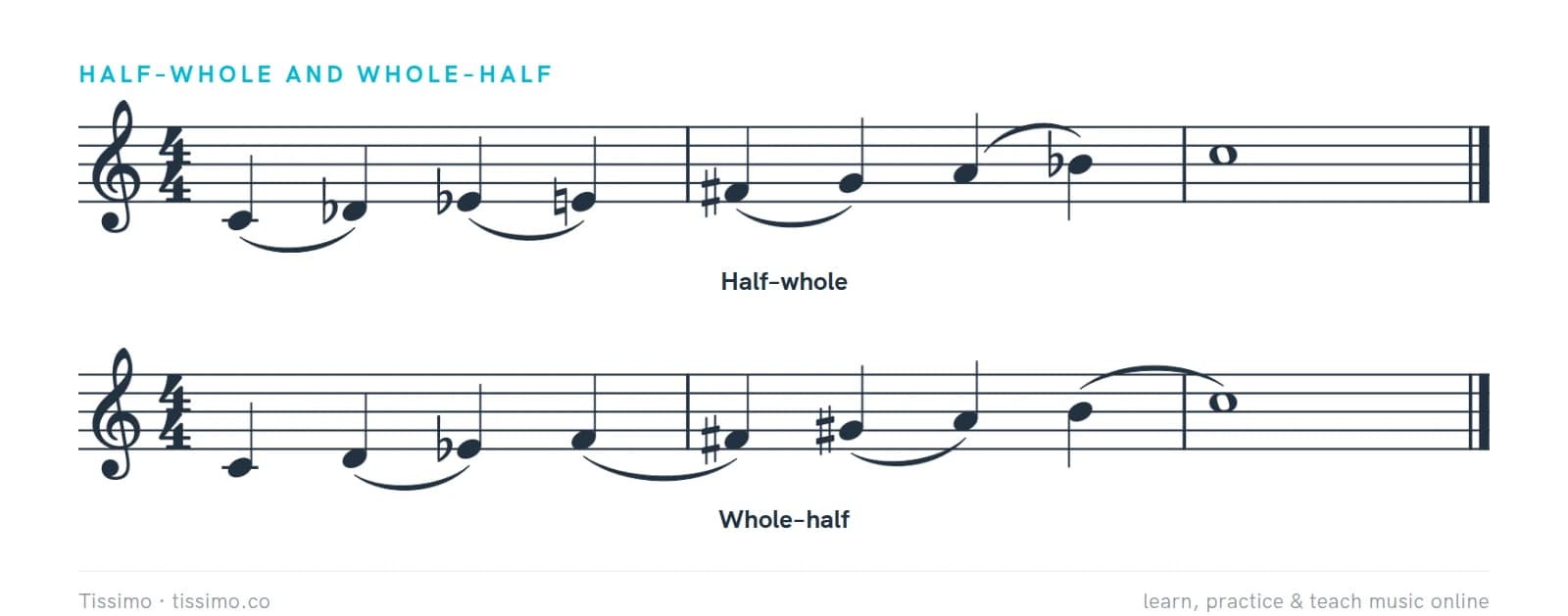
Only three octatonic scales
Like the whole-tone scale, the octatonic scale is symmetrical: its pattern repeats every three half steps (a minor third). Start the half–whole pattern on E♭ instead of C and you get the very same eight notes. So although you can begin it on any key, there are only three different octatonic collections: the half–whole scales on C, C♯ and D. Every other octatonic scale is one of these three starting somewhere else.
Two diminished seventh chords
Take every other note of an octatonic scale and you get a diminished seventh chord. The whole–half scale on C splits into C E♭ F♯ A and D F G♯ B: two diminished seventh chords interlocked a whole step apart. That is where the jazz name diminished scale comes from.
Diminished scales in jazz
Jazz players use the two orders over two different chords:
- Whole–half over a diminished seventh chord: on C°7, play C D E♭ F F♯ G♯ A B.
- Half–whole over a dominant seventh chord: on C7, the half–whole scale from C contains the chord tones C, E, G and B♭ plus the tensions D♭ (♭9), E♭ (♯9), F♯ (♯11) and A (13). The result is a tense, colorful dominant sound.
In classical music
The octatonic scale runs through a good deal of Russian music from the late 19th and early 20th centuries: Rimsky-Korsakov used it, and it is heard throughout much of Stravinsky's early music. The French composer Olivier Messiaen listed it as the second of his "modes of limited transposition", scales that, like this one, repeat themselves after only a few transpositions.
Spelling it
Eight notes and seven letter names means one letter appears twice, as E♭ and E in the half–whole scale on C. Like the whole-tone scale it has no single correct spelling, and writers choose whatever reads most easily, often mixing sharps and flats. Repeat the Steps, Find the Loop builds the scale from its step pattern and shows why only three exist.
Common questions
Why is the octatonic scale called the diminished scale?
Because it is made of two diminished seventh chords a whole step apart. Jazz musicians play it over diminished and dominant seventh chords, so they named it after the chord.
How many octatonic scales are there?
Three. The pattern repeats every minor third, so the half–whole scales on C, E♭, F♯ and A share the same eight notes. The three collections are the half–whole scales on C, C♯ and D.
Practice it: free worksheets
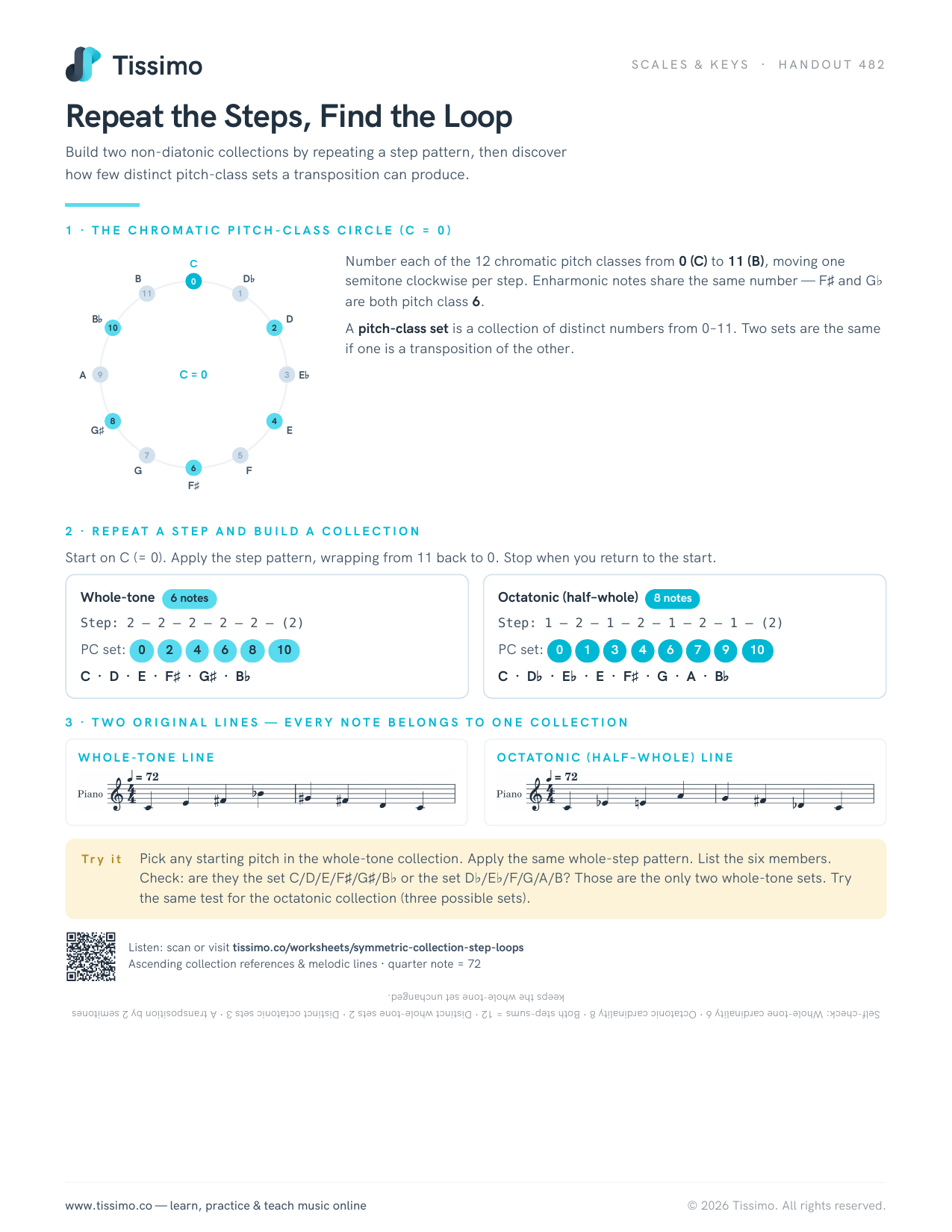 Repeat the Steps, Find the LoopBuild two non-diatonic collections by repeating a step pattern, then discover how few distinct pitch-class sets a transposition can produce.
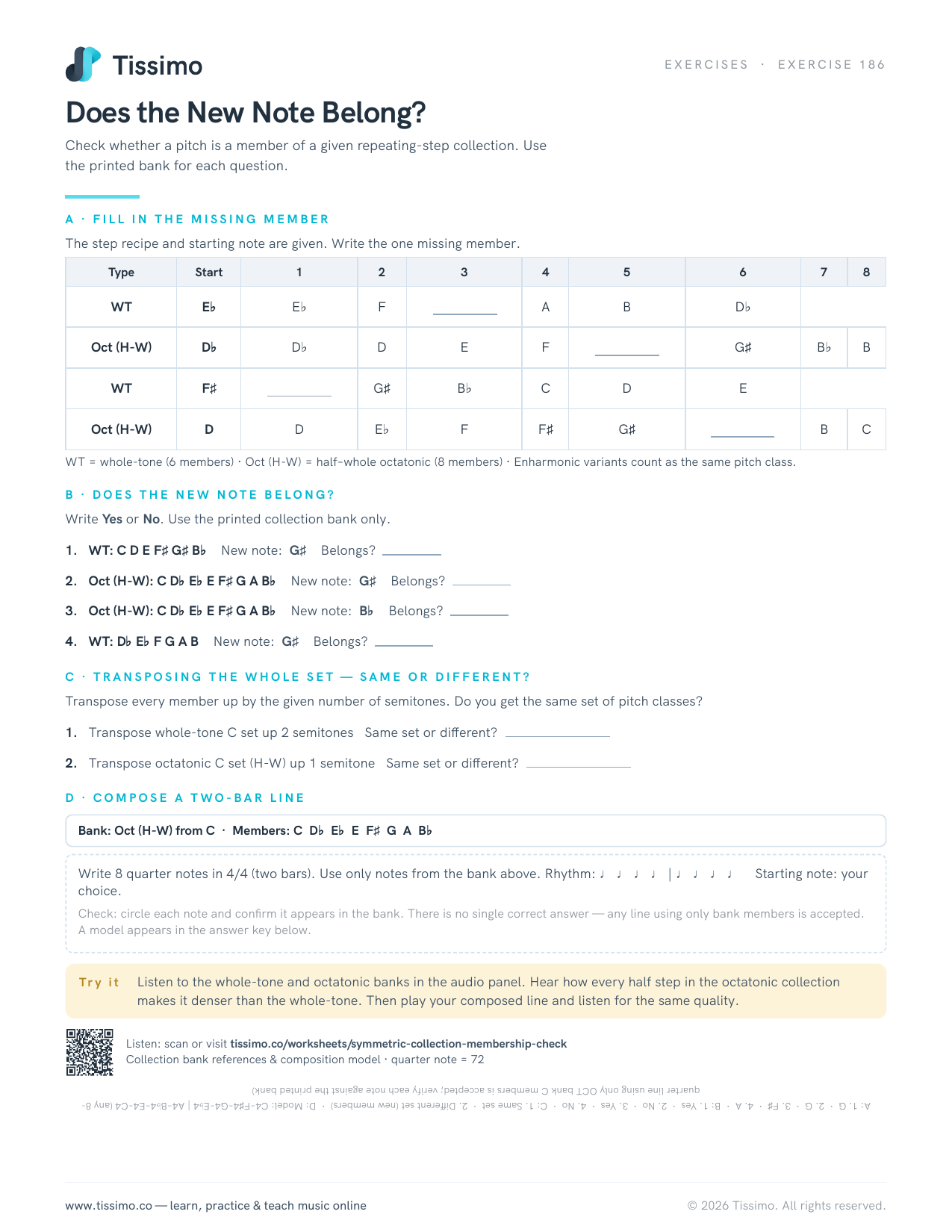 Does the New Note Belong?Check whether a pitch is a member of a given repeating-step collection. Use the printed bank for each question.
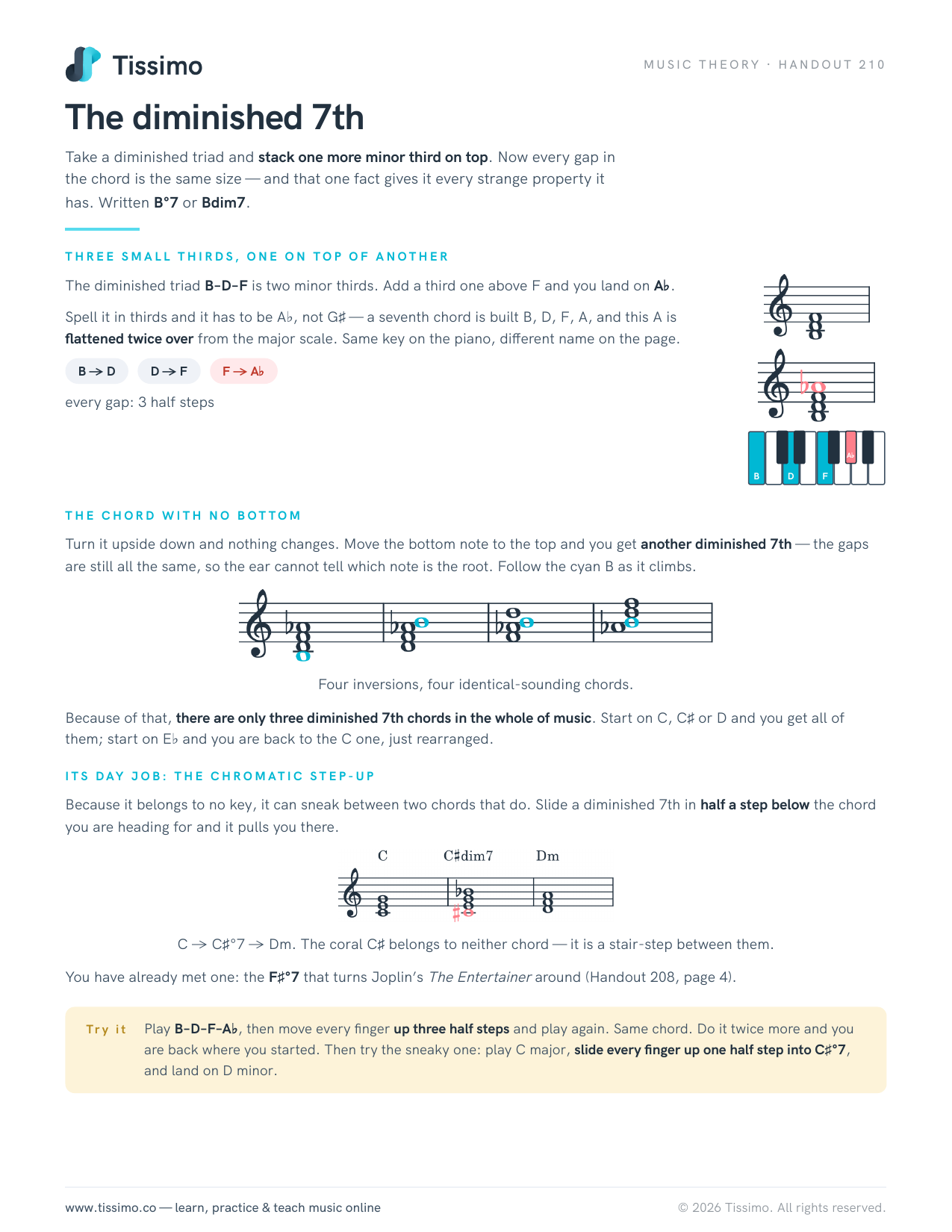 The diminished 7thTake a diminished triad and stack one more minor third on top. Now every gap in the chord is the same size — and that one fact gives it every strange property it has. Written B°7 or Bdim7.
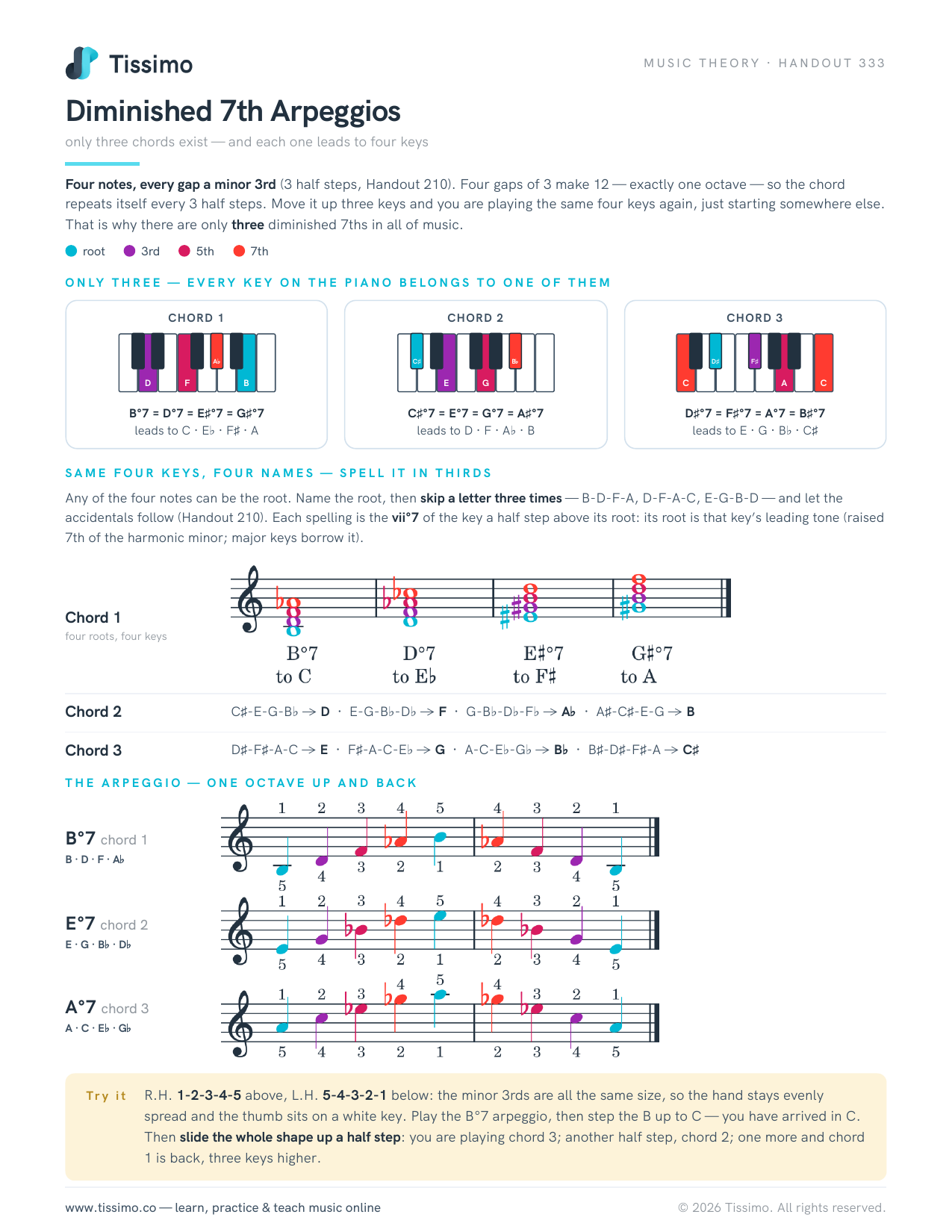 Diminished 7th Arpeggiosonly three chords exist — and each one leads to four keys