Instruments & Voices
Oboe
Pronounced OH-boh
The oboe is a double-reed woodwind with a conical wooden body and a clear, penetrating tone. It plays from B♭3 to about A6 at written pitch, and the orchestra traditionally tunes to its A.
The oboe is a woodwind played with a double reed: two thin blades of cane tied together onto a small tube, which vibrate against each other when you blow between them. The reed fits into the top of a conical wooden body, usually made of dense African blackwood (grenadilla), with a system of keys. The result is a focused, singing, slightly nasal tone that carries easily through a large ensemble.
How an oboe makes its sound
You hold the reed lightly between your lips, which are rolled slightly over your teeth, and blow through the narrow opening between the blades. The oboe needs very little air but a lot of air pressure, so oboists often have air left over at the end of a phrase and must breathe out before they breathe in. Like the flute and saxophone, the oboe overblows to the octave, and small octave keys help the upper notes speak.
Reeds matter enormously. Beginners buy them ready-made; many advanced oboists make and adjust their own, because a reed's shape decides how the instrument responds.
Range
The oboe plays from B♭3 up to about A6, with the top notes reserved for advanced players. Its most expressive range is in the middle, roughly from G4 to C6.
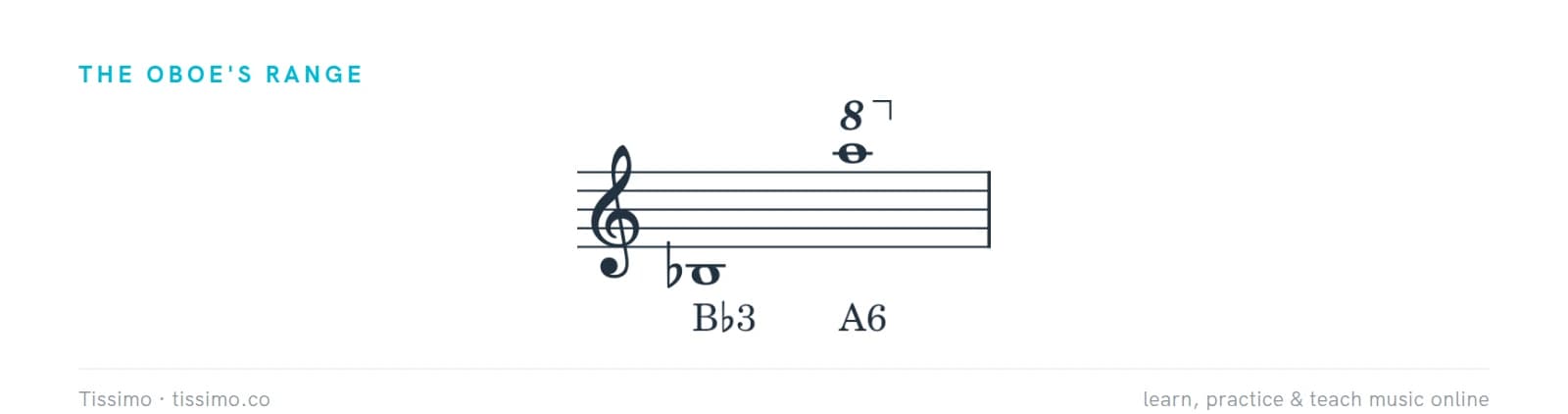
How oboe music is written
Oboe music is written in treble clef at the pitch it sounds: the oboe is a C instrument and does not transpose. Its larger relatives do: the English horn (cor anglais) sounds a perfect fifth lower than written and the oboe d'amore a minor third lower.
Its role
In the orchestra the oboe often plays lyrical solos, and the principal oboist plays the A that the whole orchestra tunes to before a rehearsal or concert. Oboes also play in concert bands, wind quintets, Baroque ensembles and a long line of solo concertos and sonatas.
Tips for beginners
- Use a soft reed at first and keep it moist. Soak it for a minute or two in water before you play.
- Don't bite. The lips cushion the reed; the air does the work.
- Practice long tones and play quietly; controlling a soft sound is the oboist's most valuable skill.
- Store reeds in a ventilated reed case and replace them when they stop responding.
Common questions
What is the difference between an oboe and a clarinet?
The oboe uses a double reed (two blades vibrating together) and has a conical body; the clarinet uses a single reed on a mouthpiece and a mostly cylindrical body. The oboe sounds as written, while the common B♭ clarinet transposes, and the two have quite different tone colors.
Why does the orchestra tune to the oboe?
It is a long tradition. The usual explanations are that the oboe's penetrating tone is easy to hear across the stage and that its pitch is fairly stable, so it makes a good reference.
Practice it: free worksheets
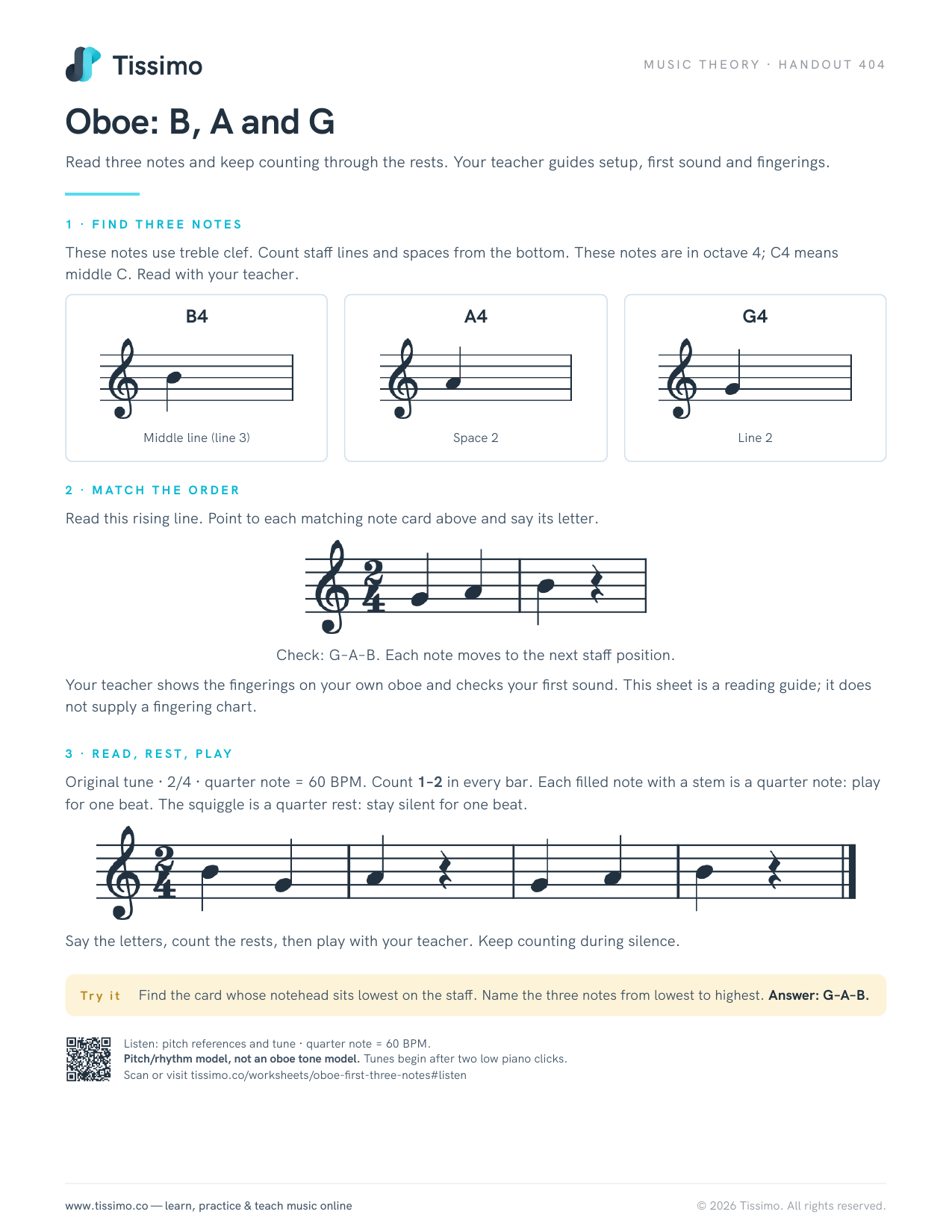 Oboe: B, A and GRead three notes and keep counting through the rests. Your teacher guides setup, first sound and fingerings.
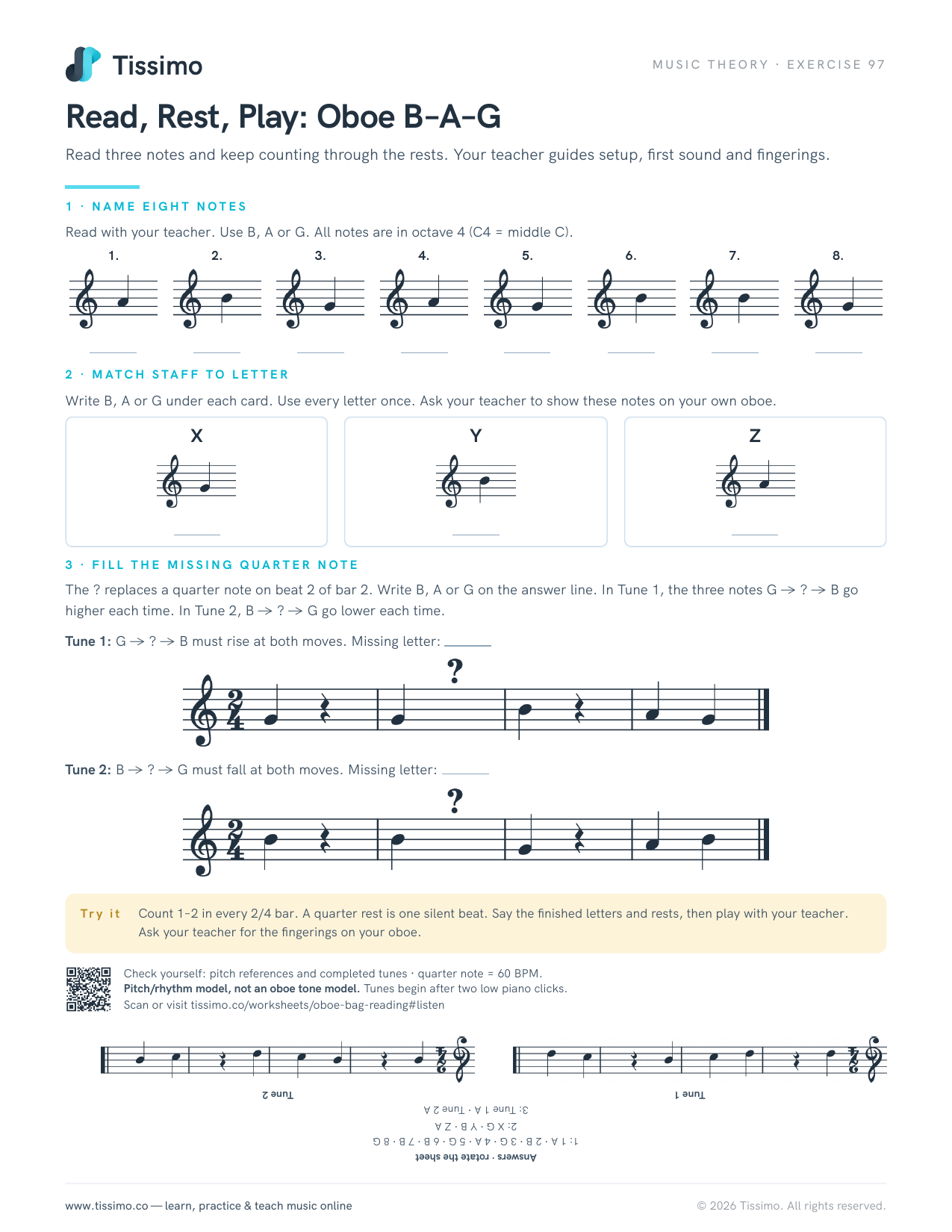 Read, Rest, Play: Oboe B–A–GRead three notes and keep counting through the rests. Your teacher guides setup, first sound and fingerings.
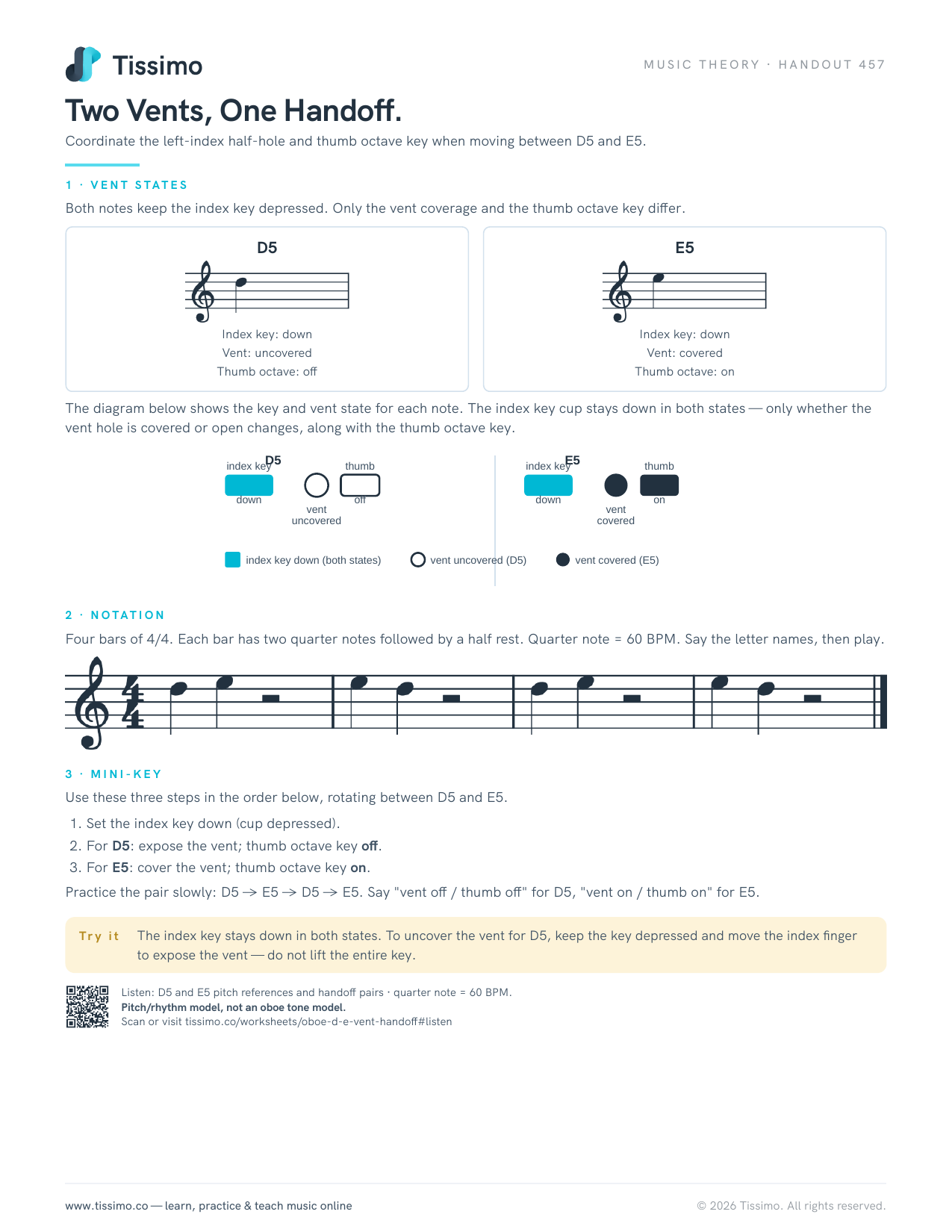 Two Vents, One Handoff.Coordinate the left-index half-hole and thumb octave key when moving between D5 and E5.
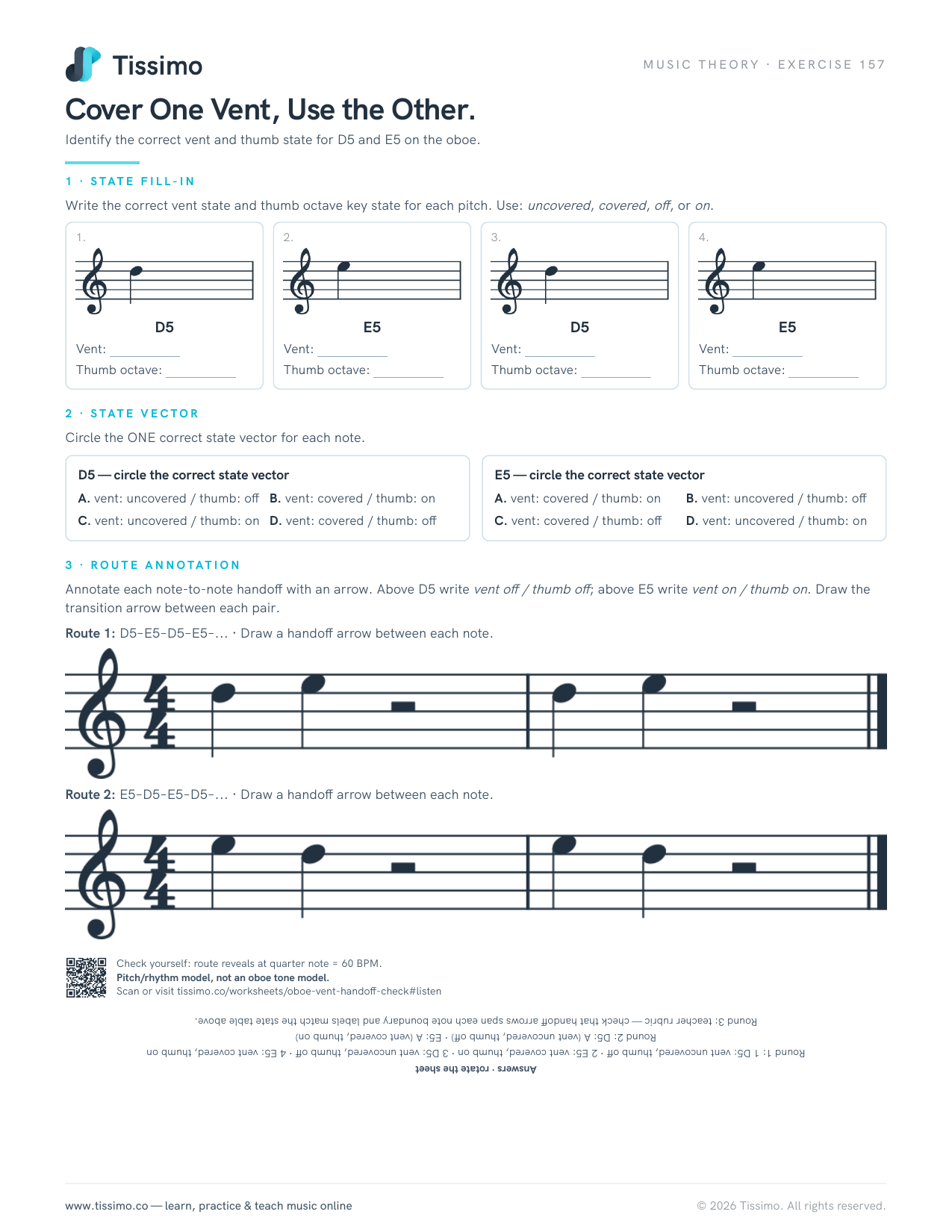 Cover One Vent, Use the Other.Identify the correct vent and thumb state for D5 and E5 on the oboe.