Instruments & Voices
Woodwind Family
The woodwind family is the group of wind instruments that make sound with an air stream on an edge (flutes) or with a vibrating reed (clarinets, saxophones, oboes, bassoons), whatever they are made of.
Woodwinds are wind instruments in which the sound starts with a column of air set vibrating by an edge or a reed, and the player changes the pitch by opening and closing holes along the tube. The name is historical: most were once made of wood, and many still are, but the metal flute and the brass saxophone belong to the family too. What matters is how the sound starts, not the material.
Three ways to start the sound
- Edge (no reed): the flute, piccolo and recorder. An air stream strikes a sharp edge and flips back and forth across it.
- Single reed: the clarinet and saxophone. One cane reed vibrates against a mouthpiece.
- Double reed: the oboe, English horn and bassoon. Two cane blades vibrate against each other.
How woodwinds change pitch
Pressing keys or covering holes makes the vibrating air column longer (lower notes) or shorter (higher notes). To reach the next register, players overblow: they change the air and use a register or octave key so the tube sounds a higher harmonic. Flutes, oboes, bassoons and saxophones overblow to the octave; the clarinet, with its cylindrical tube, overblows to the twelfth.
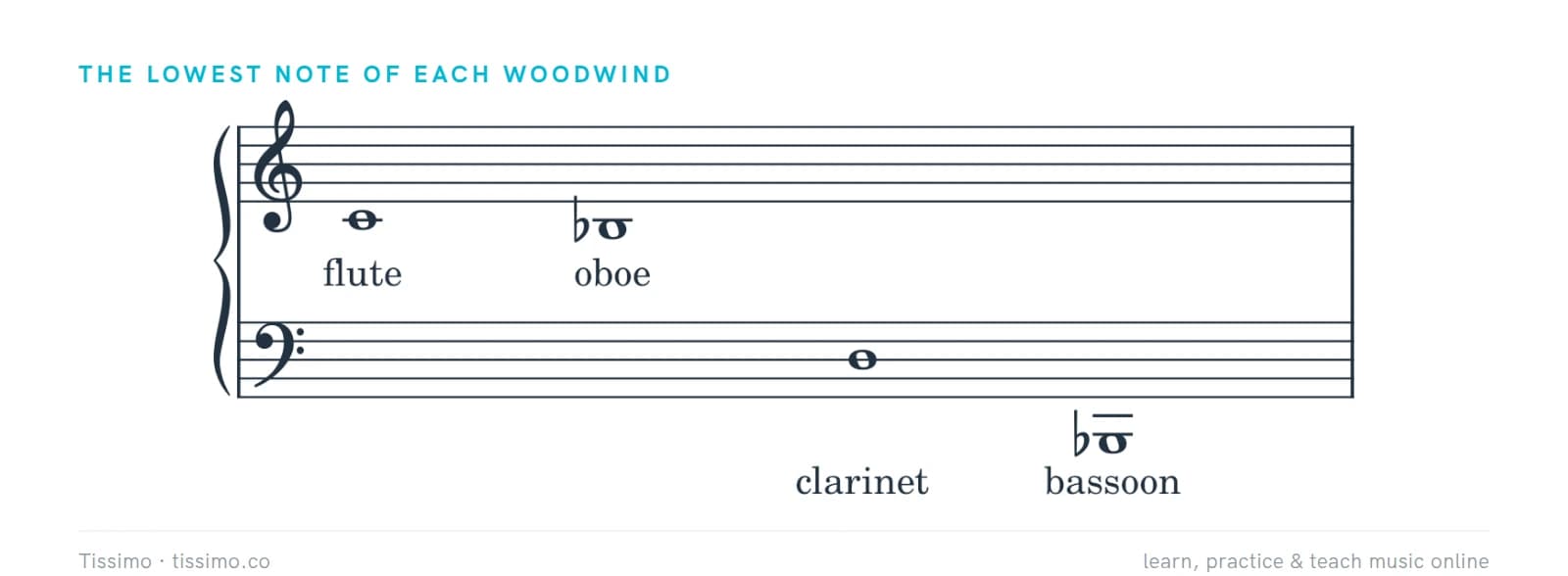
Woodwinds in the orchestra and band
A symphony orchestra usually has two or three each of flutes, oboes, clarinets and bassoons, often joined by piccolo, English horn, bass clarinet and contrabassoon. In the score, woodwinds come first, in the order flute, oboe, clarinet, bassoon. Concert bands have many more clarinets, plus a full saxophone section. The wind quintet combines flute, oboe, clarinet and bassoon with a French horn, a brass instrument that blends unusually well with the woodwinds.
Transposition
Several woodwinds are transposing instruments: the B♭ and A clarinets, the saxophones, the English horn (in F) and the piccolo (an octave higher). The flute, oboe and bassoon read at concert pitch.
Choosing a woodwind
- Flute: no reed to manage, but the first sound takes patience.
- Clarinet or saxophone: a single reed and a quick start; the saxophone is especially quick to get going.
- Oboe or bassoon: double reeds are more demanding, but these players are often in short supply, so bands and orchestras welcome them.
Recorders are a common first woodwind for children and teach breath control and fingering that carry over to the others.
Common questions
Which instruments are in the woodwind family?
The flute and piccolo, the oboe and English horn, the clarinets, the bassoon and contrabassoon, and the saxophones, plus recorders and many folk flutes and reed instruments.
Why are the flute and saxophone woodwinds when they are made of metal?
Because the family is defined by how the sound starts. The flute uses an air stream on an edge and the saxophone uses a reed; brass instruments use the player's buzzing lips instead.
Practice it: free worksheets
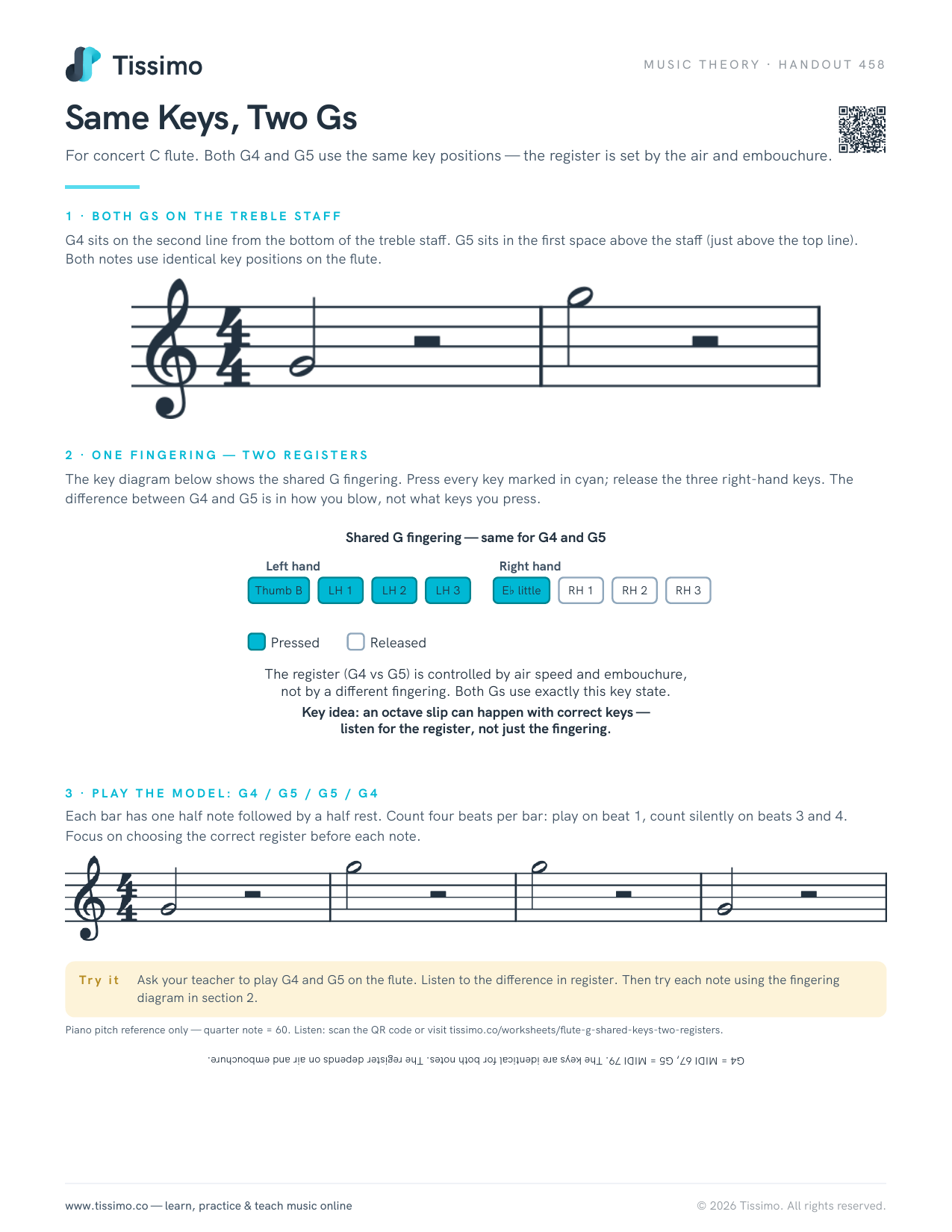 Same Keys, Two GsFor concert C flute. Both G4 and G5 use the same key positions — the register is set by the air and embouchure.
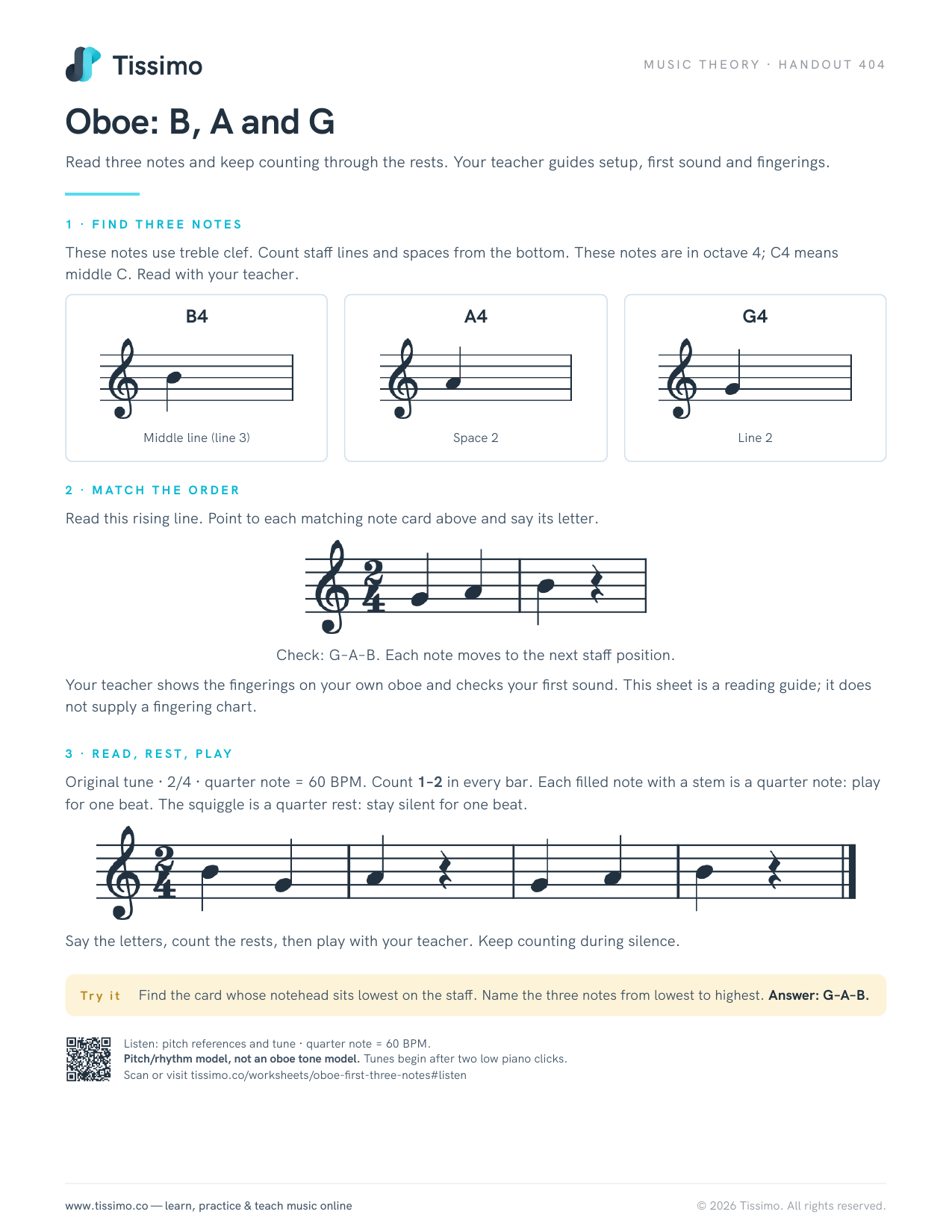 Oboe: B, A and GRead three notes and keep counting through the rests. Your teacher guides setup, first sound and fingerings.
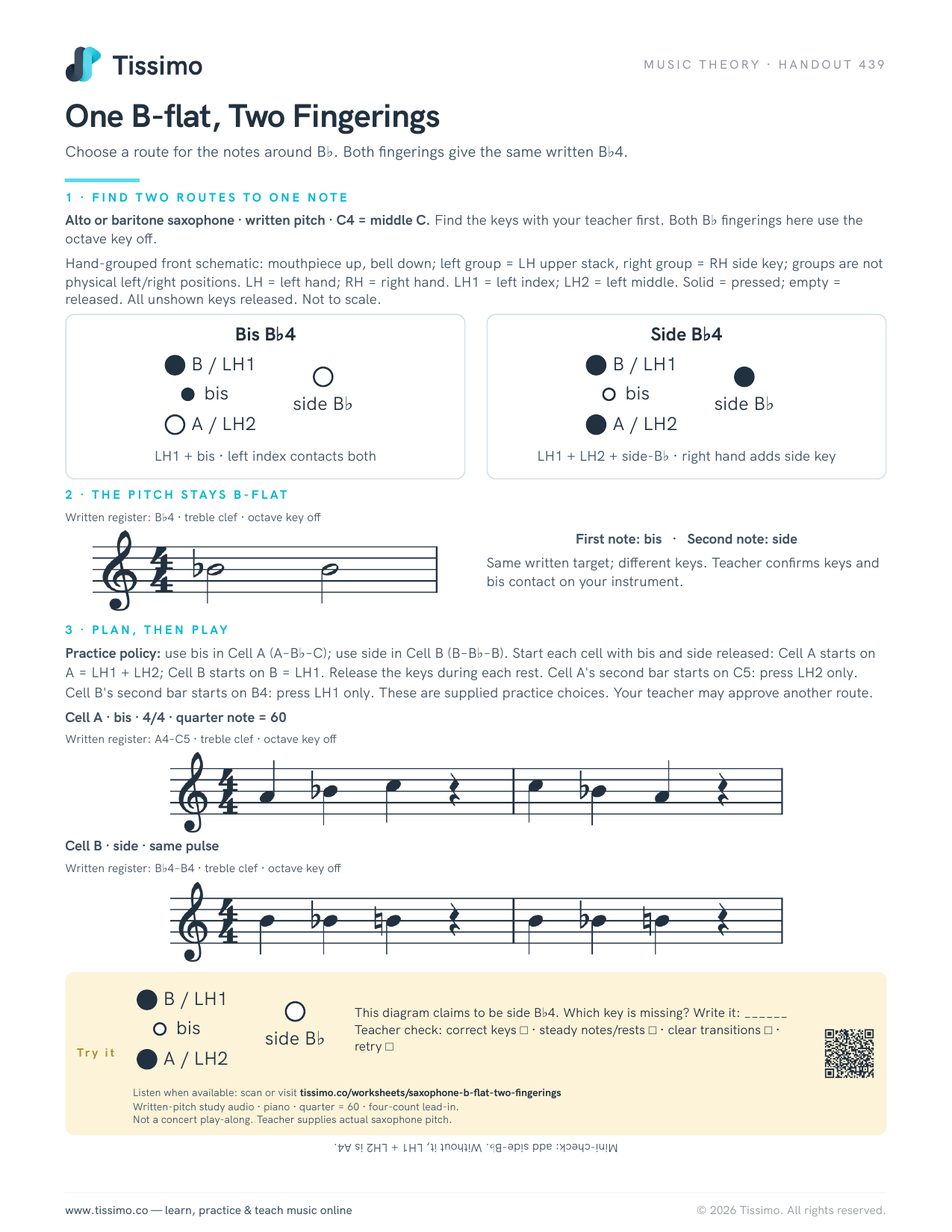 One B-flat, Two FingeringsChoose a route for the notes around B♭. Both fingerings give the same written B♭4.
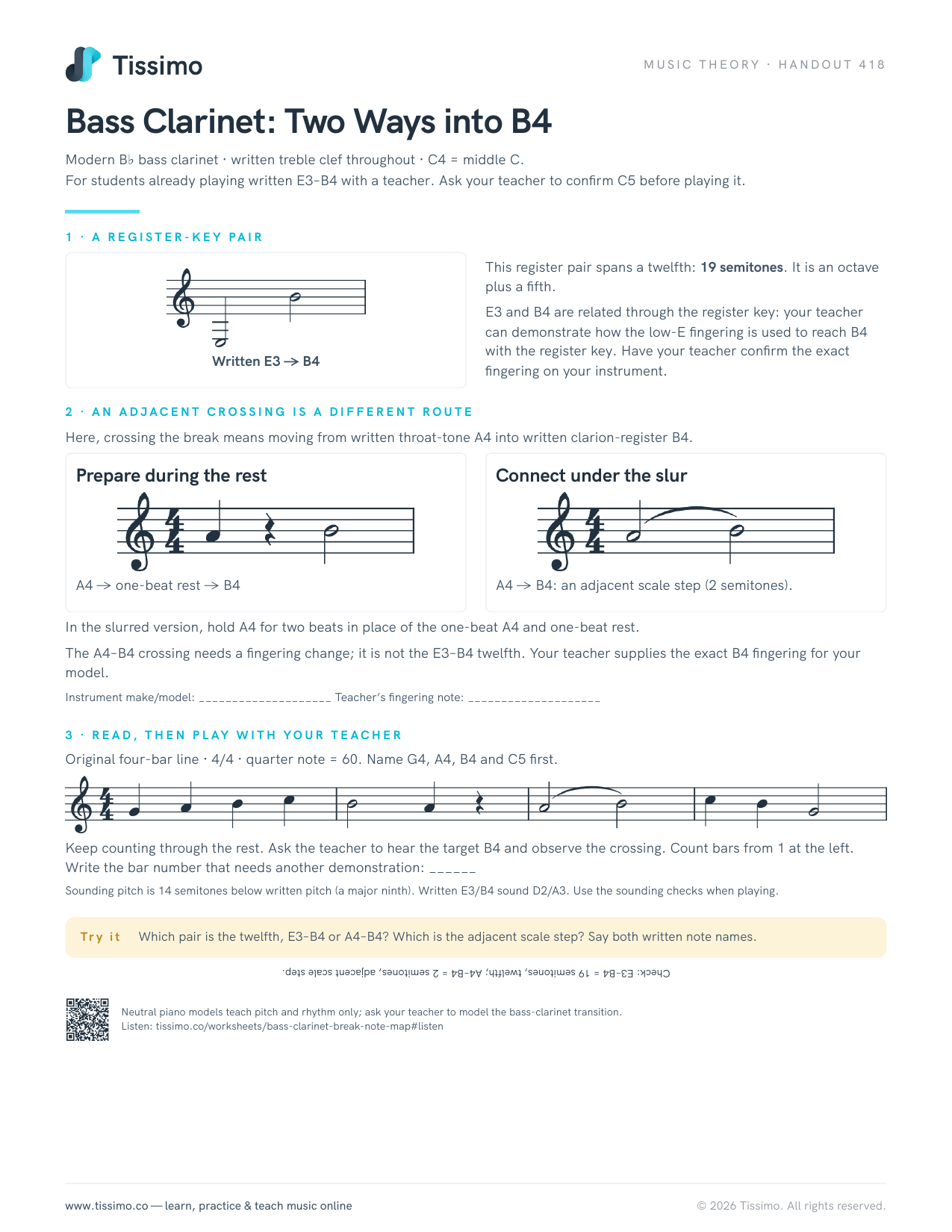 Bass Clarinet: Two Ways into B4Modern B♭ bass clarinet · written treble clef throughout · C4 = middle C. For students already playing written E3–B4 with a teacher. Ask your teacher to confirm C5 before playing it.
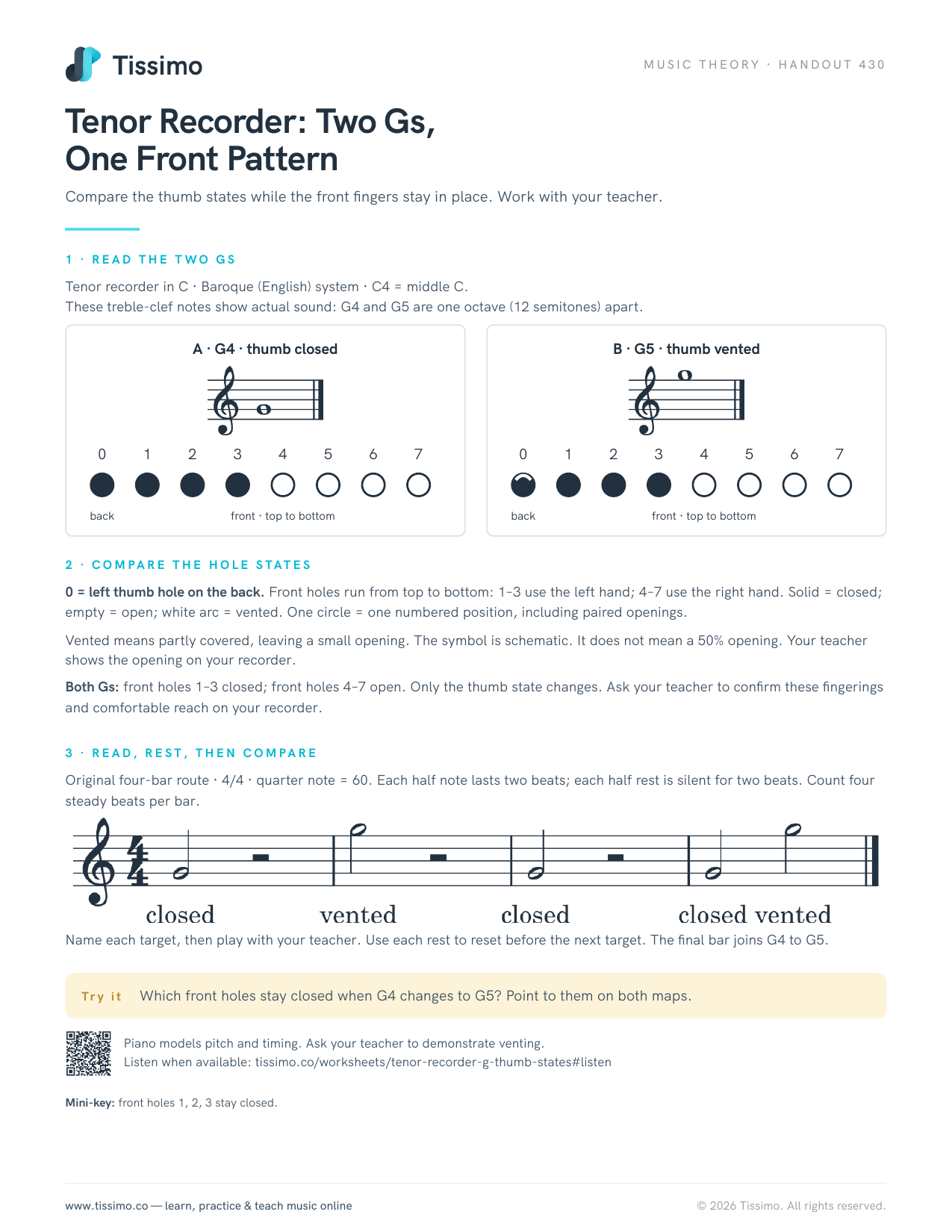 Tenor Recorder: Two Gs, One Front PatternCompare the thumb states while the front fingers stay in place. Work with your teacher.
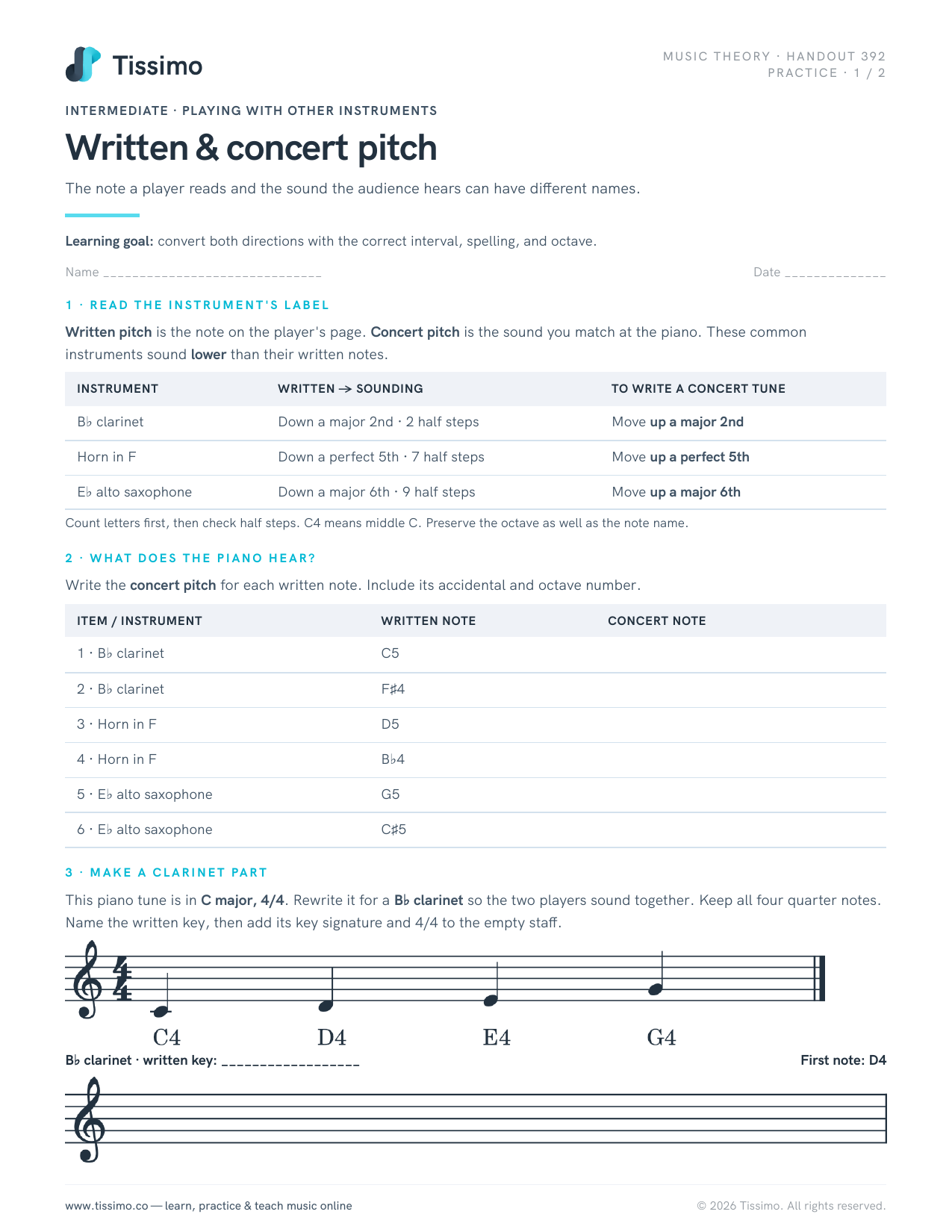 Written & concert pitchThe note a player reads and the sound the audience hears can have different names.