Instruments & Voices
Brass Family
The brass family is the group of wind instruments whose sound starts with the player's buzzing lips in a cup- or funnel-shaped mouthpiece: trumpet, horn, trombone, tuba and their relatives.
Brass instruments are wind instruments in which the player's lips are the vibrating source of the sound. You press your lips into a mouthpiece and buzz them, and the long metal tube amplifies and shapes that buzz into a tone. The main members are the trumpet, horn, trombone and tuba, with relatives such as the cornet, flugelhorn, euphonium, baritone horn, mellophone and sousaphone. As with woodwinds, the name describes the usual material, but the family is defined by how the sound starts: the brass saxophone is a woodwind, because it uses a reed.
Harmonics: many notes from one tube
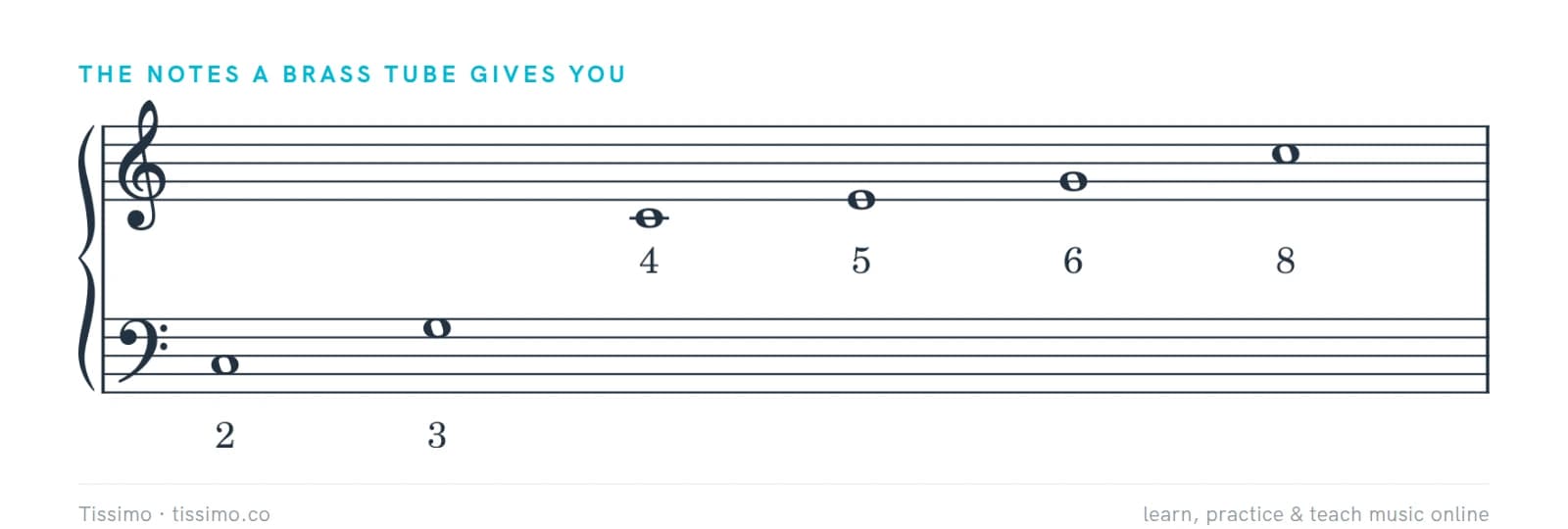
A brass tube without valves can play a whole series of notes, its harmonics, by changing the tension of the lips and the speed of the air. These notes follow the harmonic series: wide apart at the bottom and closer and closer together higher up. Bugle calls use these open harmonics. Natural horns also use them, but hand-stopping can supply pitches between them.
Valves and slides
To play the notes between the harmonics, brass instruments change the length of the tube:
- Valves (trumpet, horn, tuba, euphonium) switch in extra loops of tubing. On most three-valve instruments, valve 1 lowers the pitch a whole step, valve 2 a half step and valve 3 a step and a half.
- A slide (trombone) makes the tube longer in seven positions, each a half step lower, with every shade in between.
The brass in ensembles
A symphony orchestra usually has four horns, two or three trumpets, three trombones and a tuba, printed in the score in that order, with the horns above the trumpets. The brass quintet has two trumpets, horn, trombone and tuba. Concert and marching bands have large brass sections, jazz big bands have trumpet and trombone sections, and British-style brass bands use cornets, flugelhorn, tenor horns, baritones, euphoniums, trombones and basses.
Mutes and colors
Brass players change their sound with mutes placed in the bell: the straight mute (thin and edgy), cup mute (soft and muffled) and harmon mute (the buzzy jazz trumpet sound), among others. Horn players also change the color with the hand in the bell.
Transposition
The trumpet (usually in B♭) and the horn (usually in F) are transposing instruments. The trombone and tuba normally read at concert pitch in bass clef, except in British brass bands, where nearly all parts are written in treble clef and transposed.
Starting a brass instrument
Every brass instrument depends on a healthy embouchure and steady breath support, so beginners spend time on buzzing, long tones and lip slurs. The trumpet and trombone are common first choices; the horn suits players with a good ear for pitch; the tuba and euphonium suit anyone who loves a big, warm bass sound.
Common questions
Which instruments are in the brass family?
The trumpet, French horn, trombone and tuba, plus relatives such as the cornet, flugelhorn, euphonium, baritone horn, mellophone and sousaphone. Any instrument played by buzzing the lips into a mouthpiece belongs to the brass family.
Is the saxophone a brass instrument?
No. The saxophone is made of brass, but its sound comes from a reed, so it belongs to the woodwind family.
Practice it: free worksheets
 Two Notes, Same ValvesPrerequisite: B♭ trumpet student who can already produce written C4 and G4 comfortably with a teacher.
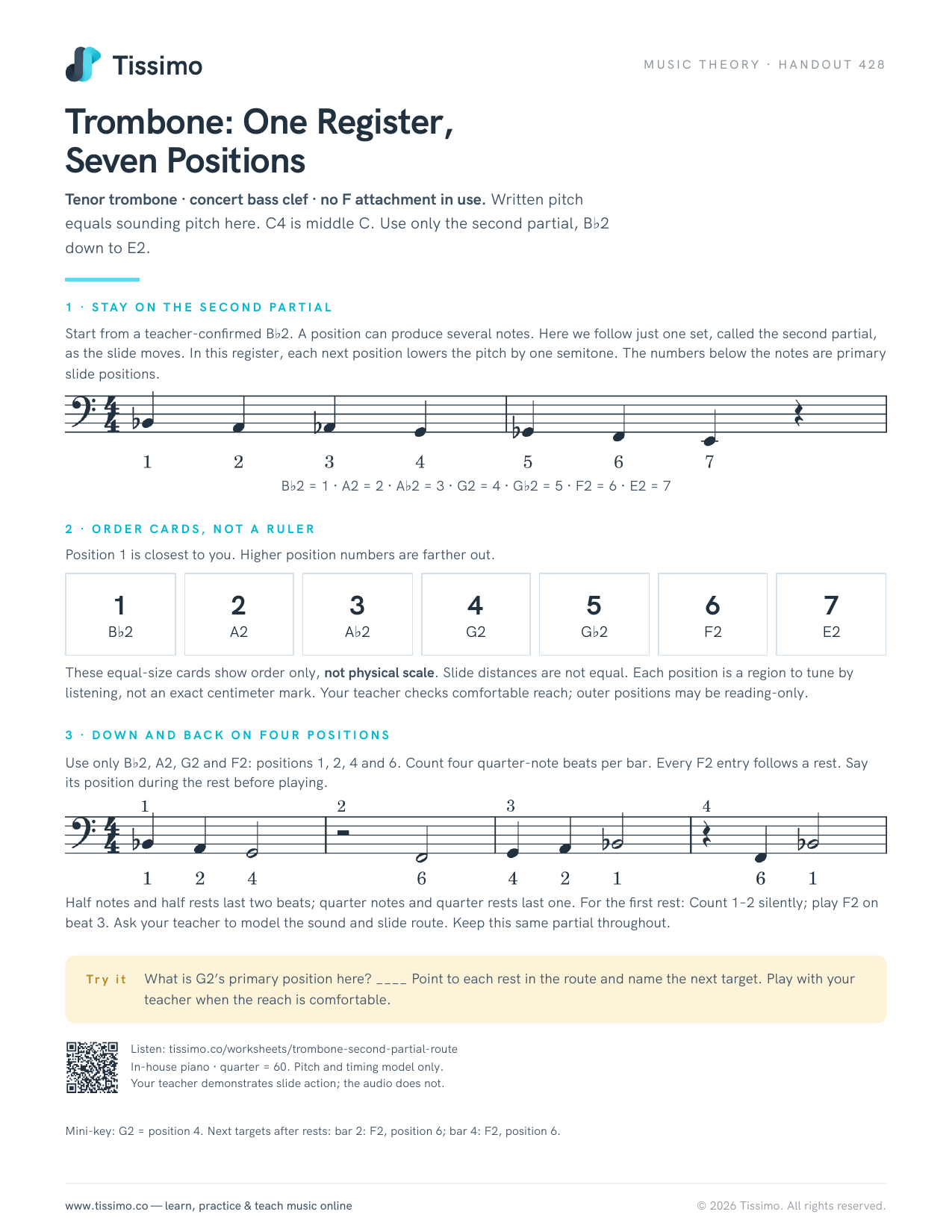 Trombone: One Register, Seven PositionsTenor trombone · concert bass clef · no F attachment in use. Written pitch equals sounding pitch here. C4 is middle C. Use only the second partial, B♭2 down to E2.
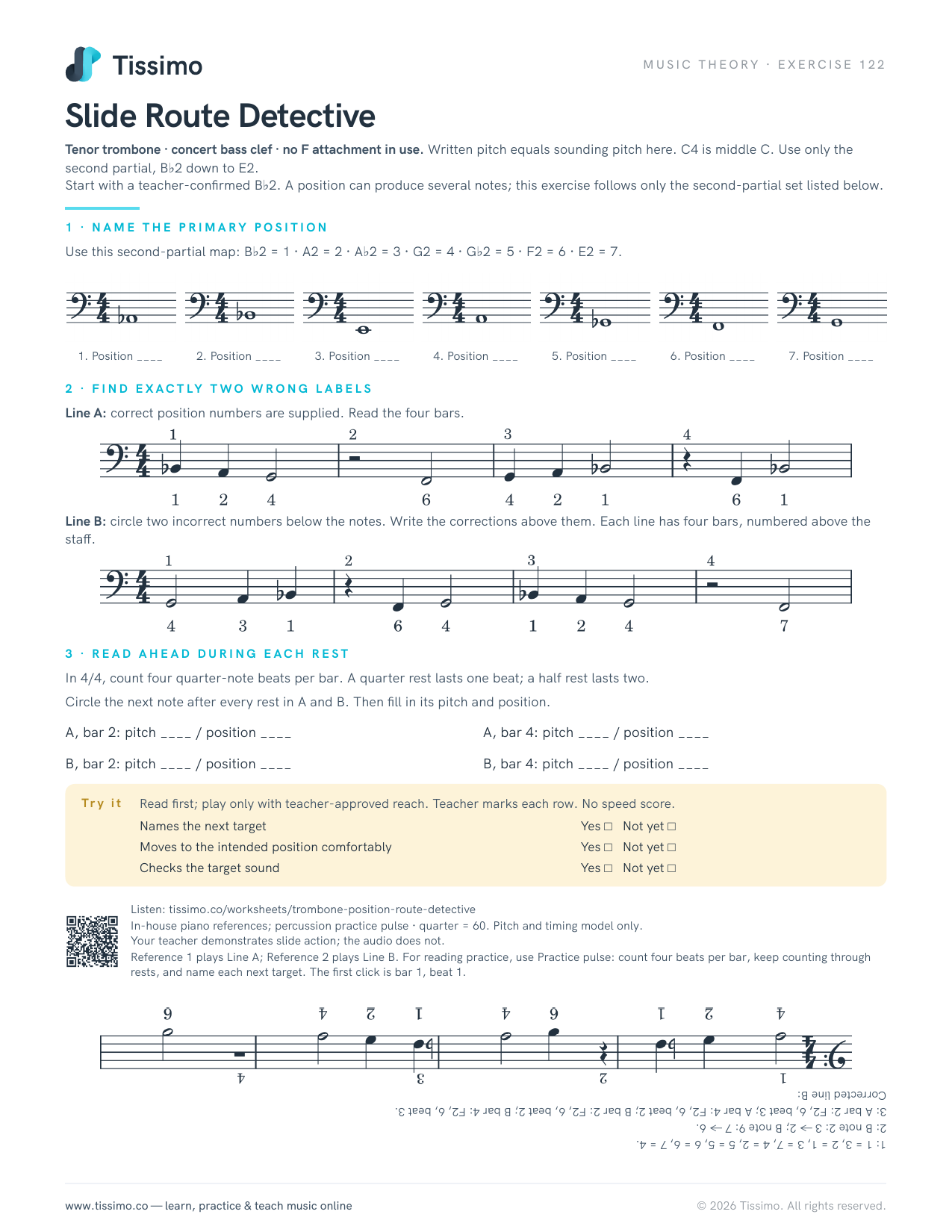 Slide Route DetectiveTenor trombone · concert bass clef · no F attachment in use. Written pitch equals sounding pitch here. C4 is middle C. Use only the second partial, B♭2 down to E2. Start with a teacher-confirmed B♭2. A position can produce several notes; this exercise follows only the second-partial set listed below.
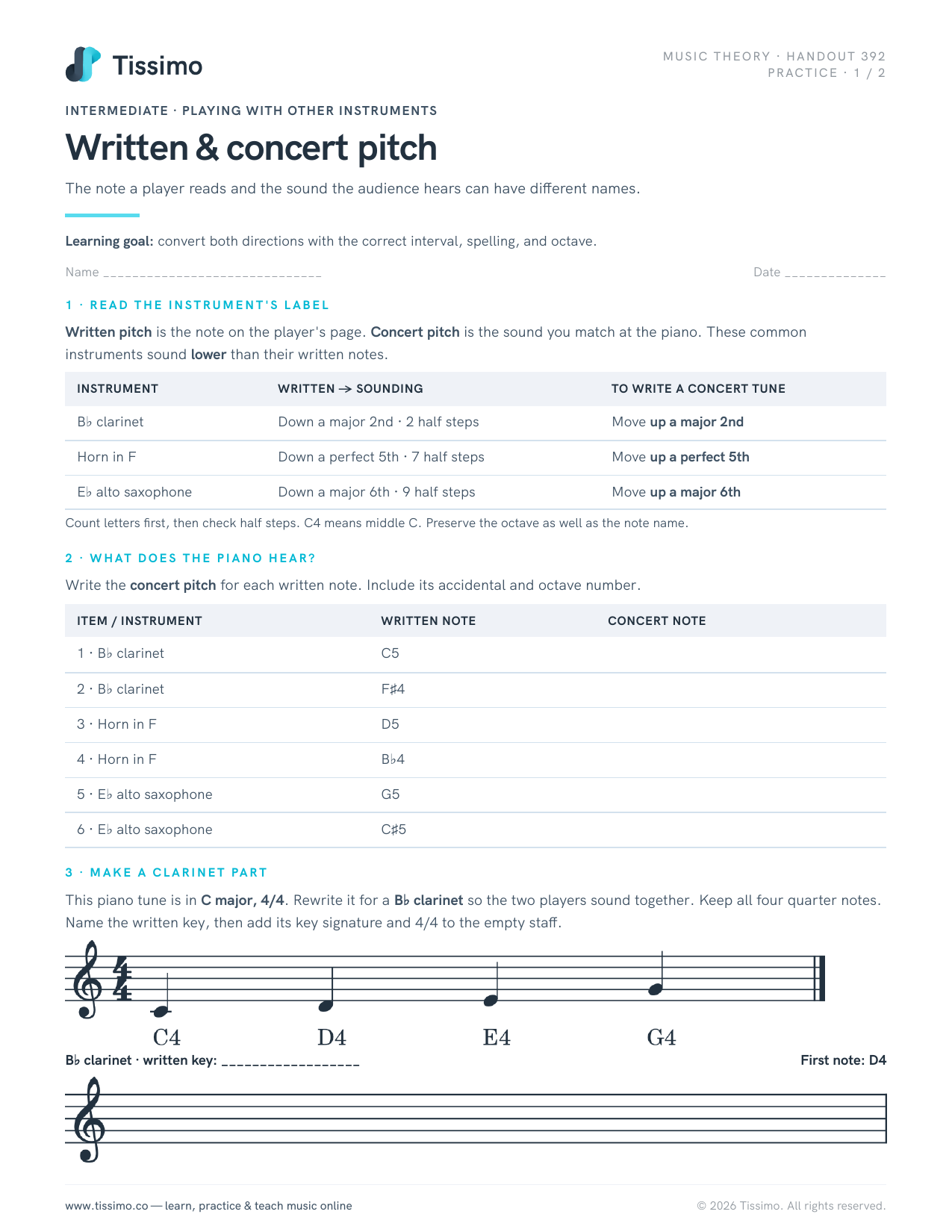 Written & concert pitchThe note a player reads and the sound the audience hears can have different names.
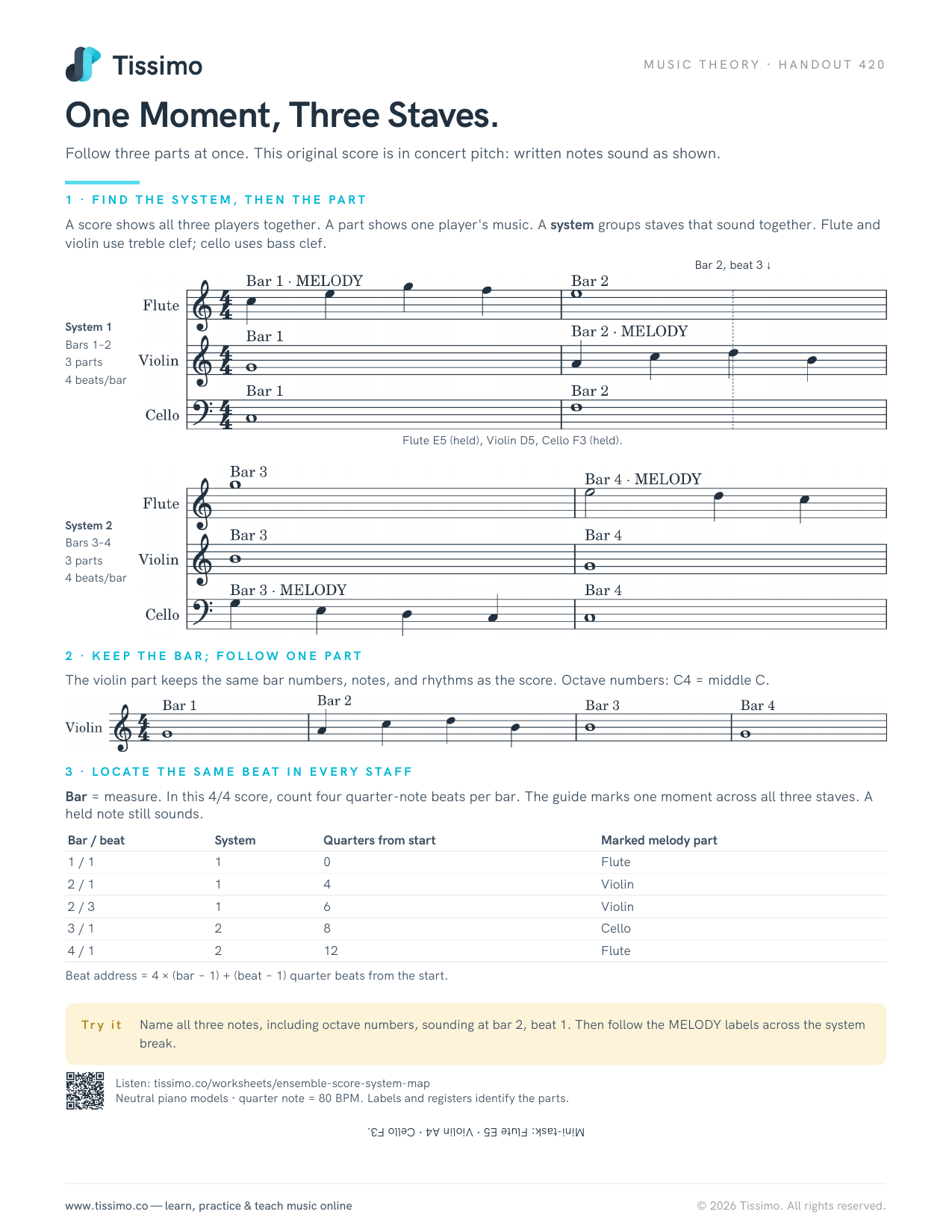 One Moment, Three Staves.Follow three parts at once. This original score is in concert pitch: written notes sound as shown.