Notation & Symbols
Breath Mark
A breath mark is a small comma-shaped sign above the staff that shows where a singer or wind player should breathe. For other instruments it asks for a slight break in the sound, taken from the end of the note before it.
A breath mark is a small comma written above the staff, just after a note; some editions use a small tick instead. It shows a place to breathe. For singers and wind and brass players, that is literal: take a breath here. For pianists, string players and anyone else who does not need air to play, it asks for a tiny lift, the sound of the phrase taking a breath. German-speaking musicians call it a Luftpause, an "air pause".
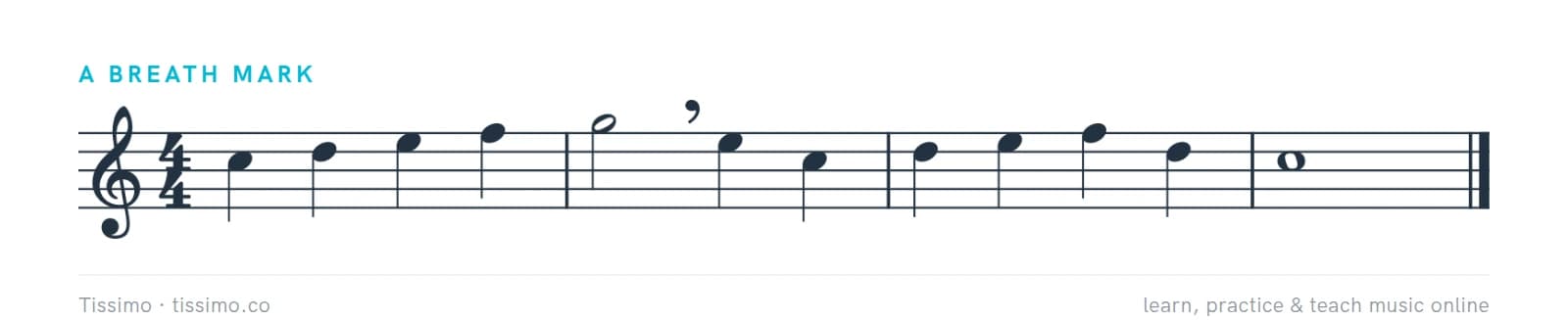
How to take the breath
Normally the breath comes out of the note before the mark: shorten that note slightly, breathe, and come in on time with the next note. The beat does not stop. That is the main difference from a caesura (two slanted lines), which halts the music for a moment, and from a fermata, which lengthens a note.
Where breath marks appear
- In vocal music, at the ends of phrases and at commas and other breaks in the words.
- In wind and brass parts, where a long passage offers few natural rests.
- In piano and string music, to separate phrases that would otherwise run together.
Players also pencil in their own breath marks. Planning breaths in advance, ideally at the ends of musical phrases rather than in the middle of a word or a melodic line, is part of learning any piece for voice or a wind instrument.
Breath mark and phrasing
A well-placed breath is part of good phrasing: it shows the listener where one musical idea ends and the next begins, just as a pause does in speech. A breath in the wrong place can split a phrase in two.
See the breath mark with other signs in Musical terms & signs, and practice shaping phrases with Phrasing.
Common questions
What does a comma mean in sheet music?
It is a breath mark: breathe, or make a small break, here. Take the time from the end of the note before it, so the beat keeps going.
What is the difference between a breath mark and a caesura?
A breath mark is a short break inside the beat, taken from the note before it. A caesura (two slanted lines) stops the music completely for a moment before it goes on.
Practice it: free worksheets
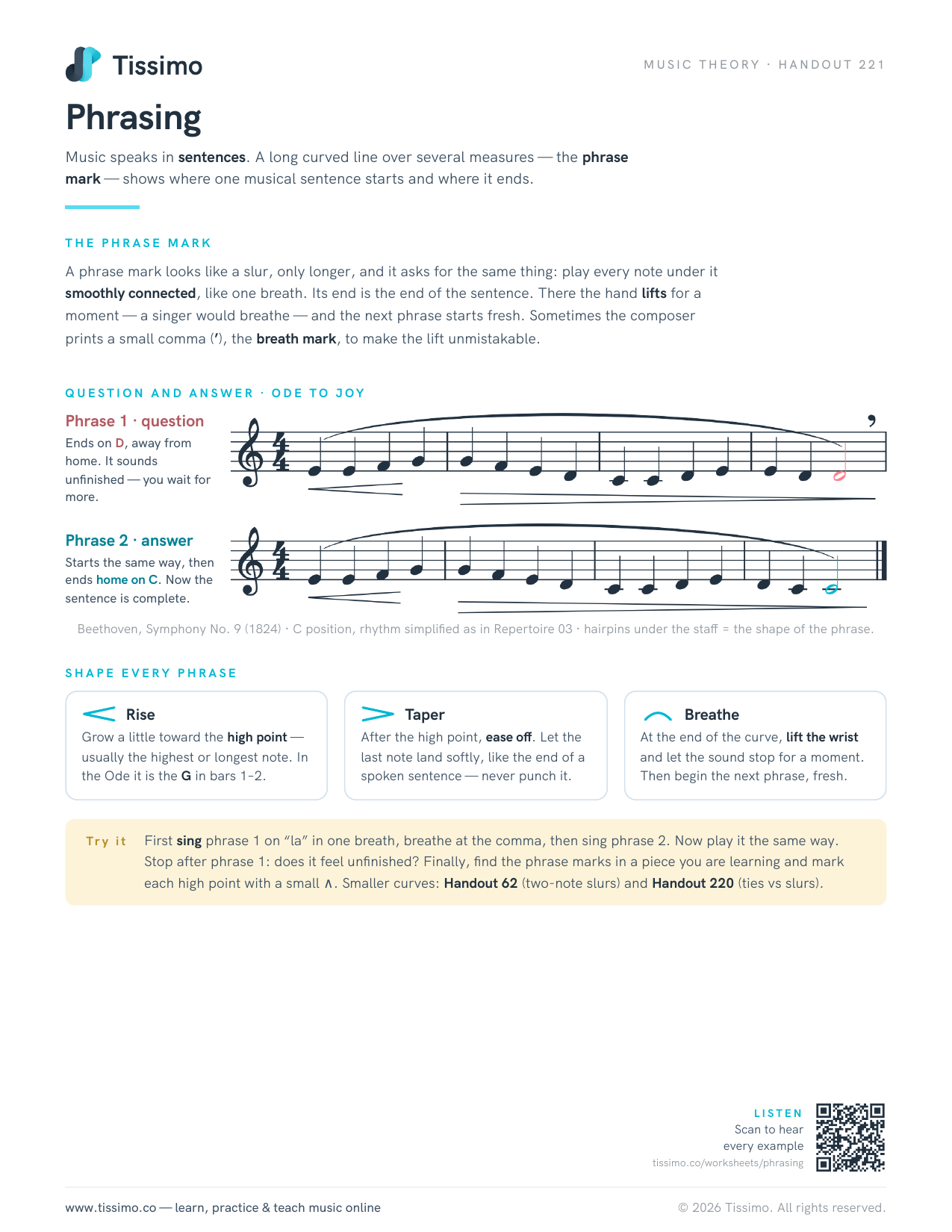 PhrasingMusic speaks in sentences. A long curved line over several measures — the phrase mark — shows where one musical sentence starts and where it ends.
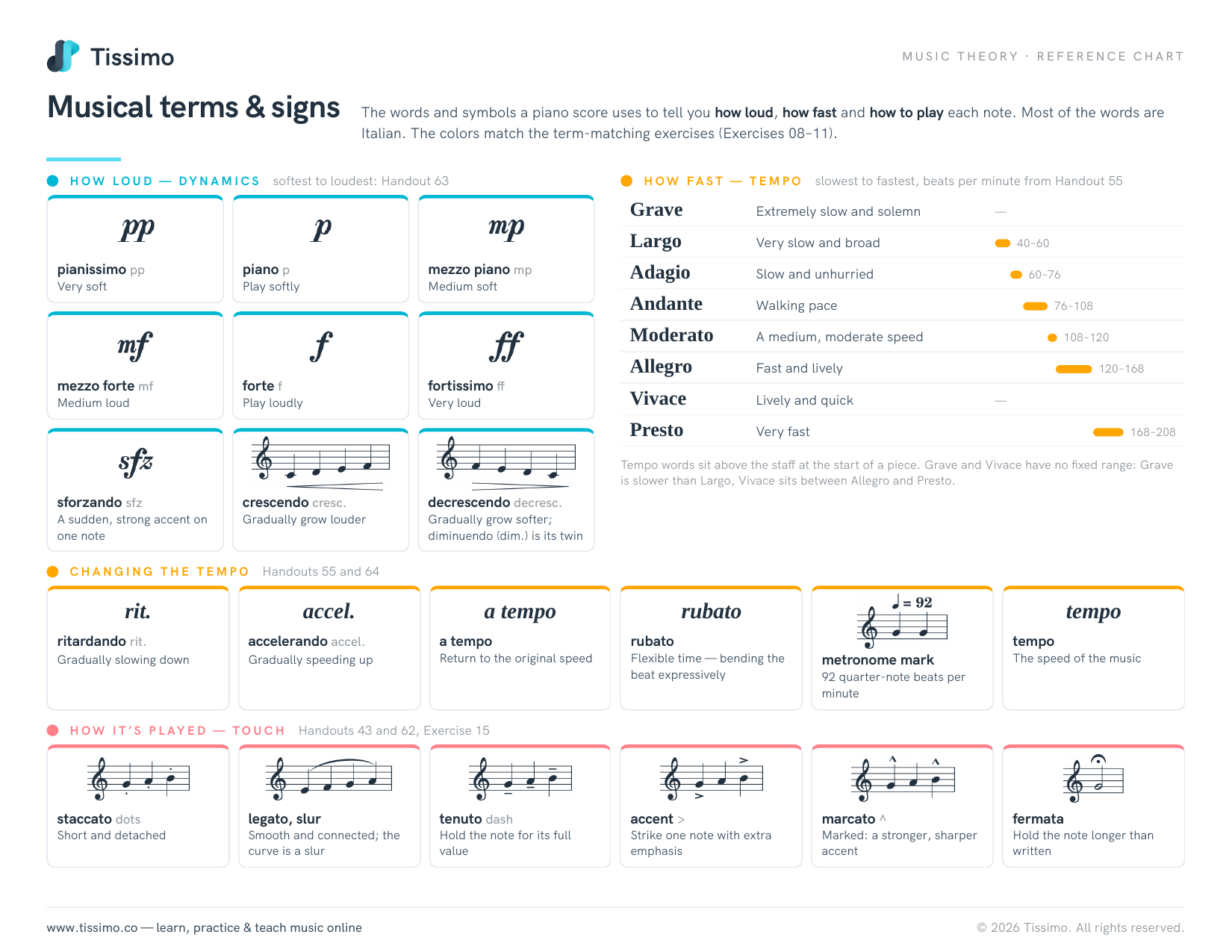 Musical terms & signsThe words and symbols a piano score uses to tell you how loud, how fast and how to play each note. Most of the words are Italian. The colors match the term-matching exercises (Exercises 08–11, 74 and 75).