Notation & Symbols
Caesura
Pronounced sih-ZHOOR-uh
A caesura is a pair of slanted lines (//) above the staff that marks a complete break in the music. The sound stops, a short silence of no fixed length follows, and then the music starts again.
A caesura is written as two short, slanted parallel lines above the staff, after a note or between two notes. Musicians often call it "railroad tracks" (in Britain, "tram lines"). It means: stop. Cut off the sound, let a moment of silence pass, then go on.
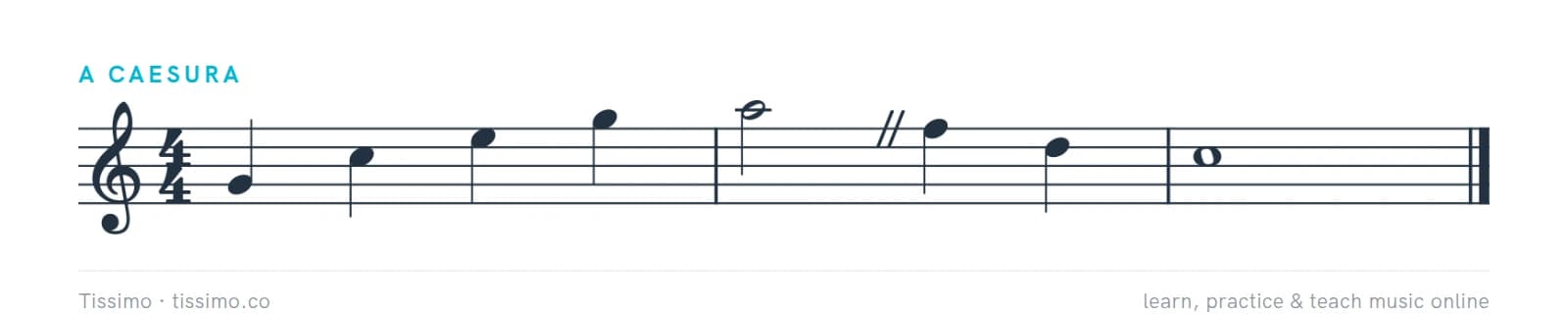
How long is the silence?
As with a fermata, the score does not say. The break is usually short, a moment of suspense rather than a long pause, and the music often resumes in the original tempo. In an ensemble, the conductor shows both the cutoff and the restart. When a caesura follows a note with a fermata, the note is held first, then cut off, and then the silence follows.
Caesura, breath mark and fermata
- A breath mark (a comma) is a small break taken from the note before it; the beat keeps going.
- A caesura stops the beat: the music breaks off and waits.
- A fermata holds a note or rest longer than written.
A related marking, G.P. (general pause), is printed over a bar of rest in ensemble music to tell everyone to be silent at once, often for dramatic effect.
Where the word comes from
Caesura is Latin for "a cutting". In poetry the word names a pause in the middle of a line of verse, and music borrowed it for a similar break in a melody.
See the caesura among the other signs in Musical terms & signs.
Common questions
What do two slanted lines mean in music?
They are a caesura: a complete break in the sound. Stop, wait a moment, then continue.
Is a caesura the same as a fermata?
No. A fermata lengthens the note or rest it sits on; a caesura is a silence after a note, a break in the music. The two are sometimes used together.
Practice it: free worksheets
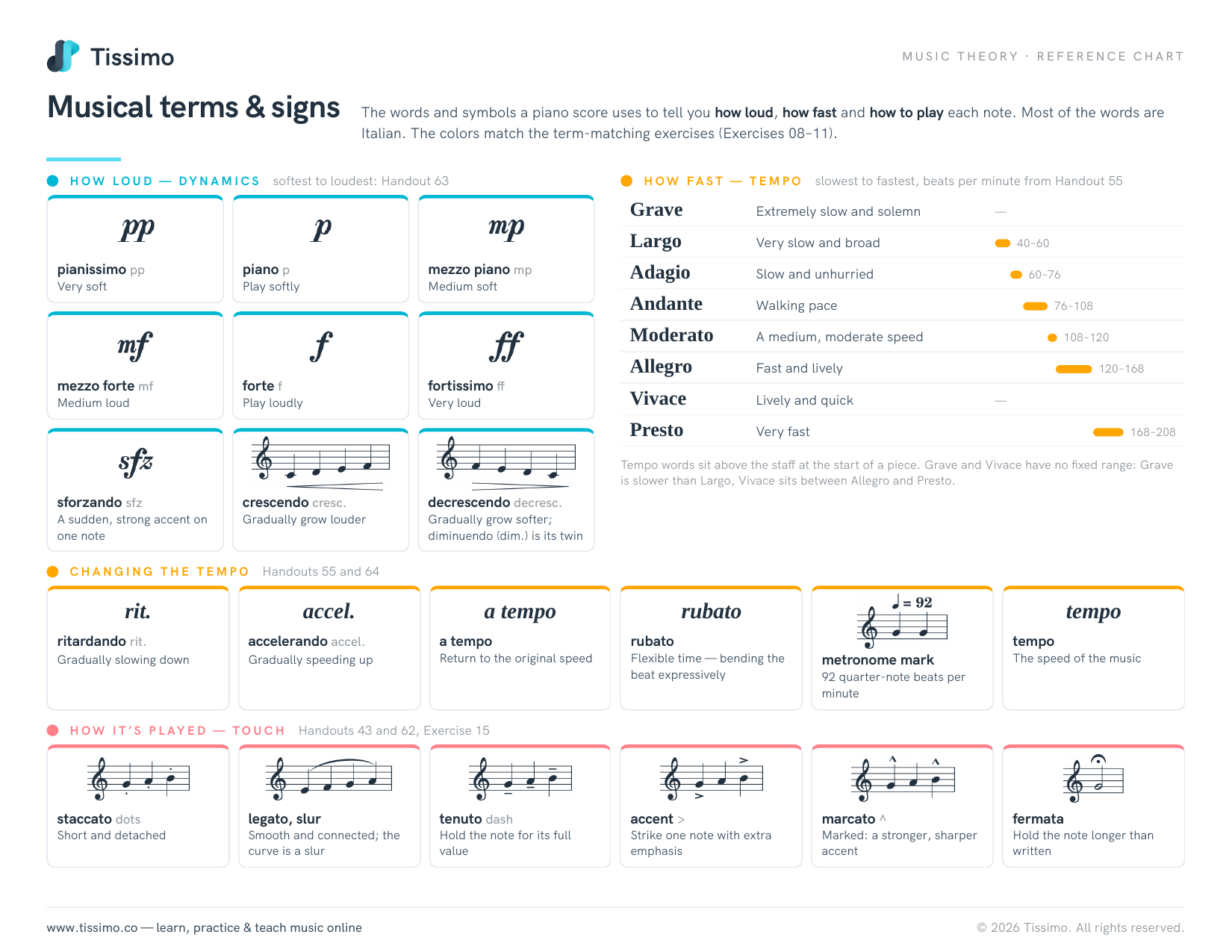 Musical terms & signsThe words and symbols a piano score uses to tell you how loud, how fast and how to play each note. Most of the words are Italian. The colors match the term-matching exercises (Exercises 08–11, 74 and 75).
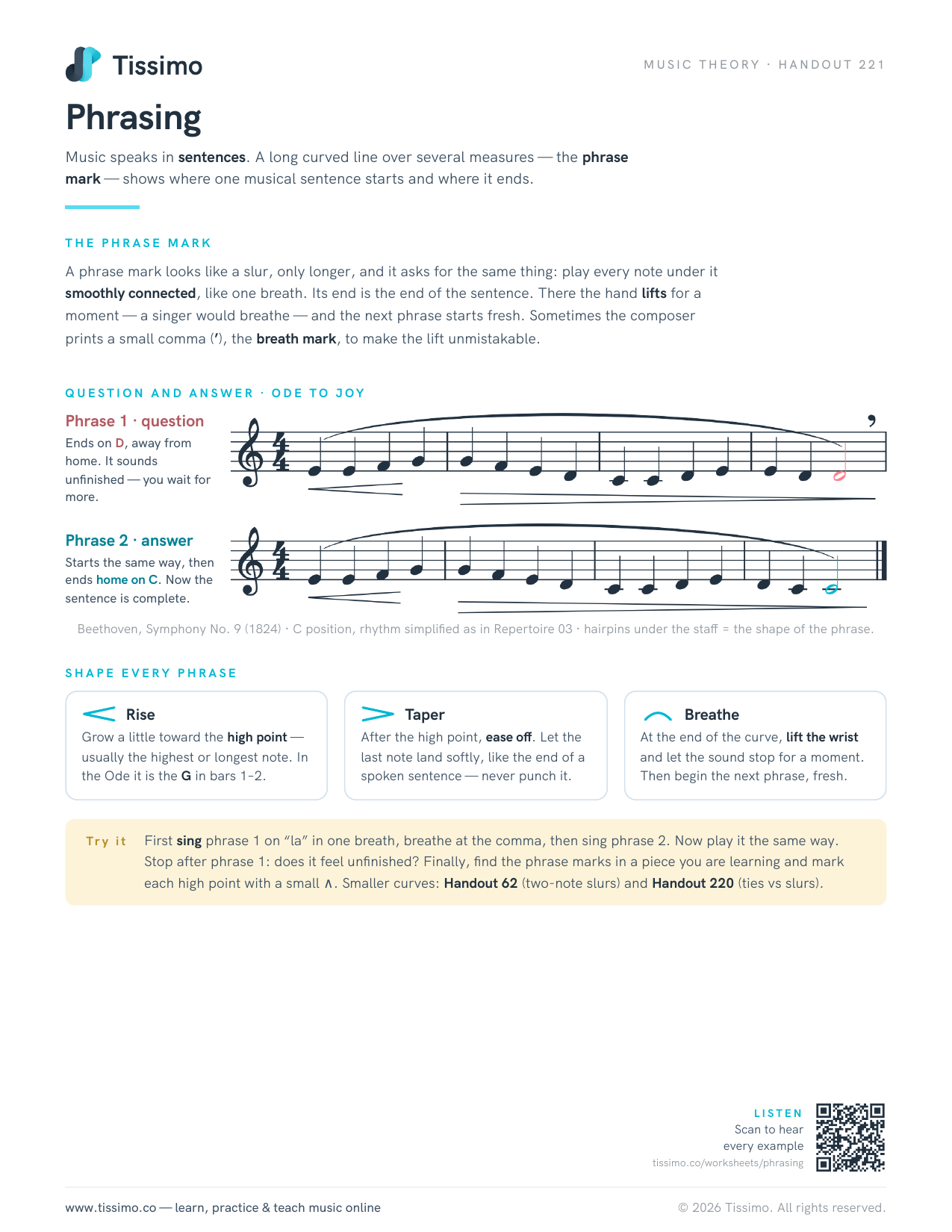 PhrasingMusic speaks in sentences. A long curved line over several measures — the phrase mark — shows where one musical sentence starts and where it ends.