Melody, Texture & Counterpoint
Call and Response
Call and response is a musical conversation in which one performer or group plays or sings a phrase (the call) and another answers it (the response), back and forth.
Call and response is a musical conversation. One performer or group sings or plays a phrase, the call, and another answers it, the response. The answer can repeat the call, complete it, or comment on it, and the exchange keeps going back and forth.
Where it comes from and where you hear it
Call and response is central to many West African musical traditions, and it traveled to the Americas with enslaved Africans. It shaped African American work songs, spirituals and gospel, where a leader sings a line and the congregation answers. It runs through the blues, where a sung line is answered by the guitar, and through jazz, where big-band sections answer one another and soloists "trade fours." From there it passed into soul, rock, funk and hip-hop: whenever a singer shouts a line and the crowd shouts it back, that is call and response. Versions of the practice exist in many other cultures as well, and in children's echo songs.
Kinds of call and response
- Leader and group: a soloist sings, a chorus answers with a refrain.
- Voice and instrument: a singer's phrase answered by a guitar, piano or horn fill.
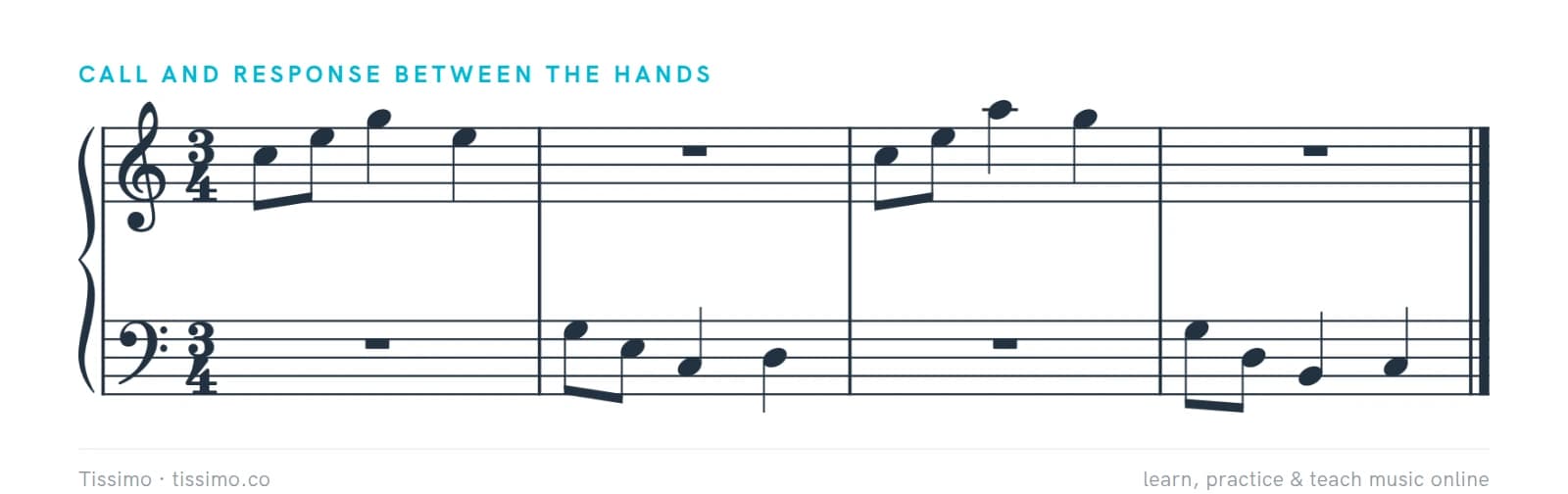
- Section and section: brass against saxophones, or one hand of the piano against the other, as in the example.
- Echo: the response copies the call exactly, a favorite teaching game.
In written music
Composers use the same idea when they pass a phrase between instruments or choirs. Music for two choirs placed apart, answering each other, is called antiphonal. Within a single melody, a period pairs a "question" phrase with an "answer" phrase: see Question and answer.
Try it yourself
In a 12-bar blues, each four-bar line leaves room for an answer: sing or play for two bars, then let another instrument respond for two. At the piano, play a two-bar call with the right hand and answer it with the left, keeping the rhythm and changing the ending. It is also one of the easiest ways into improvisation.
Common questions
What is an example of call and response in music?
A gospel leader singing a line that the choir answers, a blues singer's phrase answered by the guitar, or a concert crowd shouting a line back to the singer are all call and response.
Practice it: free worksheets
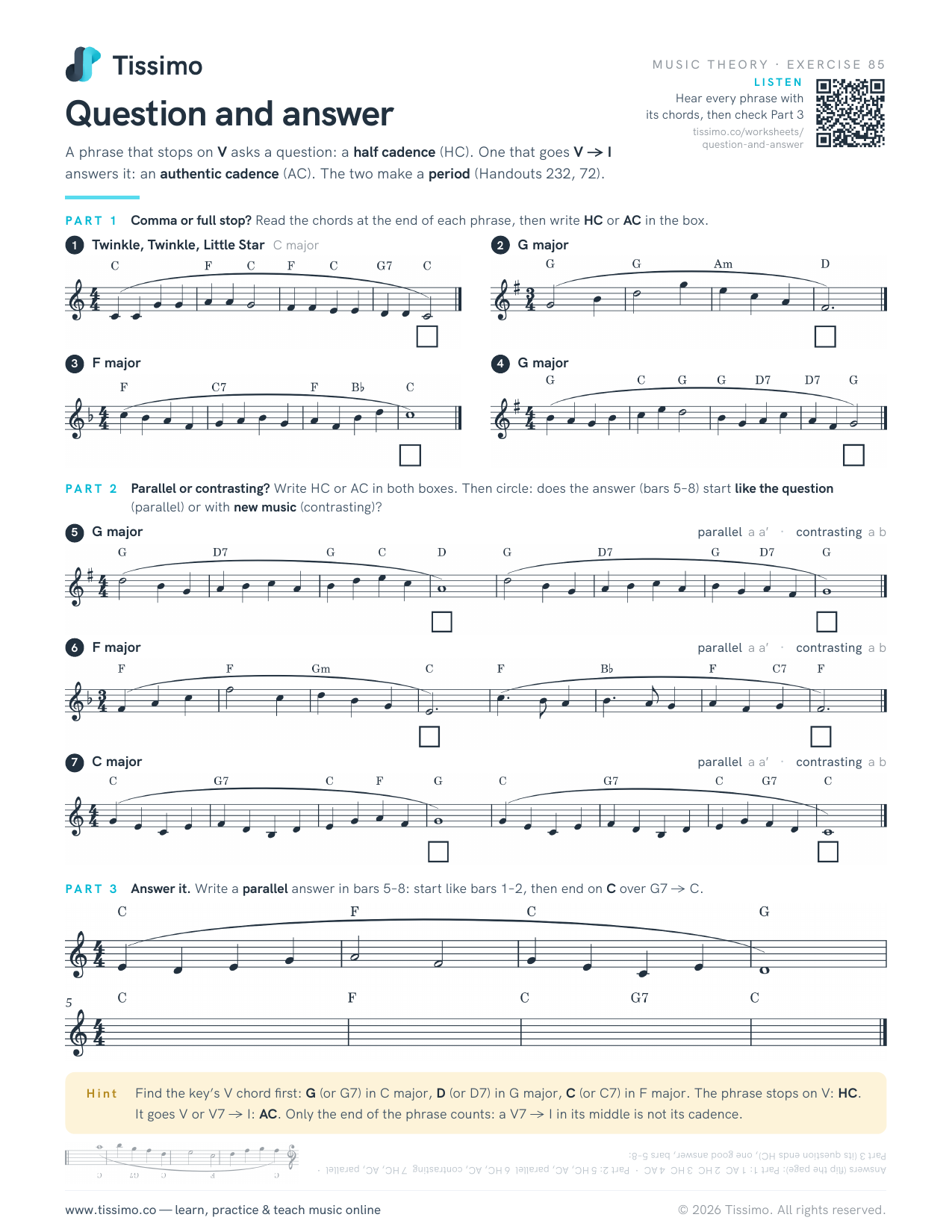 Question and answerA phrase that stops on V asks a question: a half cadence (HC). One that goes V → I answers it: an authentic cadence (AC). The two make a period (Handouts 232, 72).
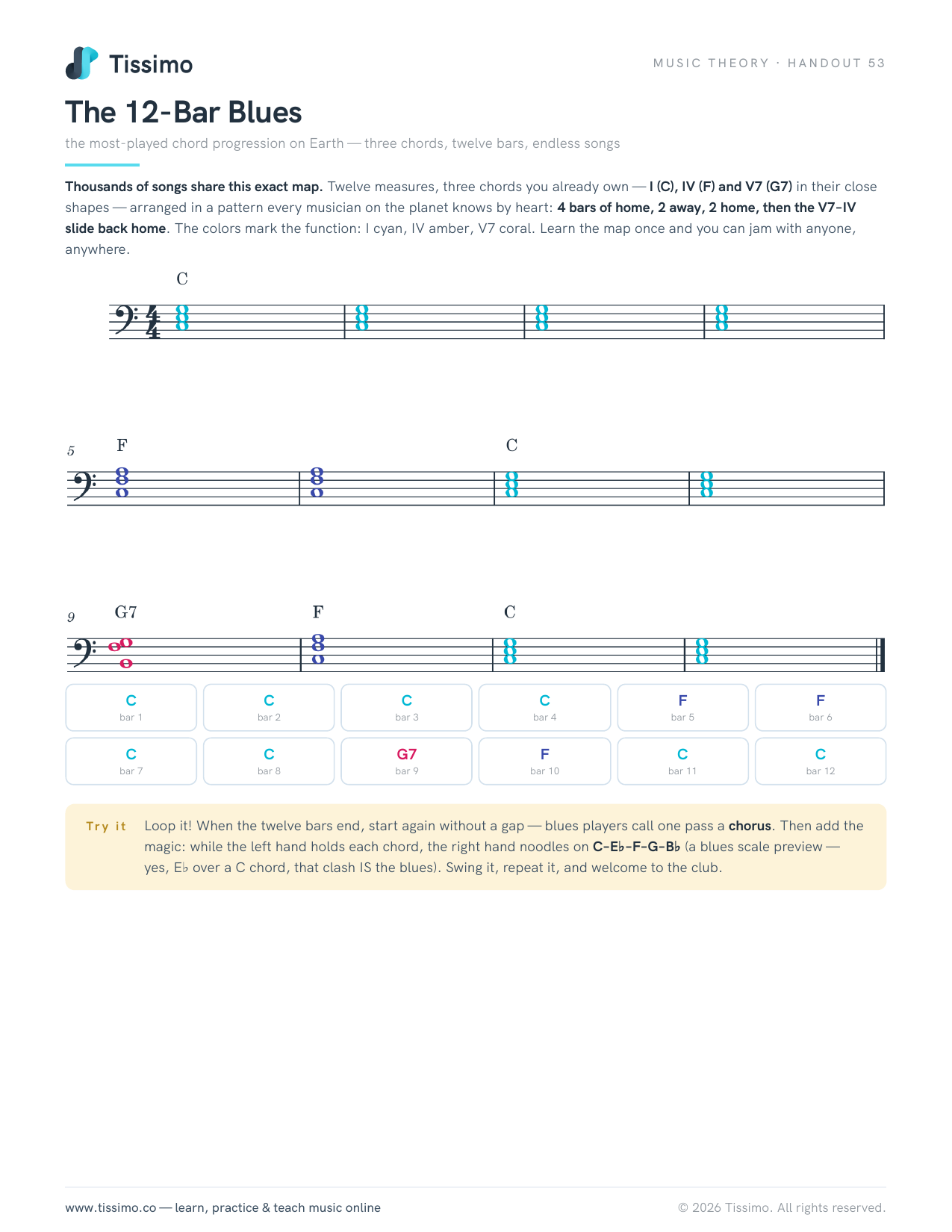 The 12-Bar Bluesone of the best-known chord progressions — three chords, twelve bars, endless songs
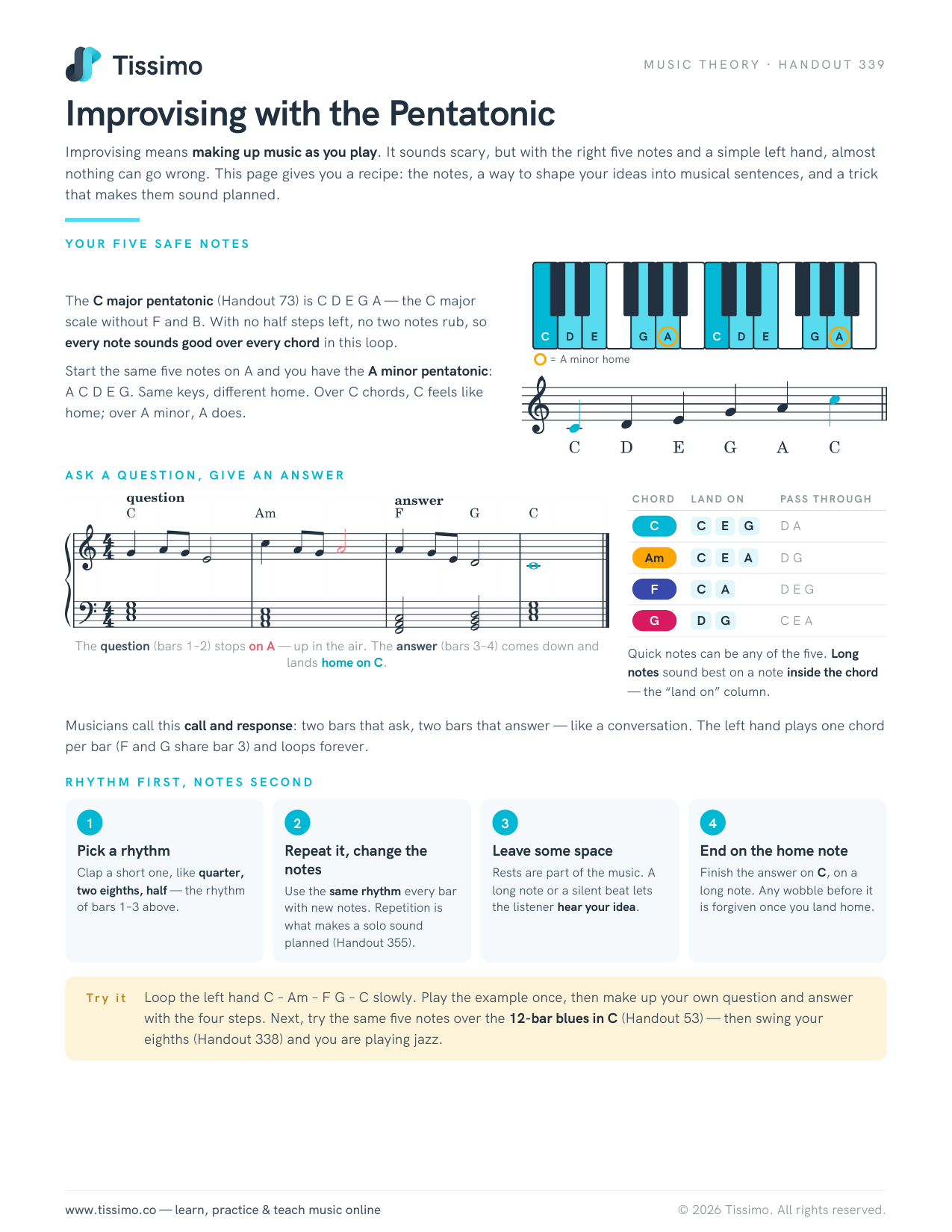 Improvising with the PentatonicImprovising means making up music as you play. It sounds scary, but with the right five notes and a simple left hand, almost nothing can go wrong. This page gives you a recipe: the notes, a way to shape your ideas into musical sentences, and a trick that makes them sound planned.