Melody, Texture & Counterpoint
Melodic Contour
Melodic contour is the overall shape of a melody, the pattern of its rises and falls: for example an arch that climbs and comes back down, a steady descent, or a wave.
Melodic contour is the shape a melody draws as it moves up and down. If you traced the notes with a pencil and ignored the exact pitches, the line you drew would be its contour. Listeners recognize contour very quickly, often before they know any of the exact notes, which is why it is one of the first things to listen for when you learn a tune by ear.
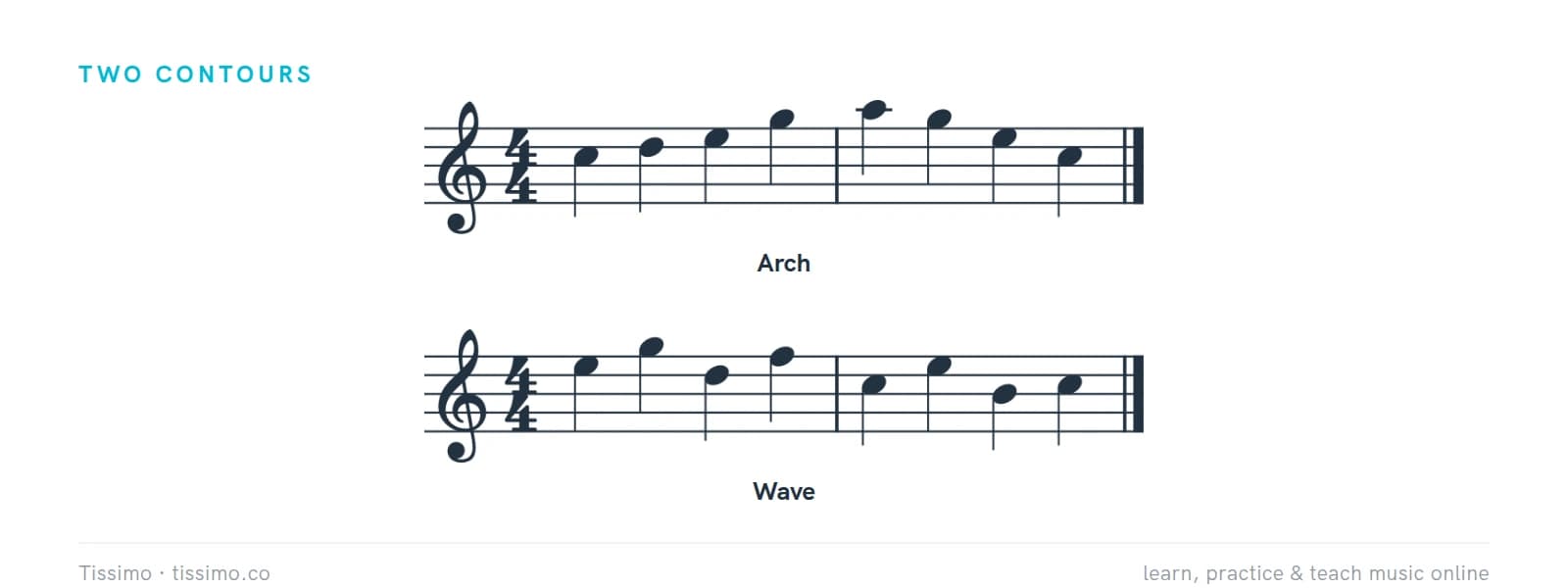
Common shapes
- Arch: rises to a high point, then comes back down. Probably the most common shape for a single phrase.
- Inverted arch (bowl): dips down, then rises again.
- Ascending: climbs steadily, building energy or excitement.
- Descending: falls, often sounding calm, sad or conclusive. Many phrases end with a short descent into the tonic.
- Wave: rises and falls several times in smaller curves.
- Static: stays around one or two notes, as in chant or some rap and spoken-style melodies.
Contour and expression
A rising line tends to build tension and is often played with a slight crescendo; a falling line tends to relax. The highest note of a phrase is usually its emotional peak, so many players shape a phrase toward it. That is part of phrasing.
Contour in ear training
When you write down a melody you hear, start with the contour: draw the shape in the air or on paper, mark where it goes up and down and where it steps or leaps (conjunct and disjunct motion). Then find the exact notes. Melodic Dictation and Ear Training: Melodic Dictation use this "trace the shape" step.
Contour also explains why a melody stays recognizable when it is transposed into another key: the exact pitches change, but the shape does not.
Common questions
What is the most common melodic contour?
The arch, which rises to a high point and falls back, is very common for single phrases. Many phrases also end with a short descent to the home note.
Practice it: free worksheets
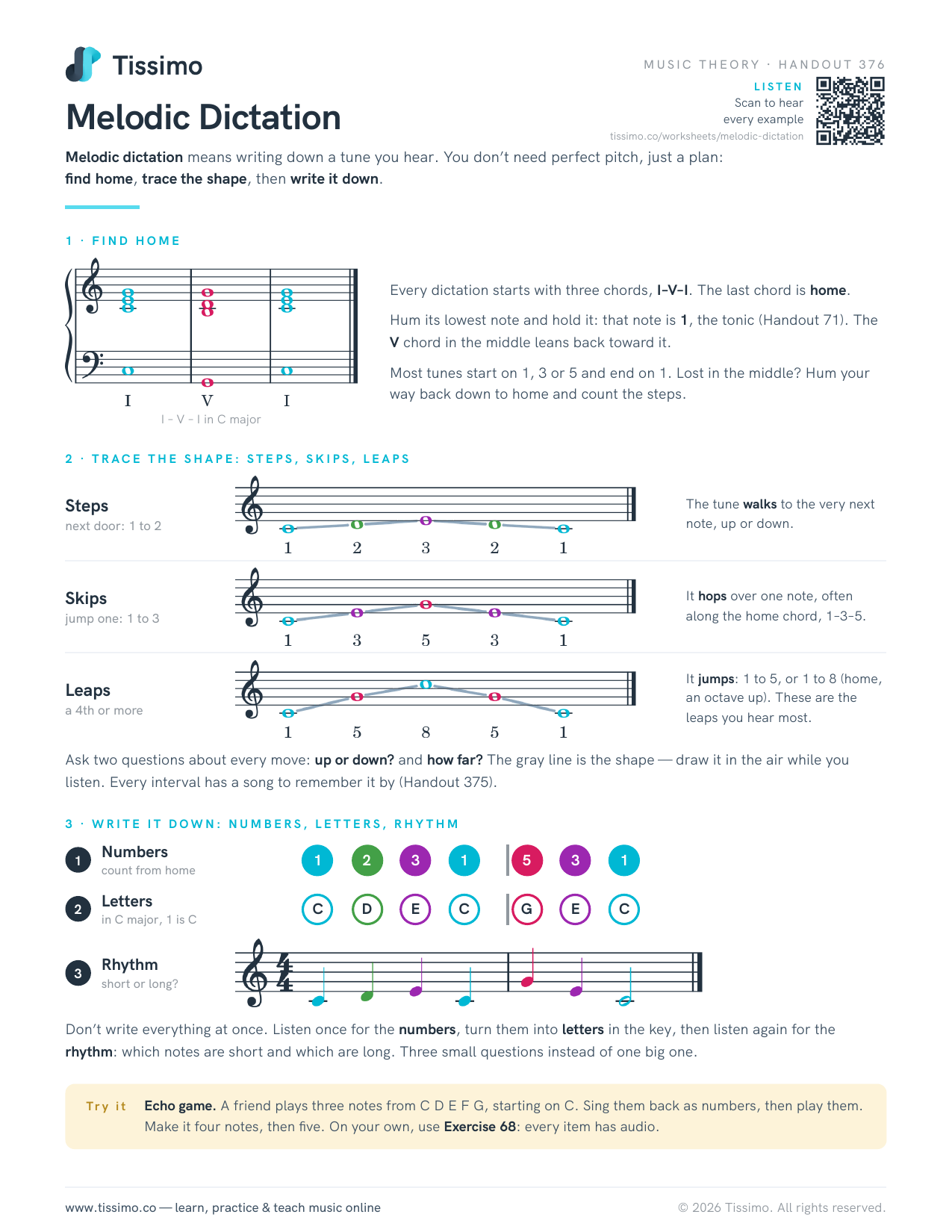 Melodic DictationMelodic dictation means writing down a tune you hear. You don’t need perfect pitch, just a plan: find home, trace the shape, then write it down.
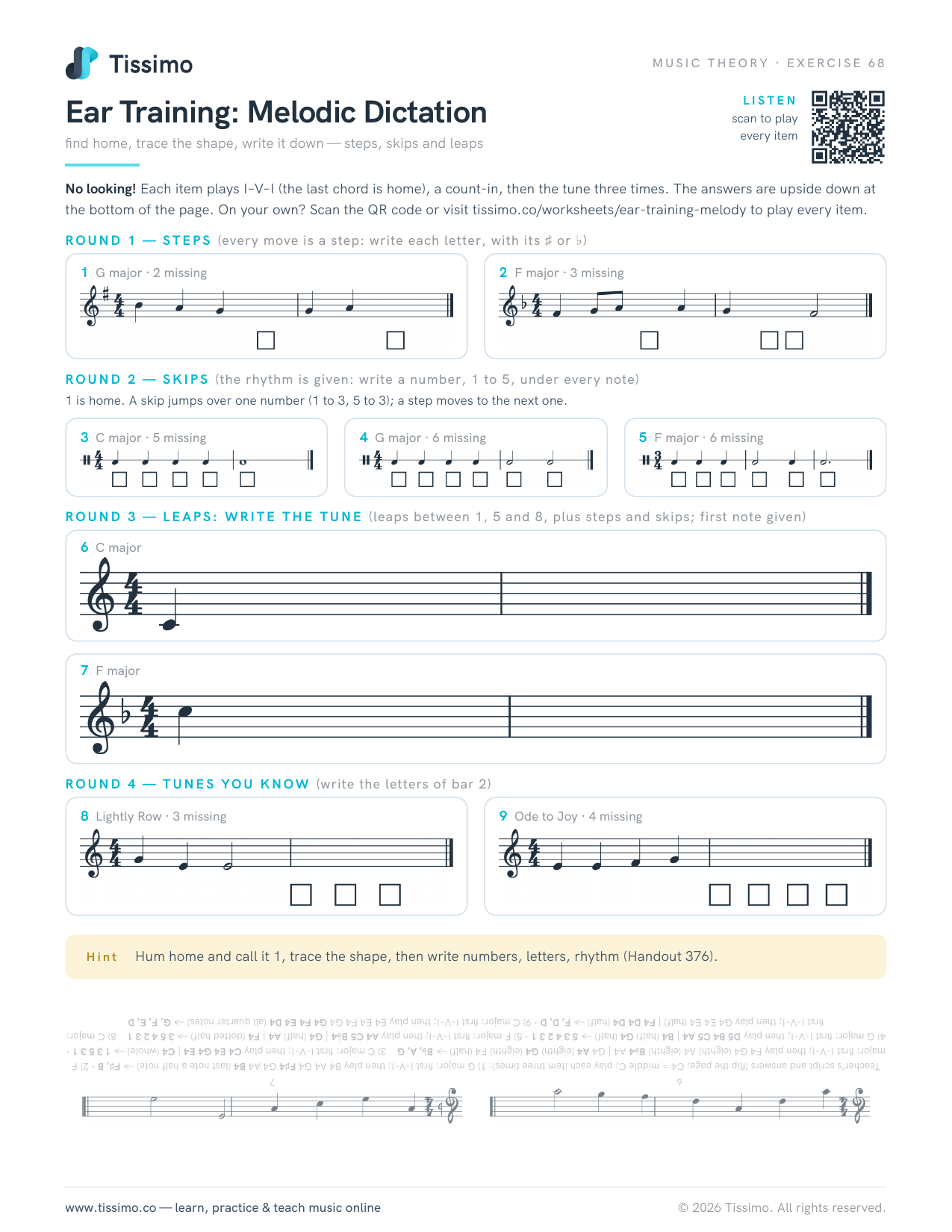 Ear Training: Melodic Dictationfind home, trace the shape, write it down — steps, skips and leaps
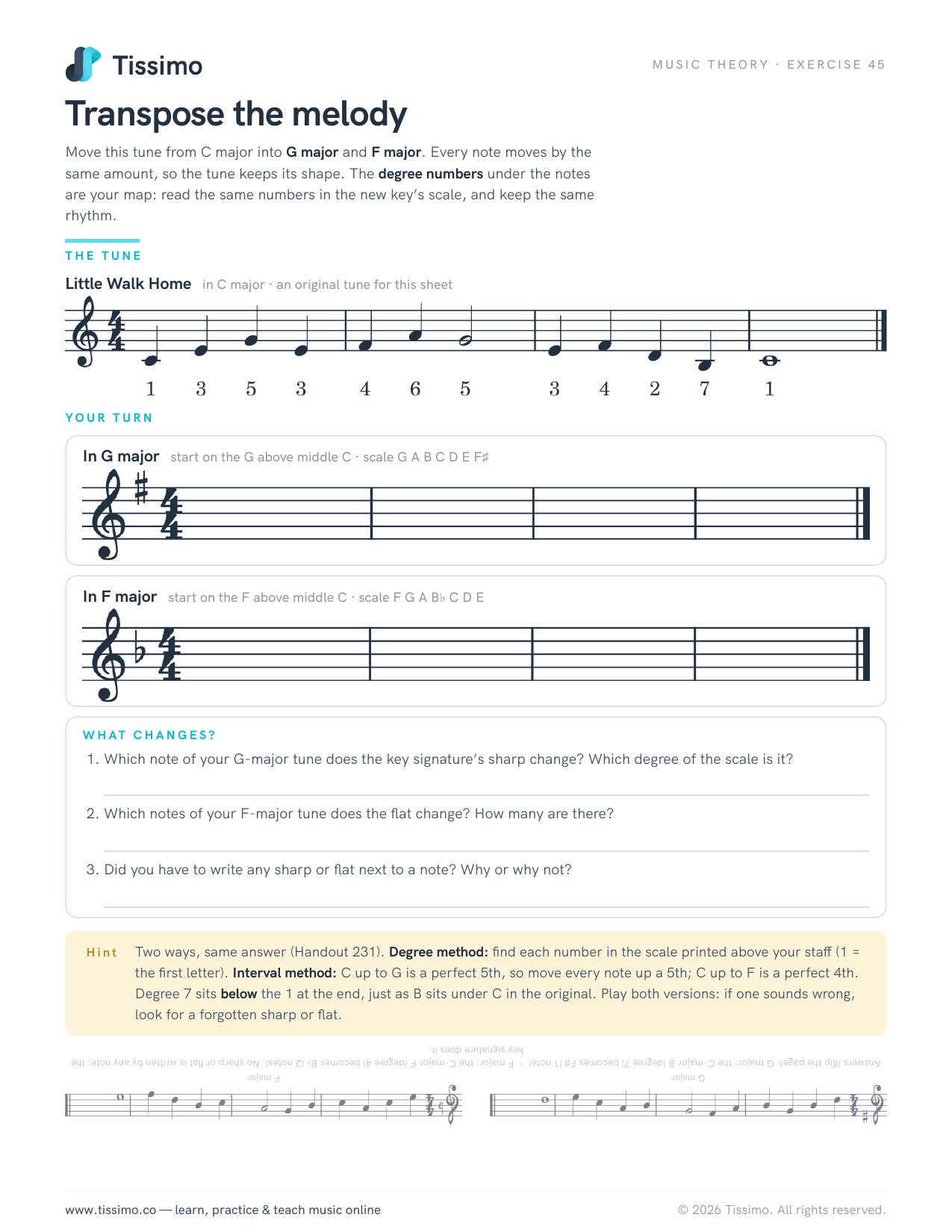 Transpose the melodyMove this tune from C major into G major and F major. Every note moves by the same amount, so the tune keeps its shape. The degree numbers under the notes are your map: read the same numbers in the new key’s scale, and keep the same rhythm.