Melody, Texture & Counterpoint
Countermelody
A countermelody is a second, independent melody played or sung at the same time as the main melody, designed to complement it rather than simply accompany it.
A countermelody is a second melody that sounds at the same time as the main one. It is a real tune in its own right, with its own shape and rhythm, but it is written to fit around the main melody and support it. Think of a cello line singing underneath a violin tune, or a high descant soaring above the congregation in the last verse of a hymn.
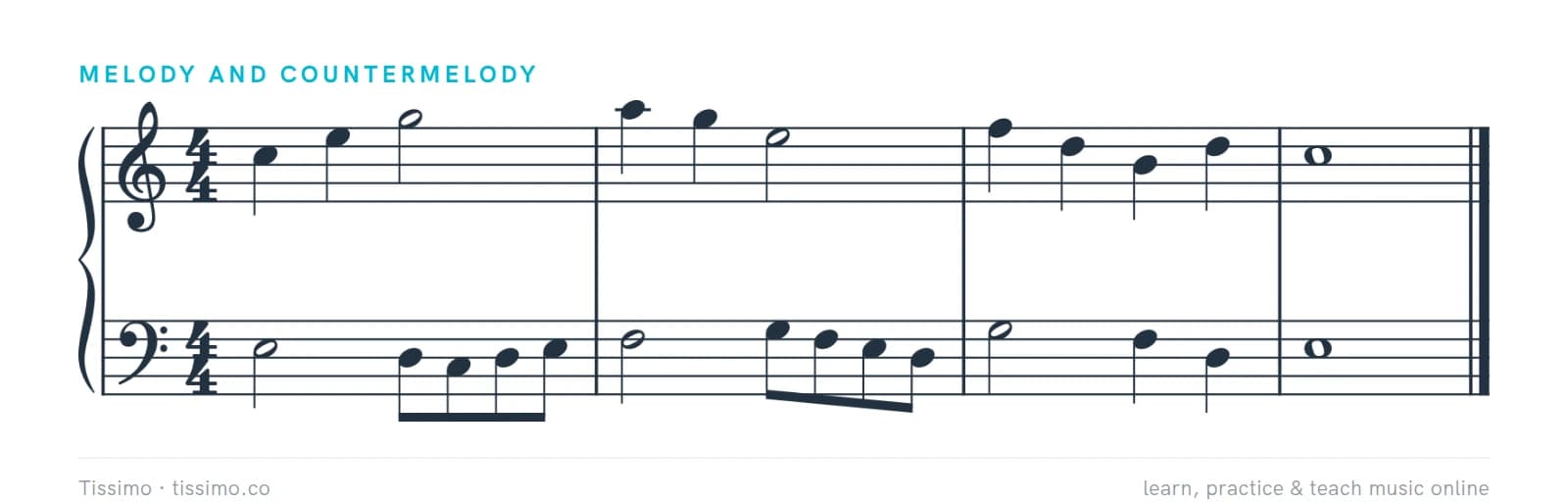
How a good countermelody works
- It moves when the melody rests. When the main tune holds a long note, the countermelody becomes busier, and when the tune is busy, the countermelody holds still. In the example, the lower line runs in eighth notes exactly where the melody sits on a half note.
- It has its own contour. It often moves in the opposite direction to the melody (contrary motion), so the two lines stay distinct.
- It fits the harmony. Its notes mostly belong to the chords, so the two melodies agree.
- It stays in its own register, above or below the main tune, so the ear can follow both.
Where you hear countermelodies
Marching bands and concert bands give countermelodies to the horns or baritones; arrangers of pop songs write string or synth lines that weave around the vocal; a descant is a countermelody sung above a hymn tune. In jazz, a player who answers the soloist with a line of their own is improvising a countermelody.
Countermelody, accompaniment and counterpoint
An accompaniment supports the tune with chords and rhythm; a countermelody is a second tune. When several lines are equally important and independent, the texture is polyphony, and the craft of writing such lines is counterpoint. A countermelody sits between the two worlds: one main melody, plus a partner that is clearly a melody too.
Hear how lines combine in Ear Training: One Line, Tune with Chords, or Two Independent Lines?, and practice keeping the main tune on top with Voicing and Balance.
Common questions
What is the difference between a countermelody and a harmony part?
A harmony part usually follows the melody's rhythm a third or sixth away, adding color. A countermelody has its own rhythm and shape, so it can be heard as a separate tune.
Practice it: free worksheets
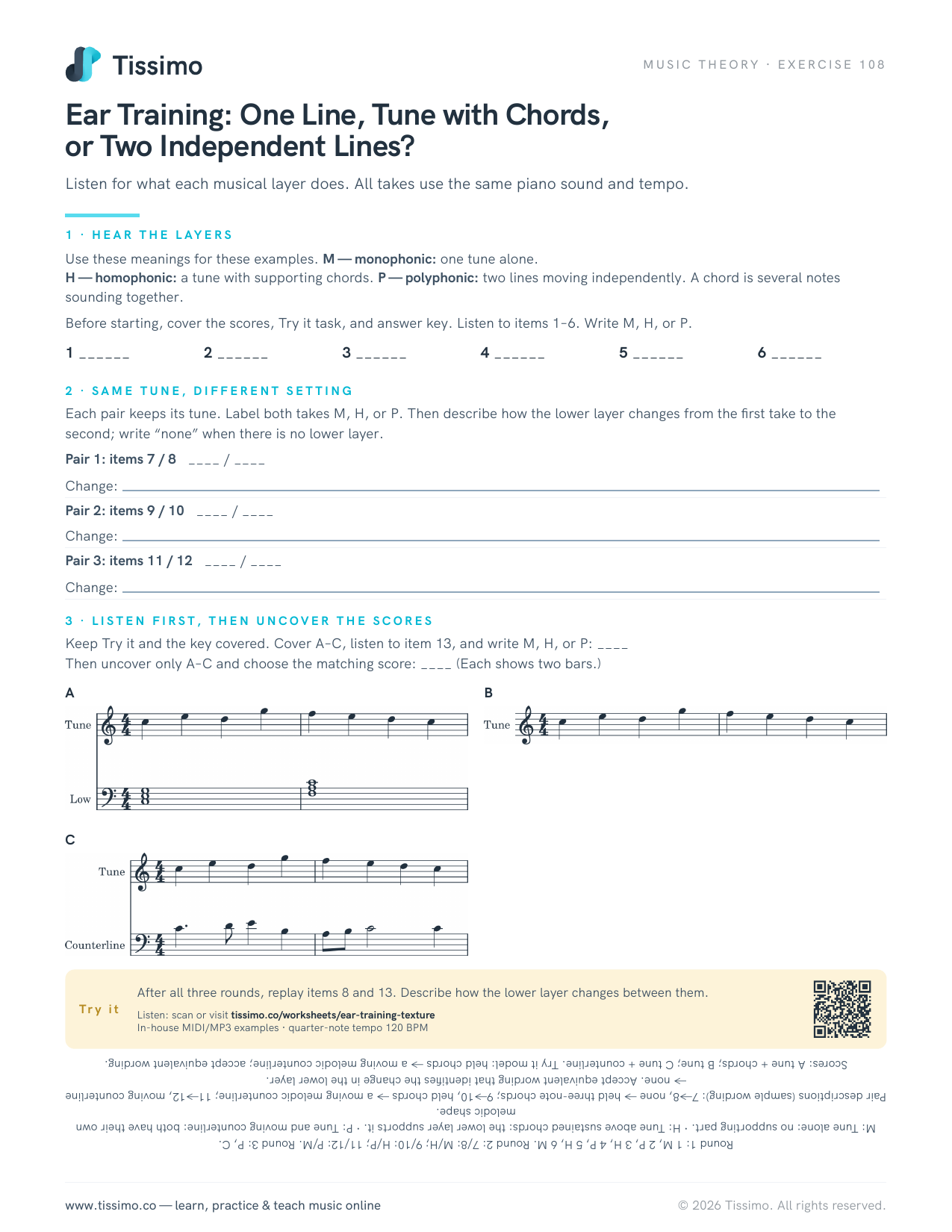 Ear Training: One Line, Tune with Chords, or Two Independent Lines?Listen for what each musical layer does. All takes use the same piano sound and tempo.
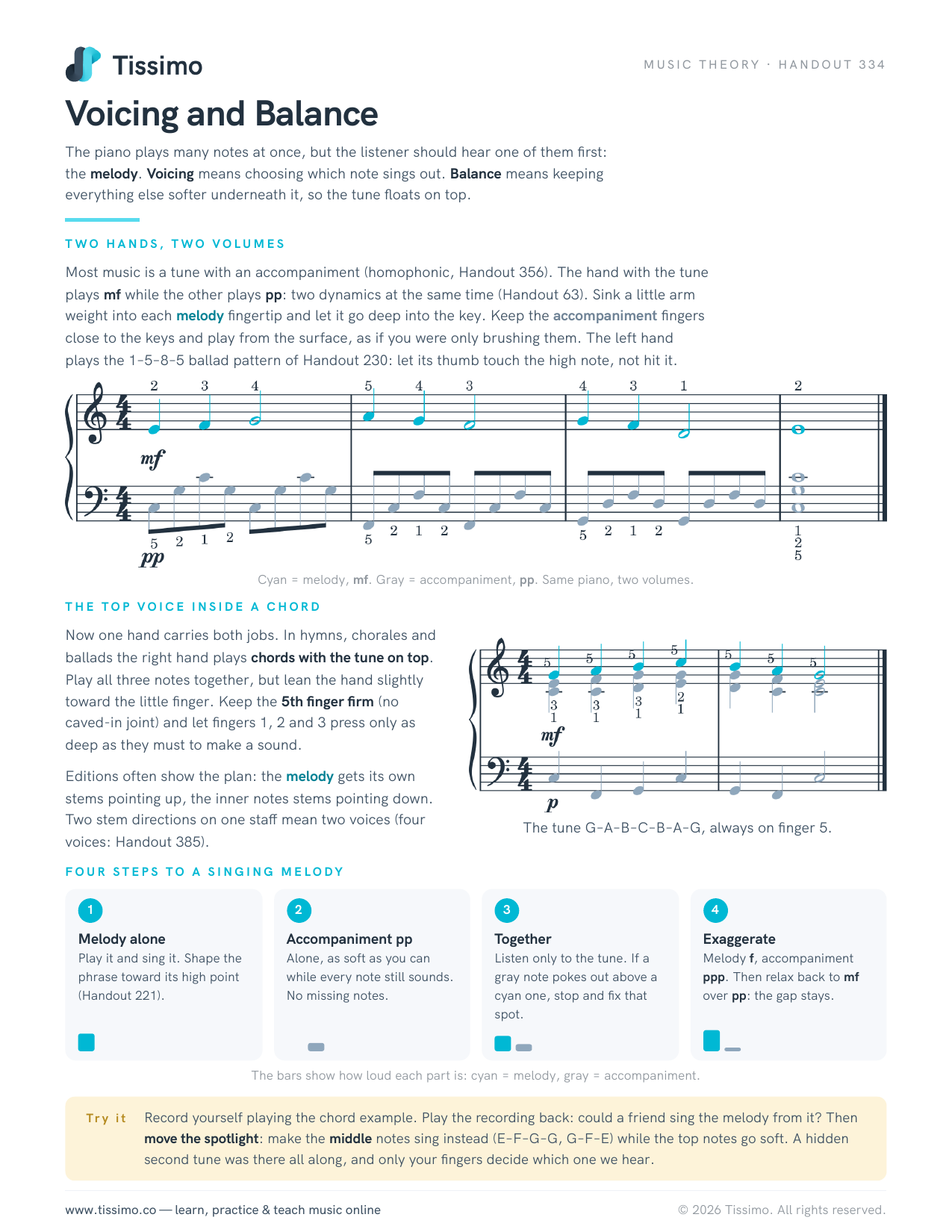 Voicing and BalanceThe piano plays many notes at once, but the listener should hear one of them first: the melody. Voicing means choosing which note sings out. Balance means keeping everything else softer underneath it, so the tune floats on top.
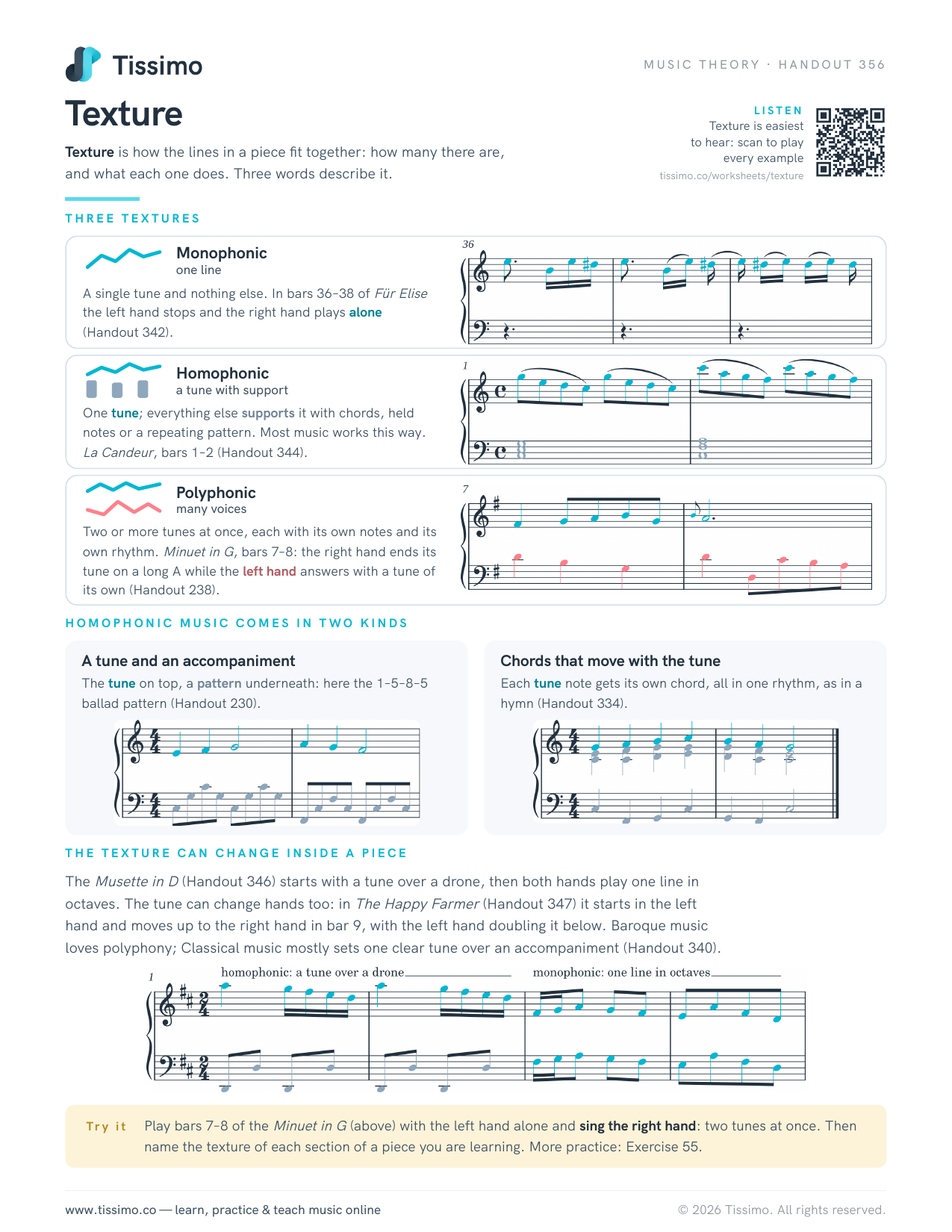 TextureTexture is how the lines in a piece fit together: how many there are, and what each one does. Three words describe it.