Melody, Texture & Counterpoint
Contrary Motion
Contrary motion is when two musical lines move in opposite directions, one rising while the other falls. It is one of four kinds of motion between voices, with parallel, similar and oblique motion.
Contrary motion happens when two musical lines move in opposite directions: one goes up while the other goes down. It is one of four ways two voices can move in relation to each other, and it is the one that keeps them most clearly independent.
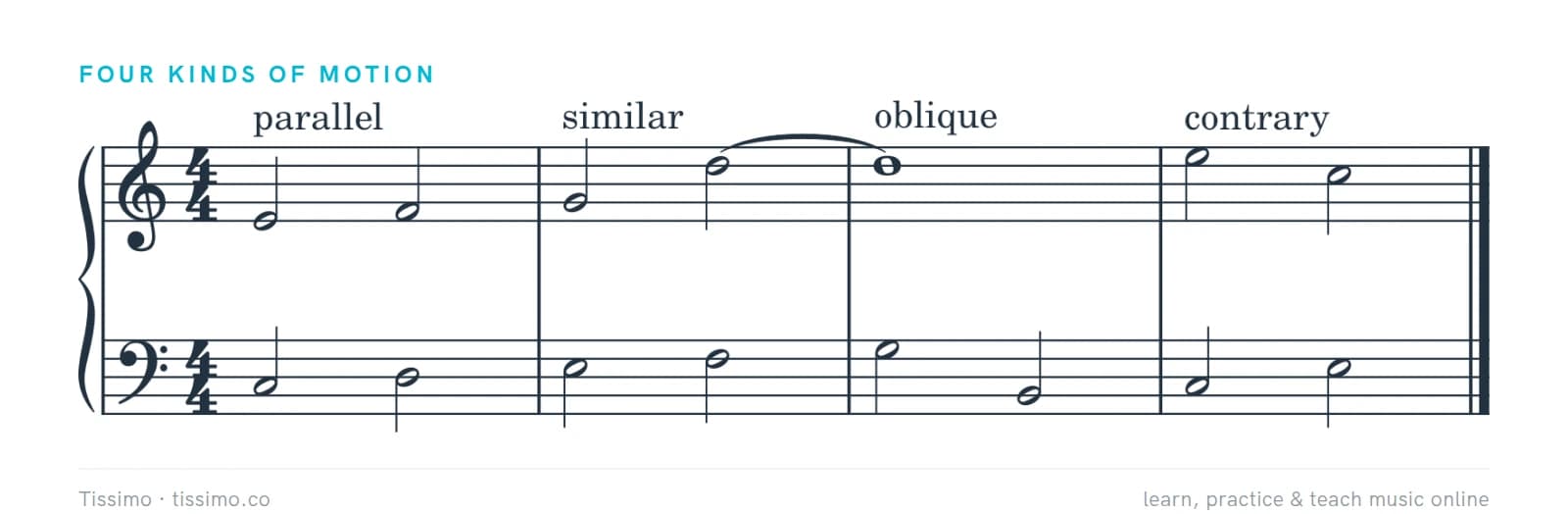
The four kinds of motion
- Parallel motion: both voices move in the same direction and stay the same distance apart, for example in thirds or tenths.
- Similar motion: both move in the same direction, but by different amounts, so the interval between them changes.
- Oblique motion: one voice stays on the same note while the other moves.
- Contrary motion: the voices move in opposite directions.
Why it matters in harmony
The traditional rules of voice leading favor contrary motion between the outer voices, the melody and the bass. When two voices move in opposite directions they cannot slide into parallel fifths or octaves, and the texture opens and closes like a fan, which gives a satisfying sense of space. A simple habit for harmonizing a tune: when the melody rises, let the bass fall, and the other way round.
Parallel motion in thirds and sixths is perfectly good too; it is parallel fifths and octaves that the rules avoid. Good counterpoint mixes all four kinds of motion, with contrary and oblique motion keeping the lines distinct.
Contrary motion at the keyboard
Pianists practice contrary-motion scales: both hands start on the same note and move apart, then come back together. In C major the two hands use mirror-image fingerings, so the thumbs cross under at the same moment, and many students find these scales easier at first than scales with the hands moving in parallel. Practice them with Contrary-Motion Scales, and turn a right-hand passage into its mirror image with Mirror the Passage.
Common questions
What are the four types of motion in music?
Parallel (same direction, same interval), similar (same direction, different intervals), oblique (one voice holds while the other moves) and contrary (opposite directions).
What is a contrary-motion scale?
A scale played with both hands starting on the same note and moving in opposite directions, the right hand up and the left hand down, then back again.
Practice it: free worksheets
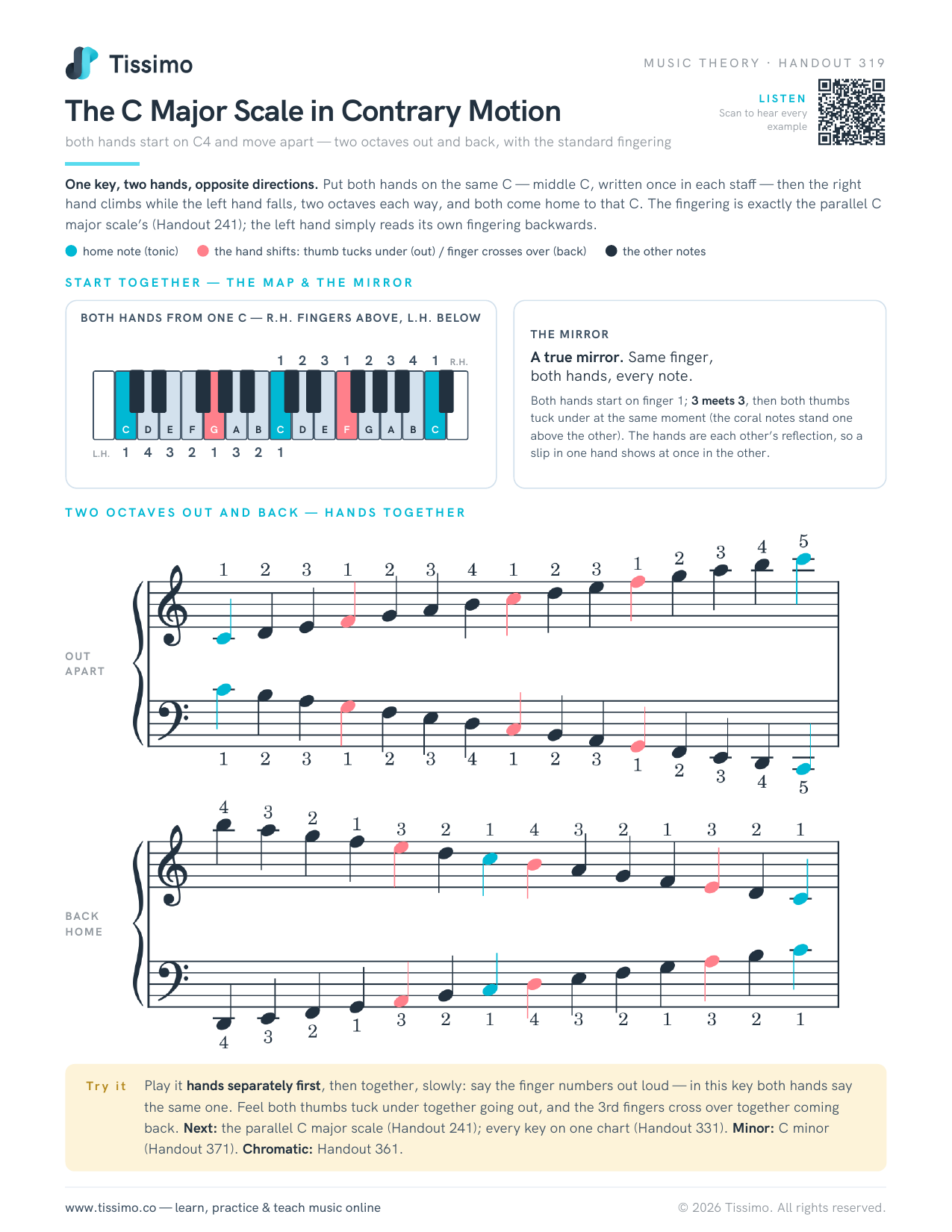 Contrary-Motion ScalesBoth hands start on one note and move apart two octaves and back, in all 12 major and 12 harmonic minor keys.
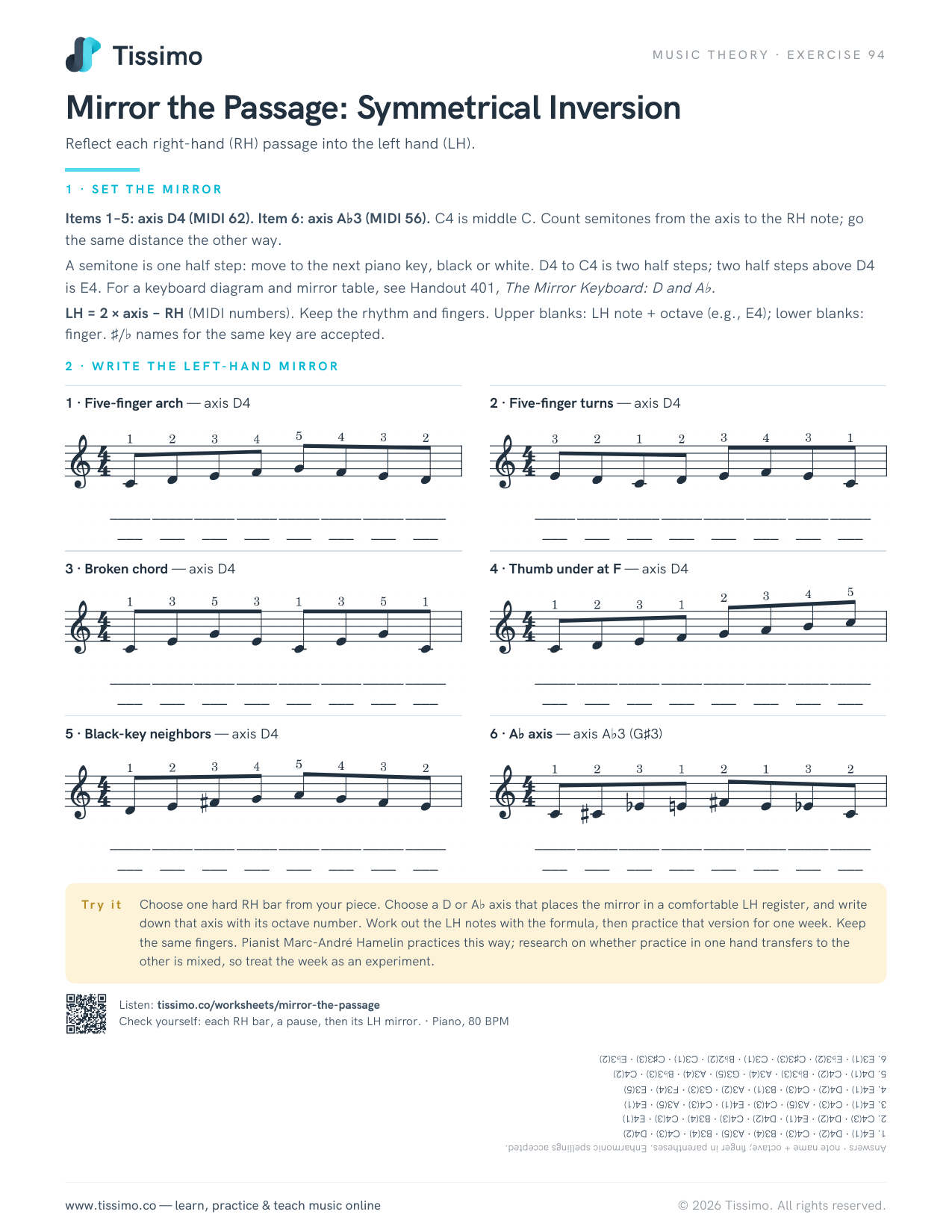 Mirror the Passage: Symmetrical InversionReflect each right-hand (RH) passage into the left hand (LH).
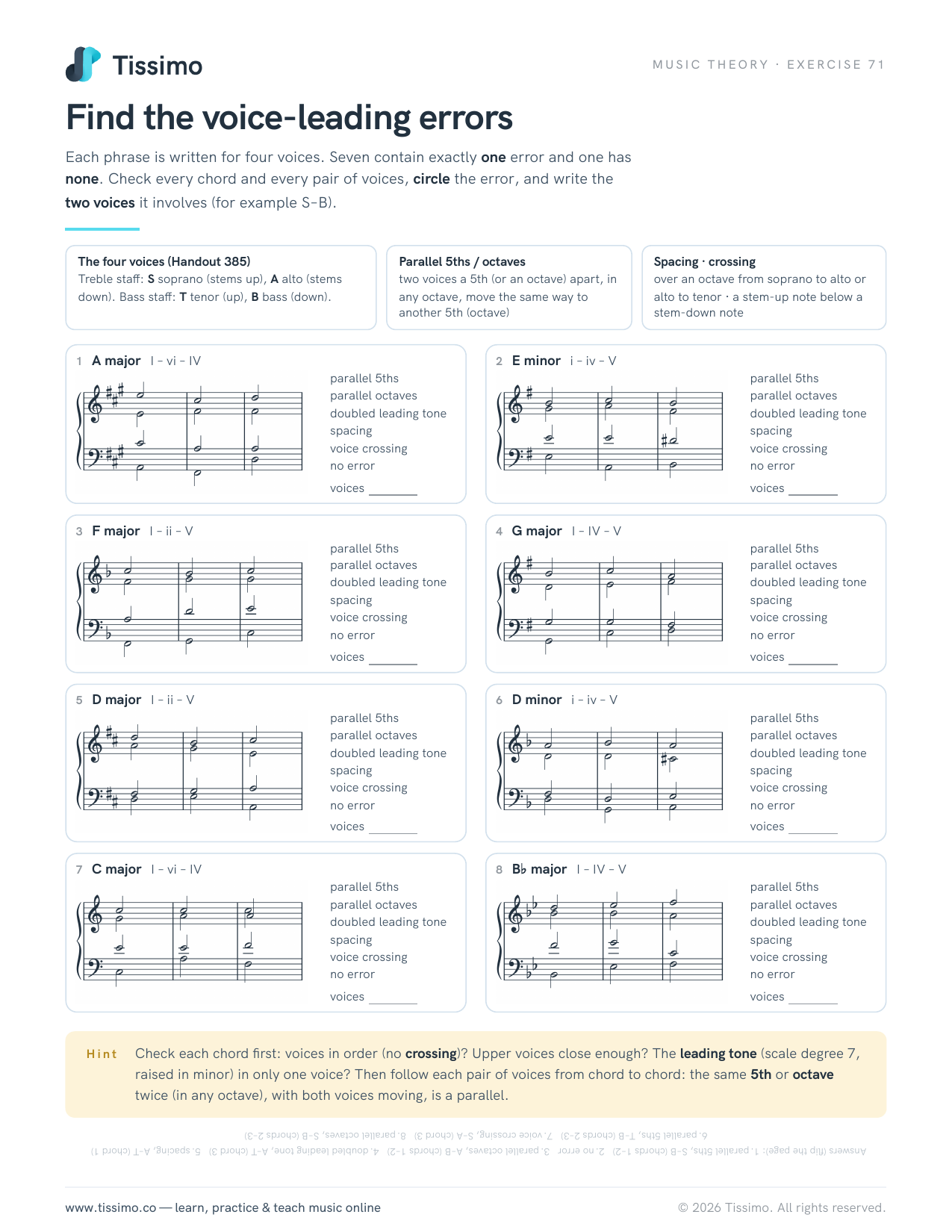 Find the voice-leading errorsEach phrase is written for four voices. Seven contain exactly one error and one has none. Check every chord and every pair of voices, circle the error, and write the two voices it involves (for example S–B).
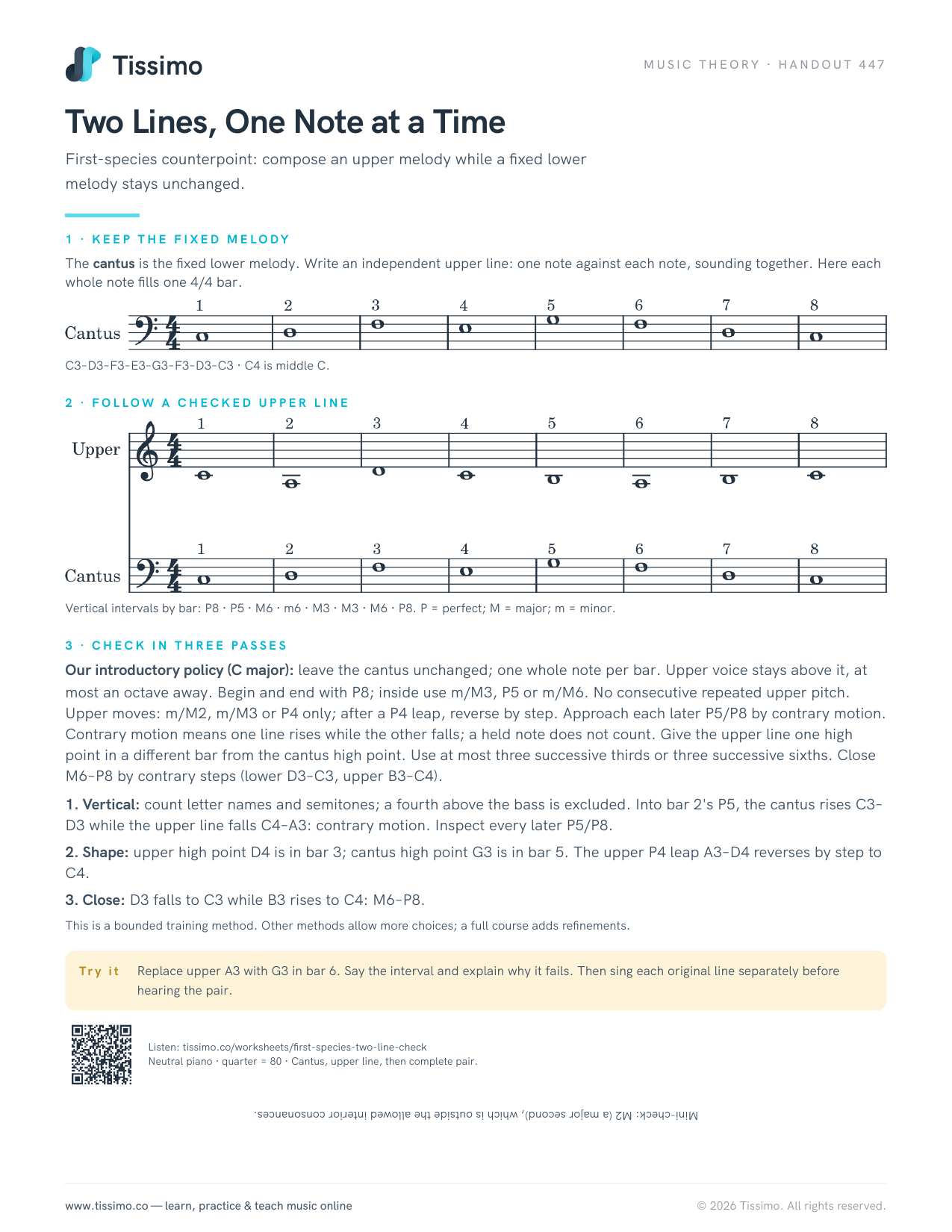 Two Lines, One Note at a TimeFirst-species counterpoint: compose an upper melody while a fixed lower melody stays unchanged.