Pitch & Intervals
Consonance
Consonance is the quality of intervals and chords that sound stable and at rest, such as octaves, fifths, thirds and sixths. Its opposite, dissonance, sounds tense and seems to need resolution.
A consonance is an interval or chord that sounds stable: it can end a phrase, and nothing in it asks to move. The octave, the perfect fifth, the major and minor thirds and sixths, and the major and minor triads built from them are the classic consonances of Western music. The opposite is dissonance.
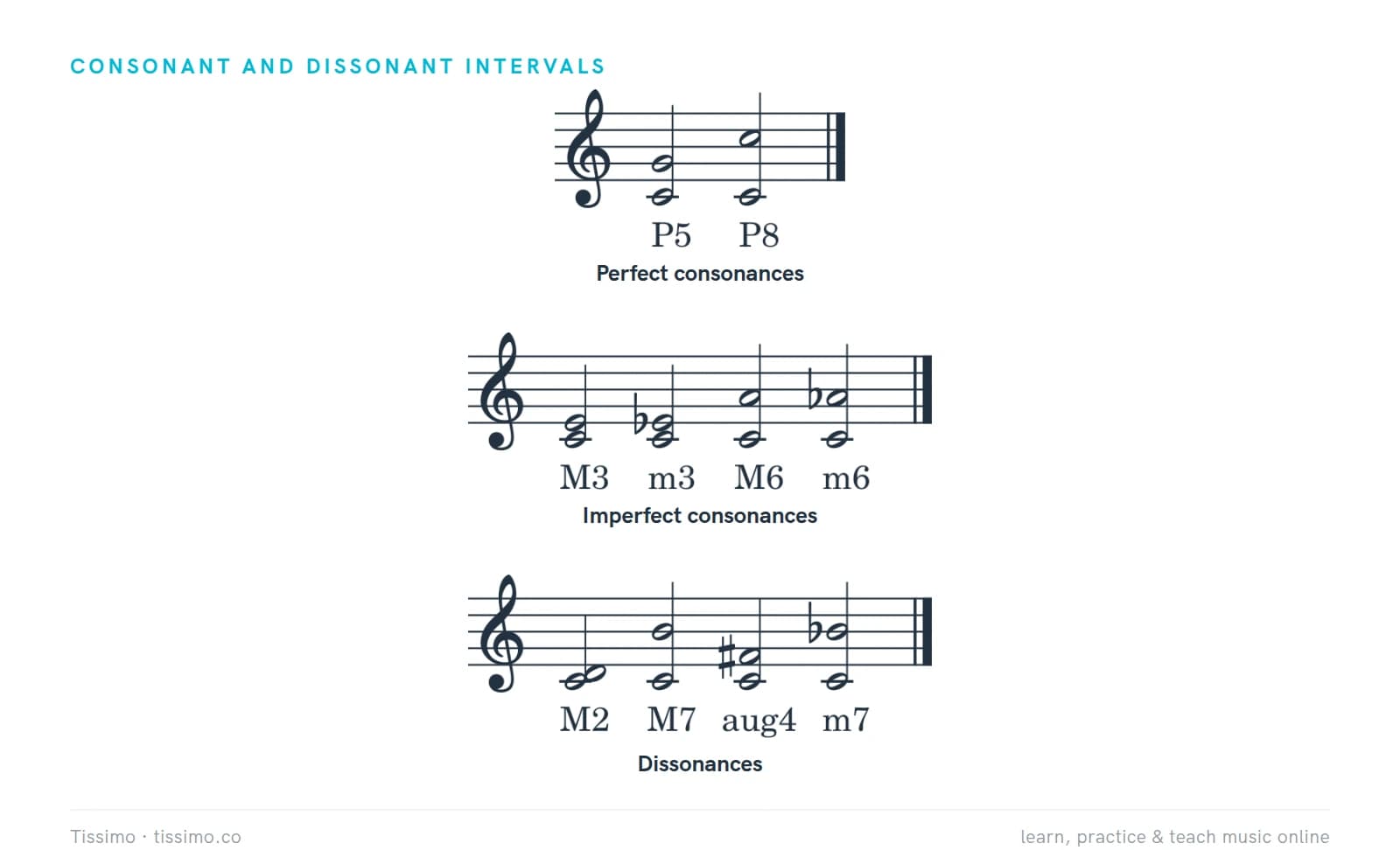
Perfect and imperfect consonances
Classical theory sorts the consonant intervals into two groups:
- Perfect consonances: the unison, the perfect fifth and the octave, with their compound forms. They are the most blended and stable, so open that on their own they can sound hollow.
- Imperfect consonances: the major and minor third and the major and minor sixth. They are stable but richer, and they carry the major or minor color of the music.
The perfect fourth is the odd one out: consonant between two upper voices, but treated as a dissonance when it is formed with the bass. Everything else counts as dissonant: seconds, sevenths, the tritone, and all augmented and diminished intervals.
Why some intervals sound consonant
The most consonant intervals have the simplest frequency ratios: 2:1 for the octave, 3:2 for the fifth, 5:4 for the major third. Many overtones of two such notes coincide, and the ones that don't are far enough apart not to clash. In dissonant intervals, overtones that lie close together produce rapid beating, which the ear hears as roughness. This explanation goes back to the 19th-century physicist Hermann von Helmholtz, and it still accounts for much of what listeners report.
Acoustics is not the whole story. What counts as consonant has changed over the centuries and differs between styles: early medieval theory did not count thirds among the consonances at all, while jazz musicians hear an added sixth or ninth as a restful color. Familiarity and context shape the ear as well.
Consonance in practice
In tonal music a phrase normally ends on a consonance, and dissonances resolve into consonances. When a suspension resolves, or a dominant seventh chord moves to the tonic, you hear tension turn into consonance.
Compare the sounds with Hearing intervals, and listen to the beating that makes close intervals rough in Hear the Pulse Between Two Tones.
Common questions
What is the difference between consonance and dissonance?
A consonance sounds stable and at rest (octaves, fifths, thirds, sixths). A dissonance sounds tense and seems to need to move (seconds, sevenths, the tritone). In tonal music, dissonances usually resolve to consonances.
Is a perfect fourth consonant or dissonant?
It depends on the context. Acoustically it is very smooth (ratio 4:3), and between upper voices it counts as consonant. In classical harmony, a fourth formed with the bass note is treated as a dissonance that resolves, as in a 4–3 suspension.
Practice it: free worksheets
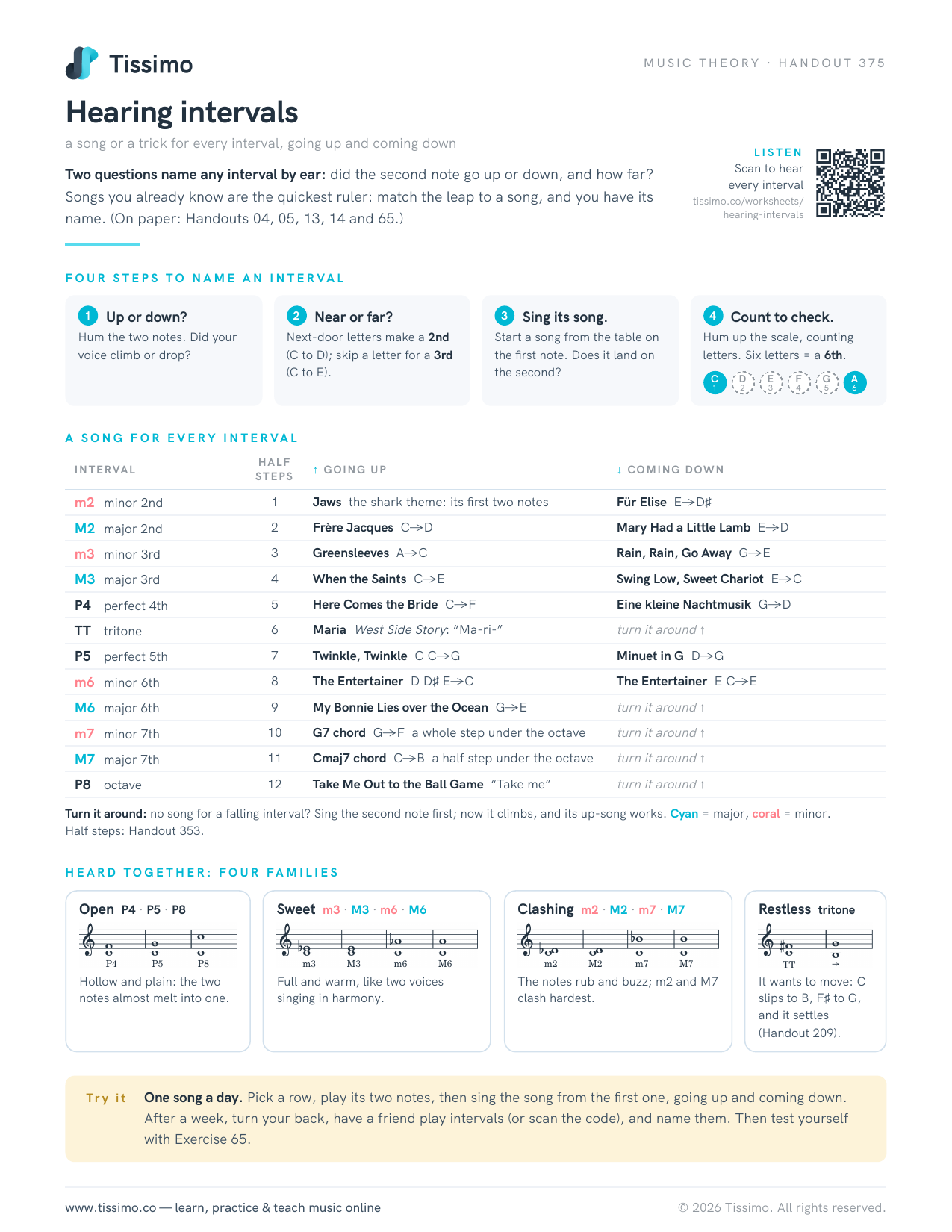 Hearing intervalsa song or a trick for every interval, going up and coming down
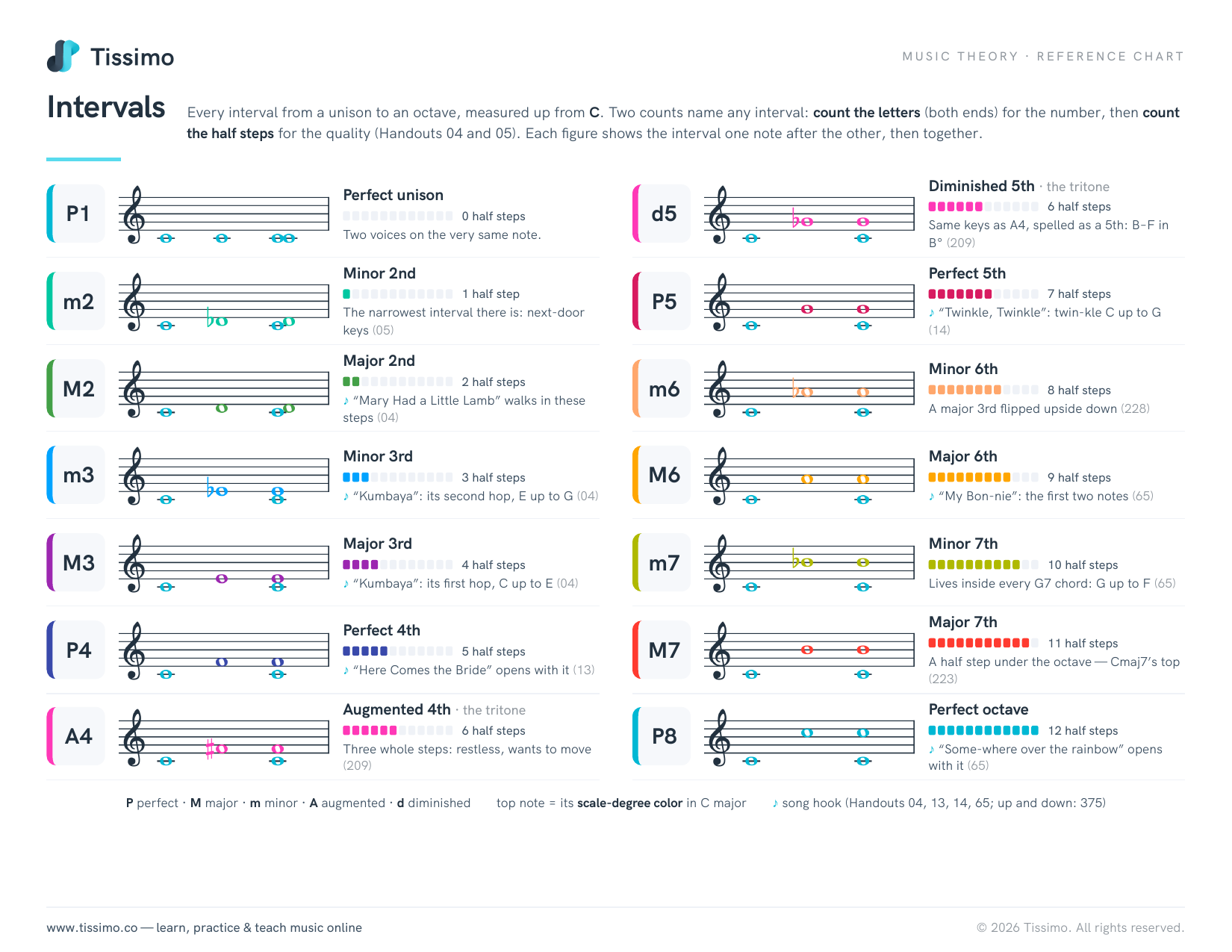 IntervalsEvery interval from a unison to an octave, measured up from C. Two counts name any interval: count the letters (both ends) for the number, then count the half steps for the quality (Handouts 04 and 05). Each figure shows the interval one note after the other, then together.
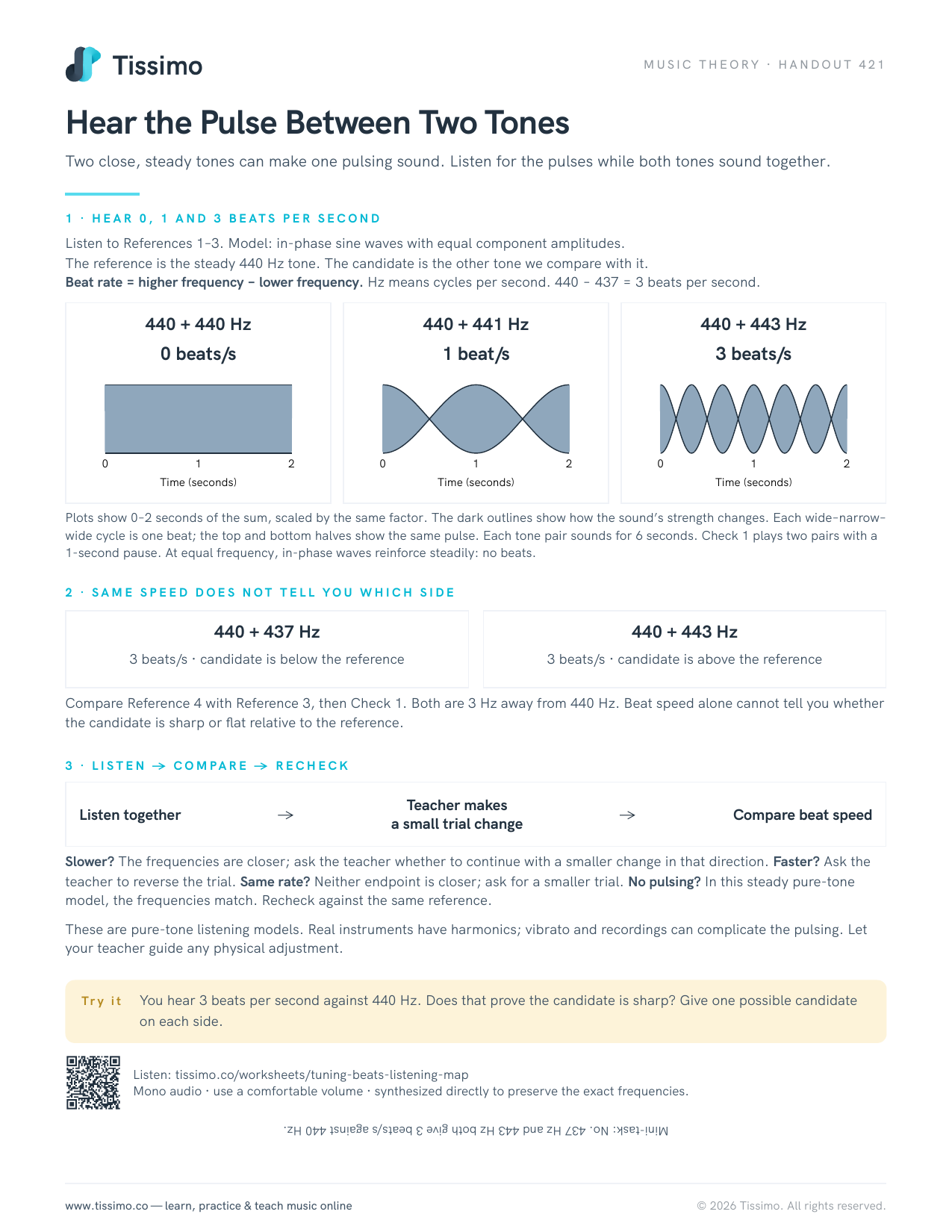 Hear the Pulse Between Two TonesTwo close, steady tones can make one pulsing sound. Listen for the pulses while both tones sound together.
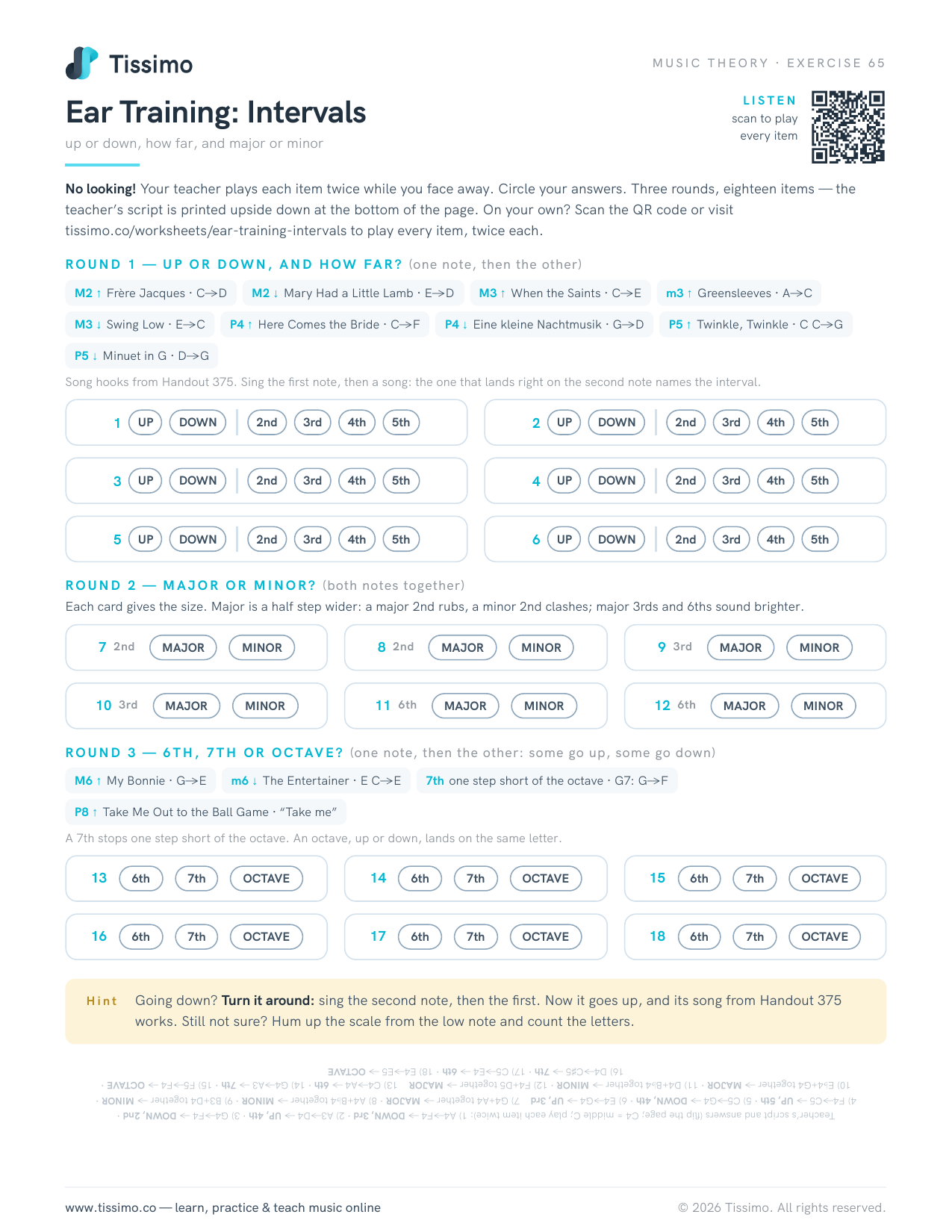 Ear Training: Intervalsup or down, how far, and major or minor