Pitch & Intervals
Minor Sixth
Written as m6
A minor sixth (m6) is an interval of eight half steps spanning six letter names, such as E–C, A–F or C–A♭. It is the inversion of the major third and sounds warm but slightly bittersweet.
A minor sixth spans six letter names and eight half steps: E up to C, A up to F, B up to G, C up to A♭. Abbreviated m6, it measures 800 cents in equal temperament.
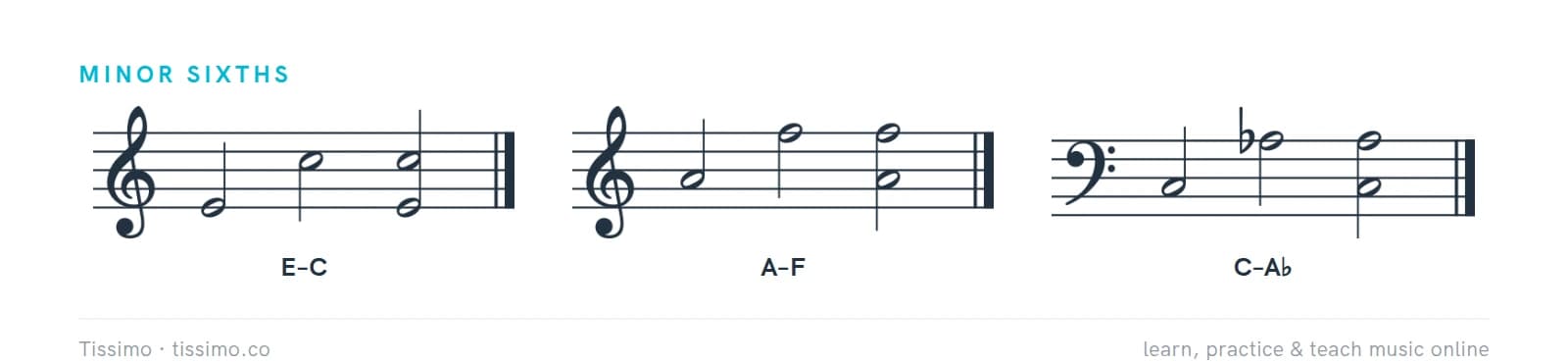
Counting it
E–F–G–A–B–C is six letters, so E–C is a 6th. Counting eight keys one by one is slow, so most musicians use a shortcut: a 6th is an octave minus a 3rd. E up to the next E is 12 half steps, and C lies a major third (4 half steps) below that upper E. So E–C is 12 − 4 = 8 half steps, a minor sixth.
Among the white keys, three 6ths are minor: E–C, A–F and B–G. The other four (C–A, D–B, F–D, G–E) are major. Lower the top note of a major sixth by a half step and it becomes minor: C–A becomes C–A♭.
Where you hear it
The minor sixth is the inversion of the major third, so it appears whenever a major chord has its third in the bass. In a first-inversion C major chord (E–G–C, see chord inversion), the outer notes E and C form a minor sixth. In minor keys, the 6th degree lies a minor sixth above the tonic (F above A in A minor), and its tendency to sink a half step to the 5th degree (F to E) is part of what gives minor-key music its sighing quality.
As a melodic leap, a rising minor sixth is wide and expressive. One way to find it: sing up a perfect fifth, then one half step more.
Consonance
In classical theory both sixths are imperfect consonances. A minor sixth sounds sweet, a little darker than a major sixth.
Inversion and look-alikes
Inverted, a minor sixth becomes a major third: E–C becomes C–E, and 8 + 4 = 12. The same keys spelled with five letter names, such as C–G♯, form an augmented fifth, the outer interval of an augmented triad.
Practice with The 6th, the 7th & the Octave and Invert the intervals.
Common questions
How many half steps are in a minor sixth?
Eight. A quick check: an octave (12) minus a major third (4) is 8.
What is the difference between a minor sixth and an augmented fifth?
On the piano they are the same keys, eight half steps apart. With six letter names (C–A♭) it is a minor sixth; with five (C–G♯) it is an augmented fifth. The chord or scale decides: C–E–G♯ is an augmented triad, while A♭ is the 6th note of C minor.
Practice it: free worksheets
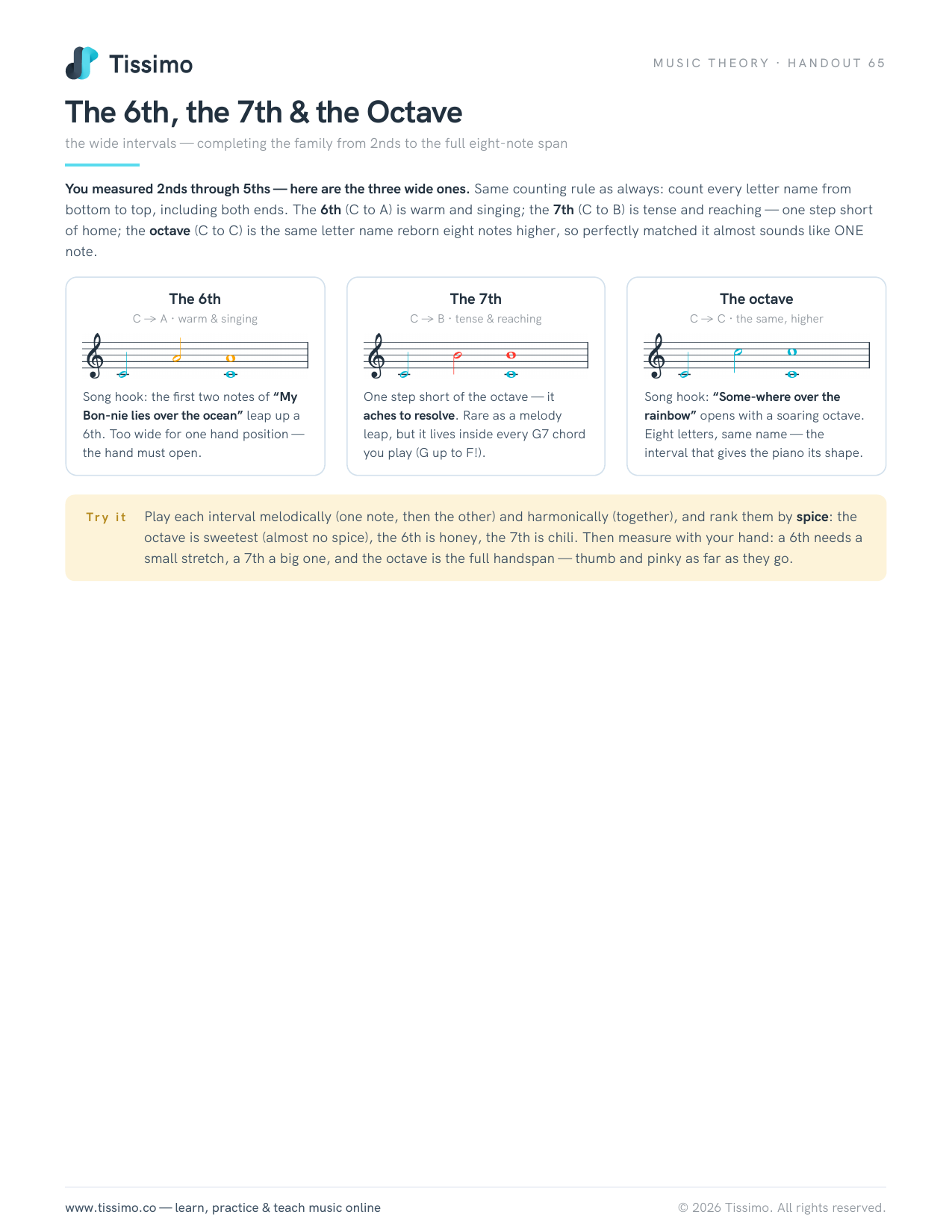 The 6th, the 7th & the Octavethe wide intervals — completing the family from 2nds to the full eight-note span
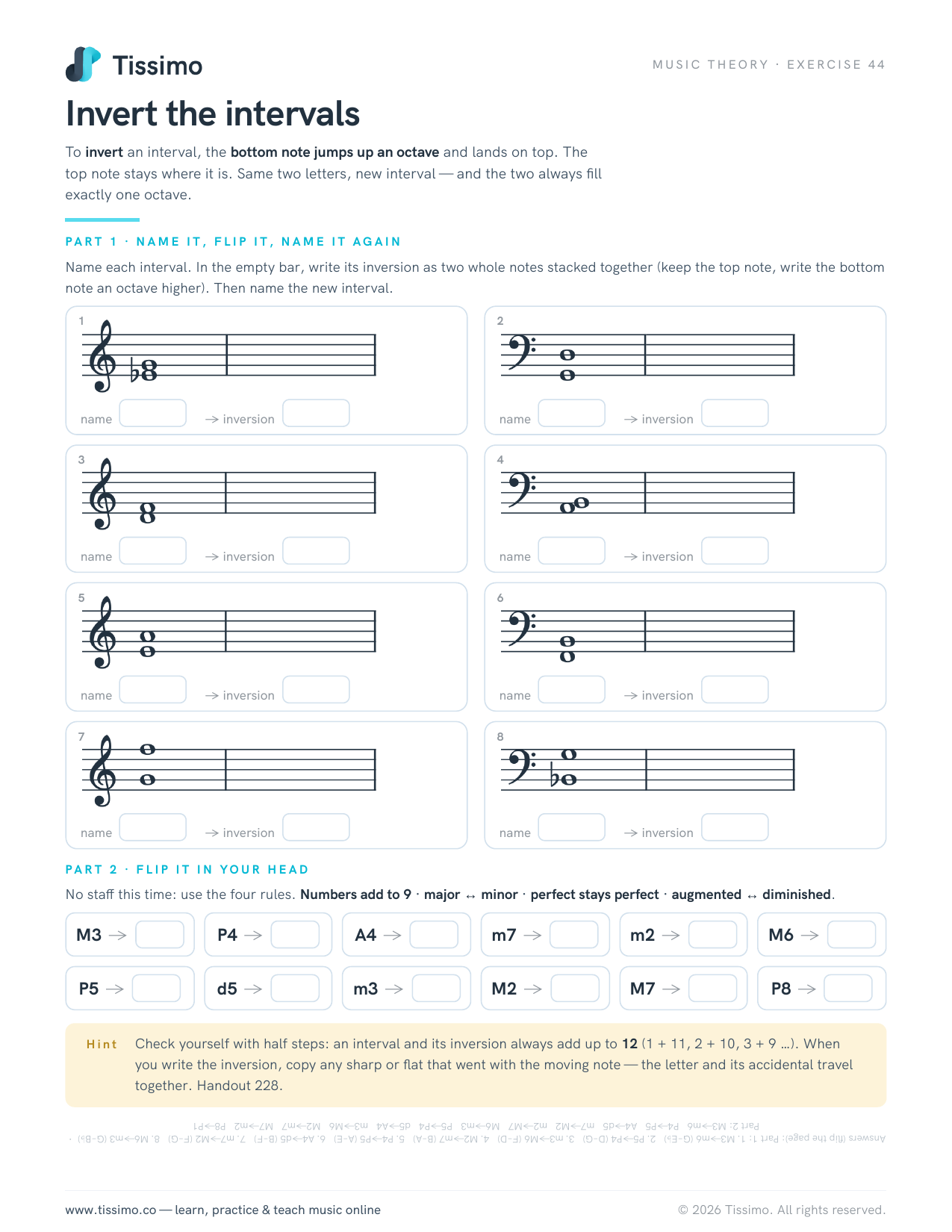 Invert the intervalsTo invert an interval, the bottom note jumps up an octave and lands on top. The top note stays where it is. Same two letters, new interval — and the two always fill exactly one octave.
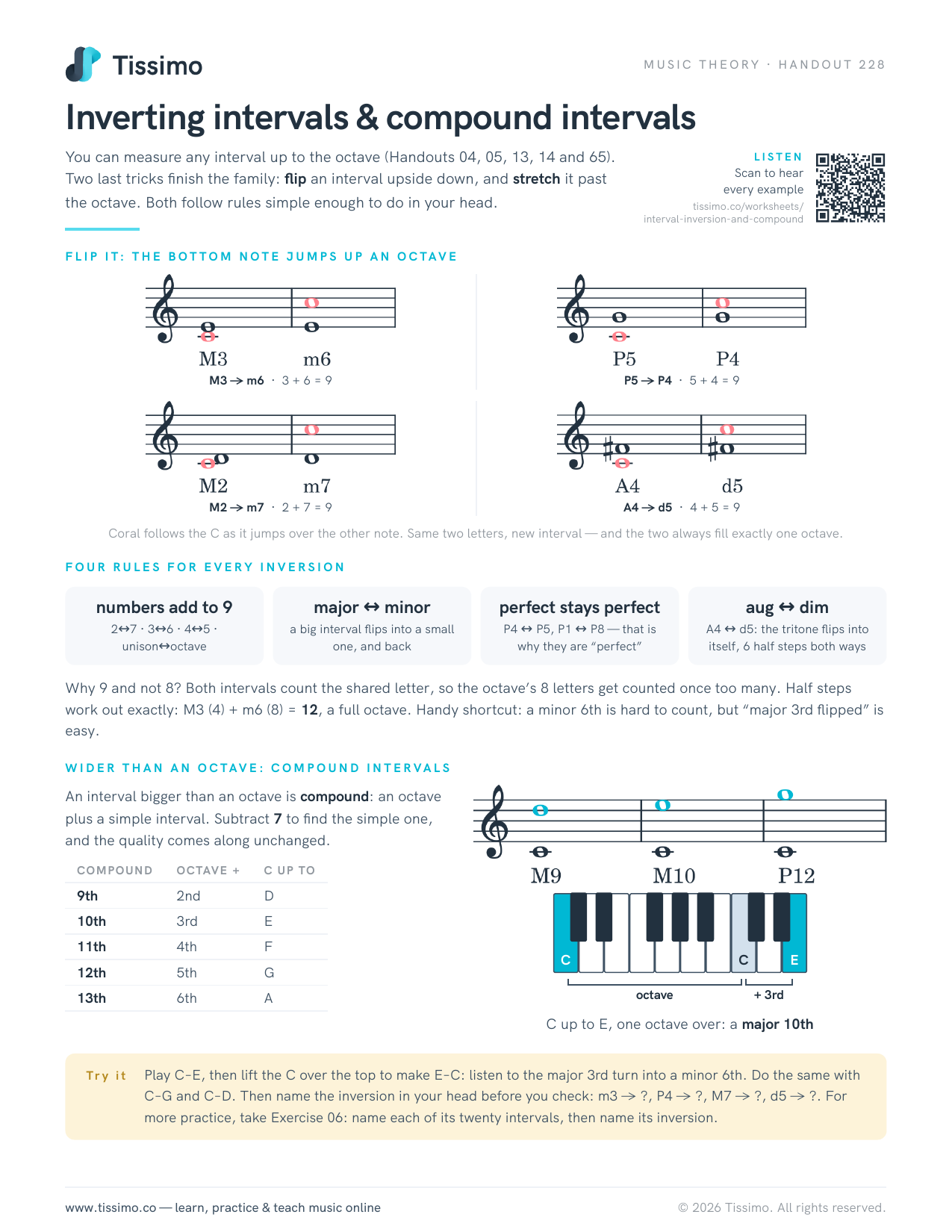 Inverting intervals & compound intervalsYou can measure any interval up to the octave (Handouts 04, 05, 13, 14 and 65). Two last tricks finish the family: flip an interval upside down, and stretch it past the octave. Both follow rules simple enough to do in your head.
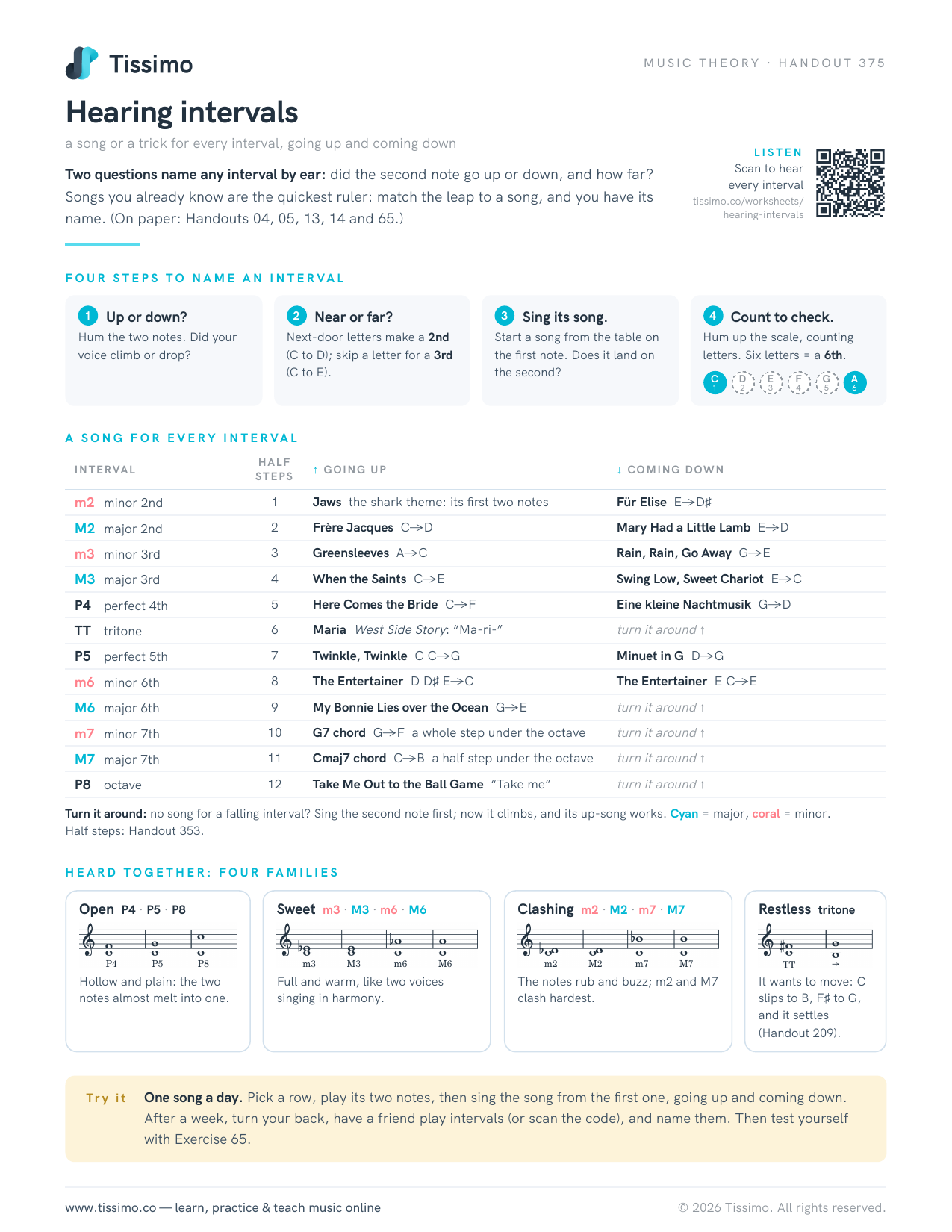 Hearing intervalsa song or a trick for every interval, going up and coming down
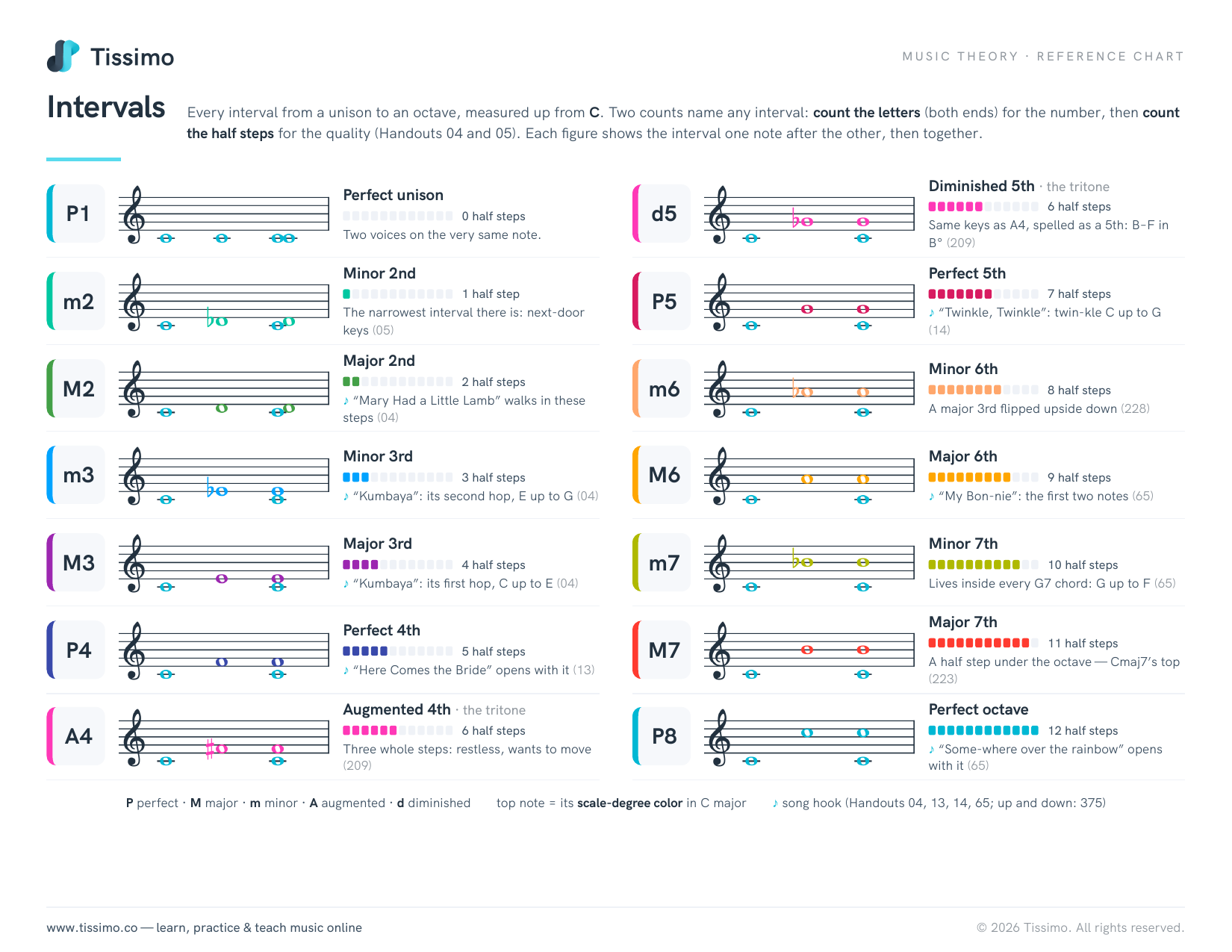 IntervalsEvery interval from a unison to an octave, measured up from C. Two counts name any interval: count the letters (both ends) for the number, then count the half steps for the quality (Handouts 04 and 05). Each figure shows the interval one note after the other, then together.