Pitch & Intervals
Major and Minor Intervals
Major and minor intervals are the two everyday sizes of seconds, thirds, sixths and sevenths. A minor interval is one half step smaller than the major interval with the same number: C–E is a major 3rd, C–E♭ a minor 3rd.
Seconds, thirds, sixths and sevenths each come in two everyday sizes. The larger is major (abbreviated with a capital M) and the smaller minor (a lowercase m). Both span the same number of letter names; the minor one is exactly one half step smaller.
- 2nds: minor 1 half step (C–D♭), major 2 (C–D)
- 3rds: minor 3 (C–E♭), major 4 (C–E)
- 6ths: minor 8 (C–A♭), major 9 (C–A)
- 7ths: minor 10 (C–B♭), major 11 (C–B)
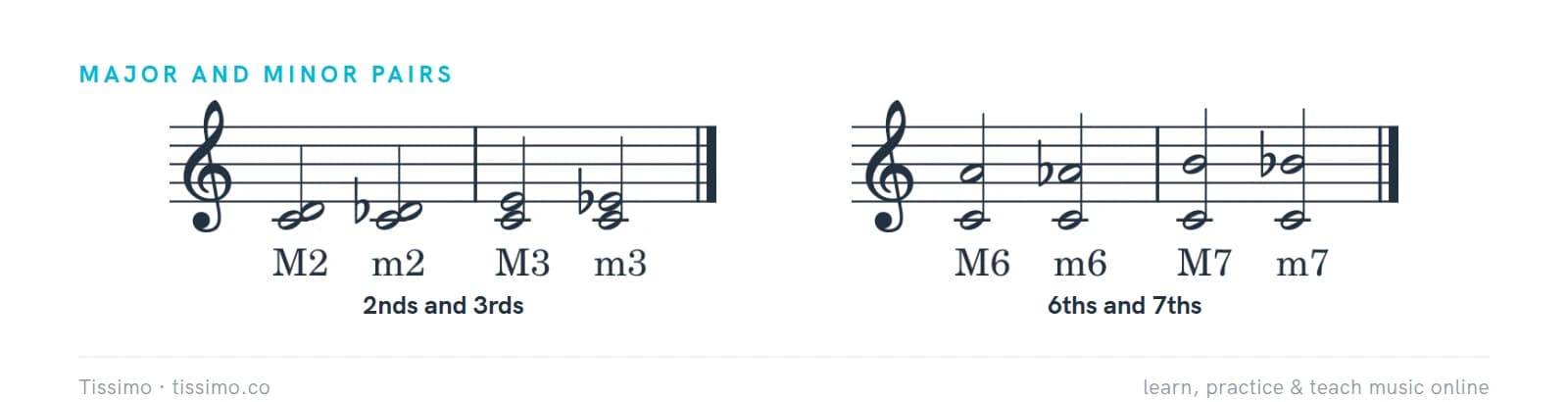
The major-scale test
A quick way to tell them apart: imagine the major scale that starts on the lower note. If the upper note belongs to that scale, the 2nd, 3rd, 6th or 7th is major; if it is a half step lower, it is minor. The D major scale contains F♯, so D–F♯ is a major 3rd and D–F a minor 3rd. The test works because every 2nd, 3rd, 6th and 7th above the tonic of a major scale is major.
Changing the quality
To make a major interval minor, lower the top note by a half step (C–E becomes C–E♭) or raise the bottom note (C–E becomes C♯–E). To make a minor interval major, do the opposite. Keep the letters the same, or you change the number as well as the quality.
Go one half step beyond either size and the interval becomes augmented (larger than major) or diminished (smaller than minor). The full ladder for 3rds, from narrowest to widest: diminished 3rd (2 half steps, C♯–E♭), minor 3rd (3), major 3rd (4), augmented 3rd (5, C–E♯).
Inversion swaps them
When you invert an interval (interval inversion), major becomes minor and minor becomes major: a major 3rd (C–E) inverts to a minor 6th (E–C), and a minor 7th (G–F) to a major 2nd (F–G).
Not the same as major and minor keys
Interval qualities only describe size. A major key contains minor intervals and a minor key contains major ones: in C major, D–F is a minor 3rd, and in A minor, C–E is a major 3rd. A key or chord is called major or minor because of the particular 3rd above its tonic or root.
Practice with Major & minor 2nds and 3rds, Name the intervals: major or minor and The 6th, the 7th & the Octave.
Common questions
Which intervals can be major or minor?
Seconds, thirds, sixths and sevenths, and their compound forms such as 9ths, 10ths and 13ths. Unisons, fourths, fifths and octaves are perfect instead.
How do you know if an interval is major or minor?
Count the half steps, or use the major-scale test: if the upper note is in the major scale that starts on the lower note, the interval is major; if it is a half step lower, it is minor.
Practice it: free worksheets
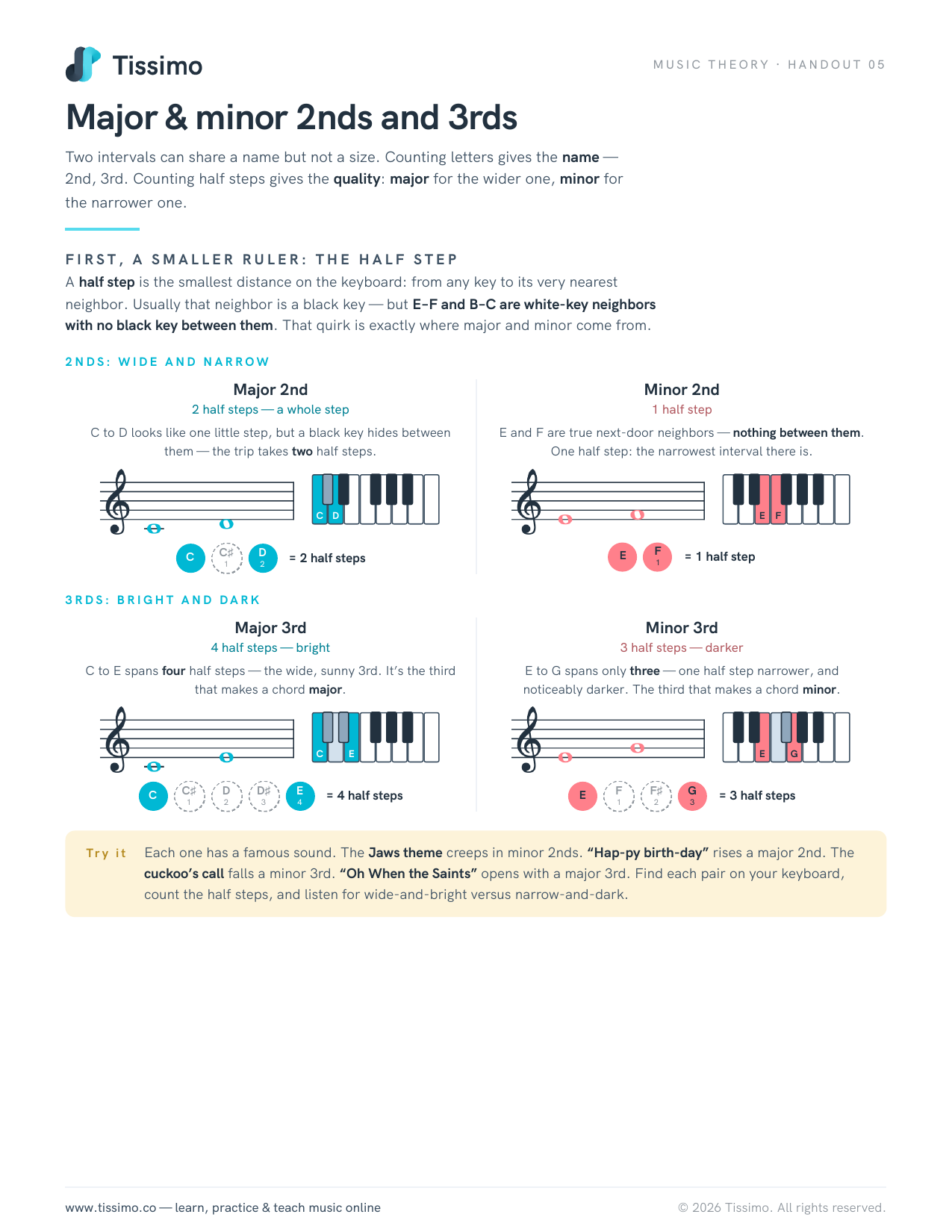 Major & minor 2nds and 3rdsTwo intervals can share a name but not a size. Counting letters gives the name — 2nd, 3rd. Counting half steps gives the quality: major for the wider one, minor for the narrower one.
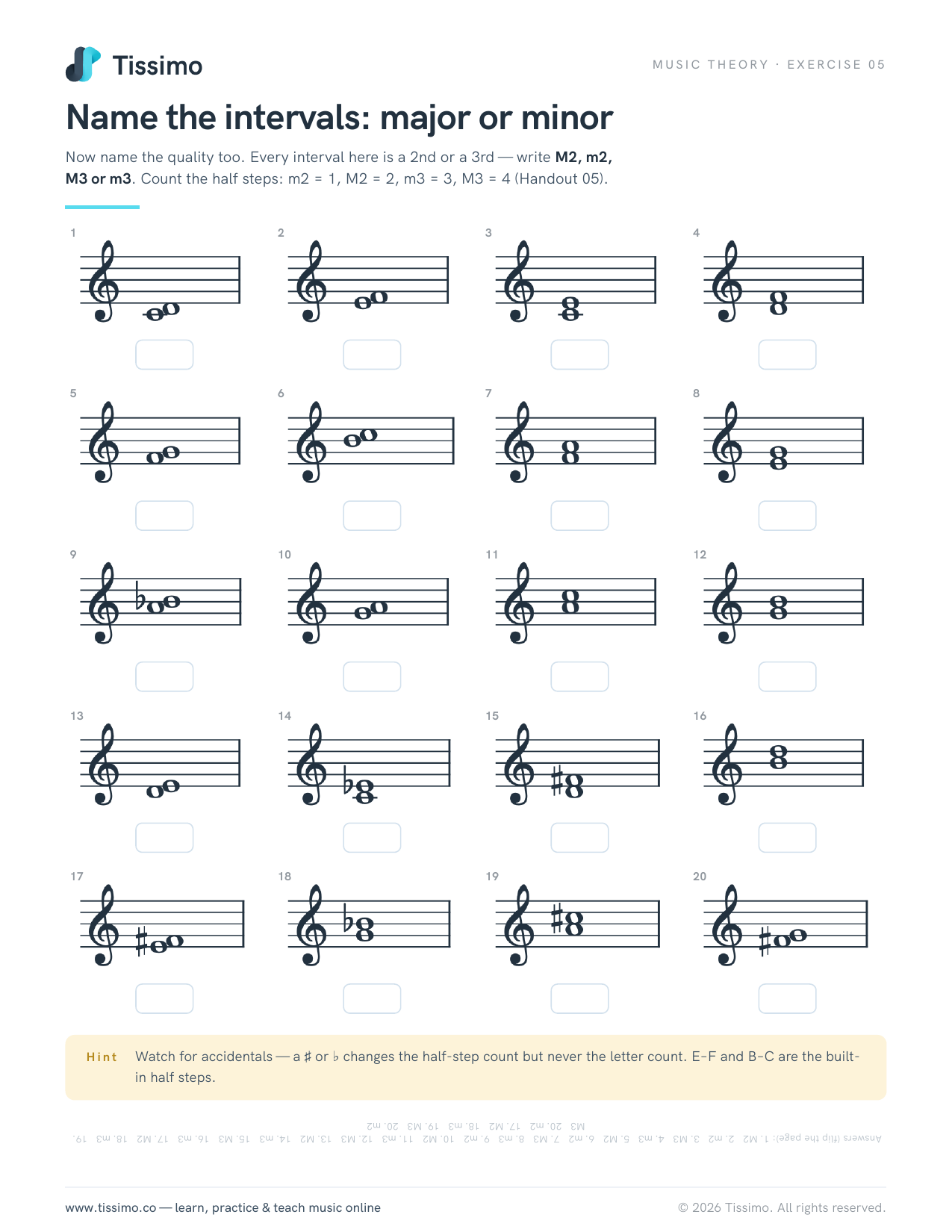 Name the intervals: major or minorNow name the quality too. Every interval here is a 2nd or a 3rd — write M2, m2, M3 or m3. Count the half steps: m2 = 1, M2 = 2, m3 = 3, M3 = 4 (Handout 05). Warm up with Exercise 52.
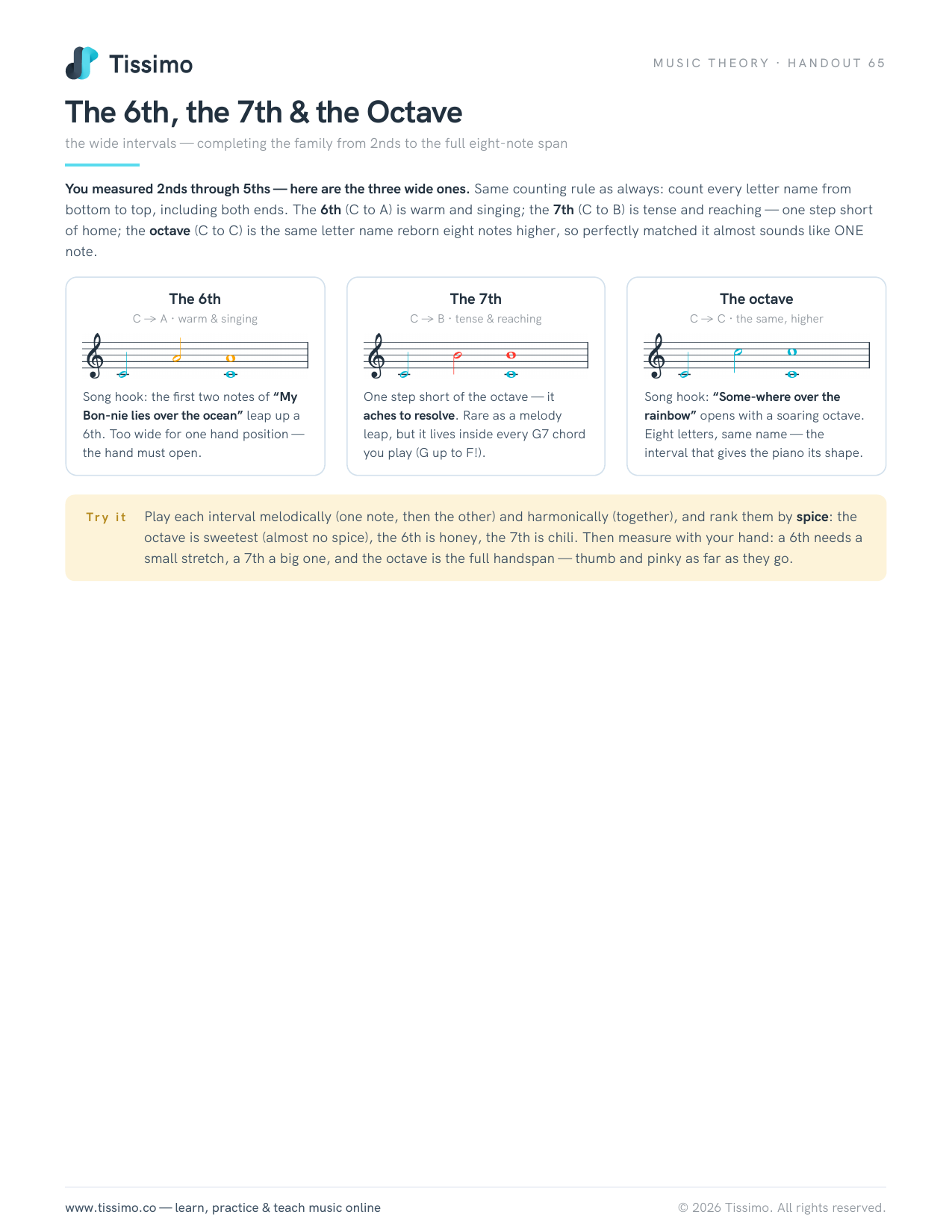 The 6th, the 7th & the Octavethe wide intervals — completing the family from 2nds to the full eight-note span
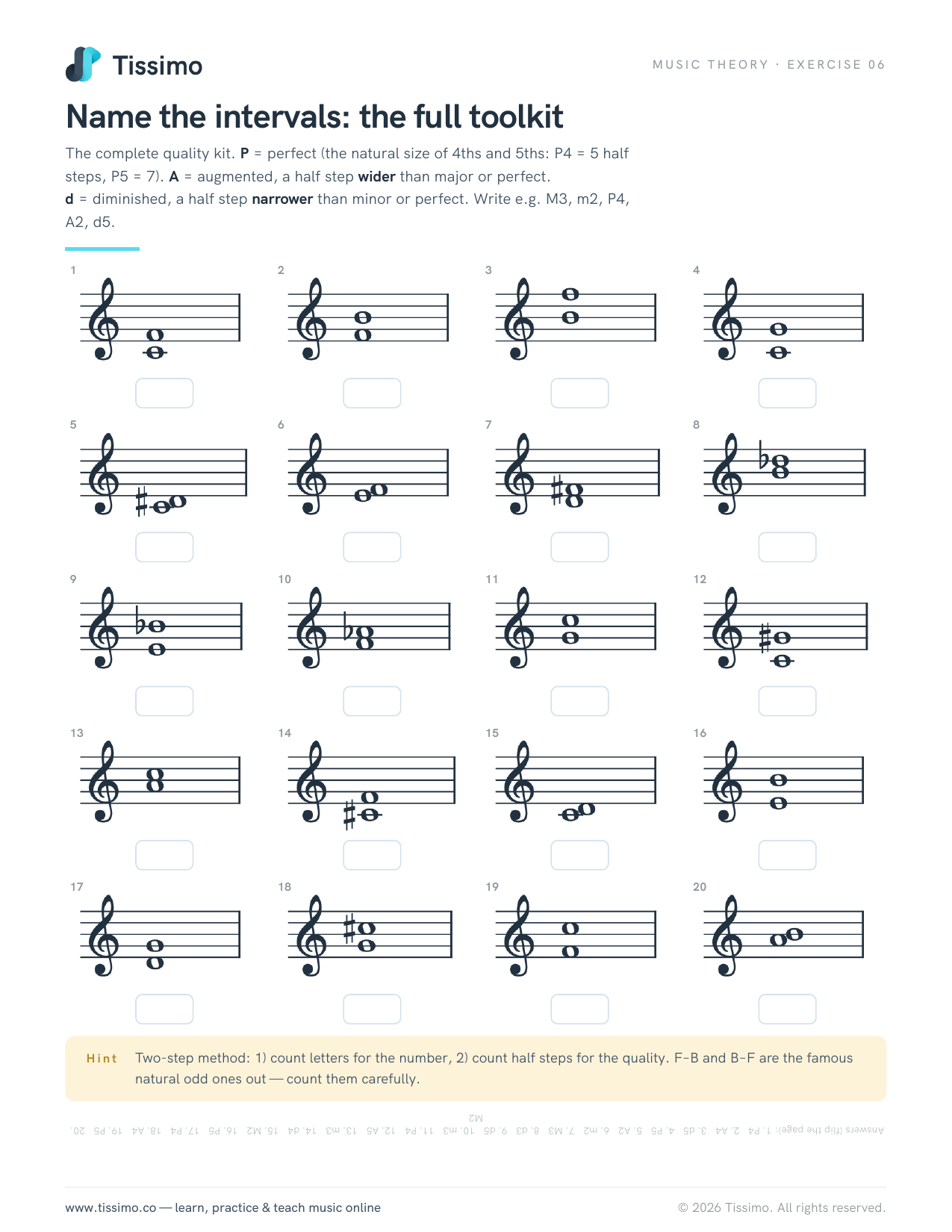 Name the intervals: the full toolkitThe complete quality kit. P = perfect (the natural size of 4ths and 5ths: P4 = 5 half steps, P5 = 7). A = augmented, a half step wider than major or perfect. d = diminished, a half step narrower than minor or perfect. Write e.g. M3, m2, P4, A2, d5.
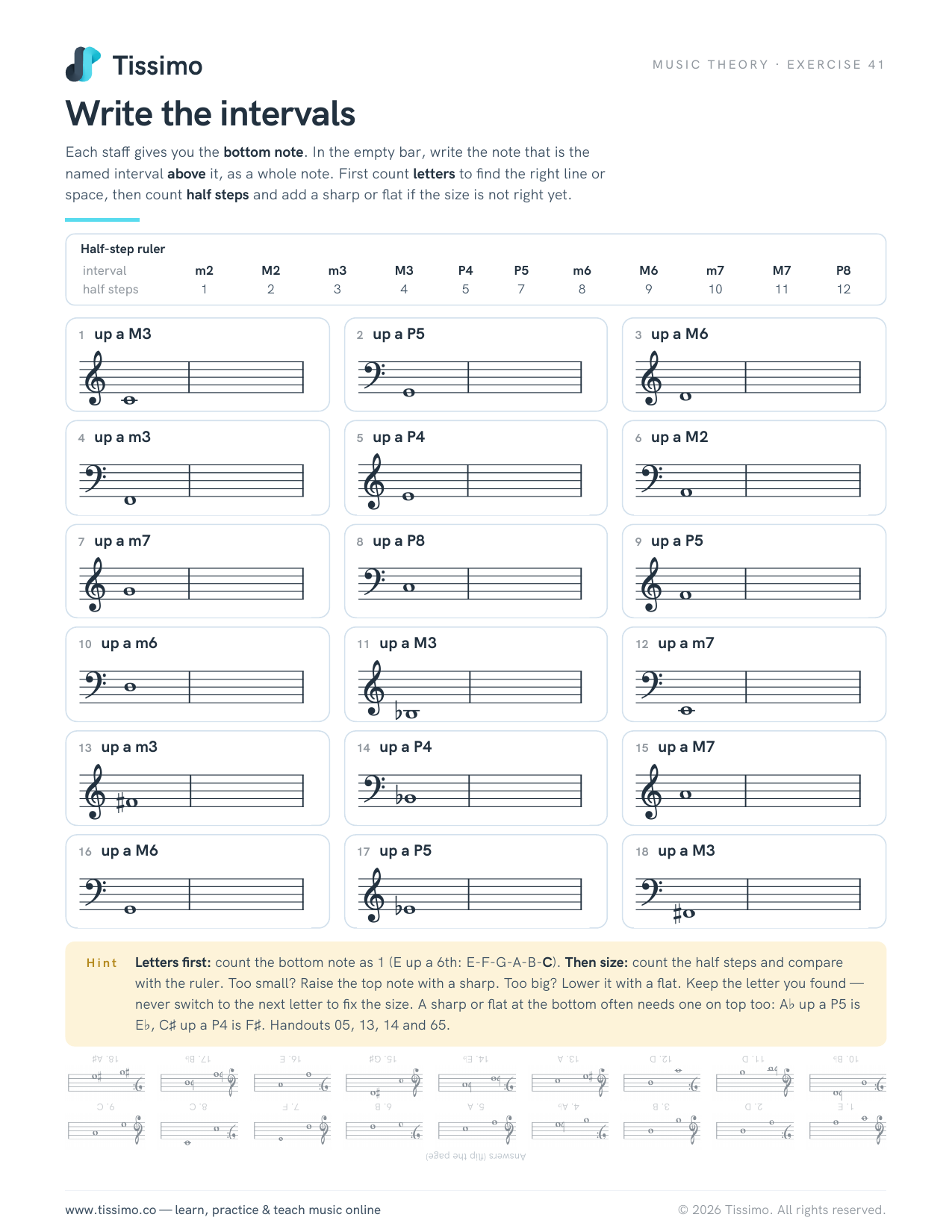 Write the intervalsEach staff gives you the bottom note. In the empty bar, write the note that is the named interval above it, as a whole note. First count letters to find the right line or space, then count half steps and add a sharp or flat if the size is not right yet.
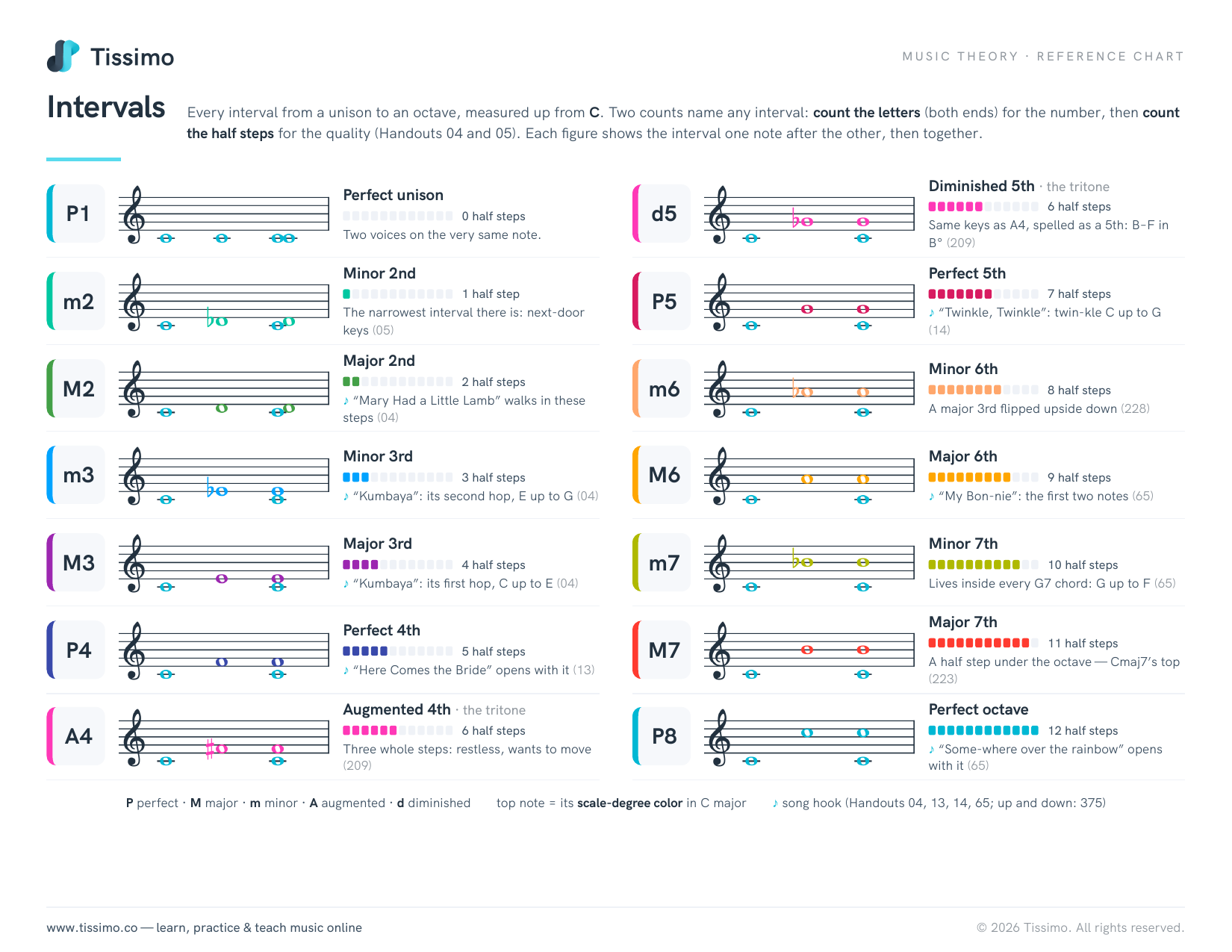 IntervalsEvery interval from a unison to an octave, measured up from C. Two counts name any interval: count the letters (both ends) for the number, then count the half steps for the quality (Handouts 04 and 05). Each figure shows the interval one note after the other, then together.