Pitch & Intervals
Major Seventh
Written as M7
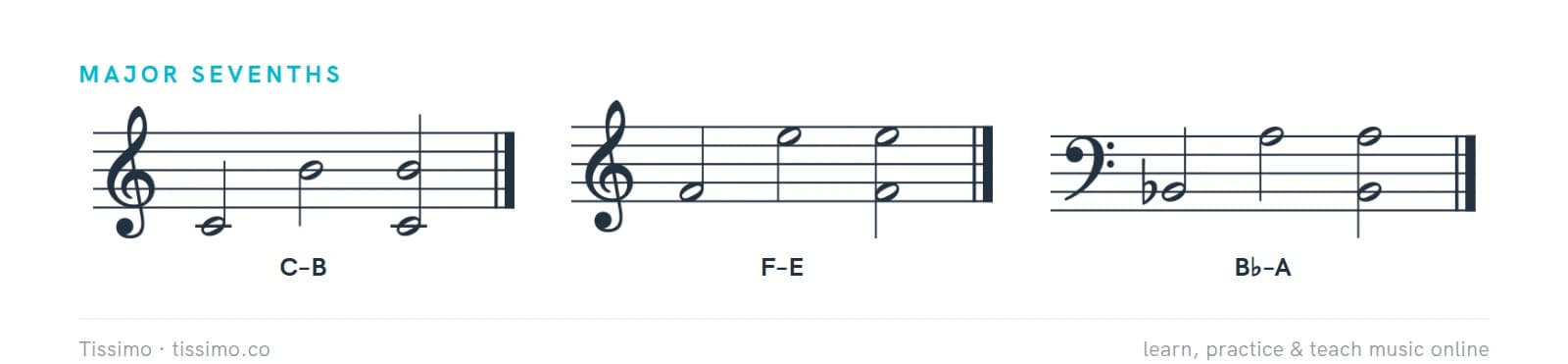
A major seventh (M7) is an interval of eleven half steps spanning seven letter names, such as C–B, F–E or B♭–A. Just a half step short of an octave, it is sharply dissonant, yet it gives maj7 chords their glow.
A major seventh spans seven letter names and eleven half steps: C up to B, F up to E, G up to F♯, B♭ up to A. Abbreviated M7, it measures 1100 cents in equal temperament, one half step short of an octave.
Counting it
C–D–E–F–G–A–B is seven letters, so C–B is a 7th. Instead of counting eleven keys, think "an octave minus a half step": C up to the next C is 12, and B is a half step below that upper C, so C–B is 11 half steps. A minor seventh is a whole step short of the octave.
Only two white-key 7ths are major: C–B and F–E. The others need a sharp on top or a flat at the bottom: G–F♯, D–C♯, B♭–A.
How it sounds
Played together, a major seventh is one of the sharpest dissonances: the top note sits a minor second below the octave of the bottom note, and the two grind. Yet in a full chord it can sound lush. The major seventh chord (Cmaj7: C–E–G–B) adds a major seventh to a major triad, and its soft, dreamy sound is a staple of jazz, bossa nova and ballads. How harsh it sounds depends on context and voicing: with the C low and the B high, the clash turns into color.
In a major key, the leading tone lies a major seventh above the tonic (B above C) and a half step below the next tonic, which is why it pulls upward so strongly.
Hearing it
As a melodic leap, a rising major seventh is wide and dramatic, and few well-known tunes start with one. A reliable trick is to imagine the octave above the first note, then come down one half step.
Inversion and look-alikes
Inverted, a major seventh becomes a minor second: C–B becomes B–C, and 11 + 1 = 12. The same keys spelled with eight letter names, such as C–C♭, form a diminished octave, which is rare.
Practice with The 6th, the 7th & the Octave and Hearing intervals.
Common questions
How many half steps are in a major seventh?
Eleven: one half step less than an octave.
Why does a major seventh chord sound pleasant if the interval is dissonant?
In a Cmaj7 chord the dissonant B is surrounded by consonant notes (C–E–G), and players often spread the chord so that C and B are far apart. The clash becomes a soft shimmer rather than a grind, which is why jazz and pop musicians use maj7 chords as restful, even final, sounds.
Practice it: free worksheets
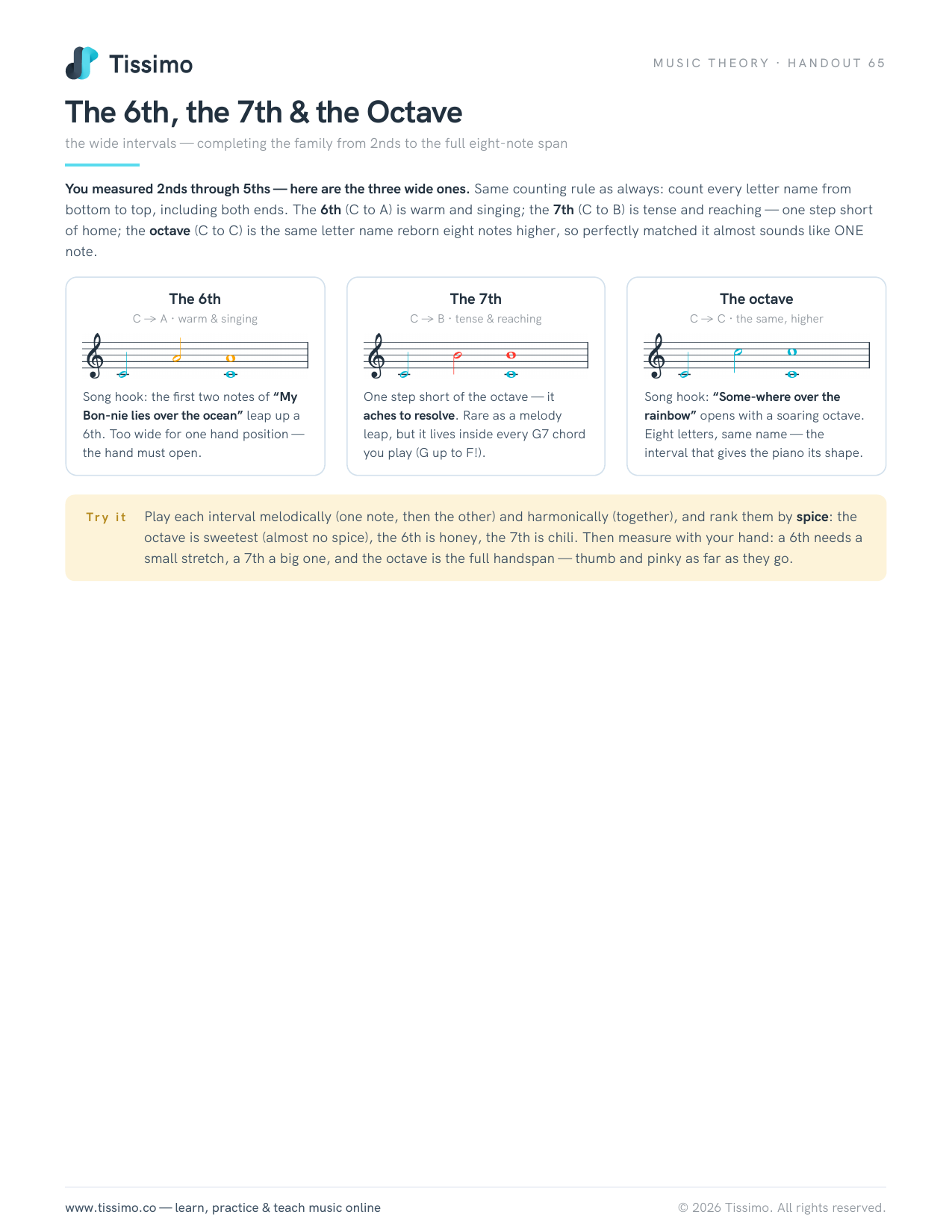 The 6th, the 7th & the Octavethe wide intervals — completing the family from 2nds to the full eight-note span
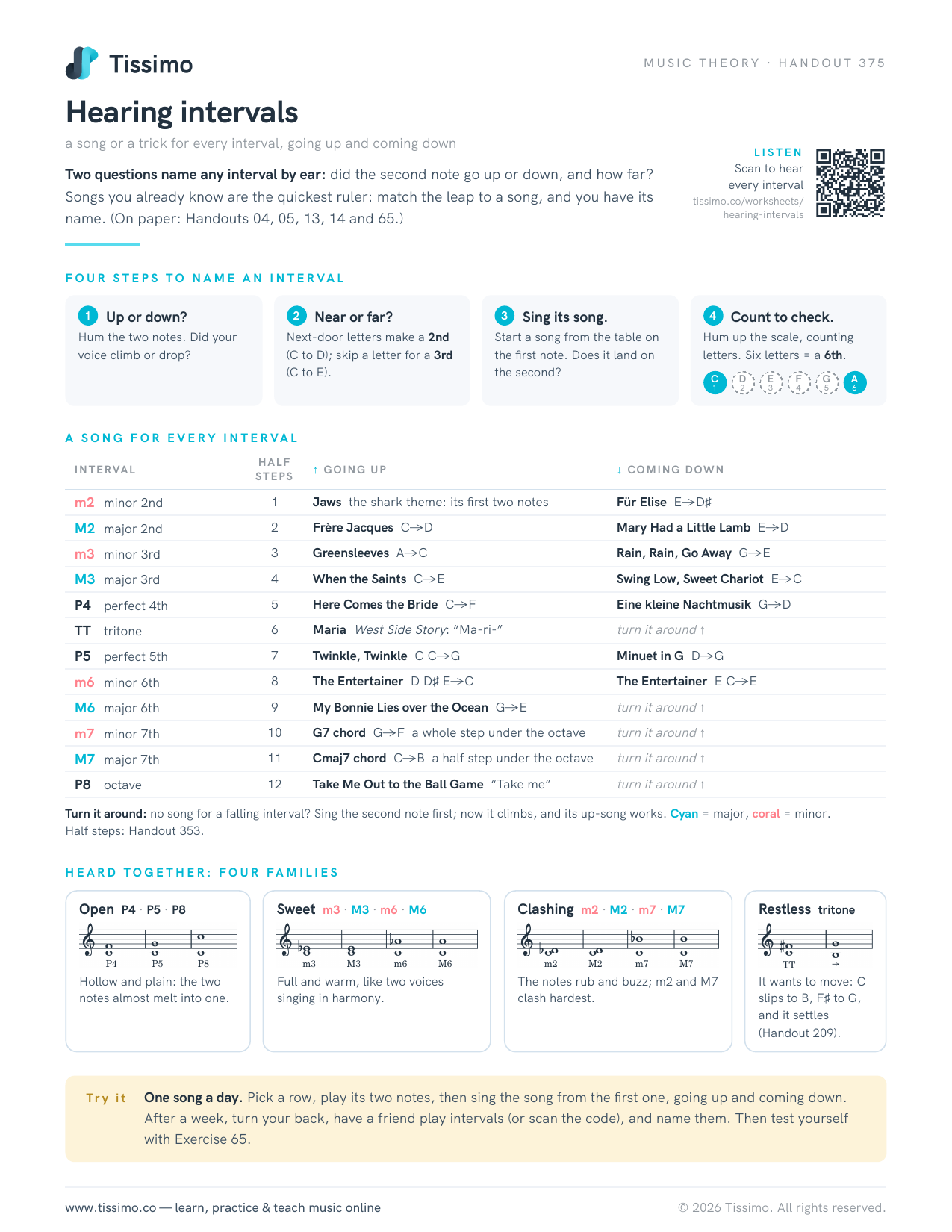 Hearing intervalsa song or a trick for every interval, going up and coming down
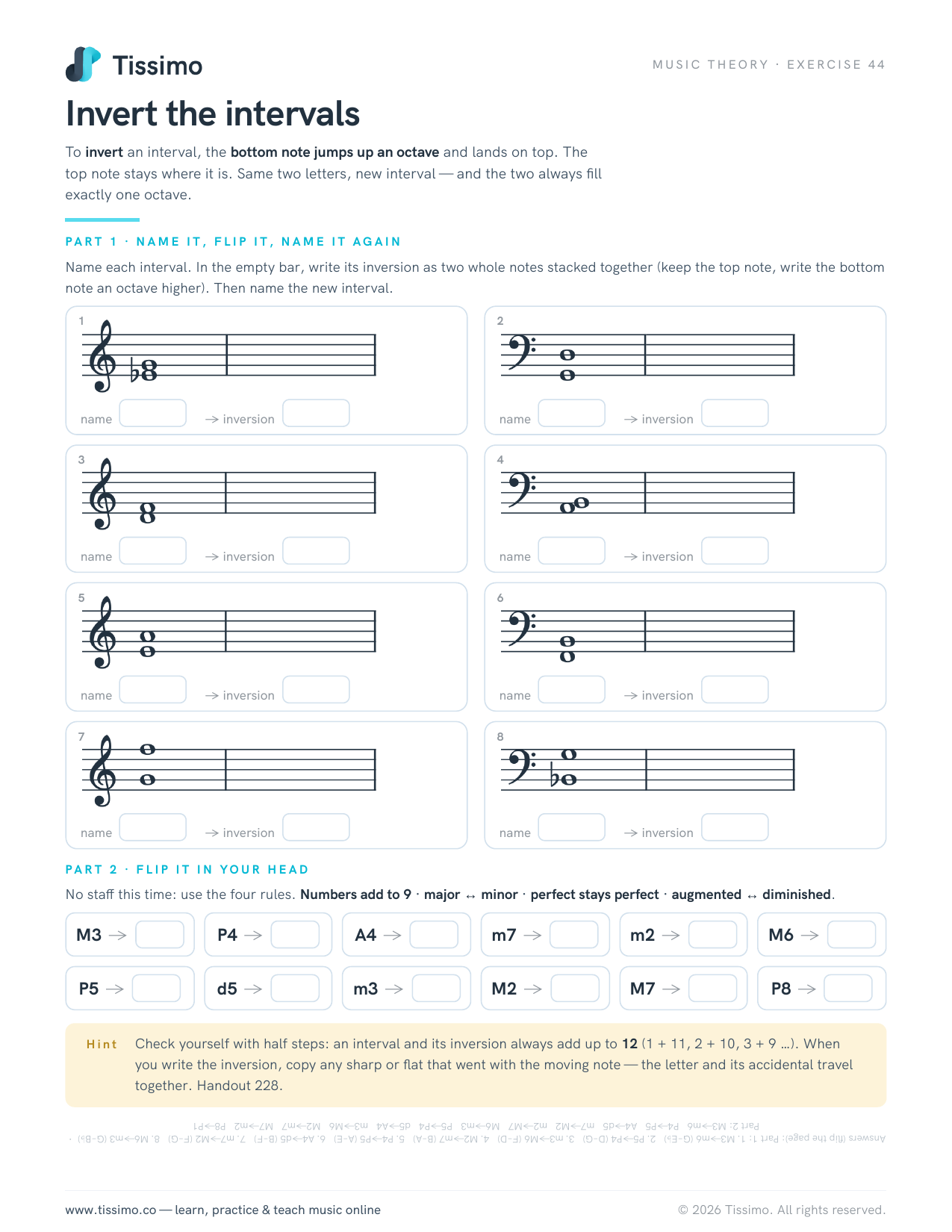 Invert the intervalsTo invert an interval, the bottom note jumps up an octave and lands on top. The top note stays where it is. Same two letters, new interval — and the two always fill exactly one octave.
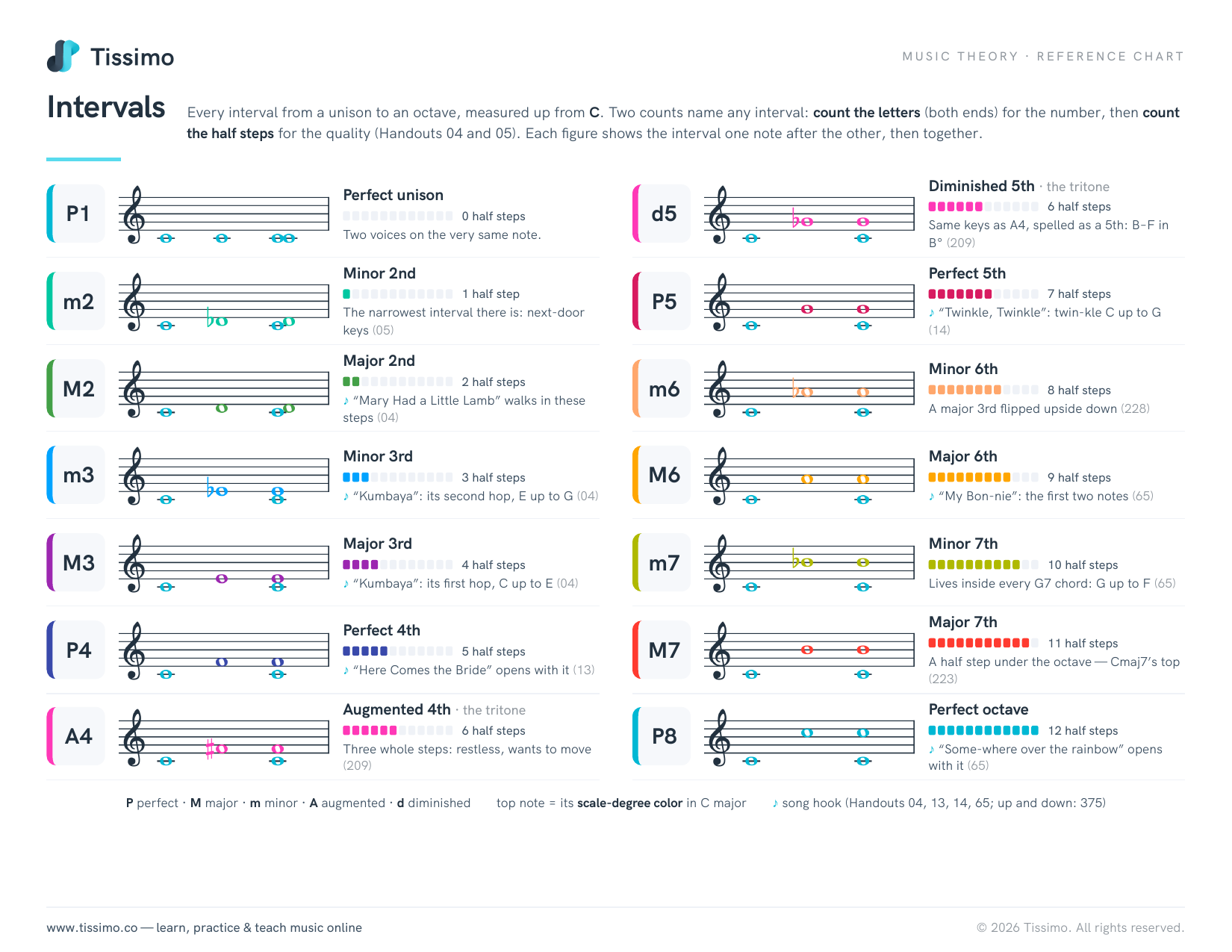 IntervalsEvery interval from a unison to an octave, measured up from C. Two counts name any interval: count the letters (both ends) for the number, then count the half steps for the quality (Handouts 04 and 05). Each figure shows the interval one note after the other, then together.
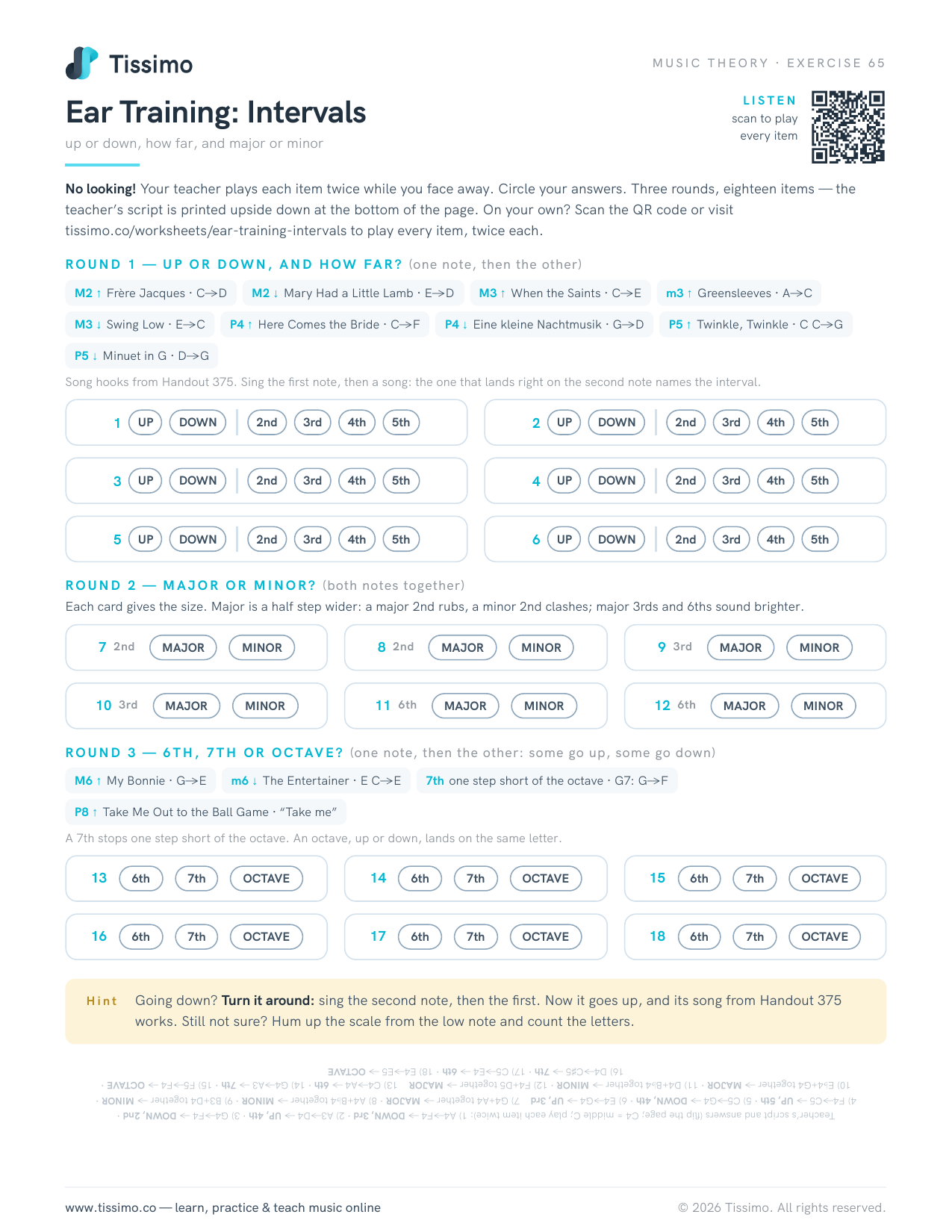 Ear Training: Intervalsup or down, how far, and major or minor