Pitch & Intervals
Dissonance
Dissonance is the quality of intervals and chords that sound tense or unstable and seem to need to move, such as seconds, sevenths and the tritone. In tonal music, dissonances usually resolve to consonances.
A dissonance is an interval or chord that sounds tense, rough or unfinished, as if it needs to go somewhere. Seconds, sevenths, the tritone, and all augmented and diminished intervals are the classic dissonances of Western music. The opposite is consonance.
Dissonance is not a mistake or an ugly noise. It is the engine of tonal music: tension that builds and then resolves gives harmony its sense of motion.
Dissonance and resolution
A dissonance usually resolves: one or both notes move, normally by step, to form a consonance.
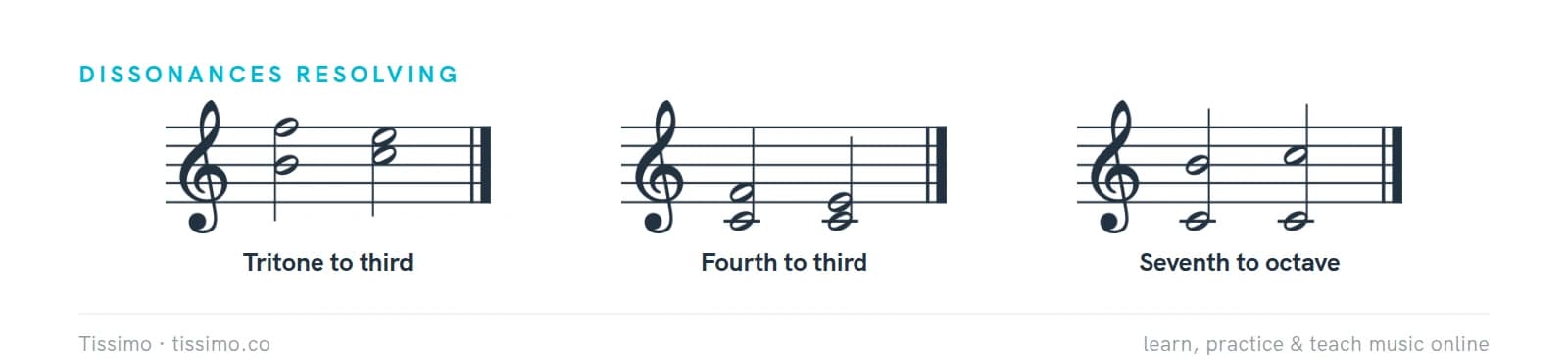
Some patterns are so common that they have names:
- A passing tone fills the gap between two chord notes by step.
- A neighbor tone steps away from a chord note and back.
- A suspension holds a note over from the previous chord, clashes with the new one, then resolves down by step (the 4–3 and 7–6 suspensions are the classics).
- In a dominant seventh chord, the seventh resolves down by step and the leading tone up, into the tonic chord.
Mild and sharp dissonances
Not all dissonances are equally tense. The minor second and major seventh grind hardest; the major second and minor seventh are milder; the tritone sounds restless more than harsh. Spacing matters too: a minor ninth (a minor second plus an octave) is softer than a minor second, though still tense.
Why dissonance sounds rough
When two notes are close in pitch, their sound waves interfere and produce beating, a rapid pulsing that the ear hears as roughness. Notes whose frequency ratio is complicated, such as 16:15 for a just minor second, also have many overtones that fall close together and beat against each other. Simple ratios avoid this, which is part of why octaves and fifths sound smooth.
A moving line
How much dissonance listeners accept has shifted through history. Late Romantic composers left dissonances unresolved for longer and longer, and Arnold Schoenberg spoke of "the emancipation of the dissonance": in atonal music, dissonances no longer need to resolve. Jazz, meanwhile, treats ninths, elevenths and thirteenths as normal chord tones.
Hear dissonances resolve in Prepare, Hold, Resolve: Hear the Three Moments, and compare interval sounds with Hearing intervals.
Common questions
Is dissonance bad?
No. Dissonance creates tension, and tension makes music move. Most tonal music uses dissonance constantly and resolves it, and many styles, from jazz to film scores, enjoy dissonant sounds for their color.
Which intervals are dissonant?
In classical theory: major and minor seconds, major and minor sevenths, the tritone, and every augmented and diminished interval. The perfect fourth counts as dissonant when it is formed with the bass note.
Practice it: free worksheets
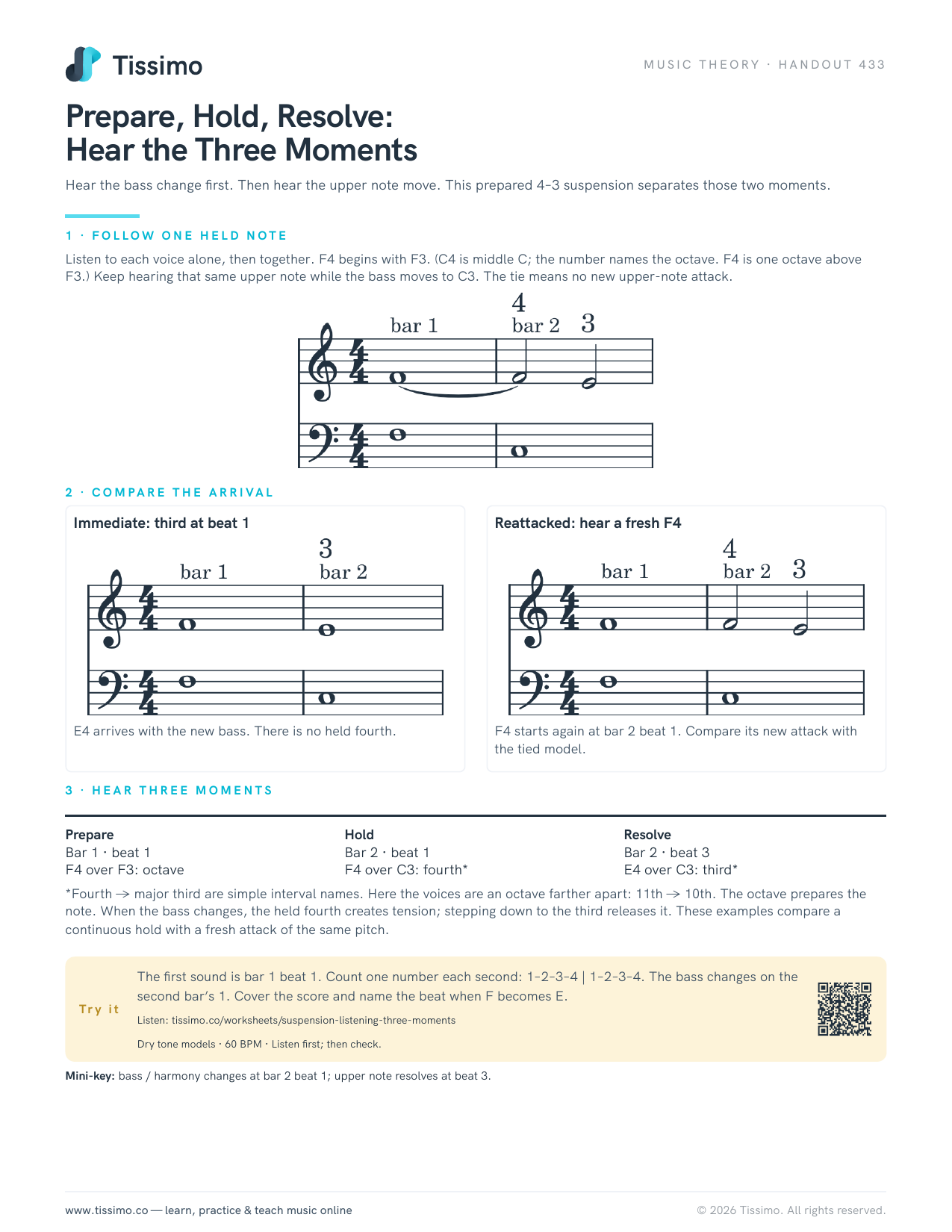 Prepare, Hold, Resolve: Hear the Three MomentsHear the bass change first. Then hear the upper note move. This prepared 4–3 suspension separates those two moments.
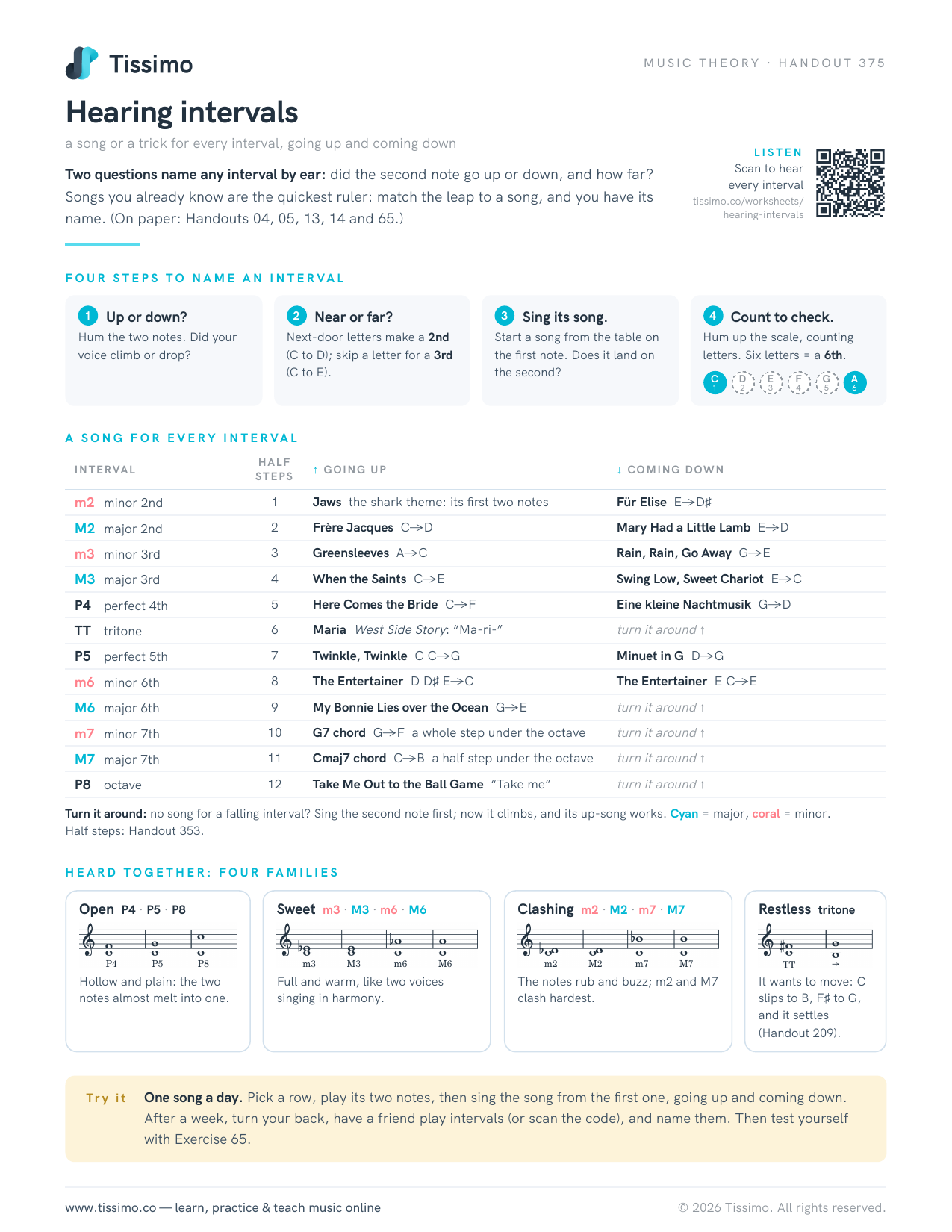 Hearing intervalsa song or a trick for every interval, going up and coming down
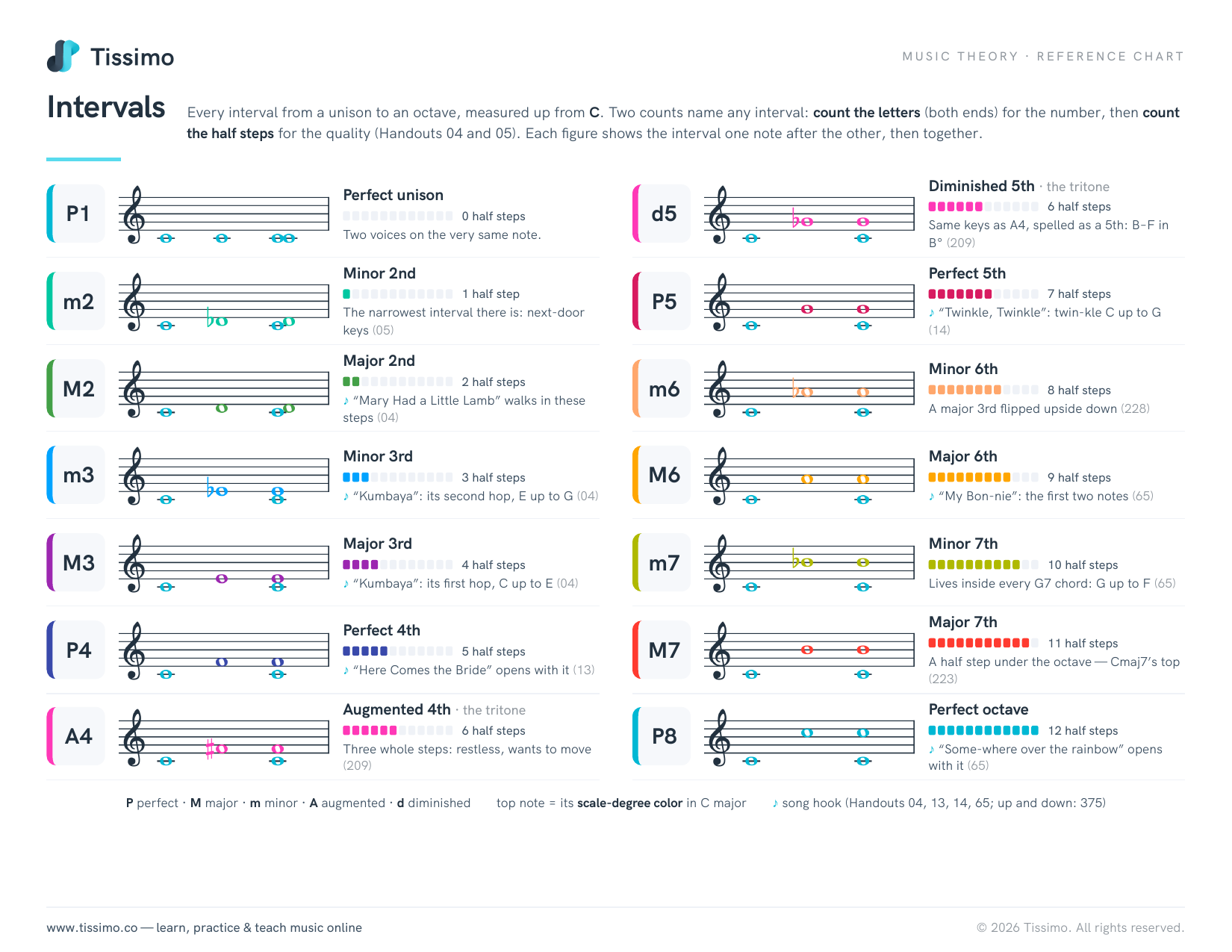 IntervalsEvery interval from a unison to an octave, measured up from C. Two counts name any interval: count the letters (both ends) for the number, then count the half steps for the quality (Handouts 04 and 05). Each figure shows the interval one note after the other, then together.
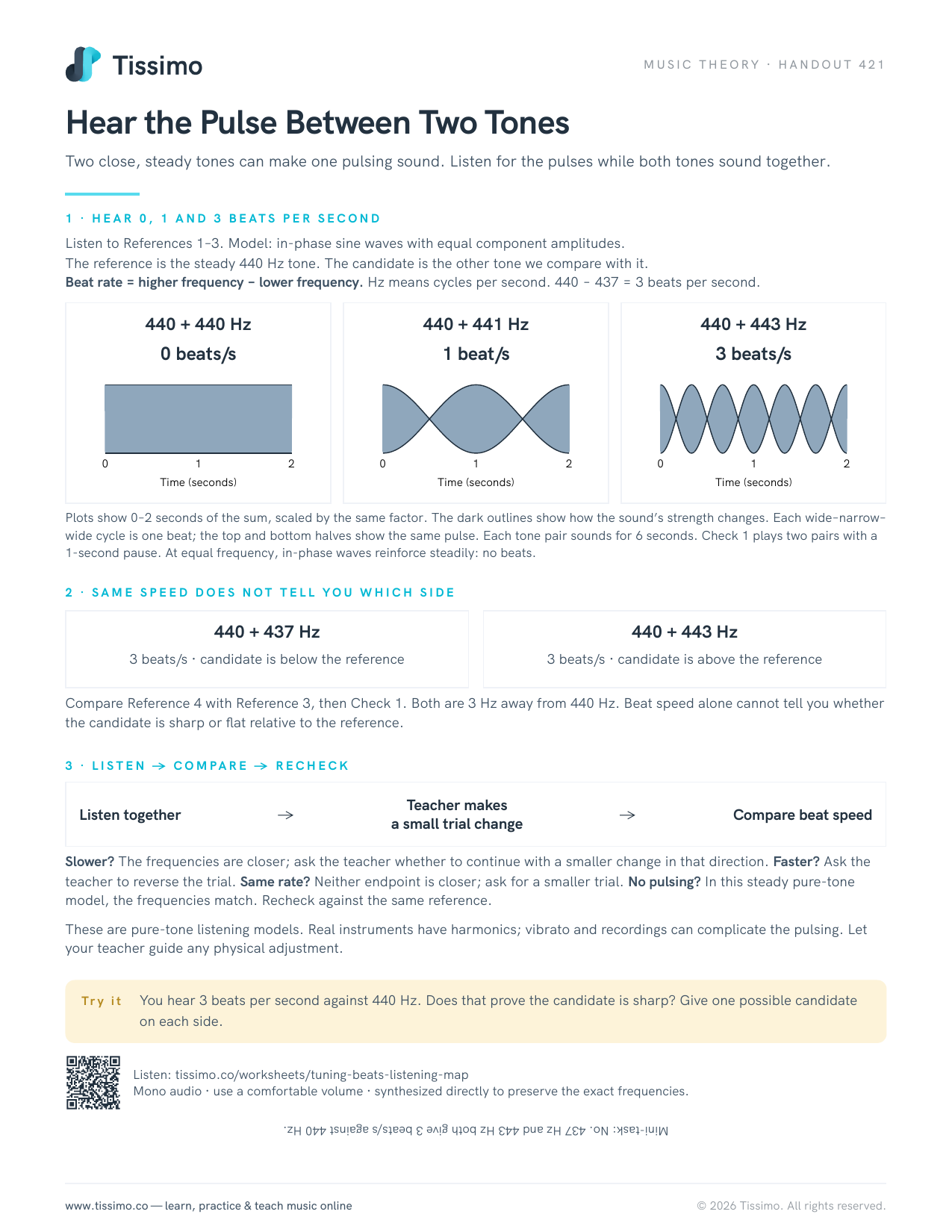 Hear the Pulse Between Two TonesTwo close, steady tones can make one pulsing sound. Listen for the pulses while both tones sound together.