Chords & Harmony
Suspension
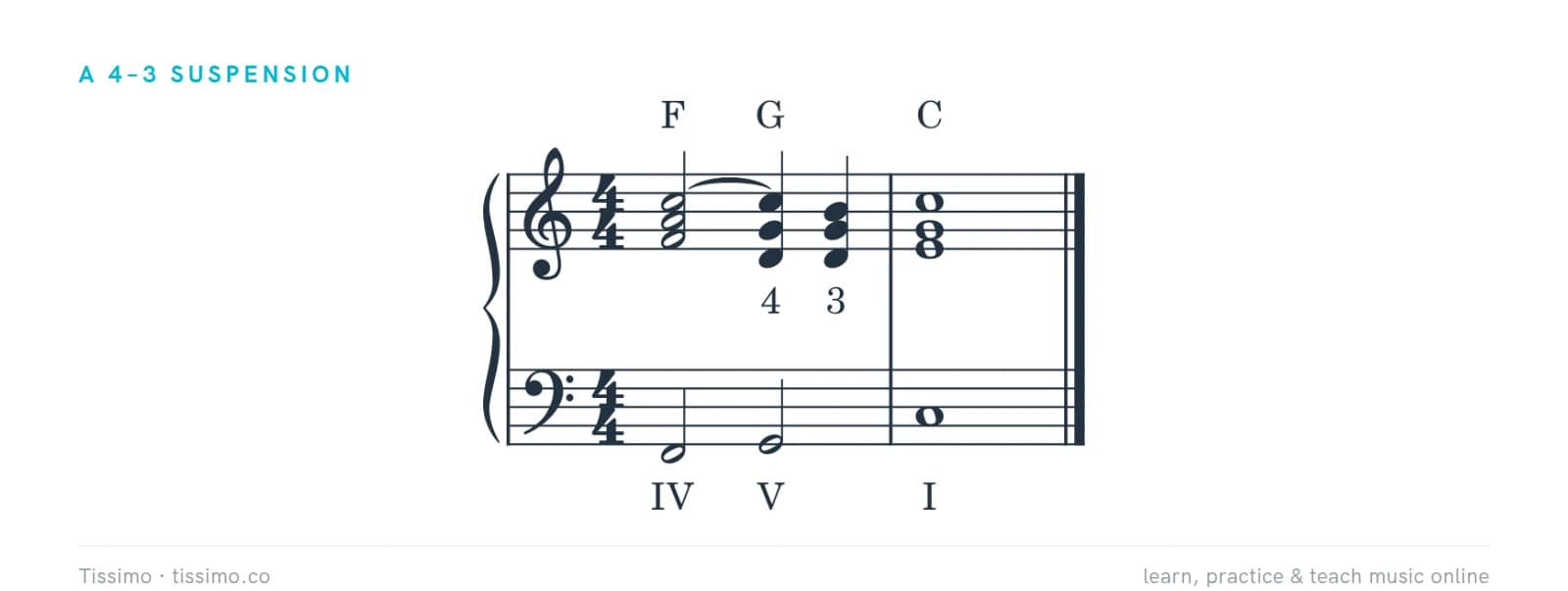
A suspension is a note held over from one chord into the next, where it clashes, before it resolves down by step to a chord tone. Its stages are preparation, suspension and resolution, as in the 4–3 suspension.
A suspension is a note held over from one chord into the next, where it no longer fits, before it resolves down by step to a note of the new chord. The harmony moves on, but one voice lags behind for a moment, and the clash that results is one of the most expressive sounds in tonal music.
Three stages
- Preparation: the note is a consonant member of the first chord.
- Suspension: the chord changes, usually on a strong beat, while the note is held or repeated. Now it is a dissonance against the new bass.
- Resolution: the note falls by step to a chord tone of the new chord, usually on a weaker beat.
Naming suspensions
A suspension is named by two intervals above the bass: the dissonance and its resolution. The common ones are:
- 4–3: a fourth above the bass resolving to a third (C to B over G).
- 7–6: a seventh resolving to a sixth.
- 9–8: a ninth resolving to an octave.
- 2–3: a suspension in the bass. The bass is held while an upper voice moves, then the bass falls by step.
A held note that resolves upward instead is called a retardation.
Where you hear them
Suspensions are at the heart of Renaissance and Baroque counterpoint, where chains of 7–6 or 4–3 suspensions keep a texture flowing. They decorate cadences in Classical music, and they turn up constantly in choral writing, film scores and slow pop ballads.
Suspension or sus chord?
A suspended chord (Csus4, Gsus4) takes its name from the suspension, and a 4–3 suspension does pass through a sus4 sound, as the example shows. The difference is that a classical suspension is prepared and resolves, while a sus chord in pop and jazz may simply appear and move on.
Practice hearing the three stages with Prepare, Hold, Resolve: Hear the Three Moments and When Does the Held Note Resolve?, and spot suspensions on paper in Label the non-chord tones.
Common questions
What do the numbers in a 4–3 suspension mean?
They are intervals above the bass. The suspended note is a fourth above the bass, then it resolves down to a third above the bass.
What is the difference between a suspension and an appoggiatura?
Both are accented dissonances that resolve by step. A suspension is prepared by the same note in the chord before; an appoggiatura arrives by leap, without preparation.
Practice it: free worksheets
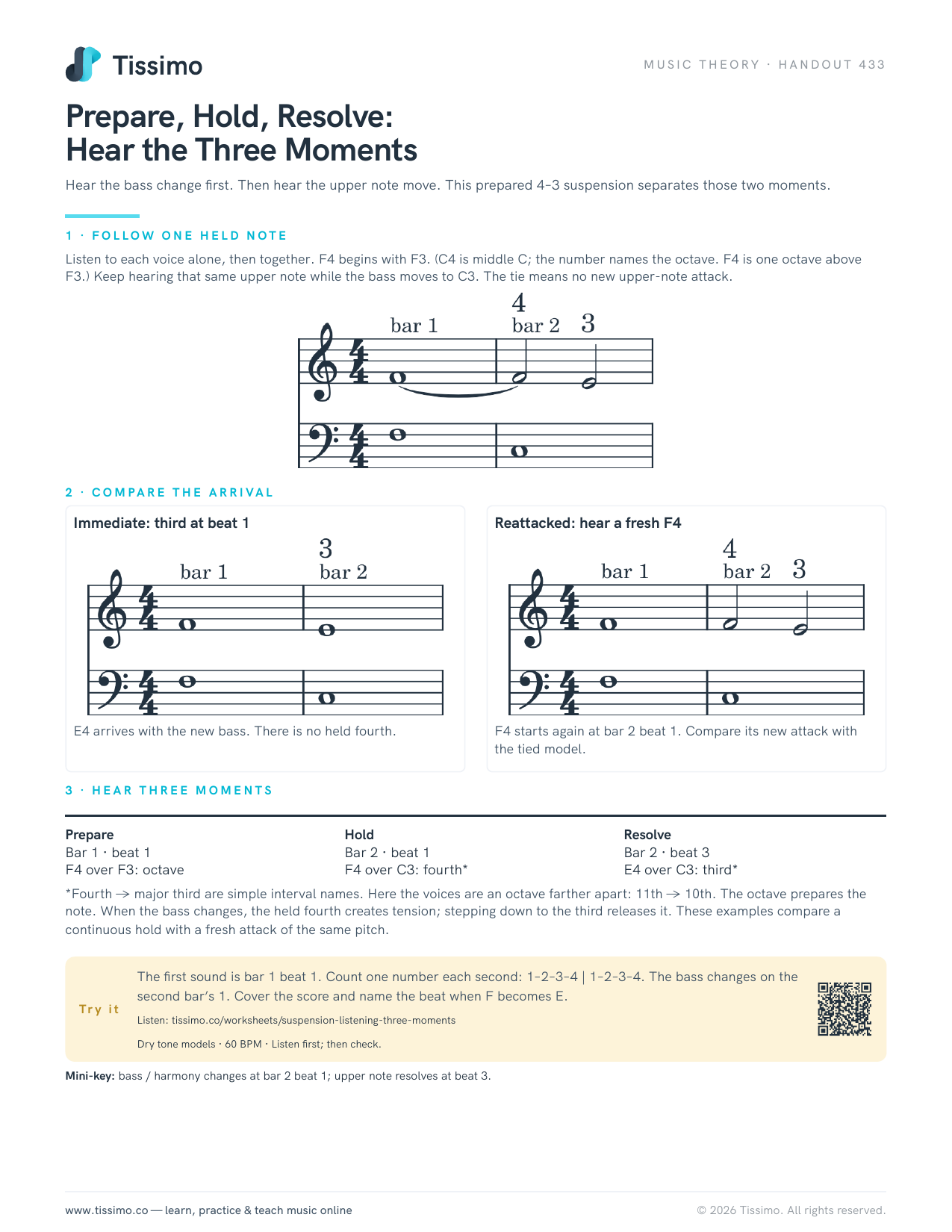 Prepare, Hold, Resolve: Hear the Three MomentsHear the bass change first. Then hear the upper note move. This prepared 4–3 suspension separates those two moments.
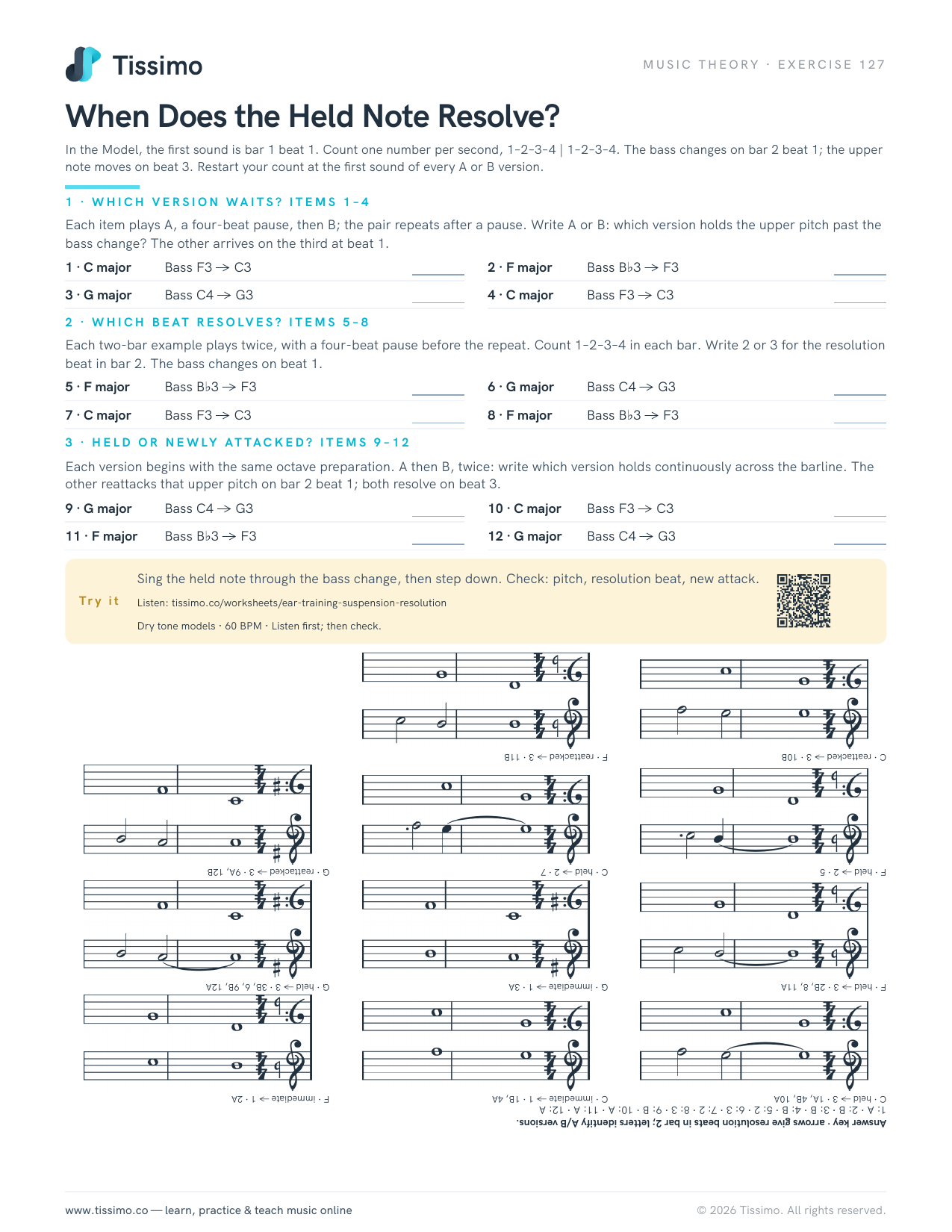 When Does the Held Note Resolve?In the Model, the first sound is bar 1 beat 1. Count one number per second, 1–2–3–4 | 1–2–3–4. The bass changes on bar 2 beat 1; the upper note moves on beat 3. Restart your count at the first sound of every A or B version.
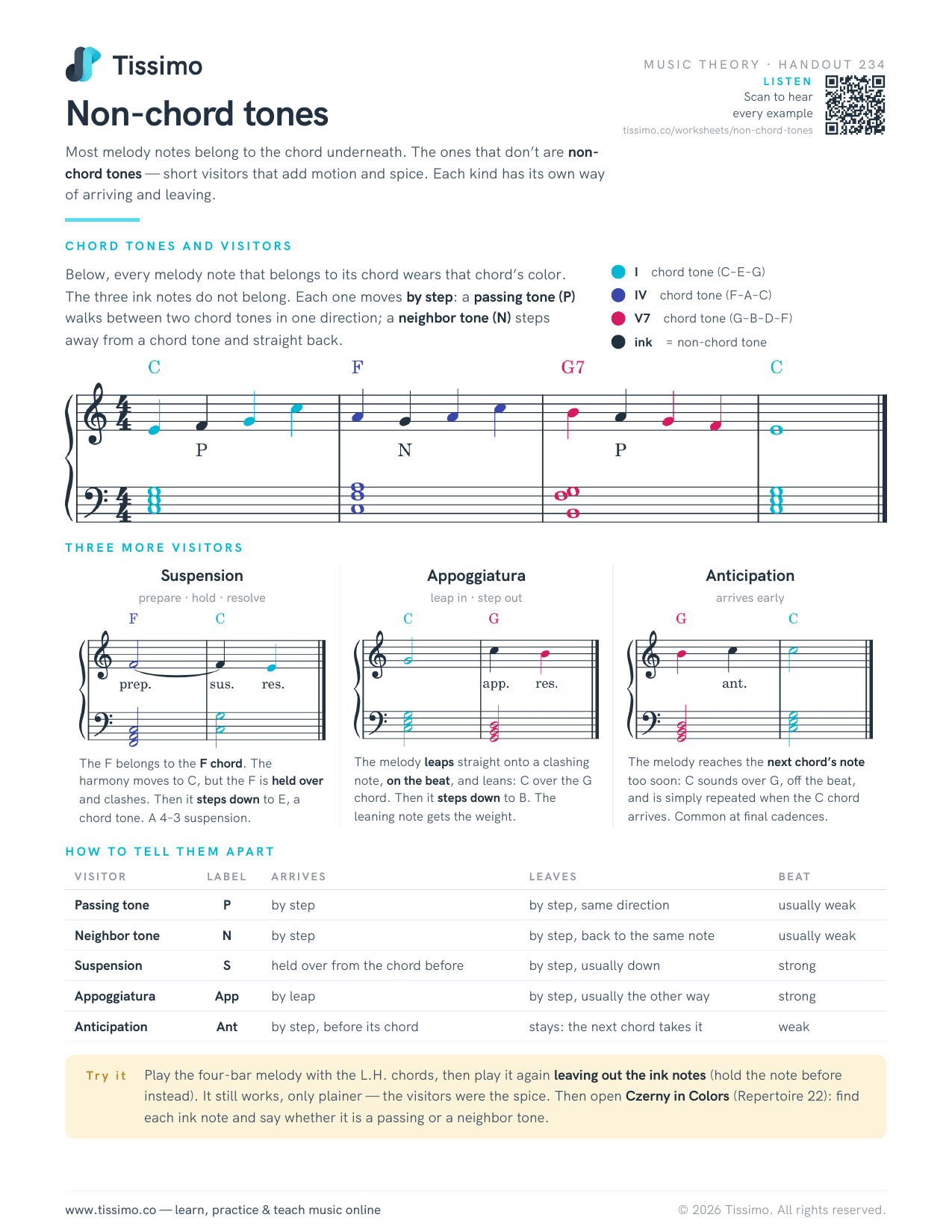 Non-chord tonesMost melody notes belong to the chord underneath. The ones that don’t are non-chord tones — short visitors that add motion and spice. Each kind has its own way of arriving and leaving.
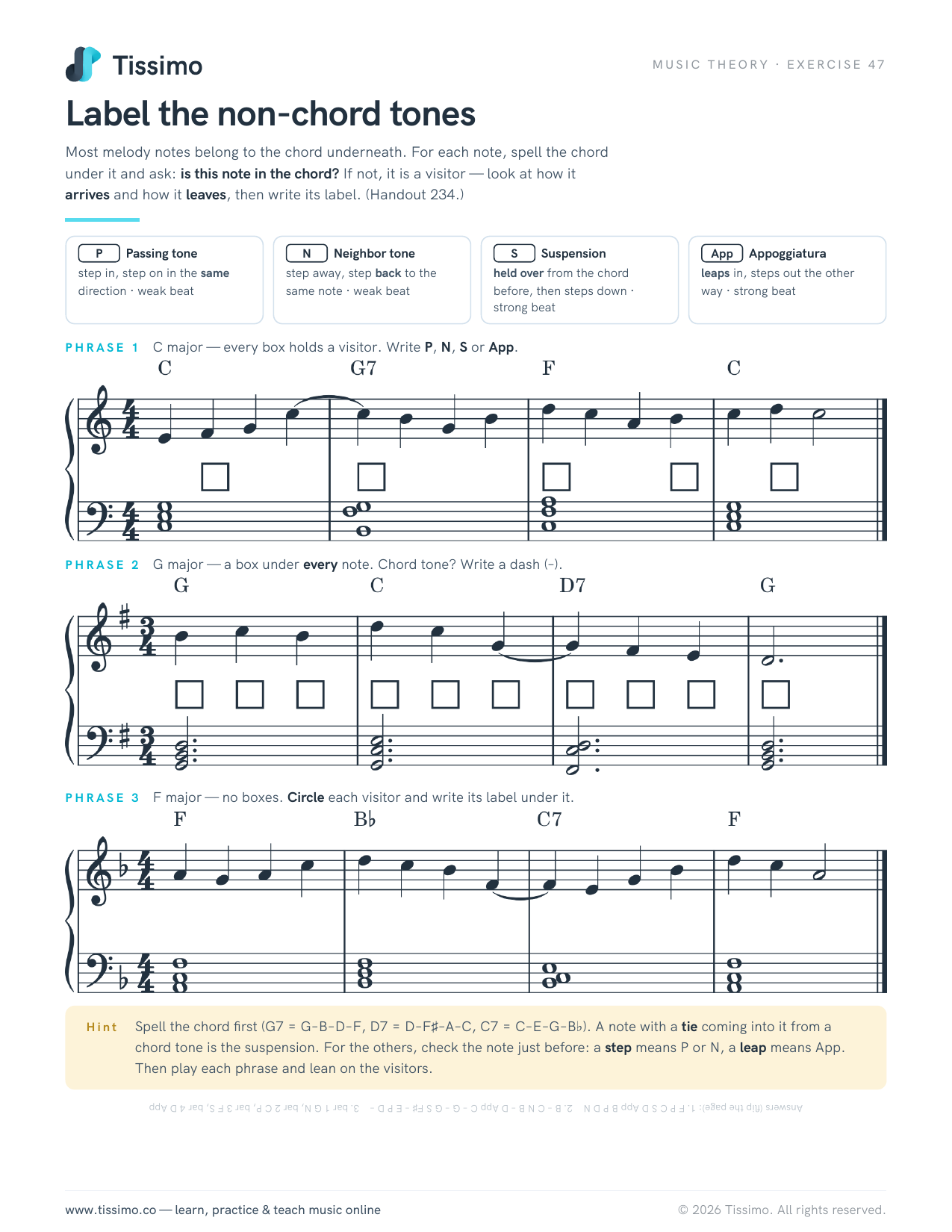 Label the non-chord tonesMost melody notes belong to the chord underneath. For each note, spell the chord under it and ask: is this note in the chord? If not, it is a visitor — look at how it arrives and how it leaves, then write its label. (Handout 234.)