Chords & Harmony
Non-Chord Tone
A non-chord tone is a melody note that does not belong to the chord sounding with it. Passing tones, neighbor tones, suspensions and appoggiaturas are the common kinds, named by how the note is approached and left.
A non-chord tone is a note that does not belong to the chord sounding at that moment. Most melody notes are chord tones; the others are visitors that add motion, tension and decoration. Each kind of non-chord tone is named by how it is approached and how it leaves: by step, by leap, or by staying on the same note. Theorists also call them nonharmonic tones or embellishing tones.
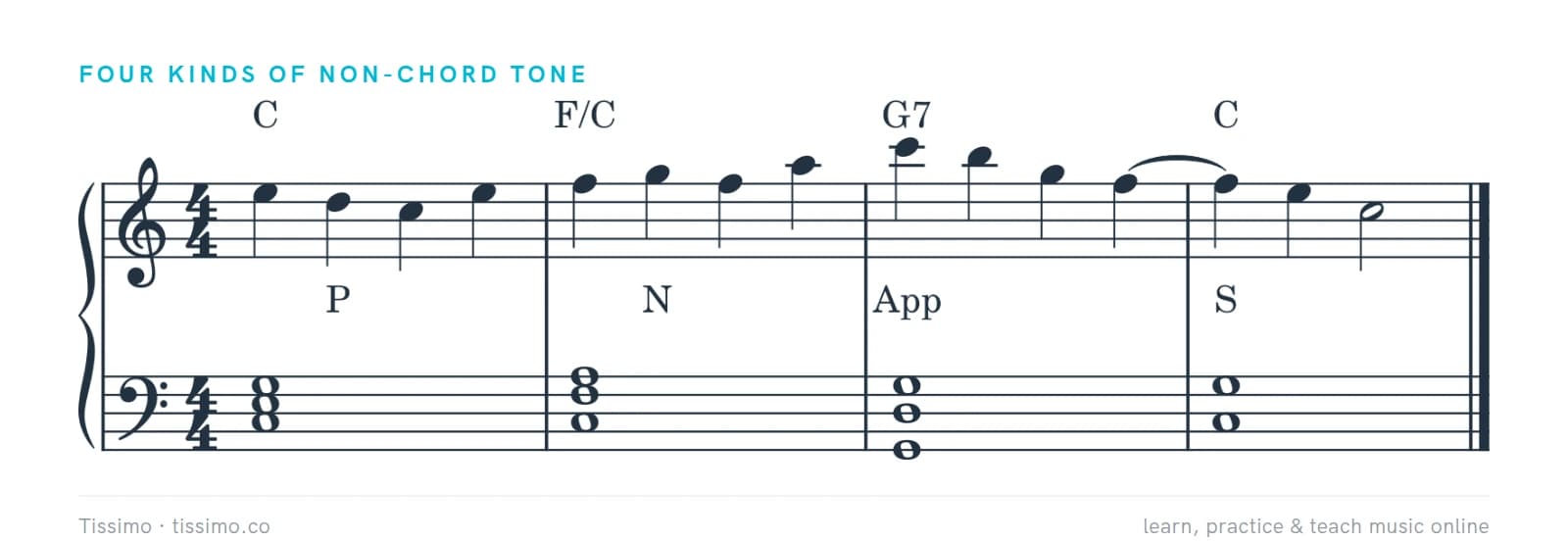
The common kinds
- Passing tone: approached by step and left by step in the same direction, filling the gap between two chord tones. See passing tone.
- Neighbor tone: steps away from a chord tone and back to the same note. See neighbor tone.
- Suspension: a chord tone held over while the harmony changes under it, then resolved down by step. See suspension.
- Appoggiatura: approached by leap and resolved by step, usually in the opposite direction and often on a strong beat. See appoggiatura.
- Escape tone: approached by step and left by leap in the opposite direction, usually on a weak beat.
- Anticipation: a note of the next chord that arrives early, before the chord changes.
- Pedal tone: a held note, usually in the bass, that the harmony moves away from and back to. See pedal point.
Accented and unaccented
A non-chord tone on a weak beat or off the beat is unaccented and sounds like decoration. One on a strong beat is accented: it clashes more and draws attention to itself, which is why appoggiaturas and suspensions sound so expressive. Passing and neighbor tones can be either.
Identifying non-chord tones
- Work out the chord under each beat from the bass and the accompaniment.
- Check each melody note: is it in that chord?
- If not, look at the notes on either side. How the melody arrives at the note, and how it leaves, tells you which kind it is.
Practice with Non-chord tones and Label the non-chord tones, and by ear with Hear the Visitor: Continue or Return?
Common questions
What are the types of non-chord tones?
The common ones are passing tones, neighbor tones, suspensions, appoggiaturas, escape tones, anticipations and pedal tones. Each is defined by how the melody approaches the note and how it leaves.
Is every non-chord tone a dissonance?
Most of them clash with the chord, but not all: a note can form a consonant interval with the bass and still not belong to the current chord. What defines a non-chord tone is simply that it is not part of the harmony at that moment.
Practice it: free worksheets
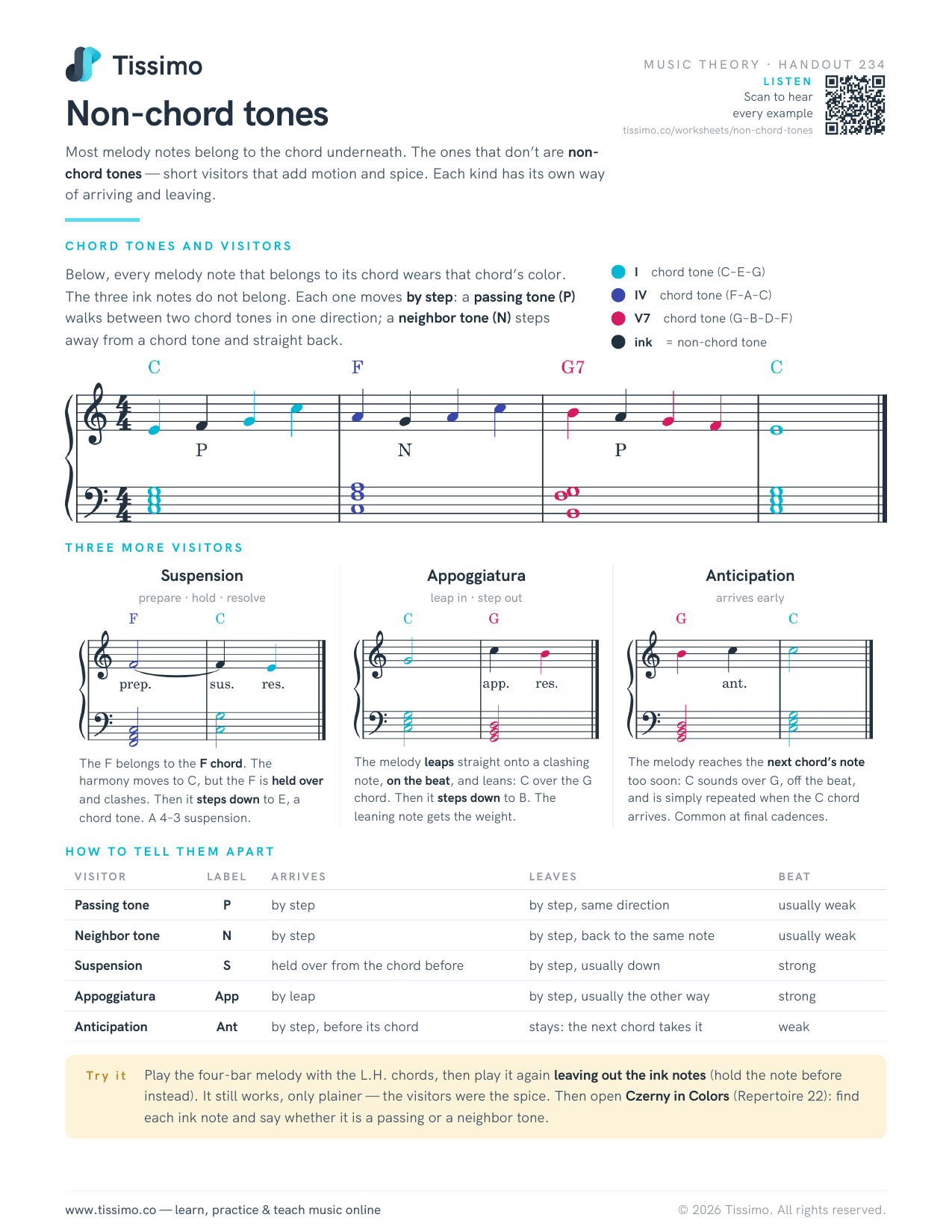 Non-chord tonesMost melody notes belong to the chord underneath. The ones that don’t are non-chord tones — short visitors that add motion and spice. Each kind has its own way of arriving and leaving.
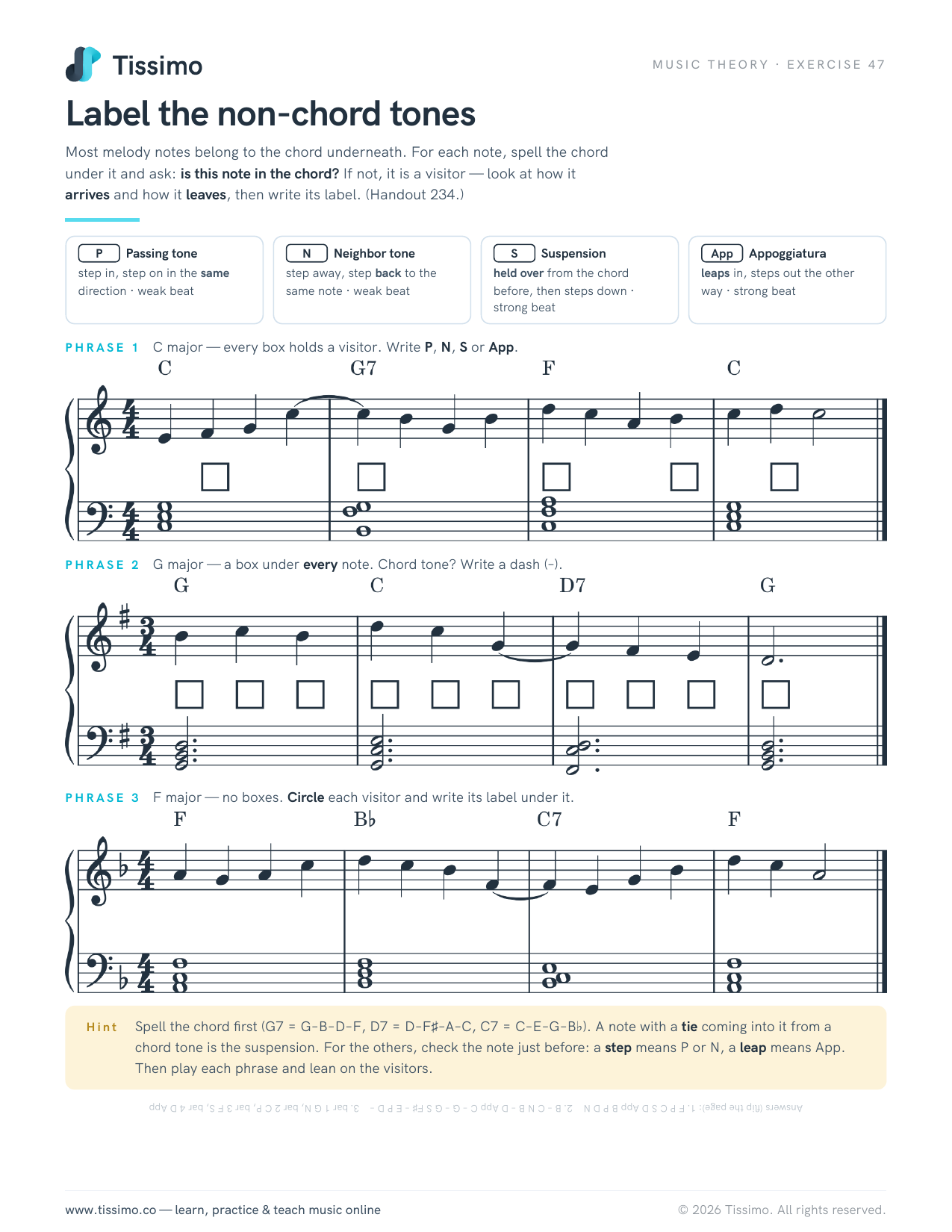 Label the non-chord tonesMost melody notes belong to the chord underneath. For each note, spell the chord under it and ask: is this note in the chord? If not, it is a visitor — look at how it arrives and how it leaves, then write its label. (Handout 234.)
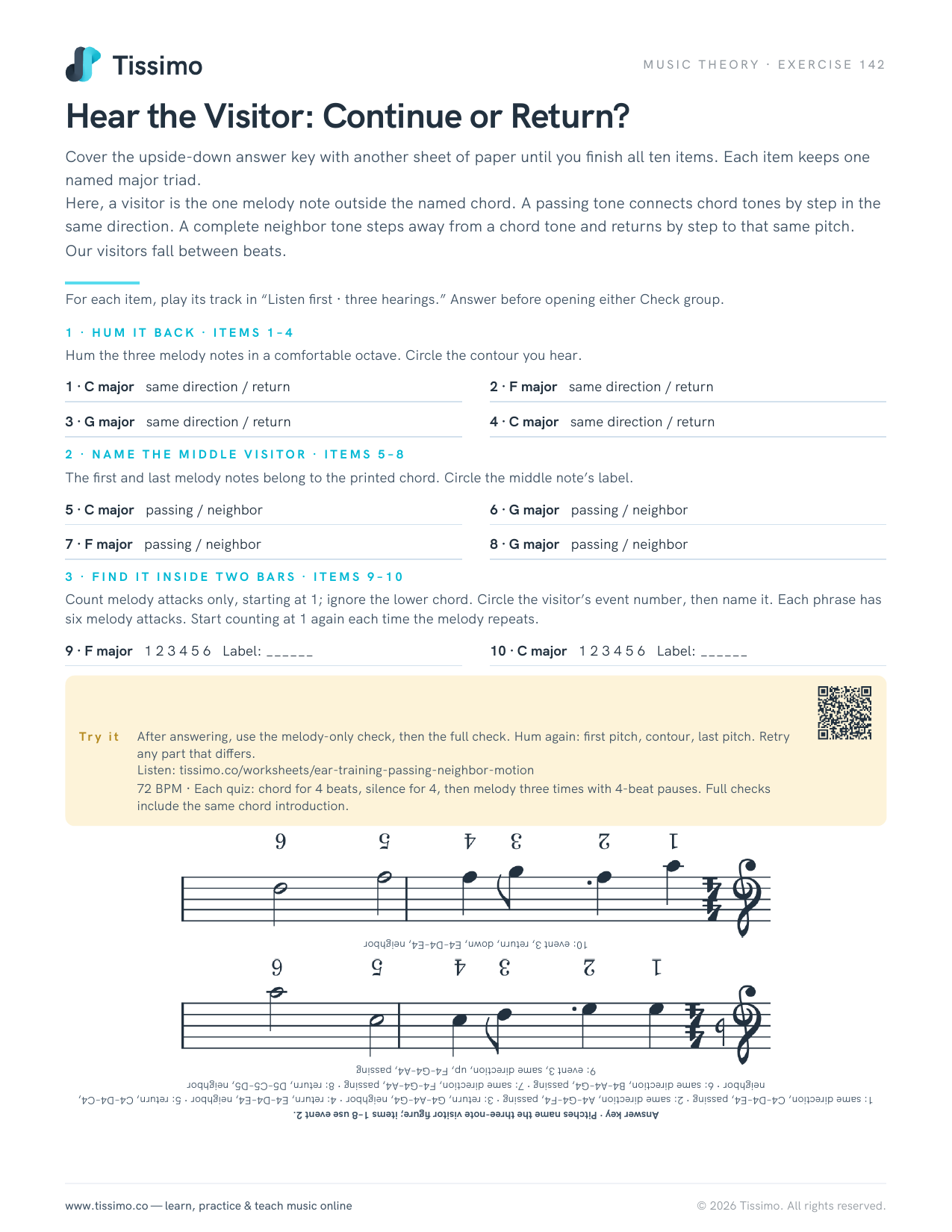 Hear the Visitor: Continue or Return?Cover the upside-down answer key with another sheet of paper until you finish all ten items. Each item keeps one named major triad. Here, a visitor is the one melody note outside the named chord. A passing tone connects chord tones by step in the same direction. A complete neighbor tone steps away from a chord tone and returns by step to that same pitch. Our visitors fall between beats.
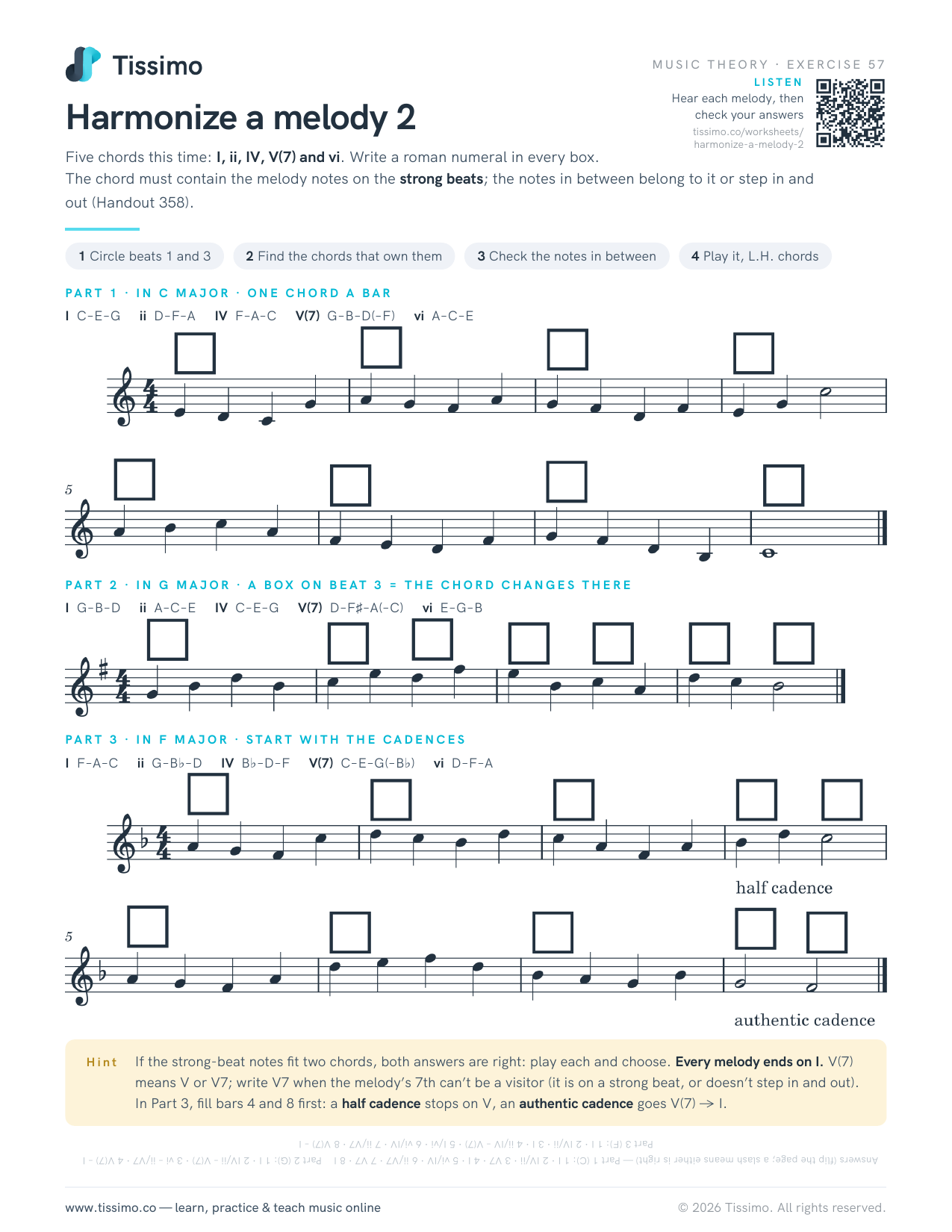 Harmonize a melody 2Five chords this time: I, ii, IV, V(7) and vi. Write a roman numeral in every box. The chord must contain the melody notes on the strong beats; the notes in between belong to it or step in and out (Handout 358).