Chords & Harmony
Pedal Point
A pedal point is a note held or repeated, usually in the bass, while the harmonies above it change, some of them clashing with it. Pedals on the tonic and the dominant are the most common.
A pedal point is a note that is held or repeated while the harmony above it changes. Most pedal points are in the bass and sit on the tonic or the dominant. Some of the chords above agree with the pedal and some clash with it, and that alternation between agreement and friction is what makes a pedal point so effective. The name comes from the organ, where players often hold a low note on the pedal keyboard with a foot while their hands keep playing.
Kinds of pedal point
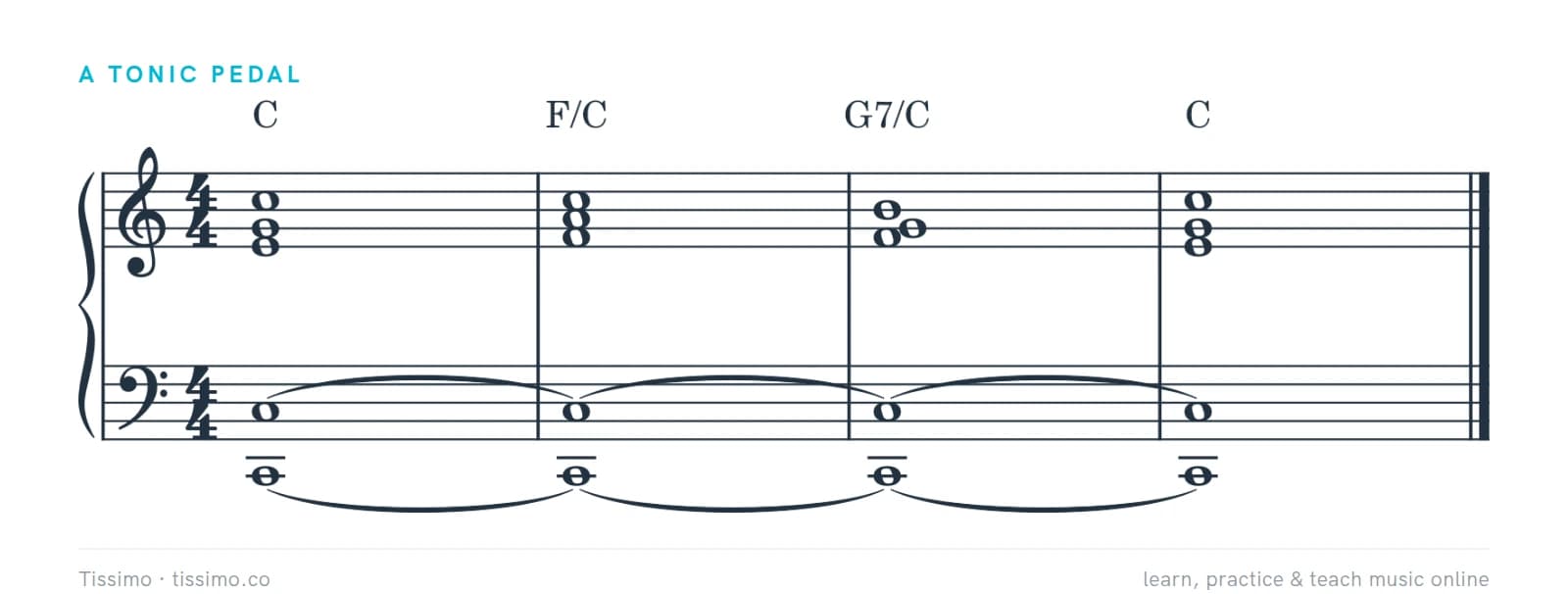
- Tonic pedal: the home note held in the bass, often near the end of a piece, as a long, settled close.
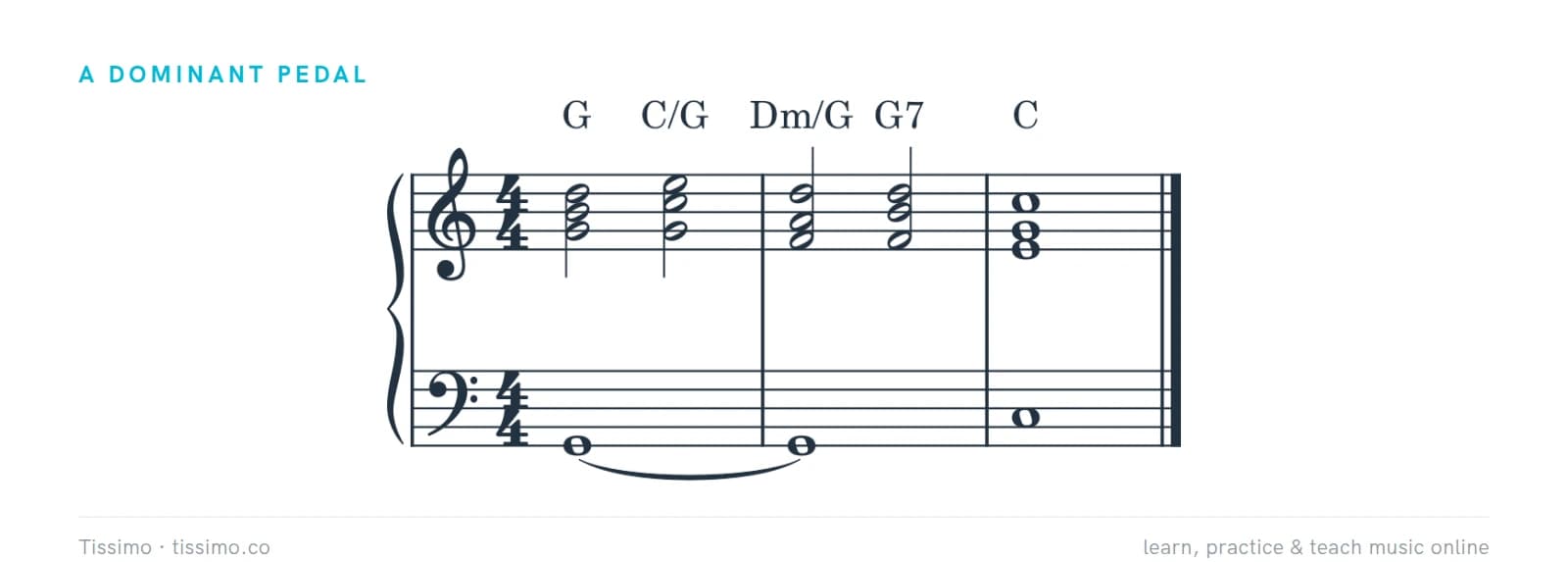
- Dominant pedal: the fifth degree held in the bass, building tension before the music returns to the tonic. Composers often place one just before a main theme comes back.
- Inverted pedal: the held note is in the top voice instead of the bass.
- Inner pedal: the held note sits in a middle voice.
- Double pedal: tonic and dominant held together, much like a drone.
How the harmony works over it
The chords above a pedal follow their own progression, almost as if the pedal were not there. Some of them, like G7 over a C pedal, do not contain the held note at all, and the clash is part of the effect. When the harmony returns to a chord that does contain the pedal, the tension releases.
In modern styles
Pedal points are everywhere in film music, rock and pop: a bass or synthesizer holding one note while the chords change above it, or a repeated eighth-note bass driving a whole verse. On a lead sheet they are usually written with slash chords such as F/C and G/C. A repeated rhythmic figure on the same note comes close to an ostinato.
Common questions
Why is it called a pedal point?
Because organists often hold long bass notes with their feet on the pedal keyboard while the harmony changes above. The term is now used for any instrument.
What is the difference between a pedal point and a drone?
A drone usually lasts through a whole piece or section, as on bagpipes, and the music is built around it. A pedal point is a temporary event inside music whose bass otherwise moves freely.