Instruments & Voices
Percussion Family
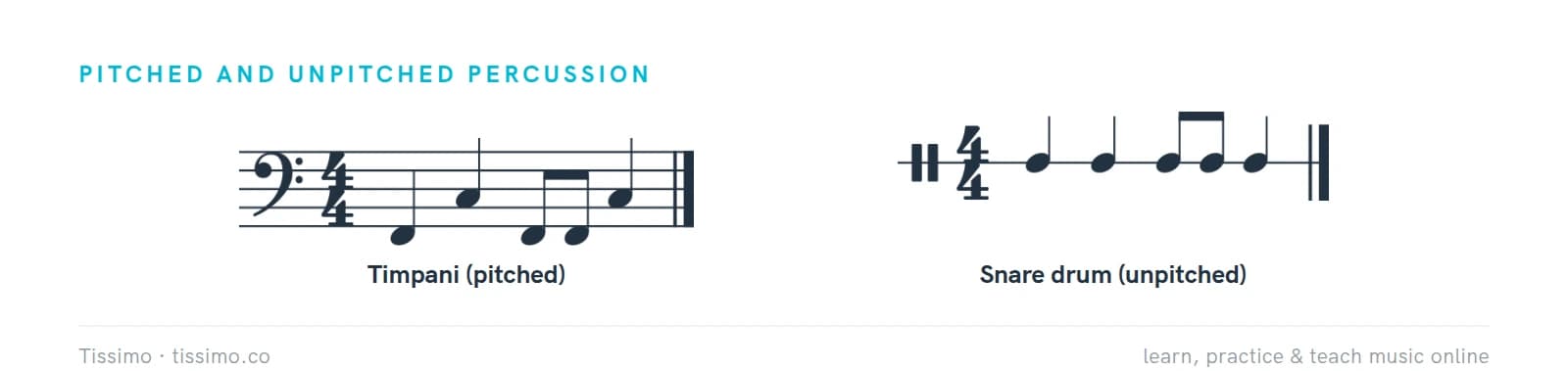
The percussion family is the instruments played by striking, shaking or scraping. It includes pitched ones, such as timpani and xylophone, and unpitched ones, such as snare drum, cymbals and triangle.
Percussion instruments make their sound when you strike, shake or scrape them. It is the largest and most varied instrument family: drums, cymbals, bells, wooden bars, rattles and many instruments from around the world. In an ensemble, percussion adds rhythm, accents and color, from a single triangle note to a whole drum kit groove.
Pitched and unpitched
The most useful way to divide the family is by pitch:
- Pitched (definite pitch) instruments play notes you can name: timpani, xylophone, marimba, vibraphone, glockenspiel, tubular bells (chimes) and crotales.
- Unpitched (indefinite pitch) instruments have no single clear note: snare drum, bass drum, cymbals, triangle, tambourine, woodblock, congas, bongos, shakers and many more.
Instrument scientists also divide percussion by what vibrates. In membranophones a stretched skin (membrane) vibrates, as in drums. In idiophones the body of the instrument itself vibrates, as in cymbals, xylophones and bells.
How percussion is written
Pitched percussion is written on ordinary staves. Some instruments transpose by octaves to avoid ledger lines: the xylophone sounds an octave higher than written and the glockenspiel two octaves higher. Unpitched percussion is written on a staff with a percussion clef (two thick vertical bars), either a five-line staff with a different line for each instrument (as in drum-kit music) or a single line for one instrument.
The percussion section
In the orchestra the timpanist usually plays only the timpani, while the other percussionists move between many instruments in one piece: snare drum, bass drum, cymbals, triangle, xylophone, glockenspiel and whatever else the composer asks for. Concert bands, marching bands and drumlines have large percussion sections, and much of the world's music, from West African drumming to Latin American and Indian traditions, is built on percussion.
Learning percussion
Most percussionists start on the snare drum or a practice pad, learning stick control and the rudiments, standard sticking patterns such as single strokes, double strokes, the paradiddle, the flam and rolls. Many add mallet instruments (xylophone or marimba), which need note reading and teach melody and harmony, and then timpani. Drum-kit players take a similar path with more emphasis on coordination between hands and feet.
Common questions
What instruments are in the percussion family?
Drums (snare, bass drum, timpani, toms, congas, bongos), cymbals, the triangle, tambourine, woodblock and shakers, and pitched mallet instruments such as the xylophone, marimba, vibraphone and glockenspiel. The drum kit combines several of them for one player.
Is the piano a percussion instrument?
Its strings are struck by hammers, so it is sometimes called one, and orchestras occasionally seat it with the percussion. Most musicians call it a keyboard instrument, and instrument classifications put it with the string instruments.
Practice it: free worksheets
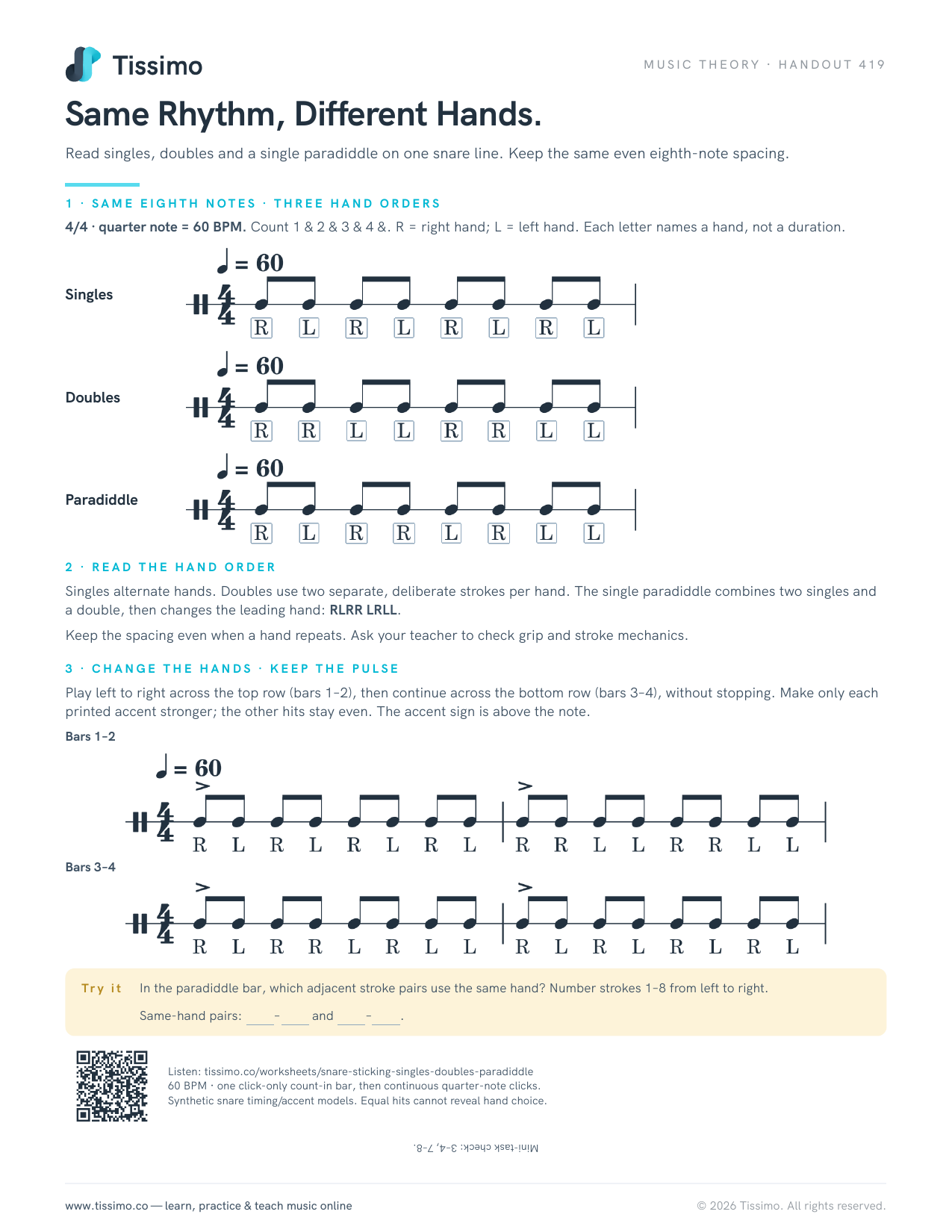 Same Rhythm, Different Hands.Read singles, doubles and a single paradiddle on one snare line. Keep the same even eighth-note spacing.
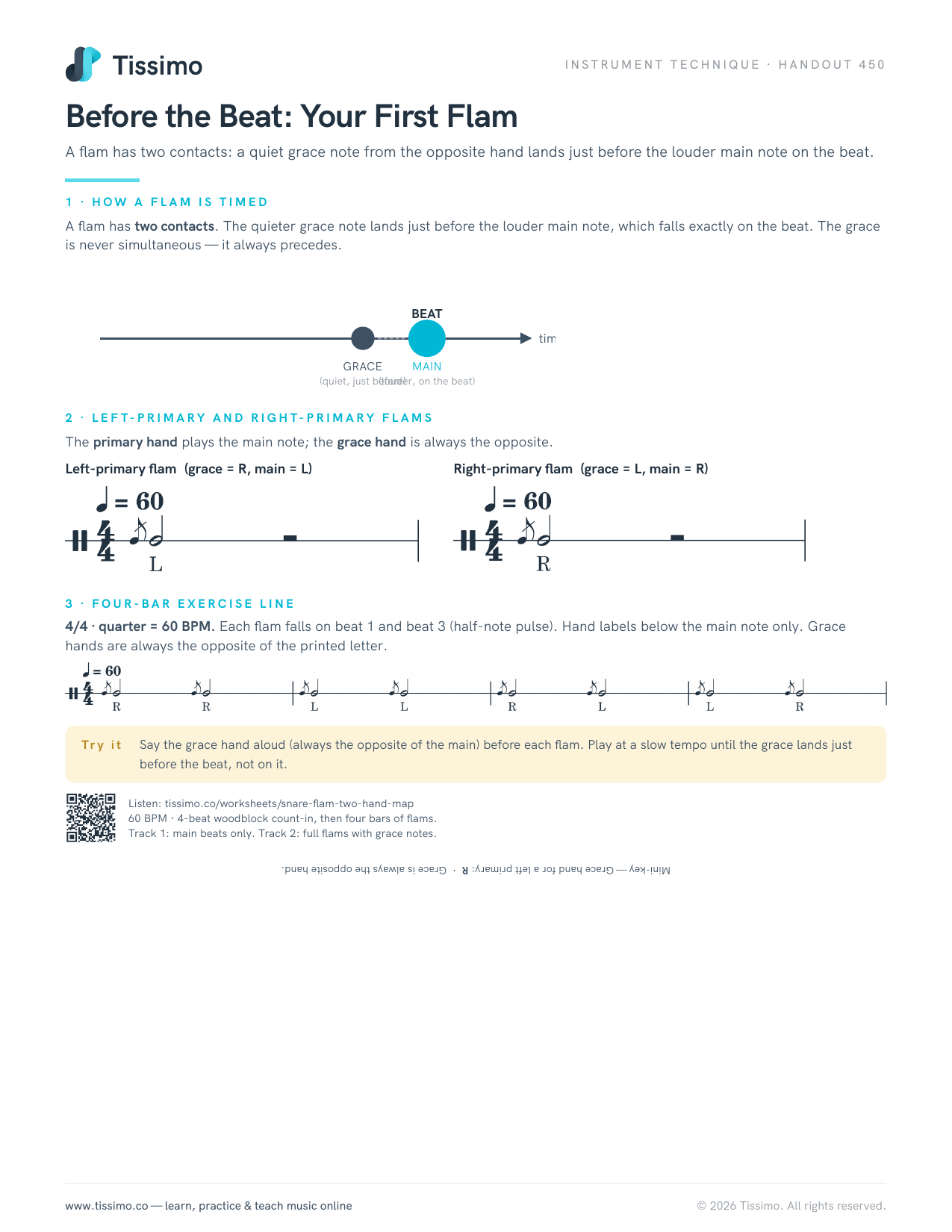 Before the Beat: Your First FlamA flam has two contacts: a quiet grace note from the opposite hand lands just before the louder main note on the beat.
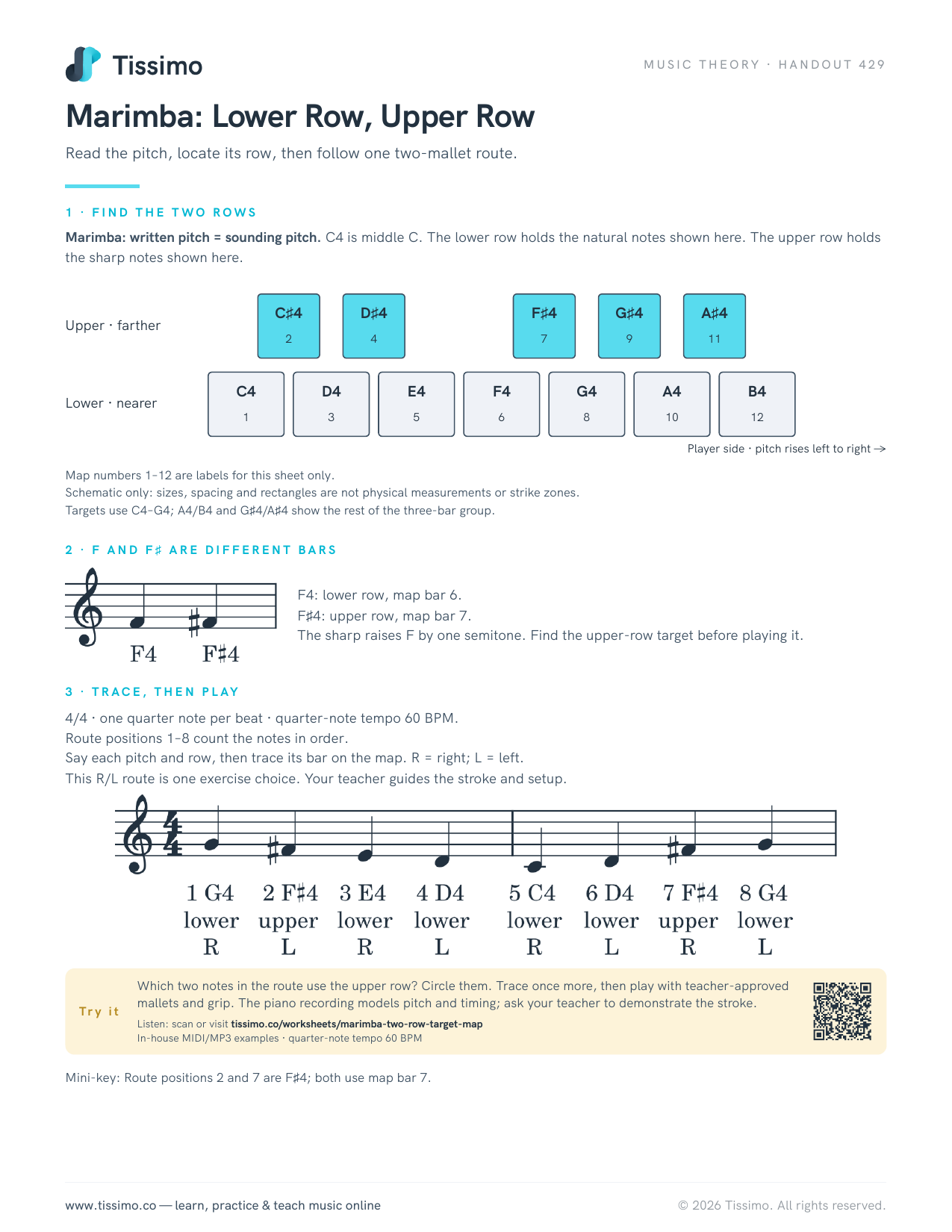 Marimba: Lower Row, Upper RowRead the pitch, locate its row, then follow one two-mallet route.
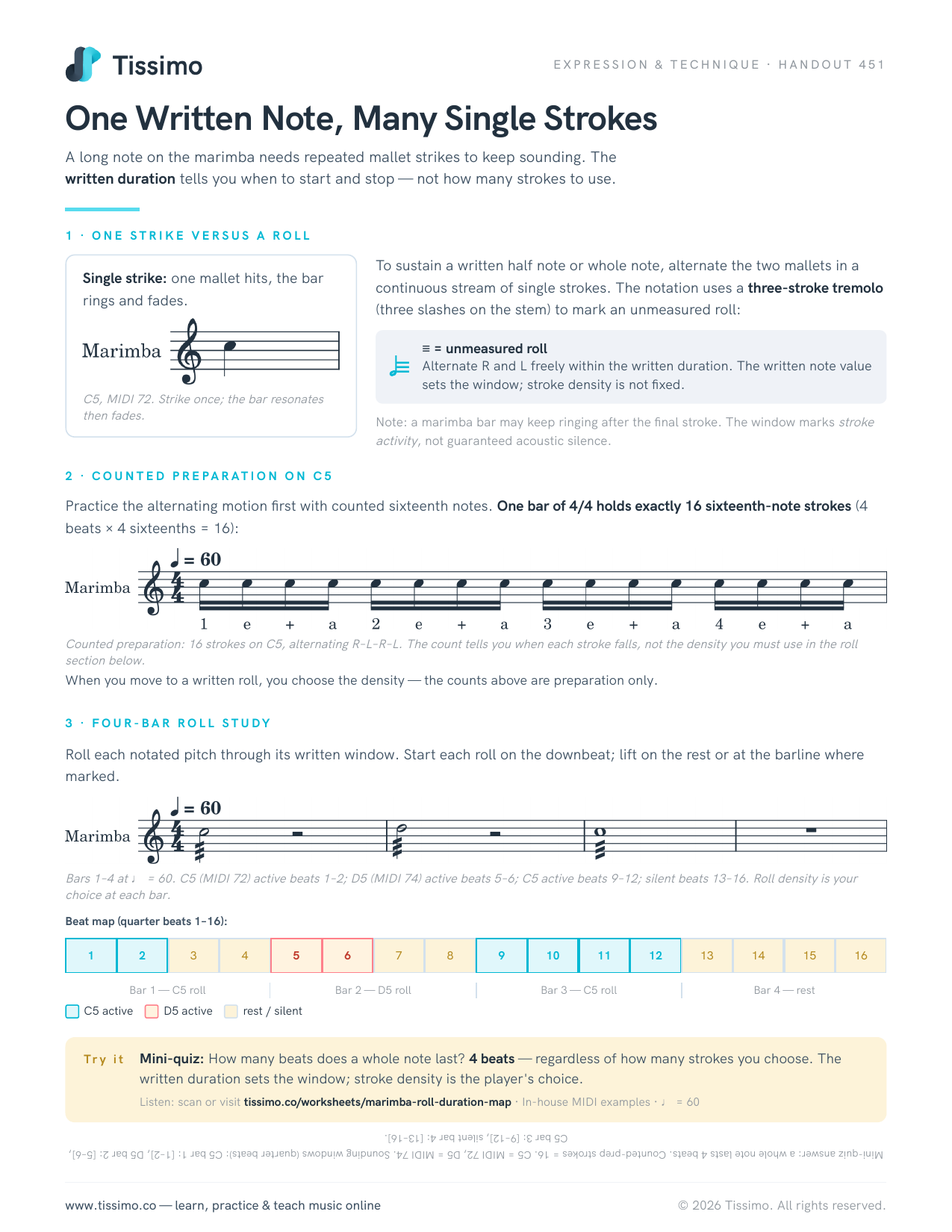 One Written Note, Many Single StrokesA long note on the marimba needs repeated mallet strikes to keep sounding. The written duration tells you when to start and stop — not how many strokes to use.
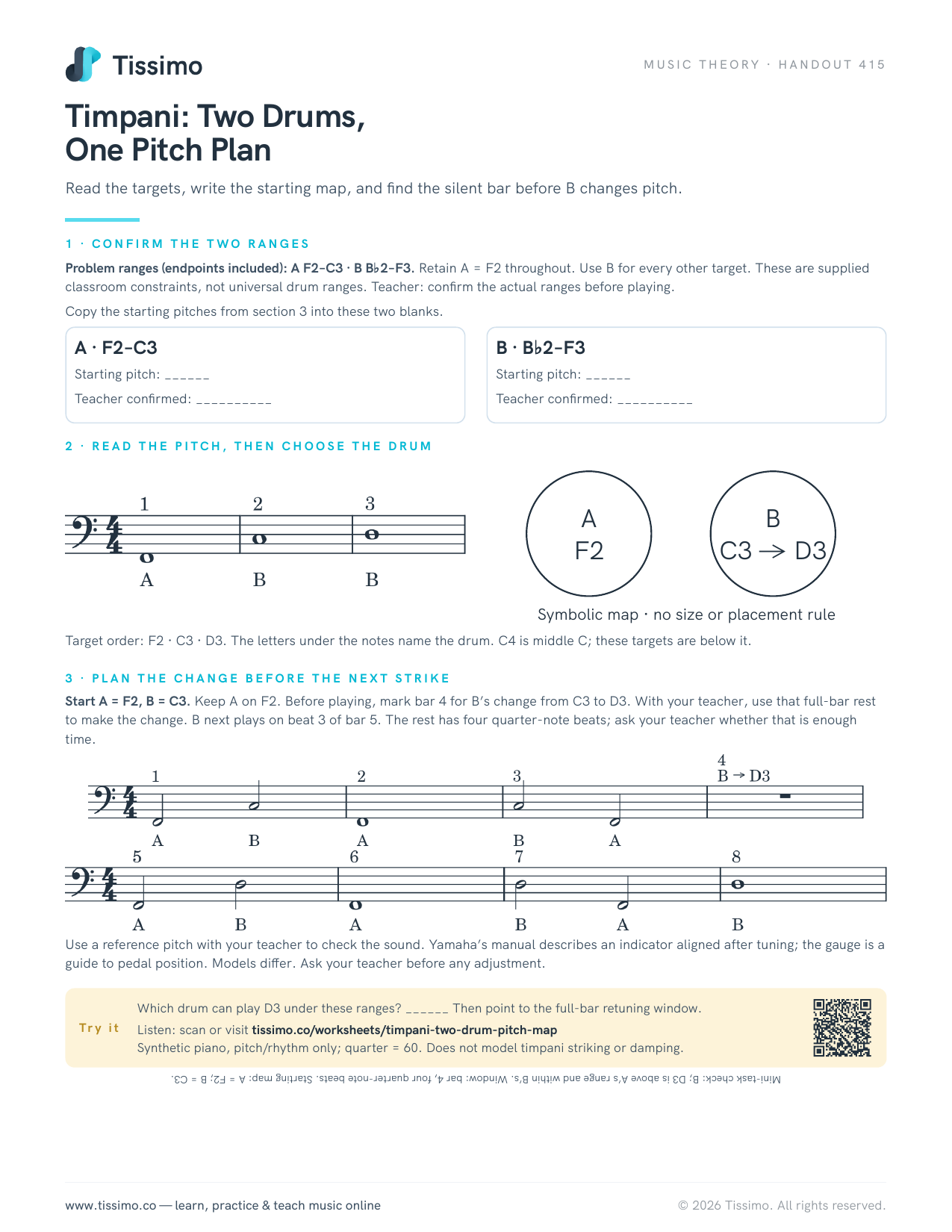 Timpani: Two Drums, One Pitch PlanRead the targets, write the starting map, and find the silent bar before B changes pitch.
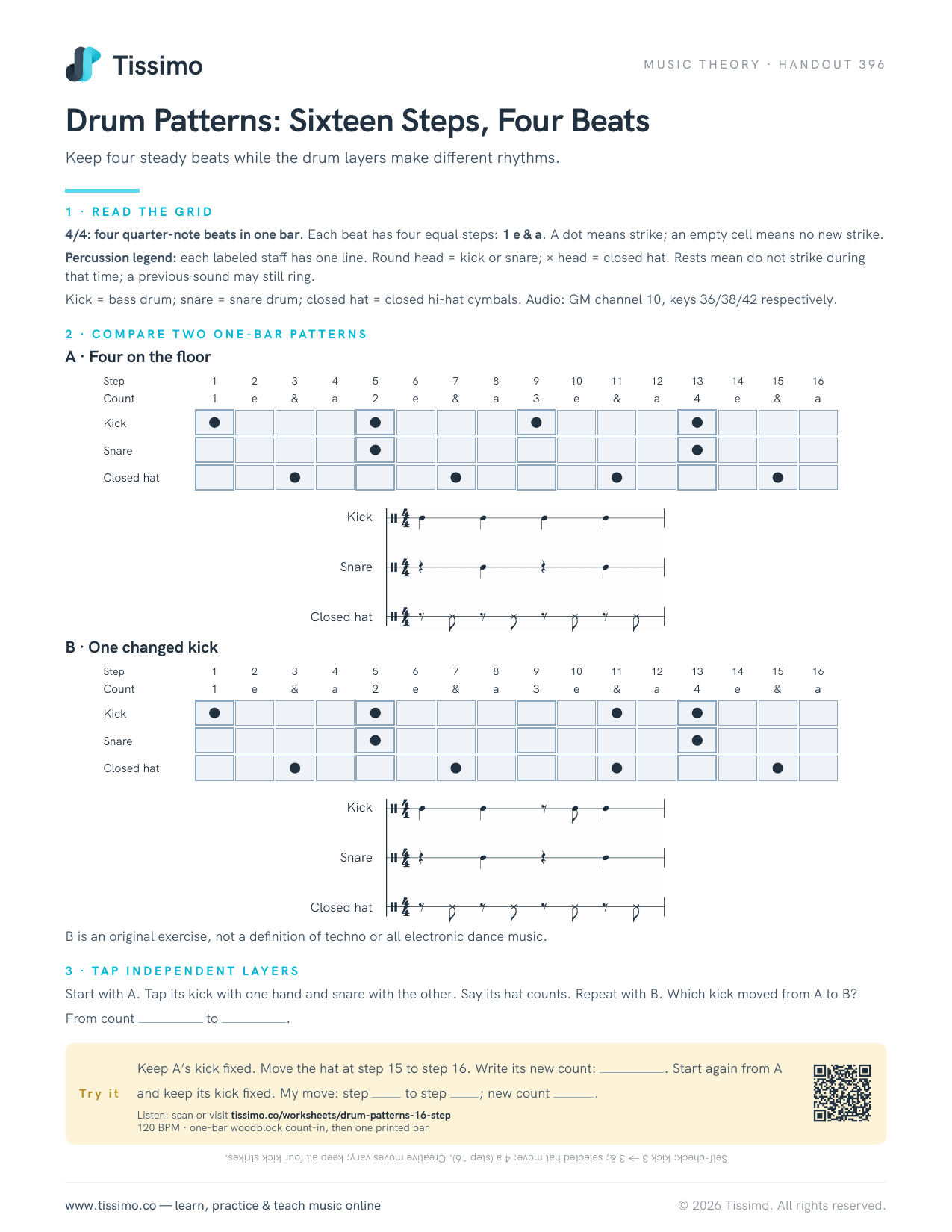 Drum Patterns: Sixteen Steps, Four BeatsKeep four steady beats while the drum layers make different rhythms.