Instruments & Voices
Timpani
Pronounced TIM-puh-nee
Timpani (kettledrums) are large bowl-shaped drums that play definite pitches. A pedal on each drum changes the tension of the head, so the player can tune it to a chosen note, usually across a set of four drums.
Timpani, also called kettledrums, are the main pitched drums of the orchestra. Each drum is a large bowl, usually of copper or fiberglass, with a head of calfskin or plastic stretched across the top. Unlike most drums, a timpano is tuned to a definite pitch, so timpani play actual notes that fit the harmony.
How timpani make their sound
The timpanist strikes the head with mallets that have felt-covered heads, harder ones for crisp, clear notes and softer ones for a round, booming sound. The bowl shapes the resonance and helps the drum produce a clear pitch. A long note is played as a roll, a rapid alternation of single strokes between the two hands, and the player stops the ringing by damping the head with the fingertips.
On modern pedal timpani, a foot pedal changes the tension of the head: pressing it down tightens the head and raises the pitch. That lets the timpanist retune quickly, even during a piece, and play short glissandos. Players tune by ear, often humming the note or tapping the head very softly during rests, and many drums have a gauge that shows roughly where each note lies.
Range
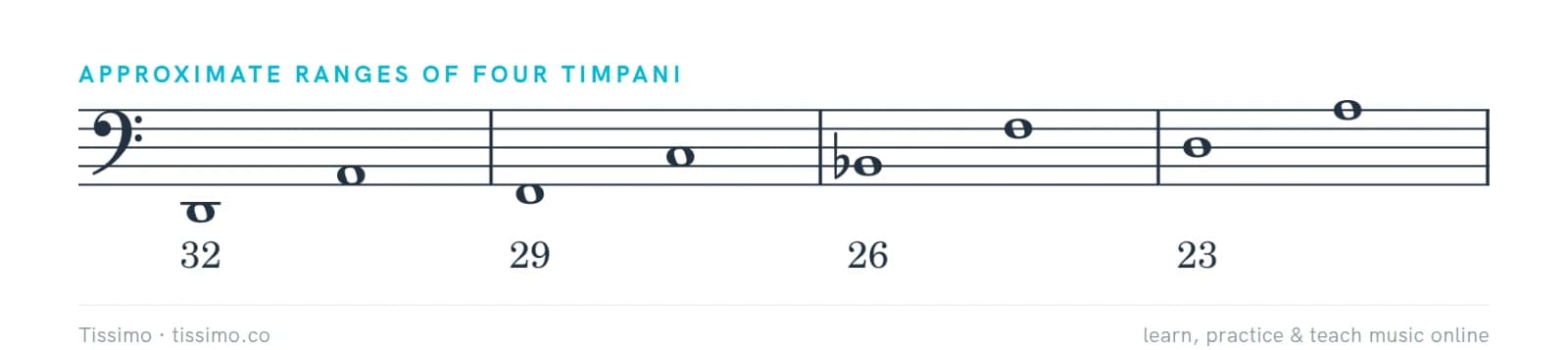
A standard set has four drums of different sizes, each covering roughly a fifth. Approximate ranges (they vary by maker and by head):
- 32-inch drum: about D2 to A2
- 29-inch drum: about F2 to C3
- 26-inch drum: about B♭2 to F3
- 23-inch drum: about D3 to A3
Together they cover roughly D2 to A3. Extra drums, larger or smaller, extend the range for some pieces.
How timpani music is written
Timpani parts are written in bass clef at the pitch they sound. The tunings needed are listed at the start of the part, and tuning changes during a piece are announced in the rests (often with the Italian word muta, "change," followed by the new note). A roll is written with three slashes through the stem or with "tr" and a wavy line. In many eighteenth-century scores the timpani part was written as C and G, with the actual tuning given at the beginning.
Its role
In Baroque and Classical music the timpani usually had two drums, tuned to the tonic and dominant of the key, and played with the trumpets to reinforce cadences and festive moments. From the nineteenth century onward composers asked for more drums, more retuning and solo passages. Timpani appear in nearly every symphony orchestra and in many concert bands.
Tips for beginners
- Strike the head about a hand's width in from the edge, not in the center, where the sound is dull.
- Let the mallet bounce off the head; pulling the sound out, not pushing it in, makes the drum ring.
- Train your ear: sing the target note before you tune, and check it softly against the band or a pitch reference.
Common questions
Is it timpani or timpanis?
"Timpani" is already plural in Italian; one drum is a timpano. In English, "timpani" is used for the set and often for a single drum too. The player is a timpanist.
How are timpani tuned?
By changing the tension of the head. On pedal timpani the foot pedal does this quickly; older drums use hand screws around the rim. Timpanists check the pitch by ear, often humming the note and tapping the head very softly.
Practice it: free worksheets
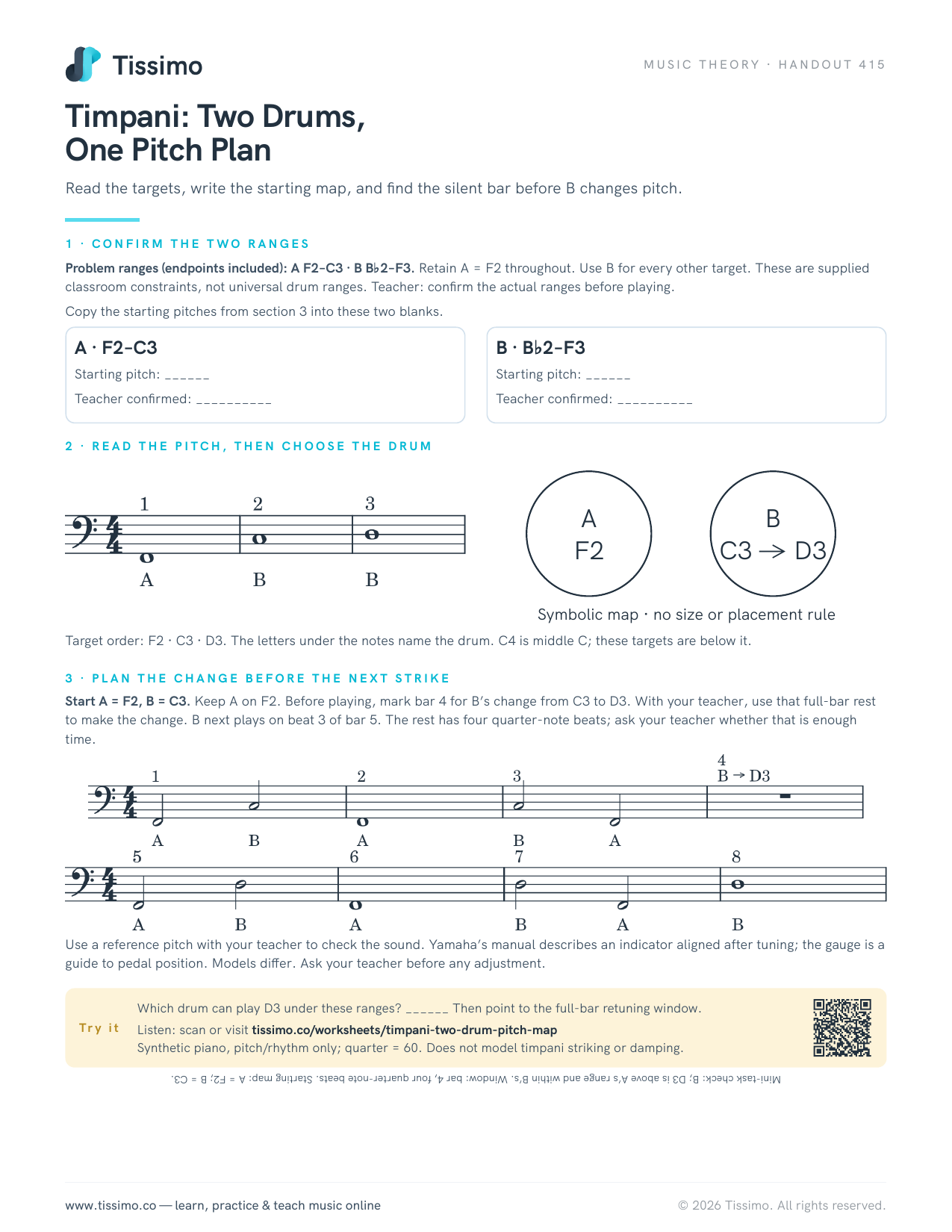 Timpani: Two Drums, One Pitch PlanRead the targets, write the starting map, and find the silent bar before B changes pitch.
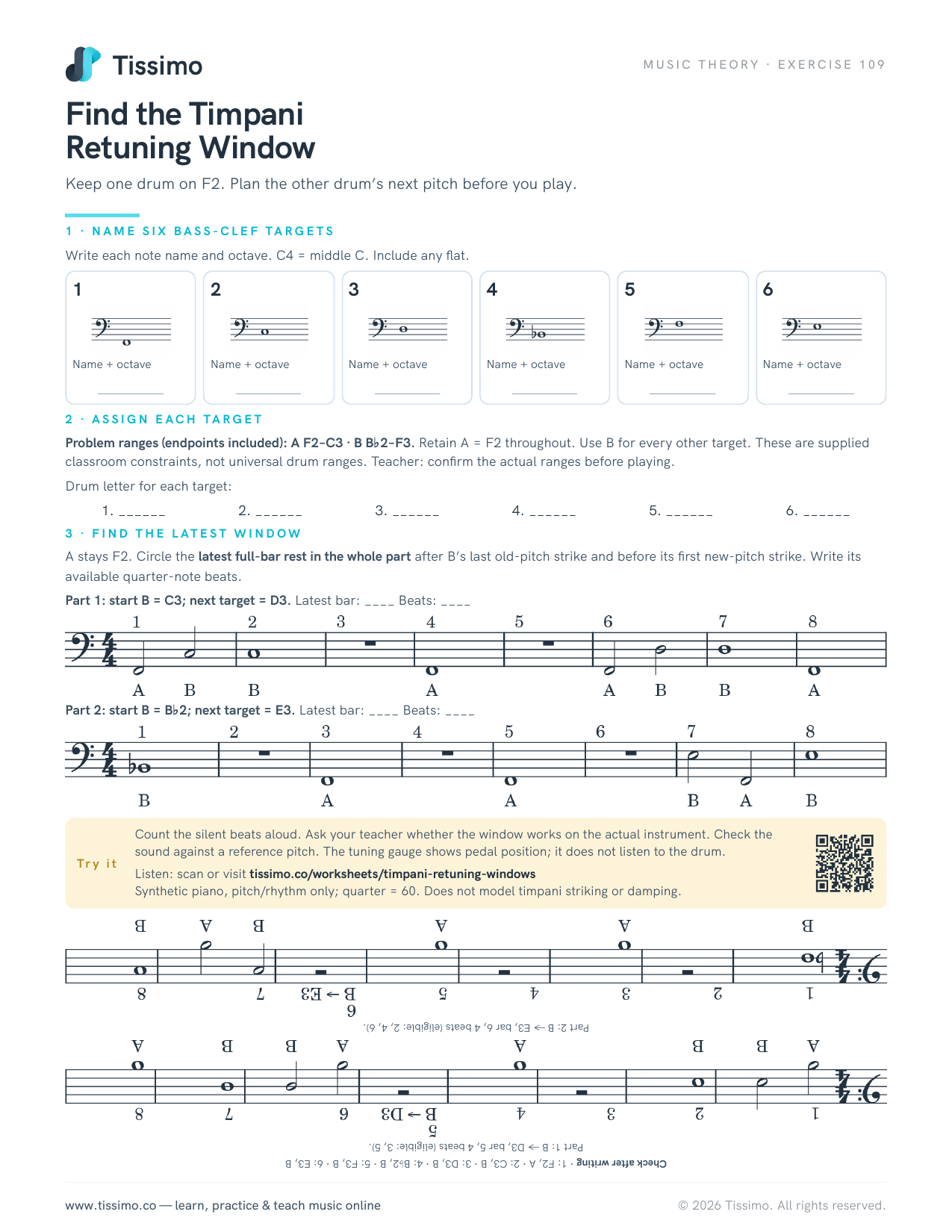 Find the Timpani Retuning WindowKeep one drum on F2. Plan the other drum’s next pitch before you play.
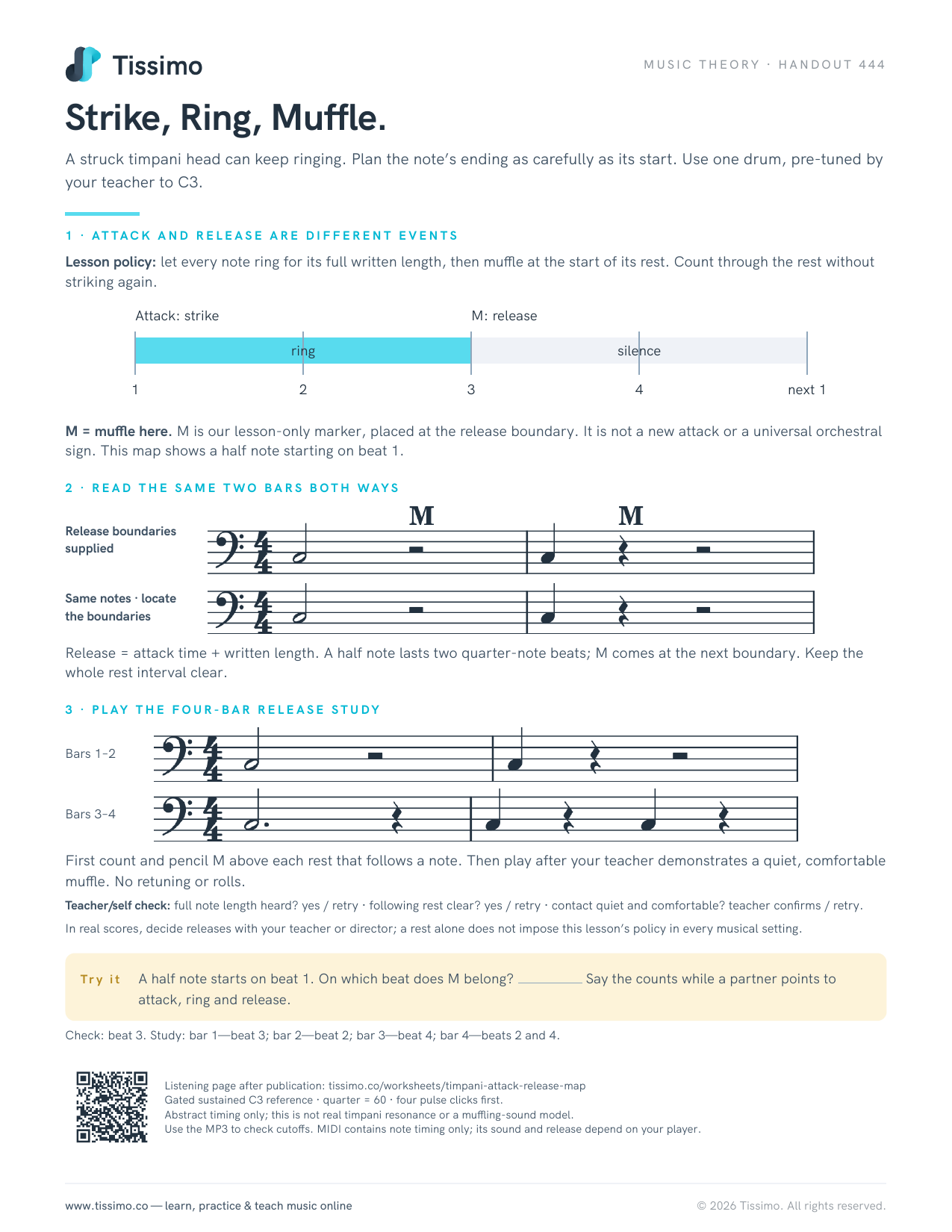 Strike, Ring, Muffle.A struck timpani head can keep ringing. Plan the note’s ending as carefully as its start. Use one drum, pre-tuned by your teacher to C3.
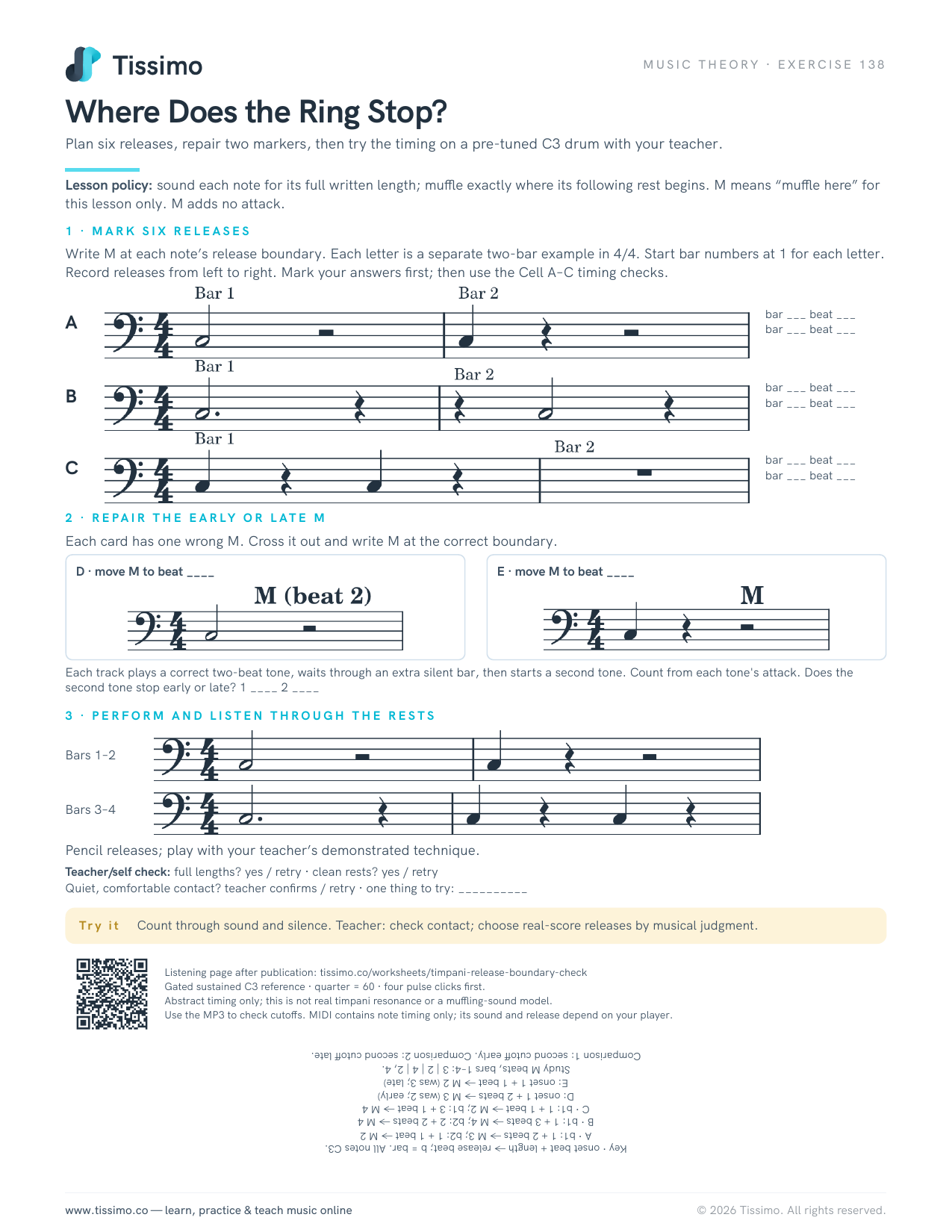 Where Does the Ring Stop?Plan six releases, repair two markers, then try the timing on a pre-tuned C3 drum with your teacher.