Instruments & Voices
Bass Guitar
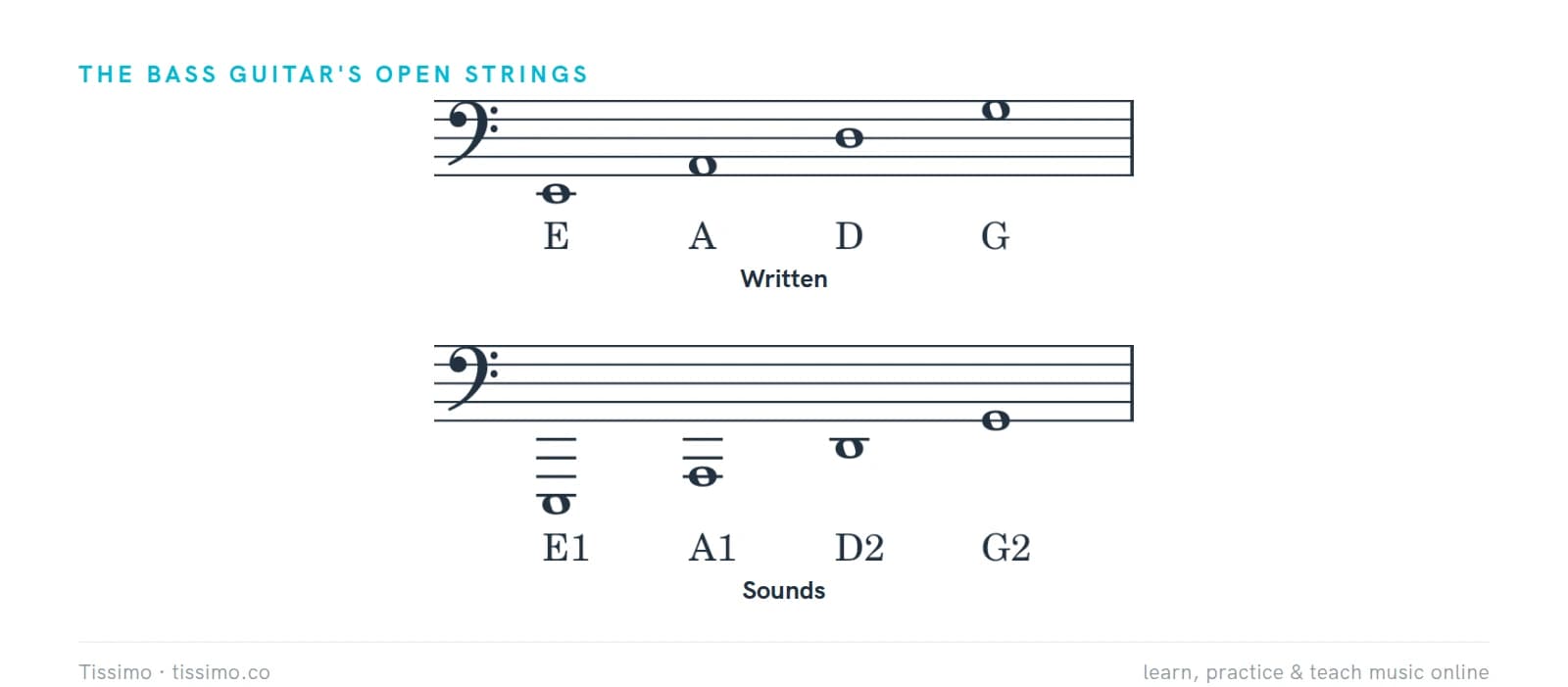
The bass guitar (electric bass) usually has four strings tuned E–A–D–G, an octave below the guitar's lowest four. It plays the bass line and is written in bass clef an octave higher than it sounds.
The bass guitar, usually called the electric bass or simply "the bass," looks like a long-necked electric guitar with four thicker strings. It plays the lowest part in most bands, the bass line, and together with the drums it forms the rhythm section that holds the music together.
How it makes its sound
Like an electric guitar, the bass uses magnetic pickups to turn string vibration into an electrical signal, which a bass amplifier makes audible. The long strings (on a typical bass about 34 inches, or 86 cm, from nut to bridge) let it reach low notes with a full, clear tone. Most basses have frets; fretless basses have a smooth fingerboard like a double bass and a singing, sliding sound.
You can play with the fingers, usually alternating the index and middle fingers, with a pick, or with slap technique, in which the thumb bounces off the low strings and the fingers snap the higher ones.
Tuning and range
A four-string bass is tuned E1, A1, D2, G2: the same note names as the guitar's four lowest strings, one octave lower. Five-string basses add a low B (B0), and six-string basses usually add a high C as well. A four-string bass runs from E1 up to about E♭4 with 20 frets, or G4 with 24.
How bass music is written
Bass parts are written in bass clef, an octave higher than they sound, which keeps the low notes on the staff instead of on several ledger lines below it. Bassists also read tablature (four lines for four strings) and chord symbols, from which they build their own lines.
Its role
The bass connects rhythm and harmony. It often plays the roots of the chords on strong beats, locks its rhythm to the bass drum and moves between chords with passing notes. In jazz, bassists play walking bass lines; in funk and R&B the bass part is often the hook of the song. Because the lowest note decides how a chord is heard (compare slash chords), the bassist has a lot of harmonic power.
Tips for beginners
- Play with a metronome or a drum loop: a steady bass part makes the whole band sound tight.
- Learn where the roots are on the E and A strings first; many songs live there.
- Mute the strings you are not playing so low notes don't ring into each other.
- Learn the notes of each chord, not only its root. Root, fifth and octave patterns get you through many songs.
Common questions
What is the difference between a bass guitar and a double bass?
The double bass is a large acoustic string instrument played upright, with the fingers or a bow, and it has no frets. The bass guitar is electric, held like a guitar and usually fretted. Both are normally tuned E1, A1, D2, G2 and both are written an octave higher than they sound.
How many strings does a bass guitar have?
Most have four (E, A, D, G). Five-string basses add a low B, and six-string basses add a low B and a high C.
Practice it: free worksheets
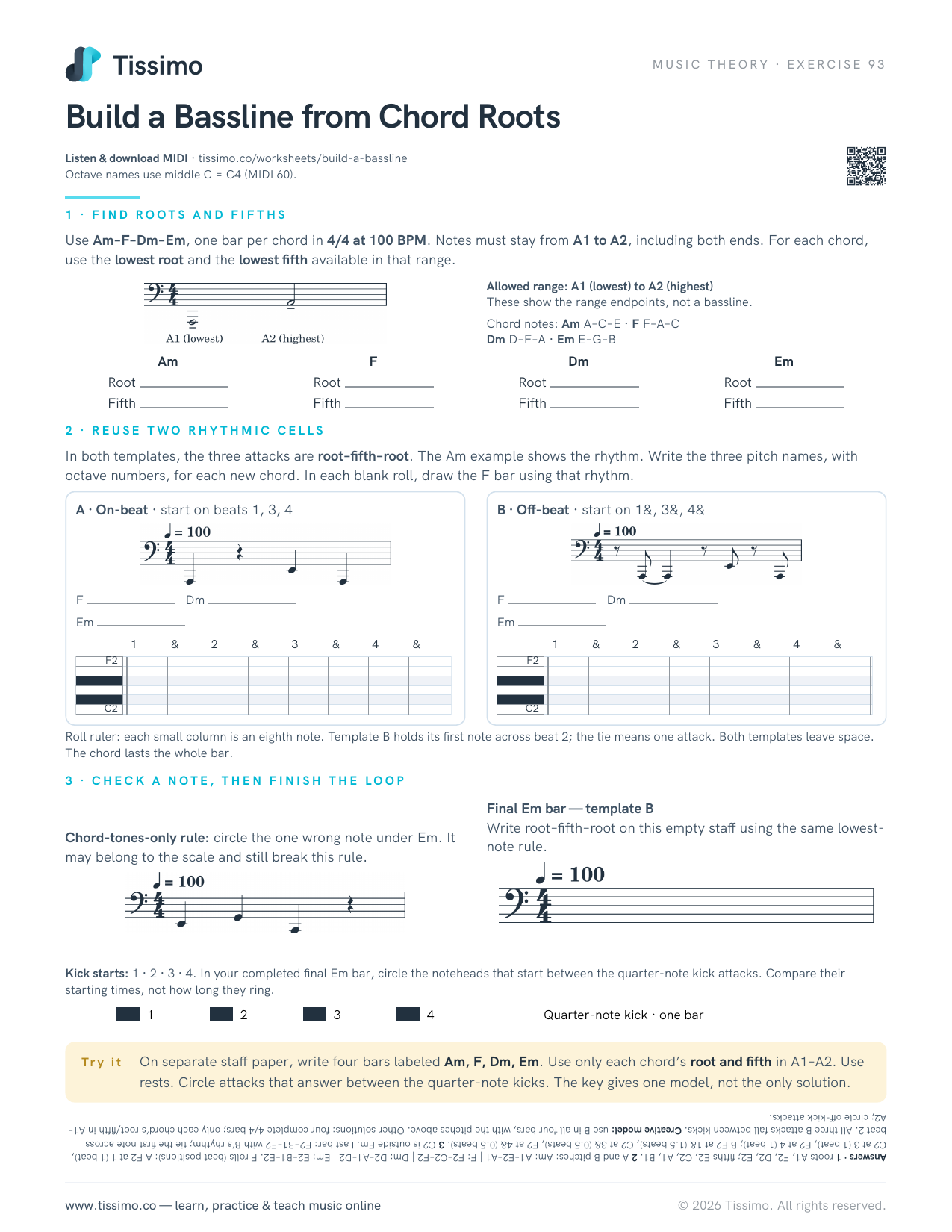 Build a Bassline from Chord Roots
 The Bass Clef & the Grand StaffThe bass staff holds the lower notes, usually played by the left hand. It works just like the treble staff (Handout 351), but its clef names a different line.
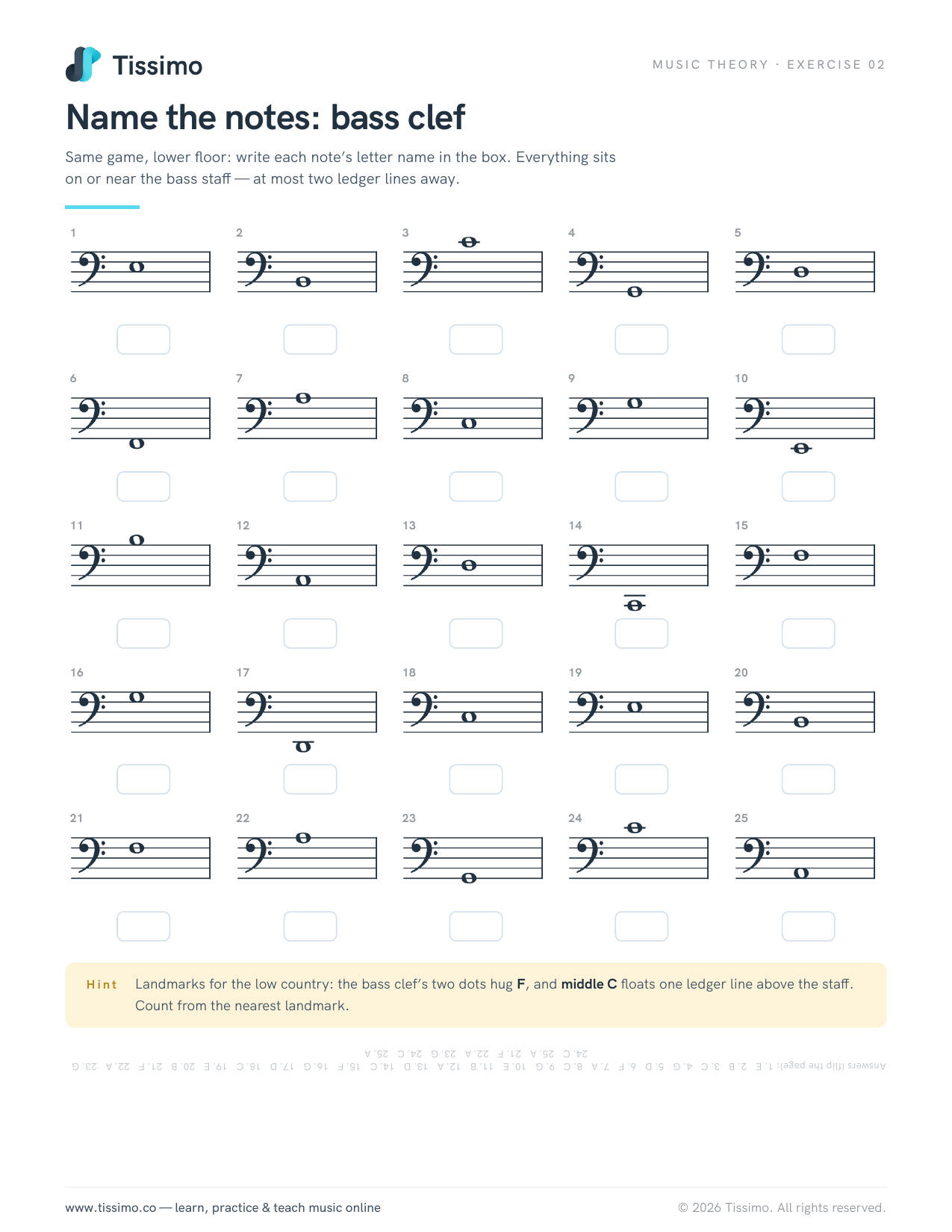 Name the notes: bass clefSame game, lower floor: write each note’s letter name in the box. Everything sits on or near the bass staff — at most two ledger lines away.