Instruments & Voices
Accordion
The accordion is a portable free-reed instrument. Pushing and pulling its bellows blows air across metal reeds, while the right hand plays a keyboard or buttons and the left hand plays bass notes and preset chords.
The accordion is a box of reeds with bellows in the middle. As you squeeze the bellows in and pull them out, air flows past thin metal reeds, and the keys or buttons you press decide which reeds sound. One player can carry a melody, a bass line and chords at once, which made the accordion a favorite for dances, cafés, folk music and traveling musicians.
How it makes its sound
Each note comes from a free reed: a thin strip of brass or steel fixed at one end over a slot in a metal plate. Moving air makes the reed swing back and forth through the slot, as in a harmonica. On most accordions valves direct the air so that a note sounds the same whether the bellows are opening or closing. You control the volume with the bellows: more pressure makes a louder note, and changing the pressure during a note shapes it, much as a singer does with breath.
Many accordions have several sets of reeds for each note, and register switches select them: an octave higher, an octave lower, or two reeds tuned slightly apart for the shimmering "musette" sound.
The two hands
- The right hand plays the melody on a piano-style keyboard (piano accordion) or on rows of buttons (chromatic button accordion).
- The left hand works the bellows and plays buttons. On the common Stradella bass system, a full-size instrument has 120 buttons in six rows. Two rows play single bass notes (the fundamental bass, and the counterbass a major third higher); each of the other four rows plays a whole chord with one button: major, minor, dominant seventh and diminished. The columns follow the circle of fifths, so the chords of a key sit close together.
Some accordions use a free-bass system instead, with a single note on every left-hand button for playing independent bass lines. Diatonic button accordions are different again: each button plays one note on the push and another on the pull.
How accordion music is written
Accordion music uses two staves: a treble staff for the right hand and a bass staff for the left. Left-hand parts show bass notes and chords, often with small letters or symbols that tell you which row to use. Conventions vary between publishers, so check the key at the start of your book. Bellows changes may be marked above the staff, and planning them (changing direction at the ends of phrases or in rests) is a big part of accordion technique.
Its role and relatives
The accordion is at home in French musette, Italian, German and Eastern European folk music, polka, tango (where its cousin the bandoneón leads), Cajun and zydeco, Tex-Mex conjunto and a growing classical repertoire. Its relatives, the concertina, harmonium and harmonica, also use free reeds.
Tips for beginners
- Choose a size that fits your body. Smaller accordions with fewer bass buttons are lighter and easier to start on.
- Find the C bass button by touch: it usually has a small dimple or stud on it.
- Practice the bellows on their own with long notes, keeping the sound even through each change of direction.
Common questions
Is the accordion a keyboard instrument or a wind instrument?
Both, in a way. Its sound comes from free reeds blown by the bellows, which makes it a wind instrument, but the piano accordion's right hand plays a piano-style keyboard, so it is often grouped with the keyboard instruments.
How many bass buttons does an accordion have?
A full-size Stradella accordion has 120 bass buttons. Smaller instruments, often with 48, 72 or 96 buttons, leave out some keys or chord rows and are common for beginners and children.
Practice it: free worksheets
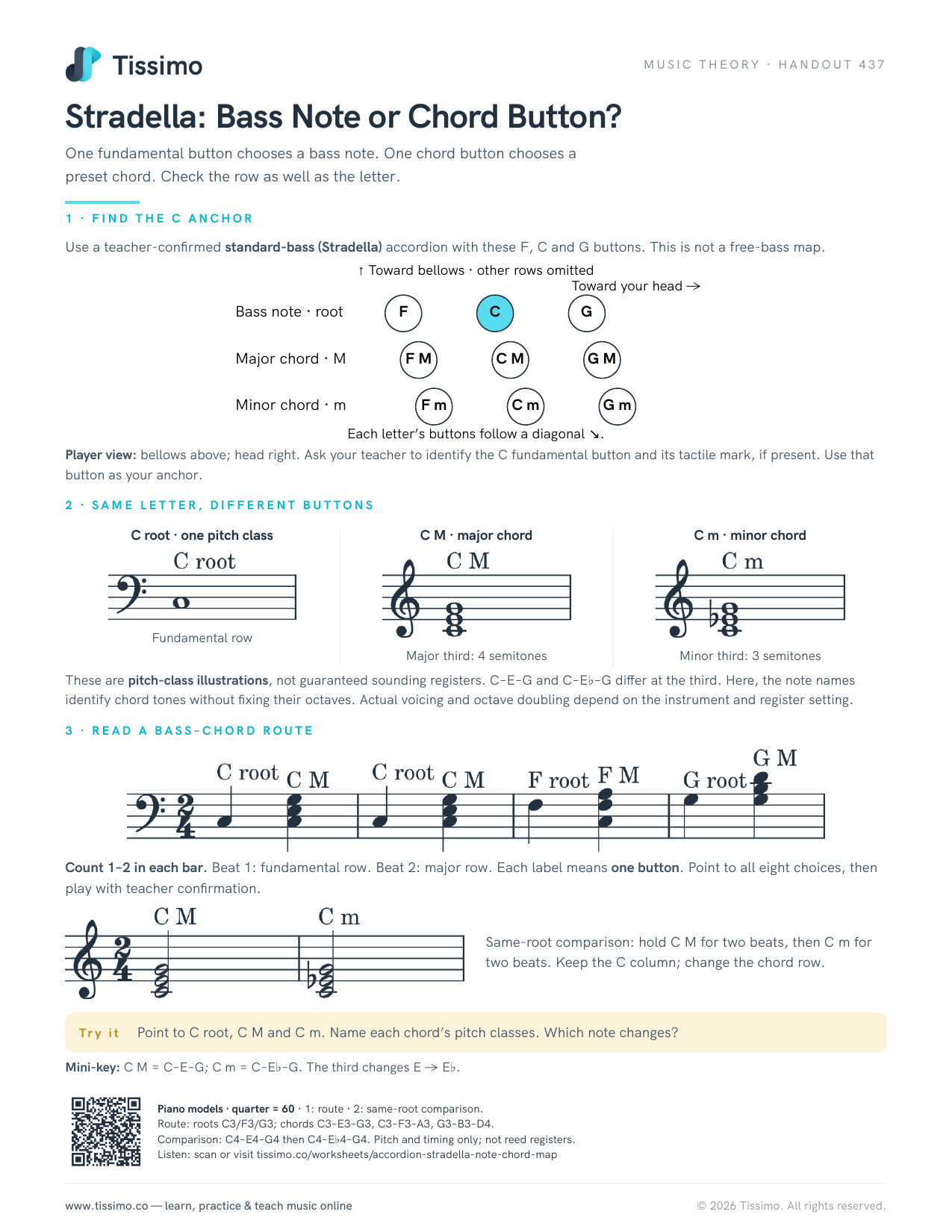 Stradella: Bass Note or Chord Button?One fundamental button chooses a bass note. One chord button chooses a preset chord. Check the row as well as the letter.
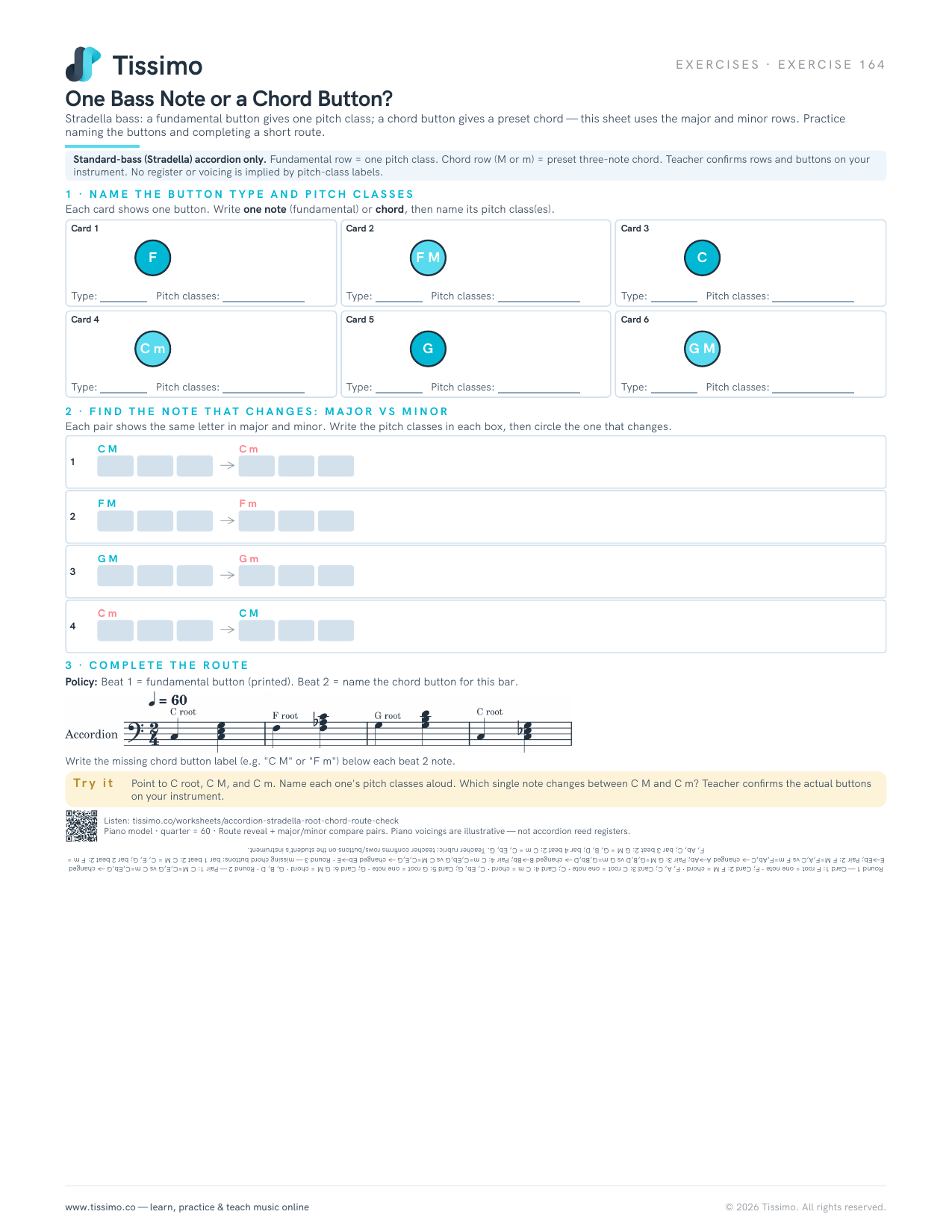 One Bass Note or a Chord Button?Stradella bass: a fundamental button gives one pitch class; a chord button gives a preset chord — this sheet uses the major and minor rows. Practice naming the buttons and completing a short route.
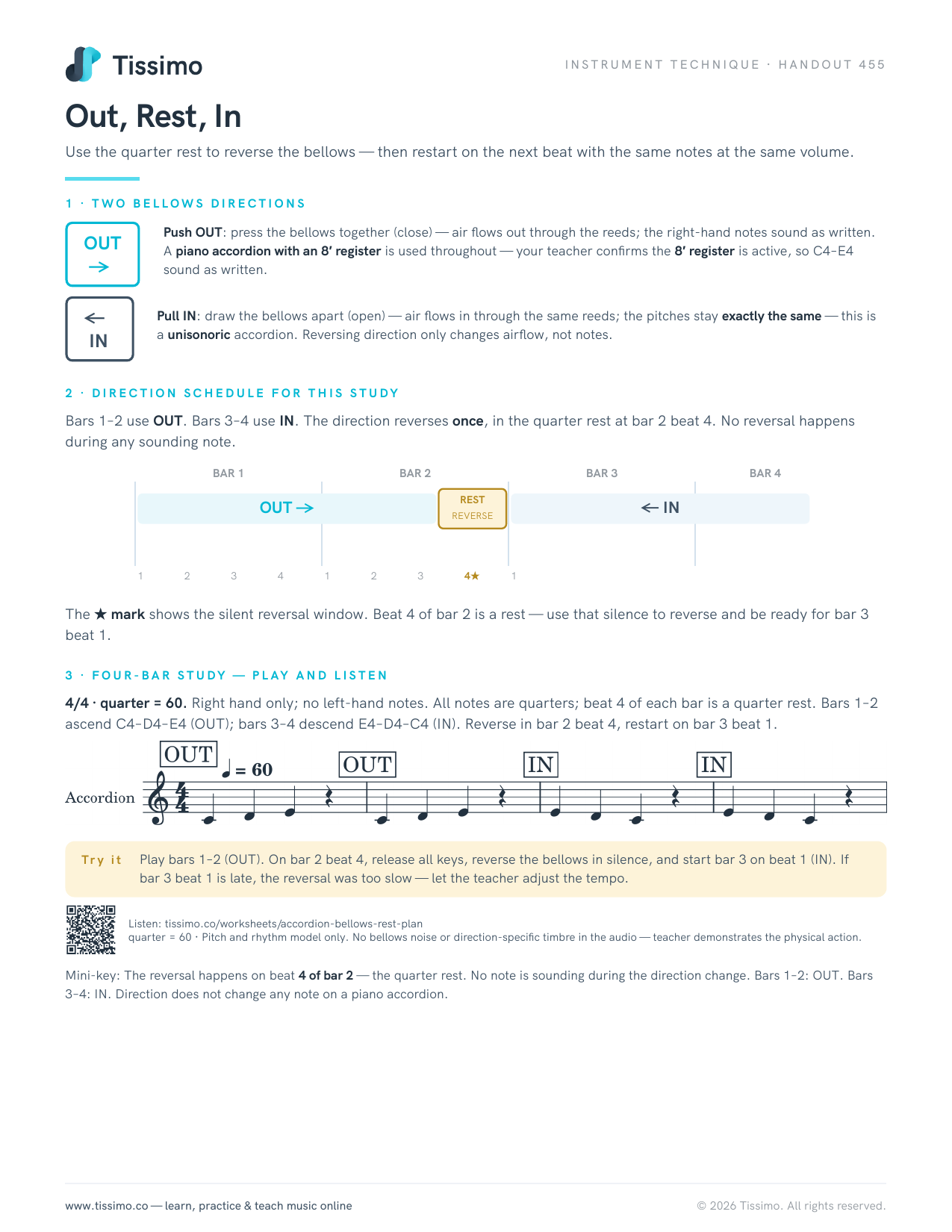 Out, Rest, InUse the quarter rest to reverse the bellows — then restart on the next beat with the same notes at the same volume.
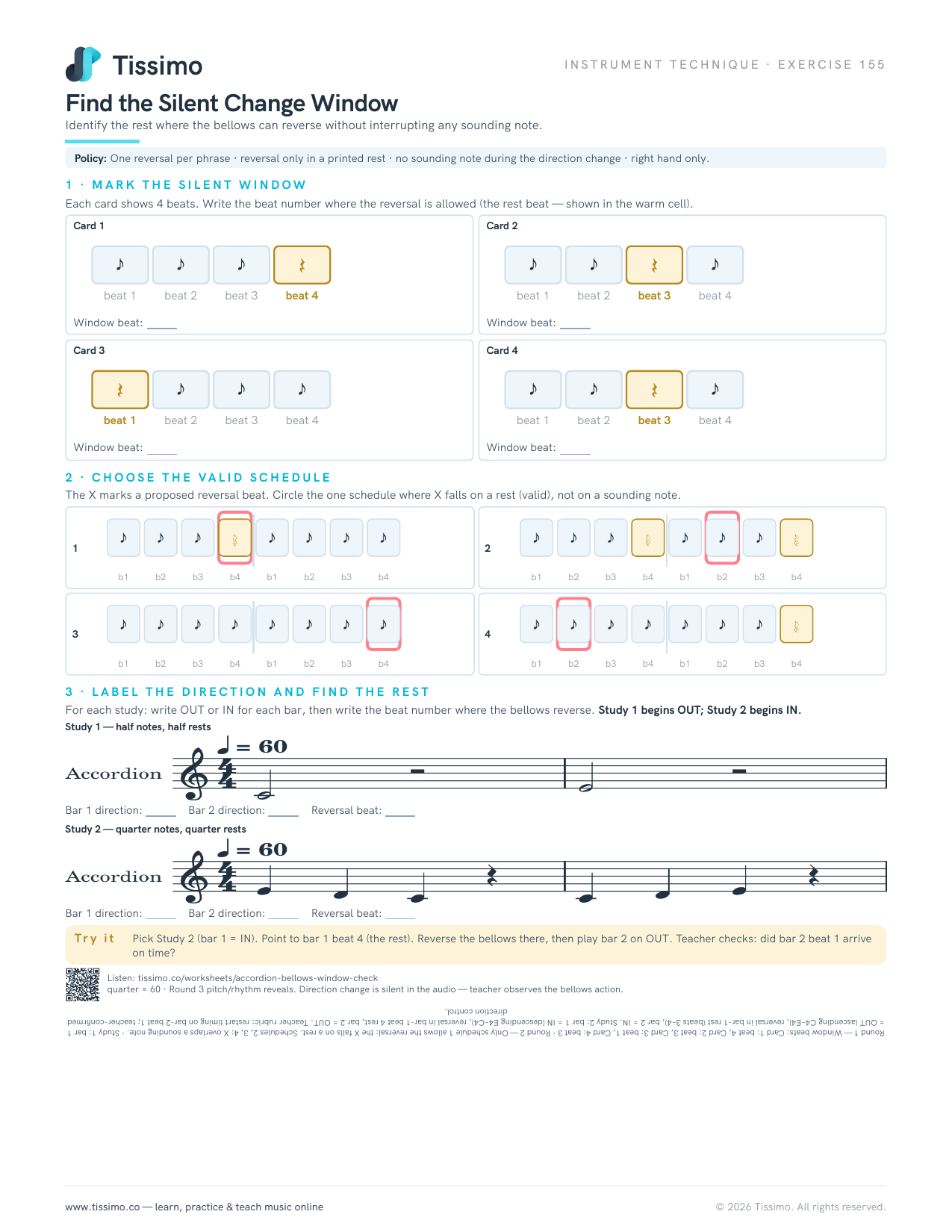 Find the Silent Change WindowIdentify the rest where the bellows can reverse without interrupting any sounding note.
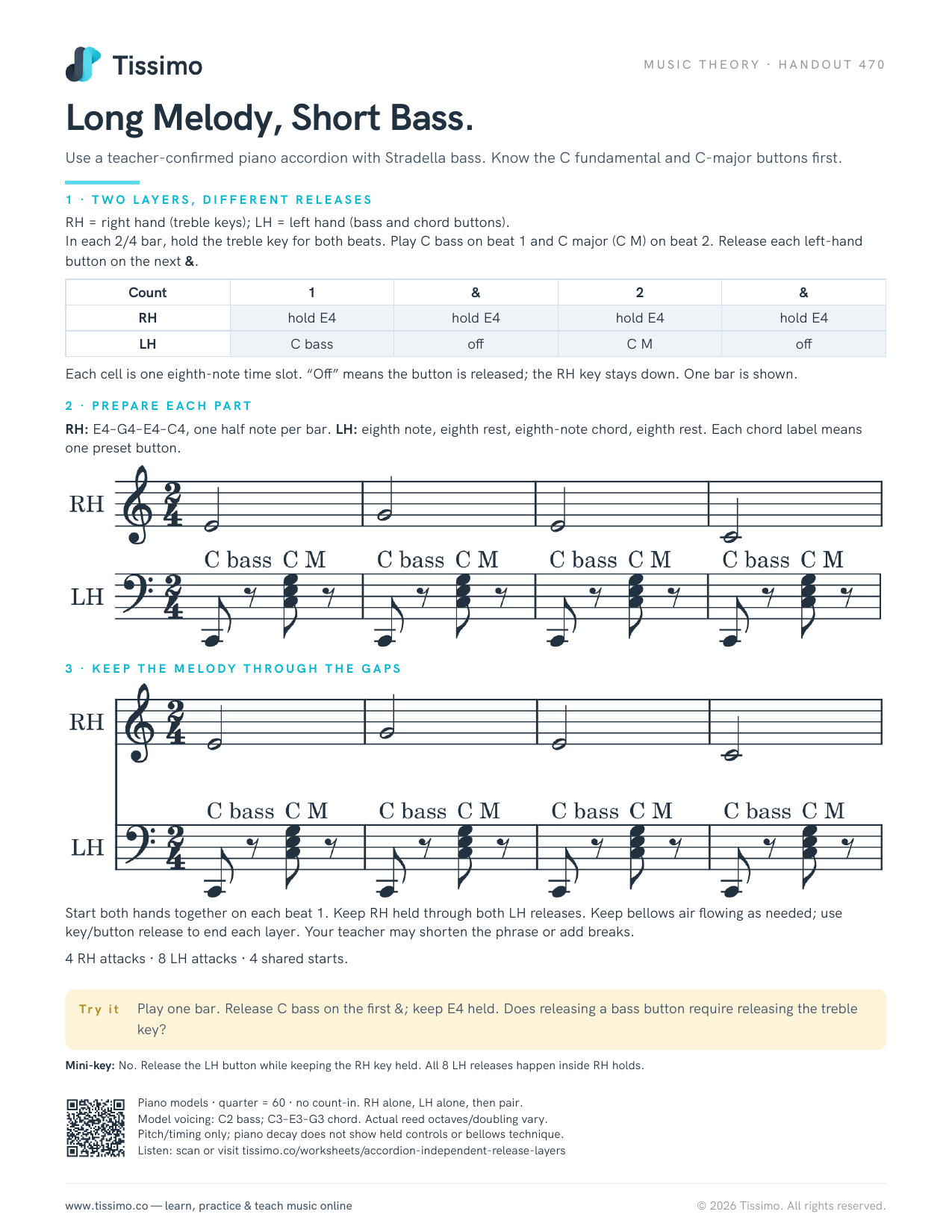 Long Melody, Short Bass.Use a teacher-confirmed piano accordion with Stradella bass. Know the C fundamental and C-major buttons first.
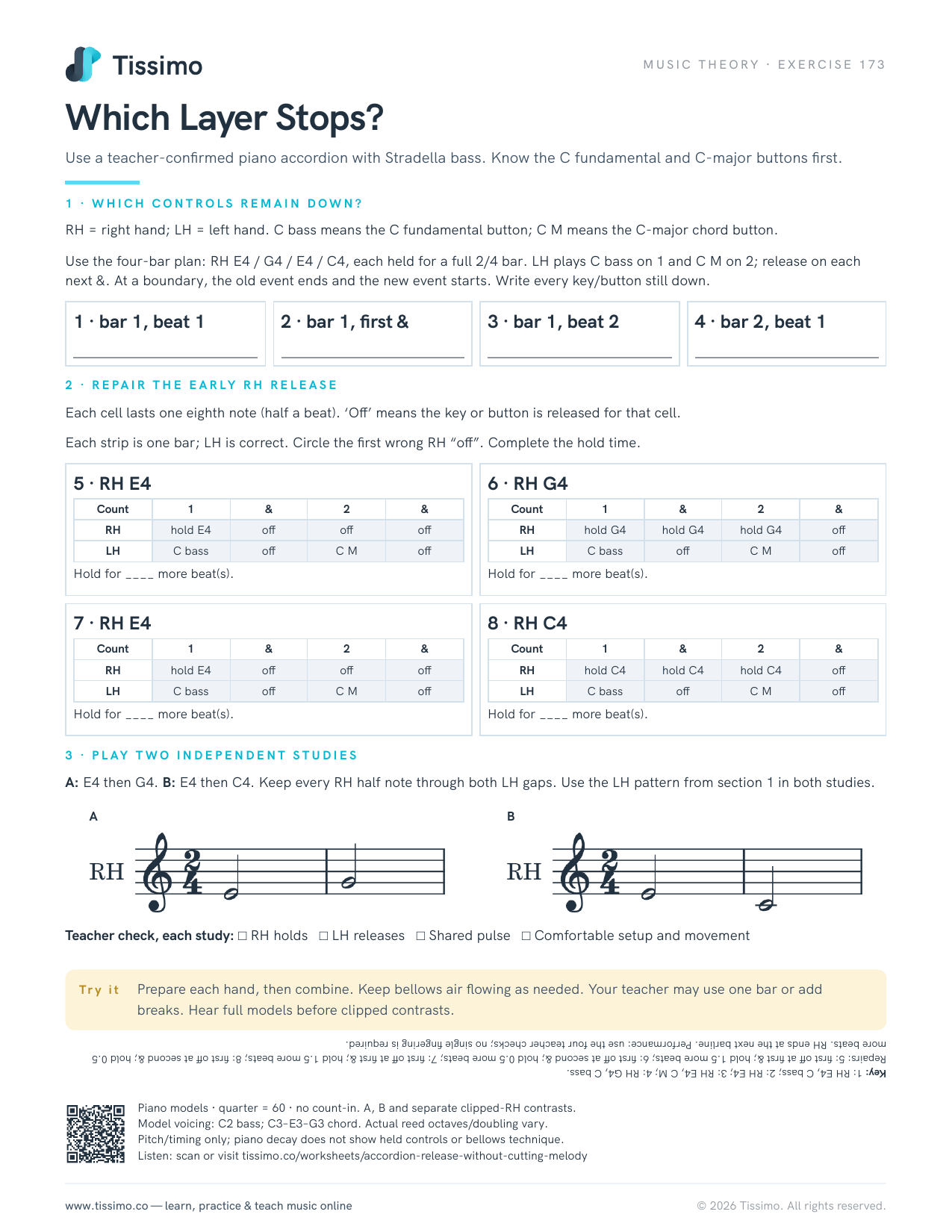 Which Layer Stops?Use a teacher-confirmed piano accordion with Stradella bass. Know the C fundamental and C-major buttons first.