Melody, Texture & Counterpoint
Accompaniment
An accompaniment is the music that supports a melody, usually chords, a bass line and rhythm played underneath a singer or soloist, such as a piano part or a strummed guitar.
An accompaniment is the music that supports a melody: the chords, bass and rhythm underneath a singer or soloist. A guitarist strumming for a singer, a pianist playing for a violinist, a band behind a vocalist: all of them are accompanying. In printed music the accompaniment is often its own part, such as the piano part of a song.
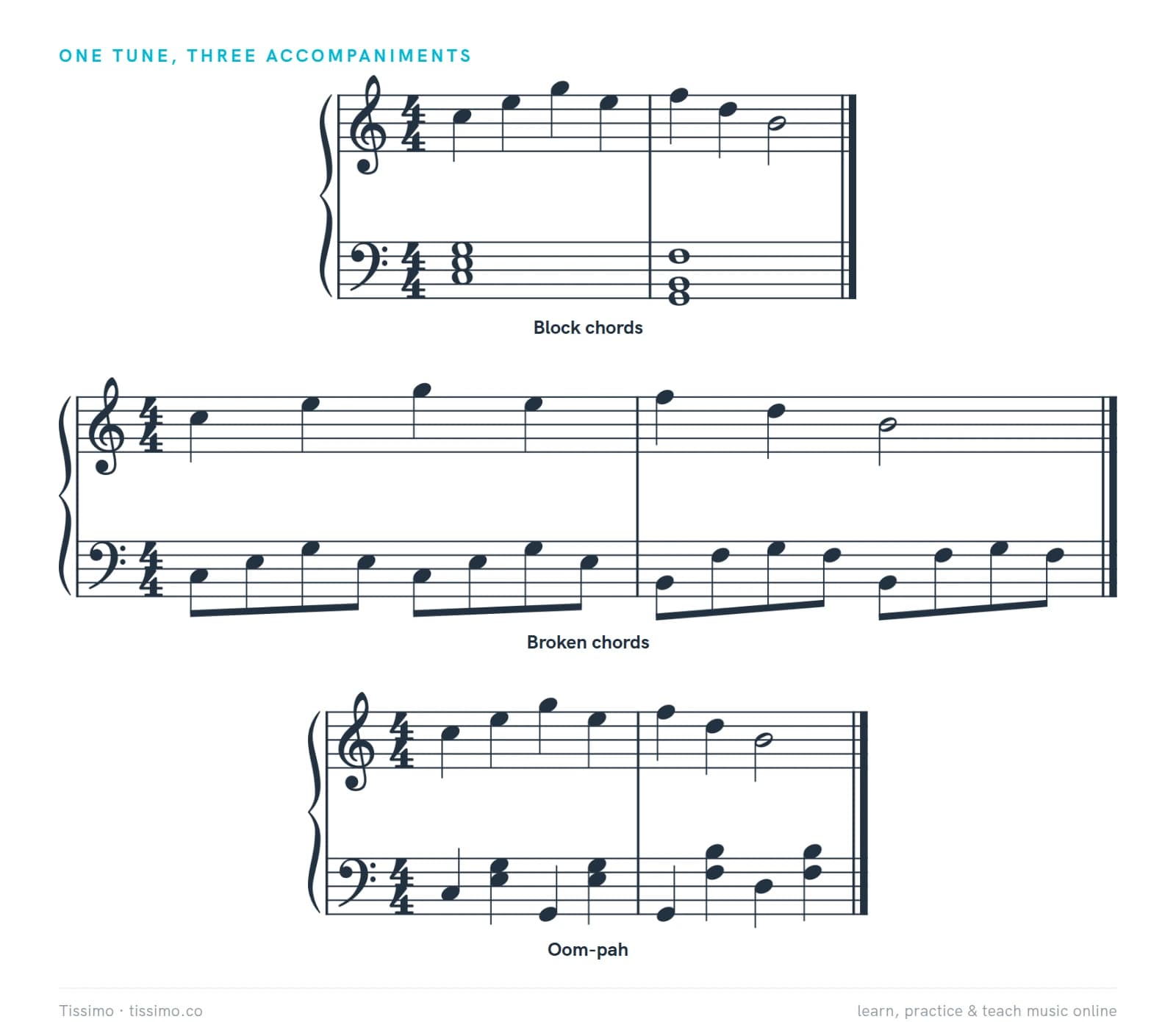
Common accompaniment patterns
- Block chords: all the notes of each chord played together (block chord).
- Broken chords: the chord's notes played one at a time in a repeating pattern (broken chord, arpeggio).
- Alberti bass: low, high, middle, high, a pattern typical of Classical piano music.
- Oom-pah: a bass note on the strong beat and a chord on the weak beat, the sound of marches, waltzes and ragtime.
- Strumming and fingerpicking on guitar (strumming, fingerpicking).
- Comping in jazz: chords placed freely in rhythm, responding to the soloist.
The same chords can sound completely different with each pattern, as the example shows.
What makes a good accompaniment
- Balance: it stays softer than the melody, so the tune always comes through (voicing).
- Steadiness: it holds the tempo and the groove, yet breathes with the soloist when the music slows or pauses.
- Space: it stays out of the melody's register and leaves room in the rhythm.
- Style: the pattern suits the music, a gentle broken chord for a lullaby, a driving rhythm for rock.
The accompanist
In classical music, pianists who specialize in performing with singers and instrumentalists are often called collaborative pianists. Many prefer that title to "accompanist," because in art songs and sonatas the piano part is an equal partner, not just a background.
Learn more patterns in Accompaniment patterns and Block & Broken Chords, then turn chord symbols into your own patterns with Turn chords into grooves.
Common questions
What is the difference between melody and accompaniment?
The melody is the main tune, the line you would sing. The accompaniment supports it underneath with chords, a bass line and rhythm.
Practice it: free worksheets
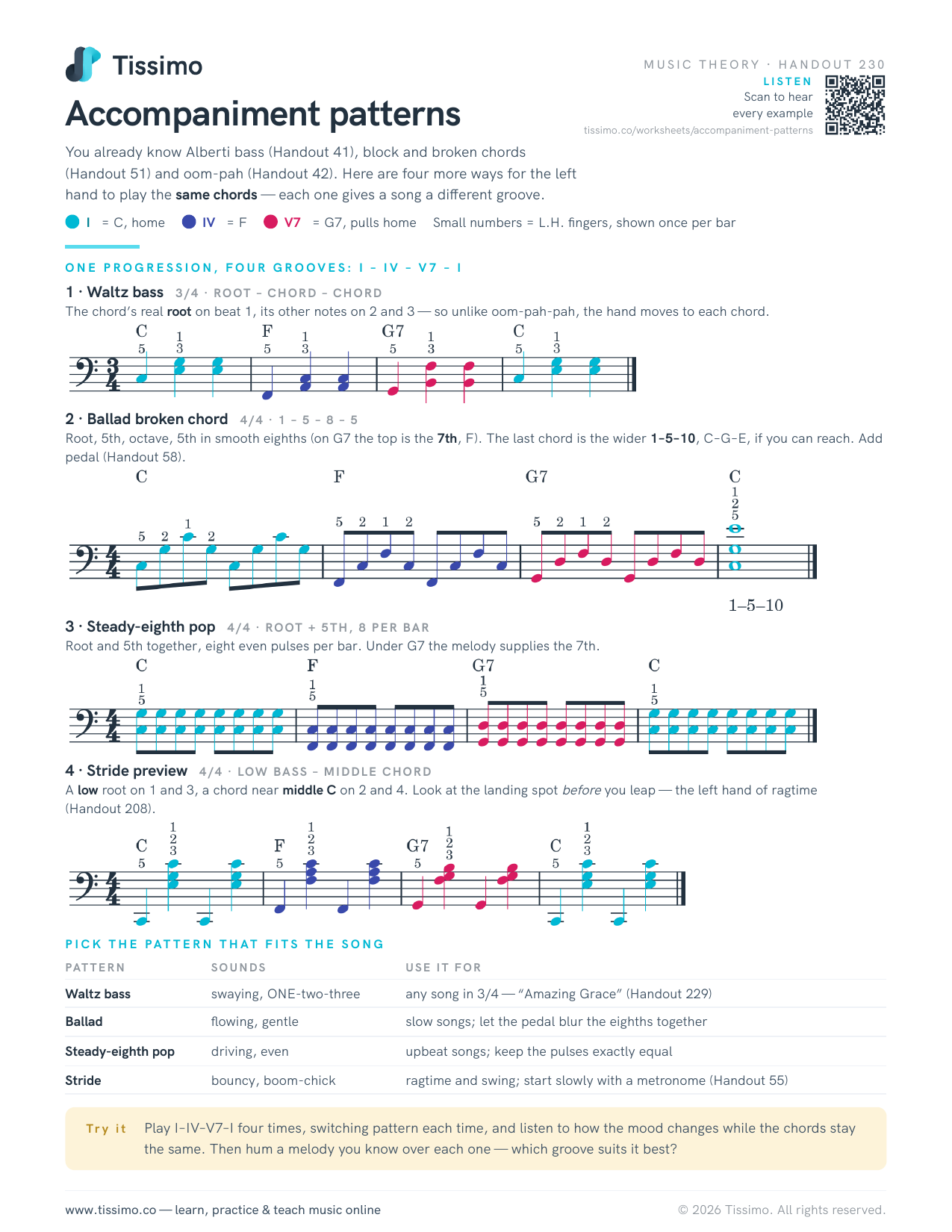 Accompaniment patternsYou already know Alberti bass (Handout 41), block and broken chords (Handout 51) and oom-pah (Handout 42). Here are four more ways for the left hand to play the same chords — each one gives a song a different groove.
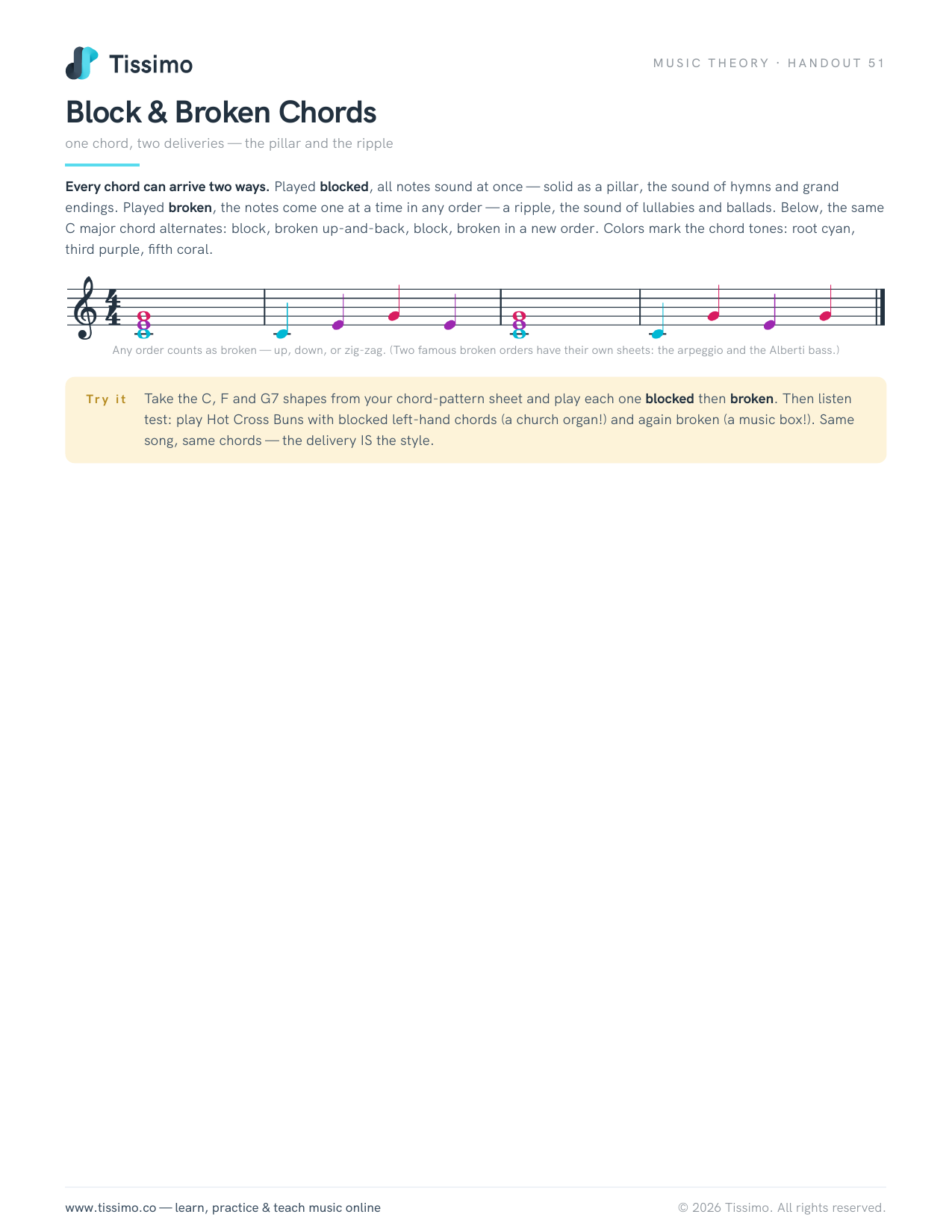 Block & Broken Chordsone chord, two deliveries — the pillar and the ripple
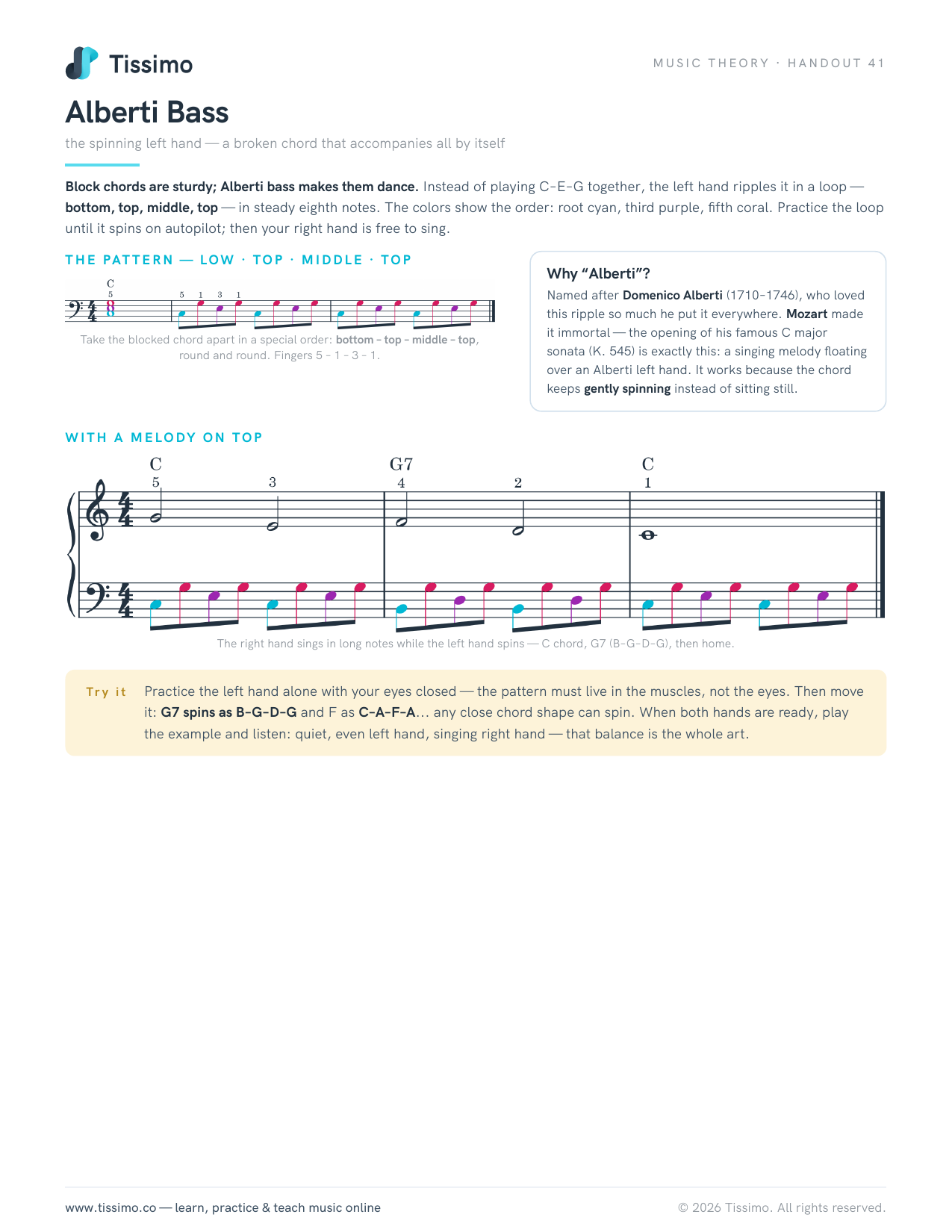 Alberti Bassthe spinning left hand — a broken chord that accompanies all by itself
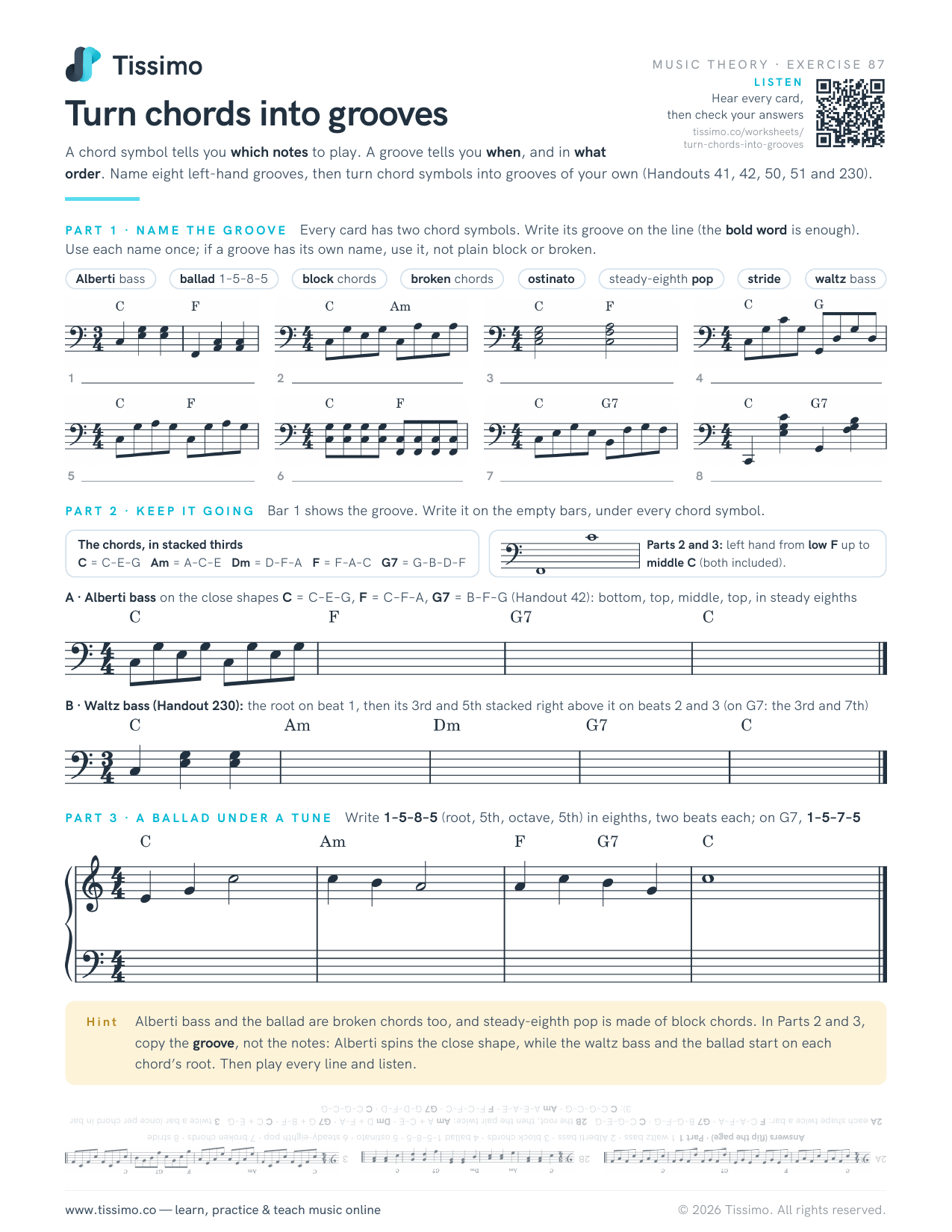 Turn chords into groovesA chord symbol tells you which notes to play. A groove tells you when, and in what order. Name eight left-hand grooves, then turn chord symbols into grooves of your own (Handouts 41, 42, 50, 51 and 230).
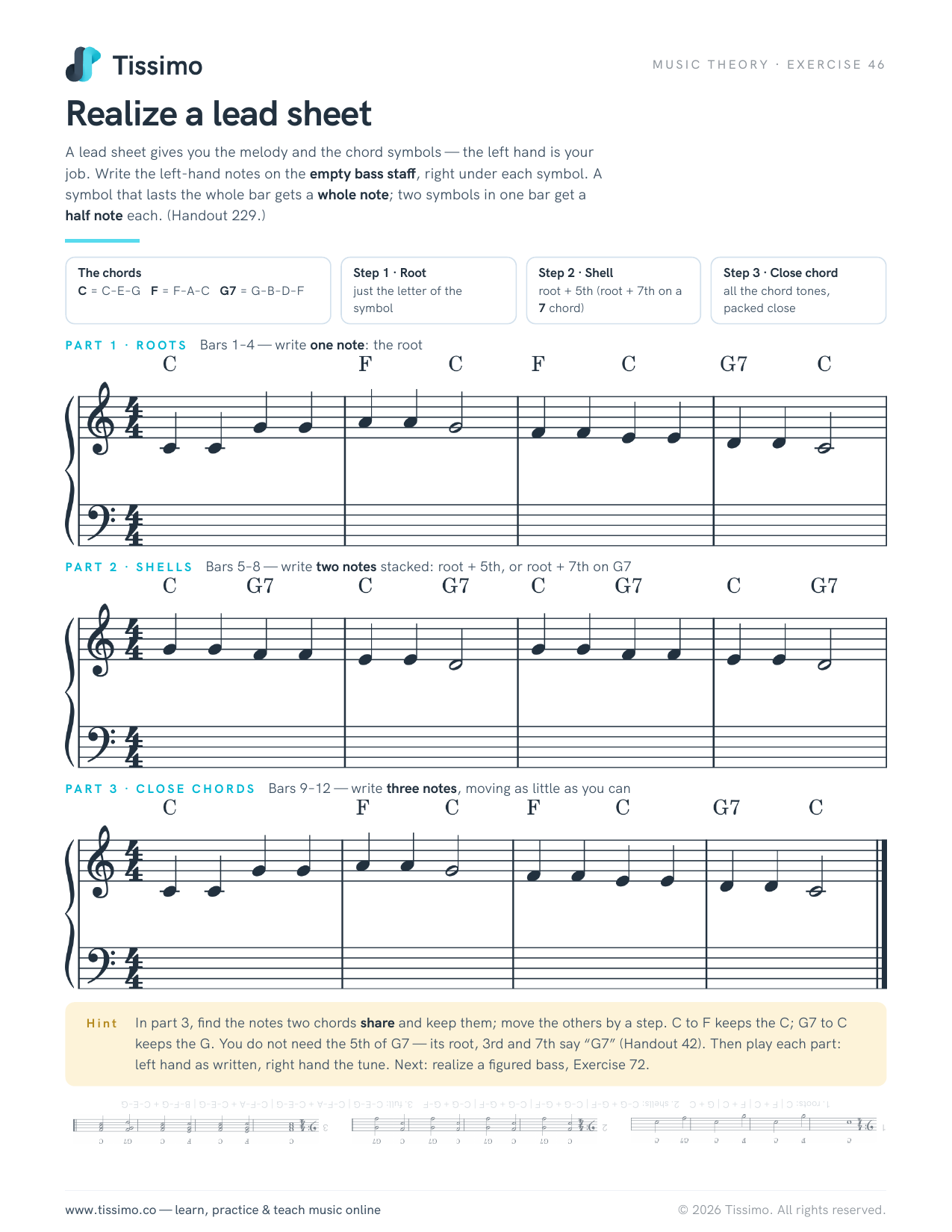 Realize a lead sheetA lead sheet gives you the melody and the chord symbols — the left hand is your job. Write the left-hand notes on the empty bass staff, right under each symbol. A symbol that lasts the whole bar gets a whole note; two symbols in one bar get a half note each. (Handout 229.)
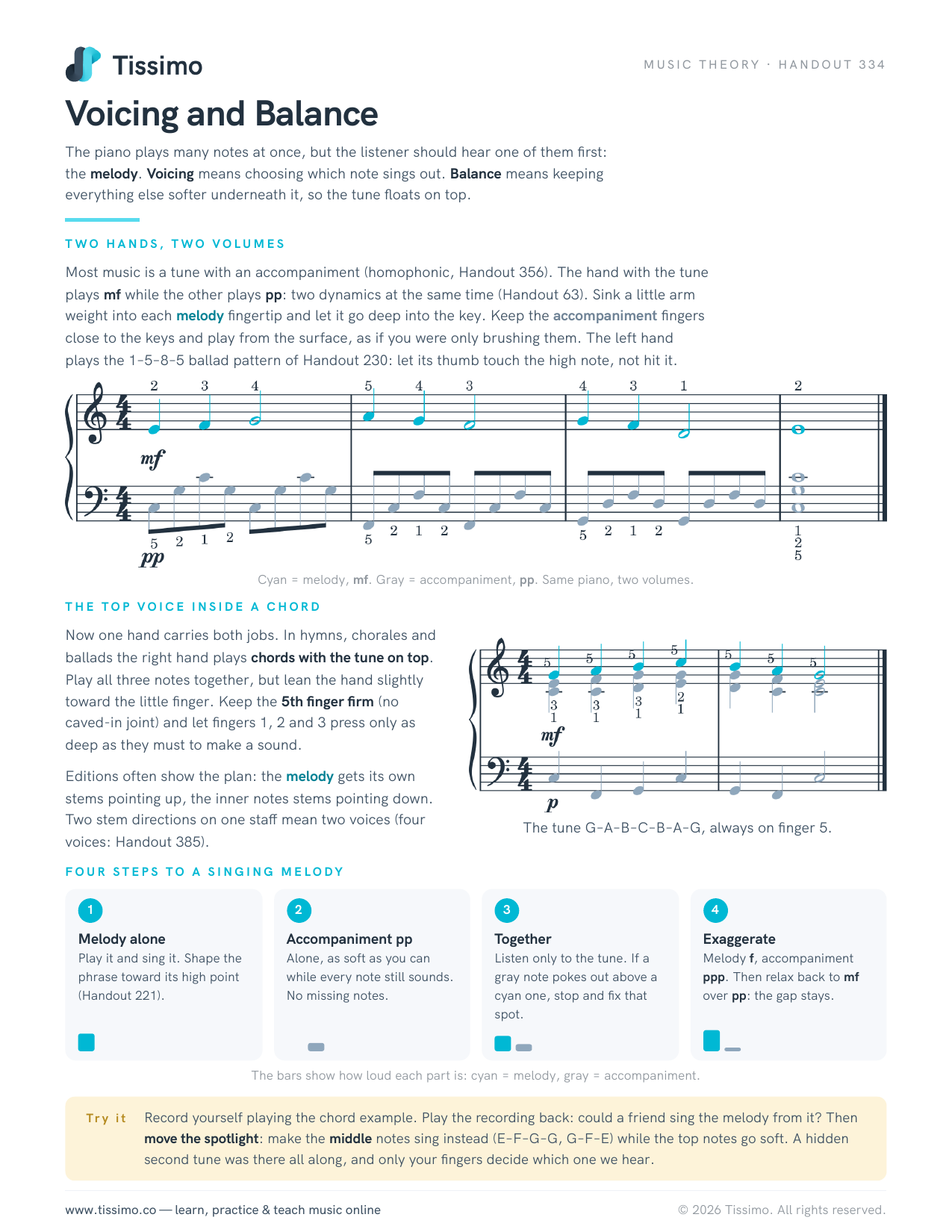 Voicing and BalanceThe piano plays many notes at once, but the listener should hear one of them first: the melody. Voicing means choosing which note sings out. Balance means keeping everything else softer underneath it, so the tune floats on top.