Technique & Performance
Voicing (Bringing Out a Voice)
In performance, voicing means playing one line, usually the melody, louder than the notes around it, so a listener hears it first while the accompaniment and inner notes stay softer.
A pianist plays many notes at once, but the listener should usually hear one of them first: the melody. Voicing, or bringing out a voice, is the control that makes this happen. Balance is the other half of the job: keeping everything else softer underneath, so the tune floats on top. (In harmony the word has a second meaning, the arrangement of a chord's notes; see voicing.)
Melody in one hand, accompaniment in the other
The simplest case: the right hand has the melody and the left hand accompanies. Aim for the left hand about two dynamic levels below the right, for example mf over p. Beginners often play both hands at the same level, and then the accompaniment covers the tune.
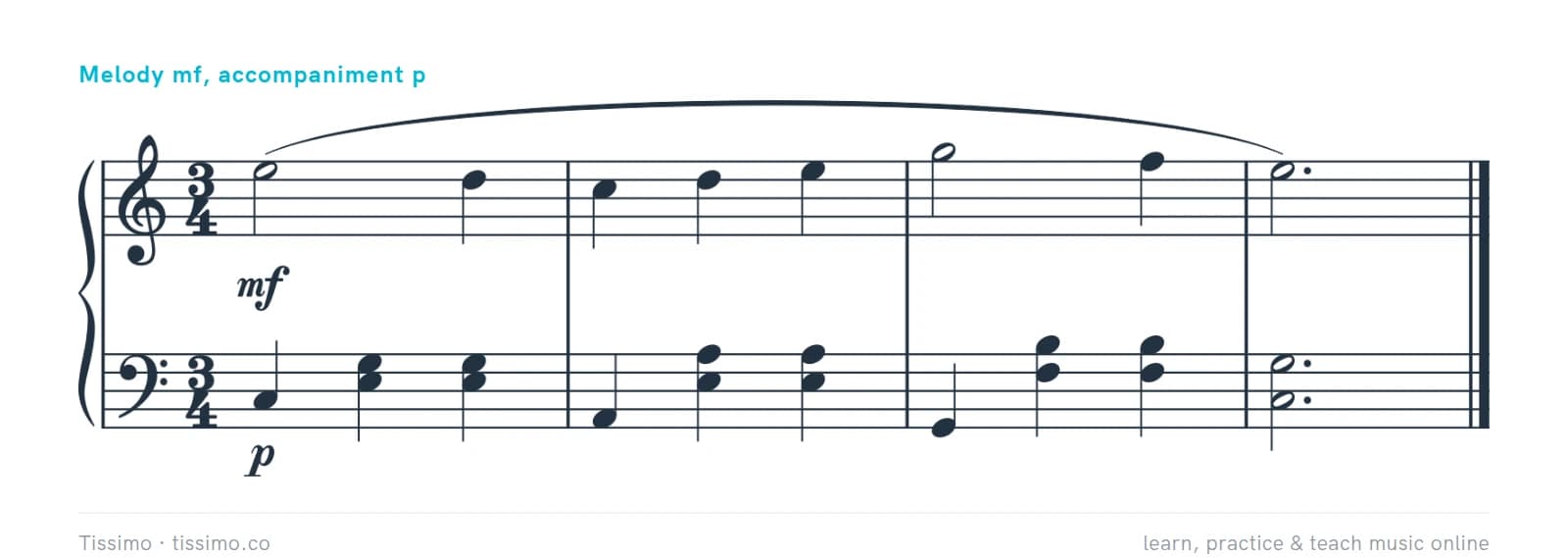
Melody inside one hand
Harder: the melody is the top note of right-hand chords, so one hand must play two dynamics at once.
- Play the melody alone, with the fingers you will use in the chords (often 4 and 5), and sing it.
- Add the other notes as "ghosts": press them so lightly they barely sound.
- Lean toward the melody finger. Let the weight of your arm tilt toward the outer side of your hand, and keep the fingers on the inner notes light and relaxed.
- Exaggerate in practice. Play the melody note a hair before the others, then bring them back together. This teaches the fingers to separate.
- Bring the inner notes back up gradually until the balance sounds natural.

The same skill works for a melody in the left hand, a tune hidden in an inner voice, or a fugue, where the theme passes from voice to voice and each entry needs to be heard.
Check it with your ears
Record yourself and listen back: is the tune obvious from the very first note? A good test is to ask someone to sing the melody back after hearing you play it. Guitarists, organists and ensembles balance too, by listening to each other and adjusting. The Voicing and Balance worksheet gives exercises to try at the piano, and Phrasing shows how to shape the line you bring out.
Common questions
How do you bring out the melody on the piano?
Play the melody notes with more weight and the other notes more lightly. Practice the melody alone first, then add the accompaniment as quietly as you can, and let your arm weight lean toward the fingers that play the tune.
Practice it: free worksheets
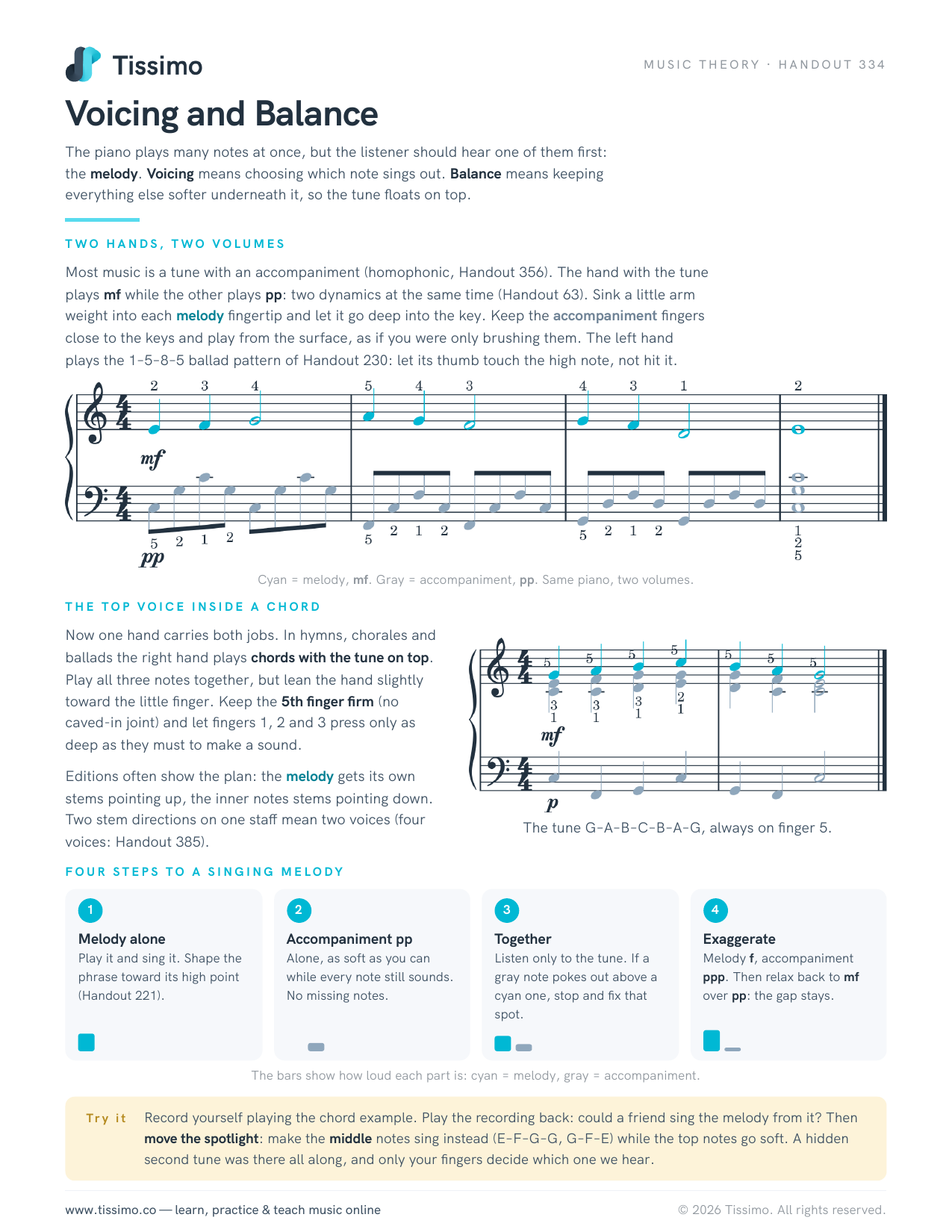 Voicing and BalanceThe piano plays many notes at once, but the listener should hear one of them first: the melody. Voicing means choosing which note sings out. Balance means keeping everything else softer underneath it, so the tune floats on top.
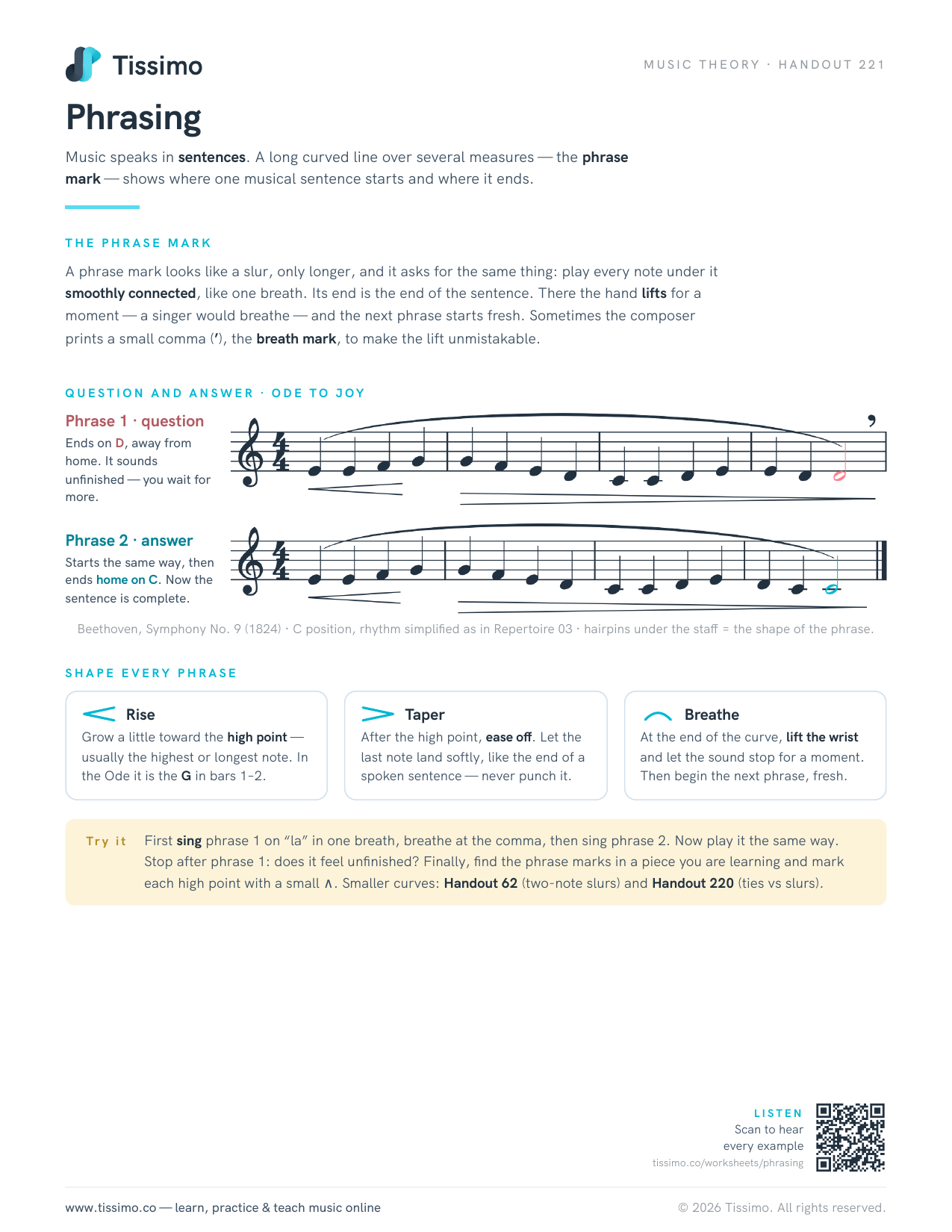 PhrasingMusic speaks in sentences. A long curved line over several measures — the phrase mark — shows where one musical sentence starts and where it ends.