Melody, Texture & Counterpoint
Walking Bass
A walking bass is a bass line that moves in steady, even notes, usually one per beat, stepping smoothly through the chord changes. It is the classic bass sound of jazz and swing.
A walking bass is a bass line that moves in steady, even notes, usually one on every beat, stepping smoothly from chord to chord. It is the classic sound of jazz, especially of the swing era, and of much blues, where the bassist "walks" through the chord changes four steps to the bar and the whole band rides on that pulse.
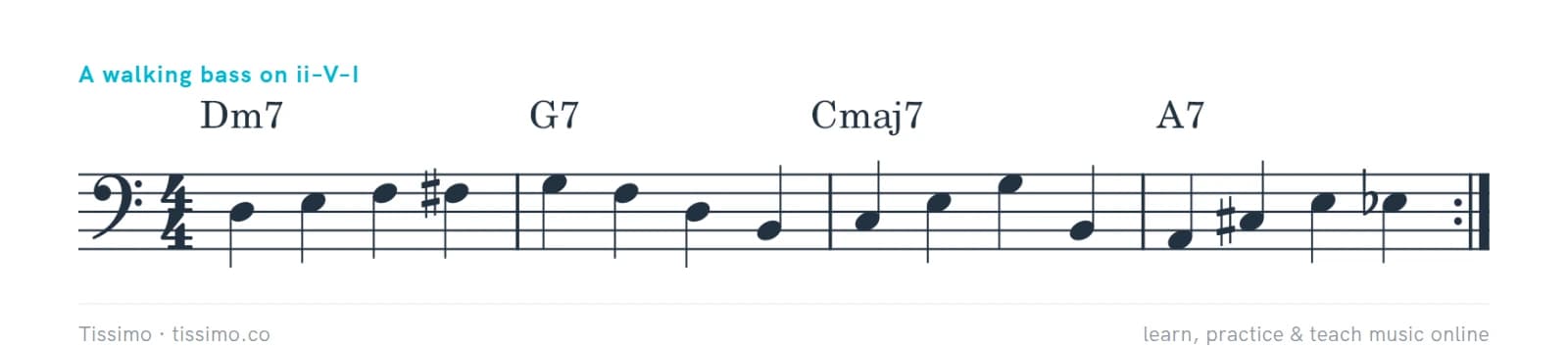
How a walking bass is built
A common recipe for each bar of 4/4:
- Beat 1: the root of the chord, so everyone hears the harmony.
- Beats 2 and 3: other chord tones (the third, fifth or seventh) or scale notes that connect smoothly.
- Beat 4: an approach note that leads into the next chord's root, very often a half step above or below it. In the example, F-sharp leads up to G, and E-flat leads down to D when the line goes back to the start.
Within that framework, bassists vary the direction, add passing notes, repeat notes and change register, so that the line stays interesting chorus after chorus.
The feel
In jazz the quarter notes are steady and even, with a strong forward push, as if each note leans toward the next. On the double bass a walking line is played pizzicato, plucked with the side of the finger; on bass guitar it is plucked or picked. Pianists play walking bass with the left hand in solo piano or when there is no bassist.
Walking bass in Baroque music
The term is also used for the steady, evenly moving bass lines found in much Baroque music, where the bass keeps up a constant pulse of quarter or eighth notes beneath the upper parts.
Try it
Start with roots on beat 1 and chord tones on the other beats, then add one approach note at the end of each bar. Build lines with Build a Bassline from Chord Roots, and practice over the progression in the example with The ii–V–I in Every Key.
Common questions
How do you write a walking bass line?
Put the chord's root on beat 1, fill beats 2 and 3 with chord tones or scale steps, and use beat 4 for a note a half step or whole step away from the next root, so the line leads into it.
Practice it: free worksheets
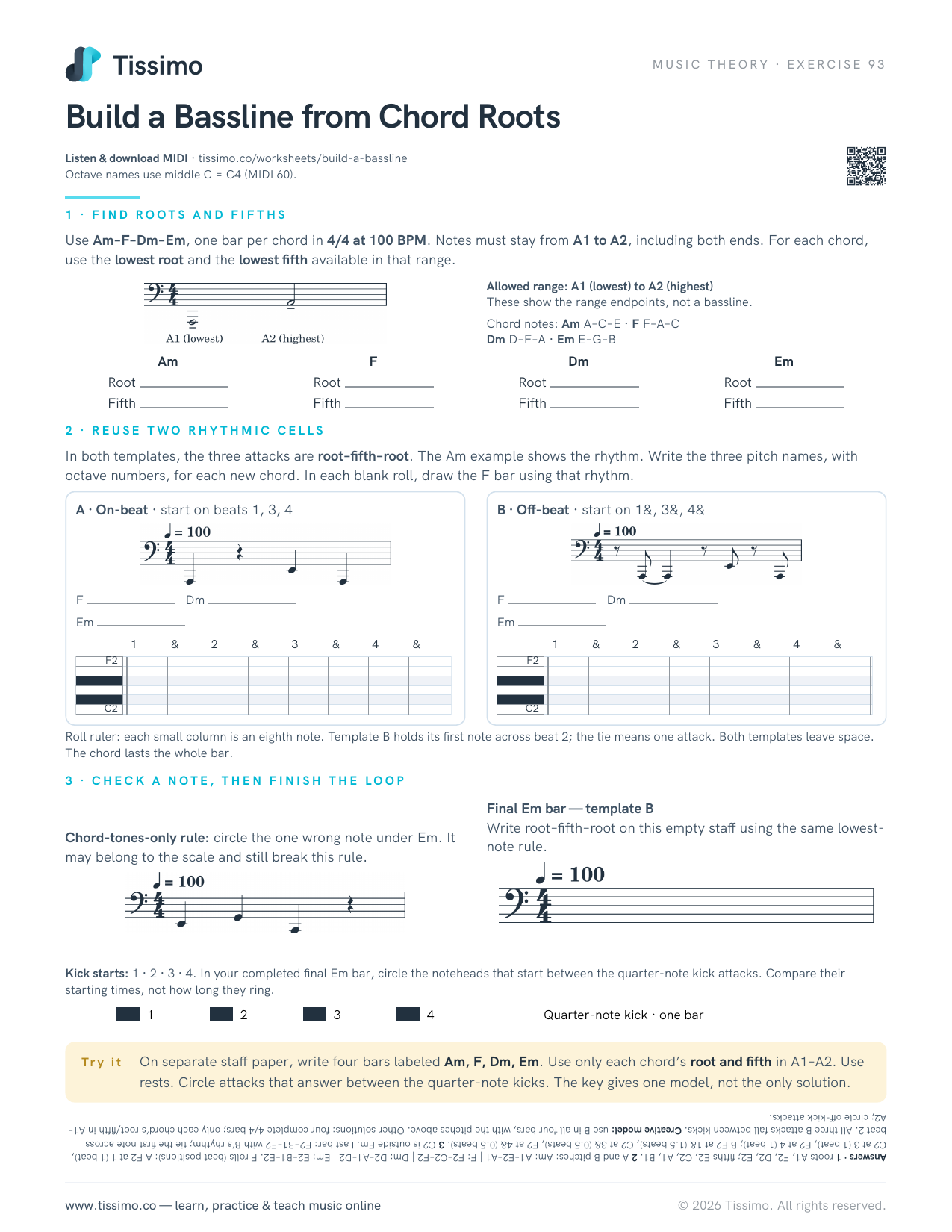 Build a Bassline from Chord Roots
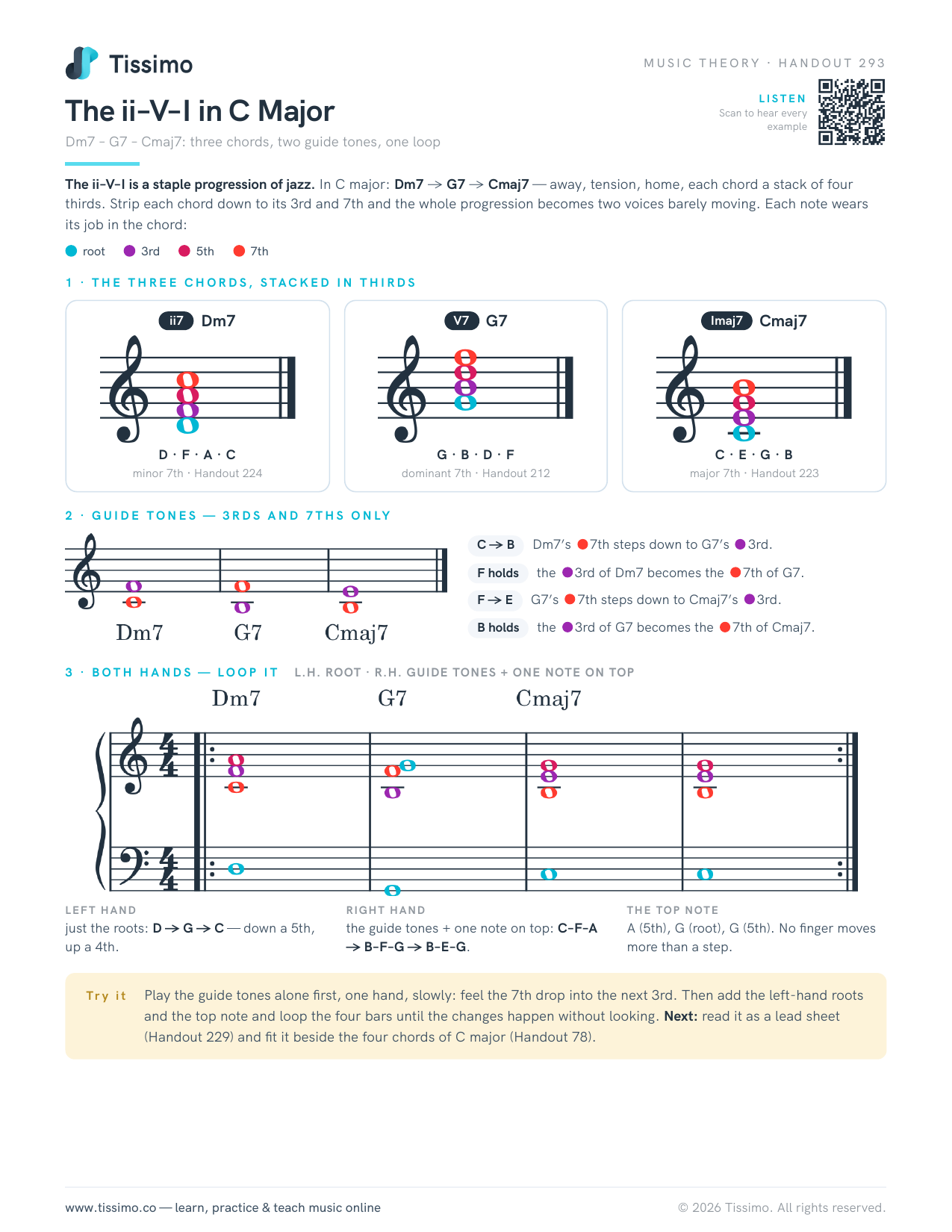 The ii–V–I in Every KeyThe most-played progression in jazz: three chords, two guide tones, one loop, in all 24 keys.
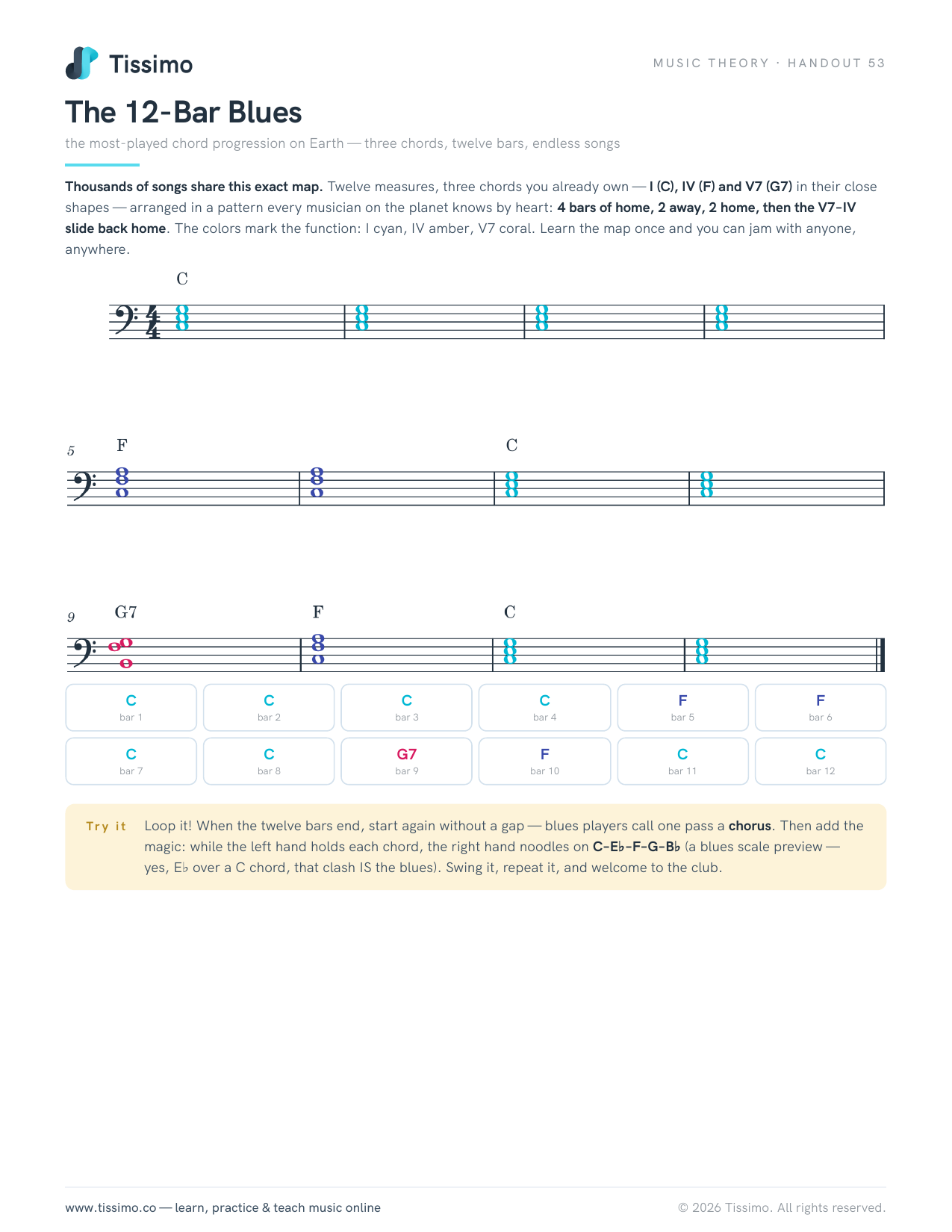 The 12-Bar Bluesone of the best-known chord progressions — three chords, twelve bars, endless songs
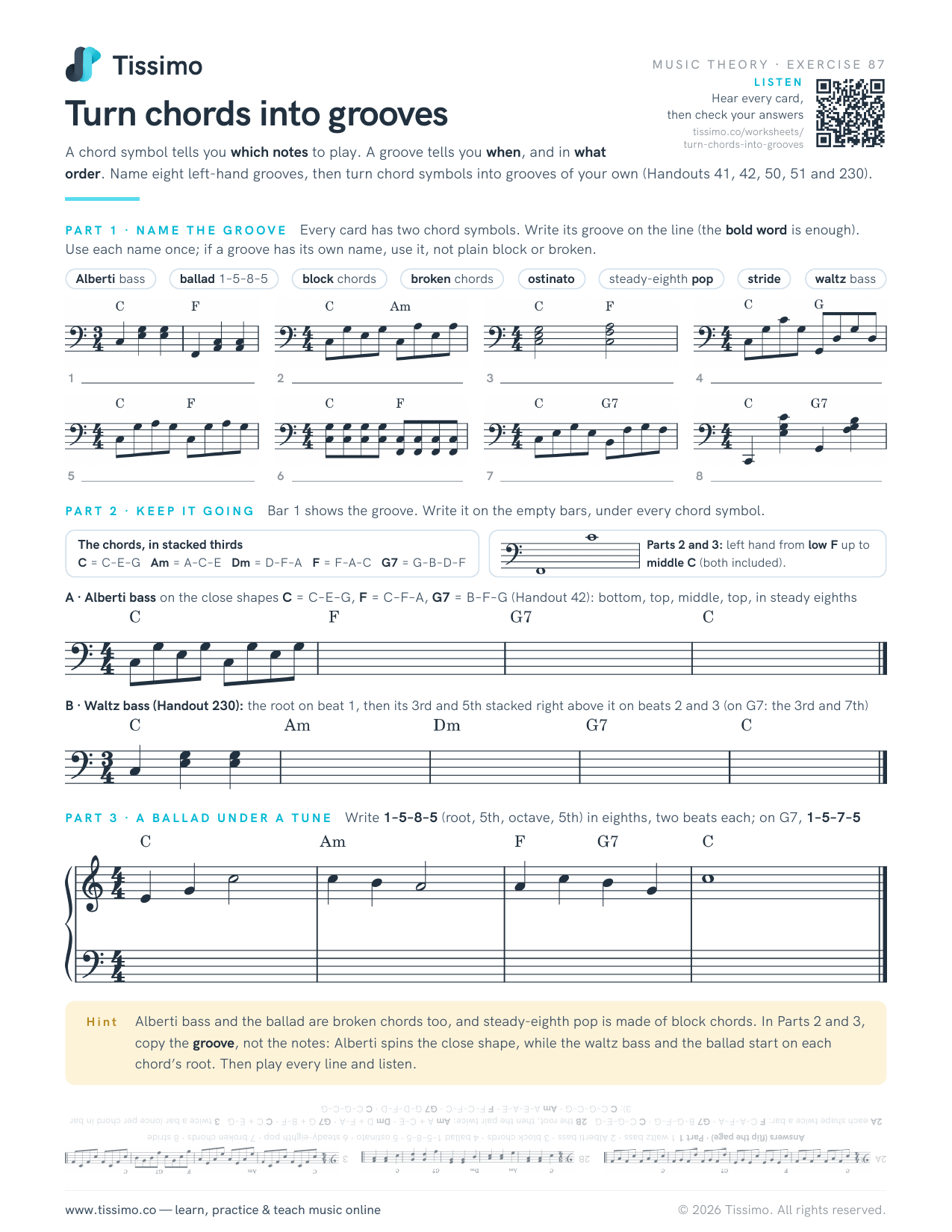 Turn chords into groovesA chord symbol tells you which notes to play. A groove tells you when, and in what order. Name eight left-hand grooves, then turn chord symbols into grooves of your own (Handouts 41, 42, 50, 51 and 230).