Form & Structure
Waltz
A waltz is a dance in 3/4 time with a strong first beat, usually accompanied by an "oom-pah-pah" pattern: a bass note on beat 1 and chords on beats 2 and 3. It flourished in 19th-century Vienna.
The waltz is a turning couple dance in triple meter. It grew out of Austrian and southern German country dances in the late 1700s and became the rage of 19th-century ballrooms, above all in Vienna. Its sound is instantly recognizable: a swaying ONE-two-three, with a clear accent on the first beat of every bar.
The oom-pah-pah
Most waltzes use the same accompaniment pattern in the left hand or the lower instruments:
- Beat 1: a low bass note, usually the root of the chord ("oom").
- Beats 2 and 3: the chord, higher up and lighter ("pah-pah").
The bass often alternates between the root and the fifth of the chord in successive bars. Above it, the melody tends to float in longer notes, often a dotted half note or a half and a quarter per bar, so that it sweeps across the bar lines.
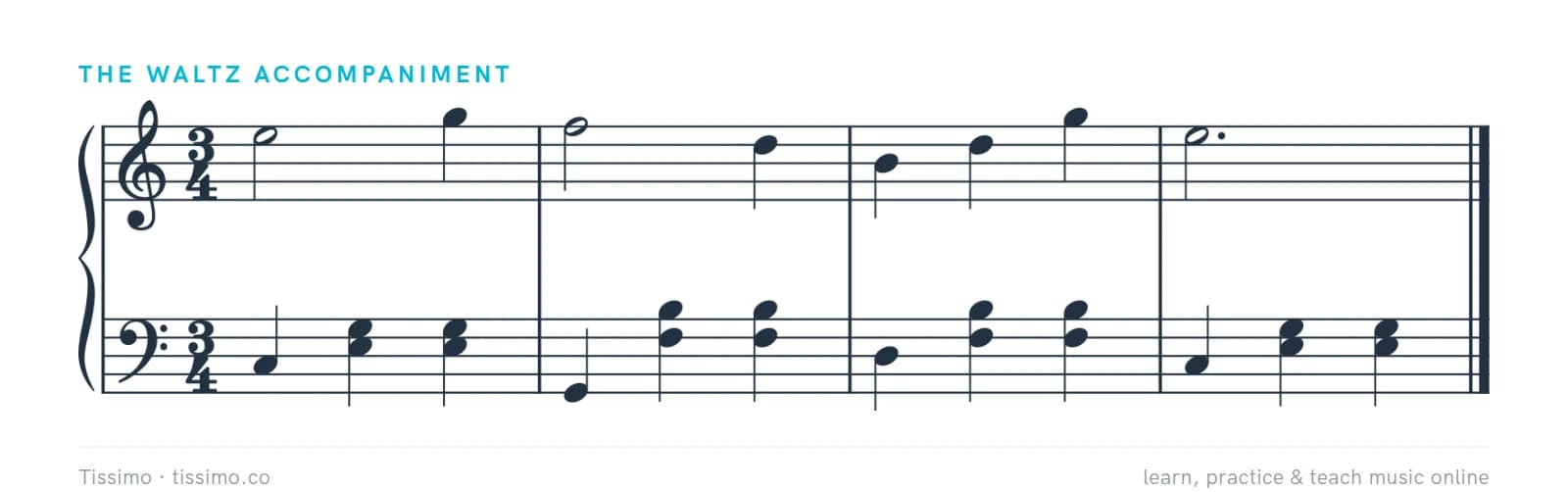
Feeling it in one
At a fast waltz tempo, the three beats go by too quickly to count separately, and dancers and musicians feel one pulse per bar. The Viennese waltz is quick; the slow waltz of the ballroom is much more relaxed. In both, the first beat is the strong one, and beats 2 and 3 should be lighter.
Famous waltzes
- Johann Strauss II, the "Waltz King," wrote dozens of concert waltzes for Vienna's ballrooms, including The Blue Danube.
- Chopin wrote waltzes for piano that are for listening rather than dancing, such as the "Minute" Waltz, Op. 64 No. 1.
- Brahms's Waltzes, Op. 39, for piano duet or solo piano.
- Tchaikovsky put waltzes into his ballets, including the "Waltz of the Flowers" from The Nutcracker.
- Ravel's La valse turns the Viennese waltz into a dizzying orchestral nightmare.
Jazz musicians play jazz waltzes in 3/4, and many folk and popular songs use waltz time too.
Waltz or minuet?
Both are dances in 3/4. The minuet is older (17th–18th centuries), more stately and usually felt in three moderate beats, with a phrase structure tied to its dance steps. The waltz is faster, smoother and more sweeping, felt in one, with its distinctive oom-pah-pah accompaniment.
Common questions
What time signature is a waltz?
3/4: three quarter-note beats per bar, with the strongest accent on beat 1. Fast waltzes are felt as one beat per bar.
What is the difference between a waltz and a minuet?
Both are in 3/4, but the minuet is an older, more stately dance felt in three, while the waltz is faster and more sweeping, felt in one, with an oom-pah-pah accompaniment.
Practice it: free worksheets
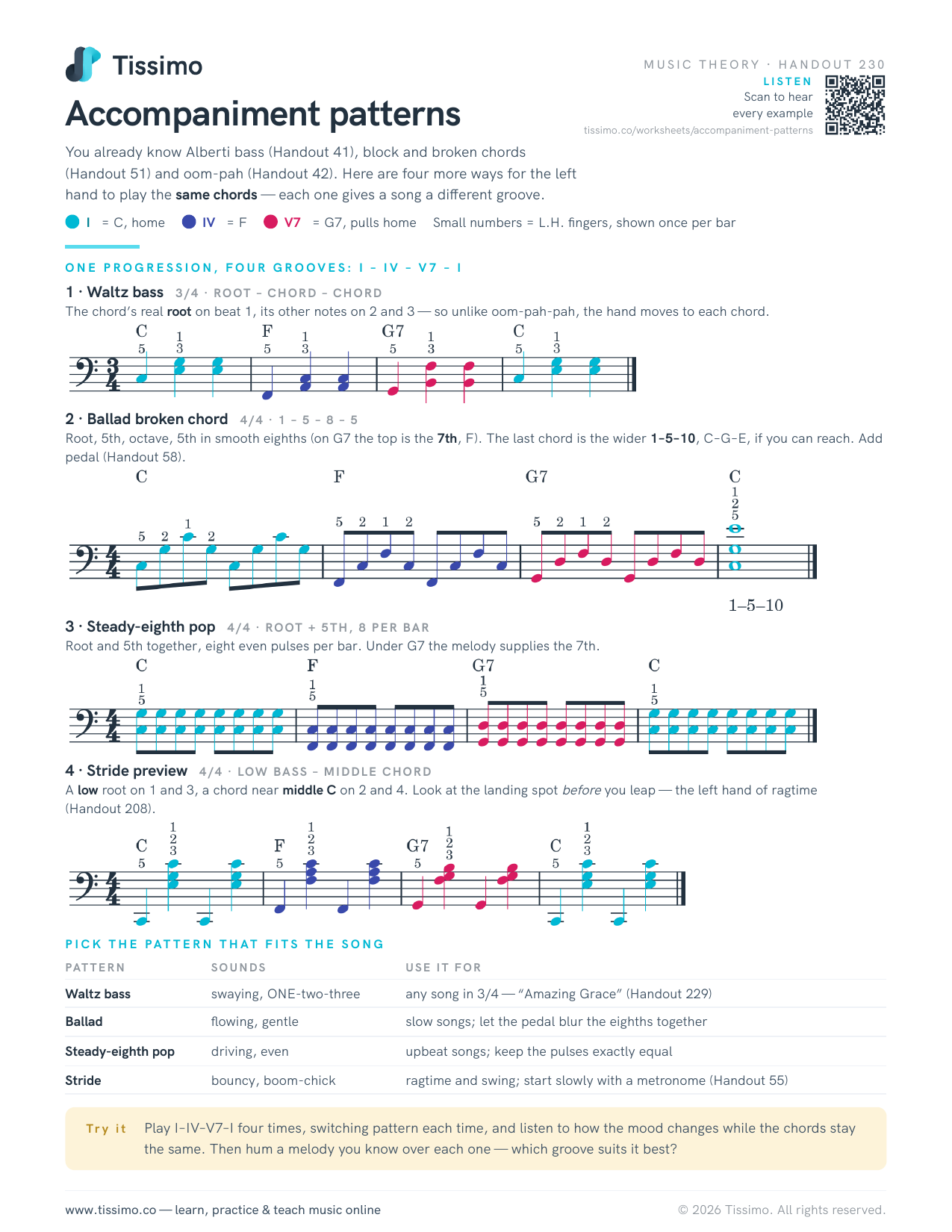 Accompaniment patternsYou already know Alberti bass (Handout 41), block and broken chords (Handout 51) and oom-pah (Handout 42). Here are four more ways for the left hand to play the same chords — each one gives a song a different groove.
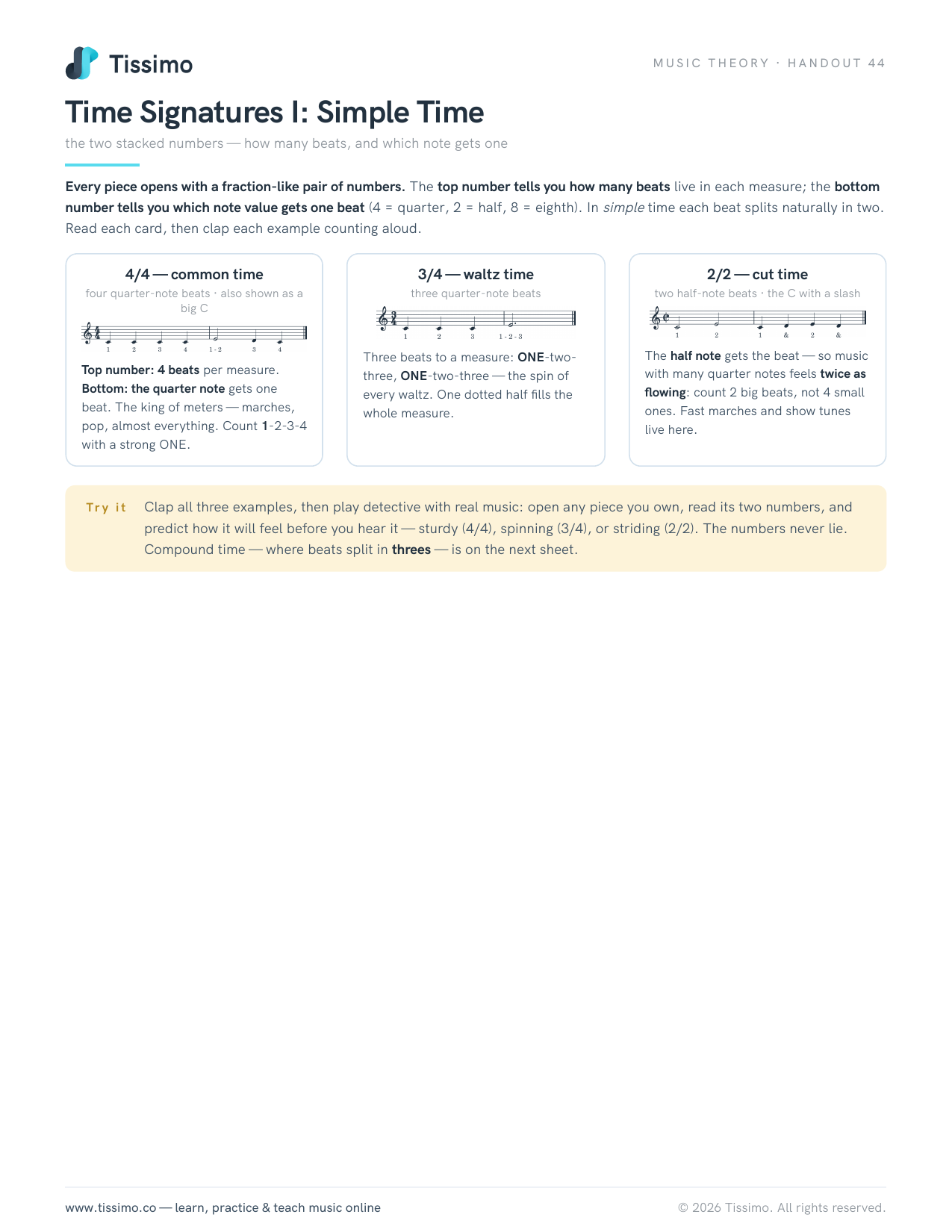 Time Signatures I: Simple Timethe two stacked numbers — how many beats, and which note gets one