Technique & Performance
Warm-Up
A warm-up is a short, gentle routine at the start of practice, rehearsal or performance that prepares your body, breath and focus, using simple exercises such as long tones, scales or five-finger patterns.
Musicians use their bodies as precisely as athletes do, and starting cold invites stiffness, a poor sound and, over time, strain. A good warm-up gets the blood flowing, settles your breathing, wakes up your ears and turns your attention from the day to the music. It often takes five to fifteen minutes, and it starts easy.
Warm-ups on different instruments
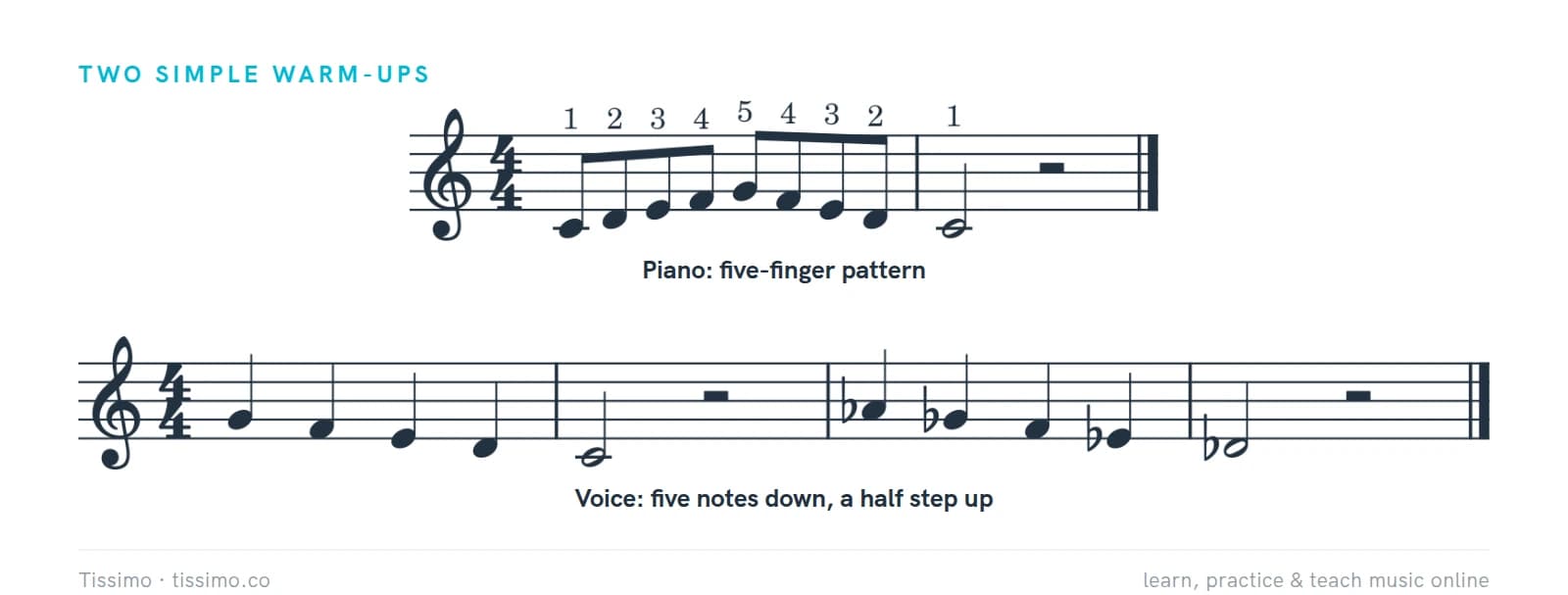
- Piano and keyboards: loosen the shoulders and wrists, then play five-finger patterns, scales and arpeggios at a comfortable tempo, legato and then staccato.
- Voice: gentle humming, lip trills or sirens to set the voice moving, then short scale patterns on vowels, moving up and down by half steps within a comfortable range.
- Wind and brass: long tones for steady air and a centered sound, then lip slurs (brass) or slurred scales, before fast articulation or high notes (embouchure).
- Strings: slow open-string bows for an even sound, then scales in one position and simple shifting exercises.
- Guitar: slow finger exercises across the strings, chord changes and simple picking or strumming patterns.
Principles
- Start easy and small. Middle register, moderate volume, slow tempo. Build range and speed gradually.
- Listen as you go. A warm-up is also a warm-up for the ears: listen for an even tone, steady rhythm and good intonation.
- Notice tension. Shoulders down, jaw loose, breathing free. If something hurts, stop.
- Keep it short. Save your energy for the music; a warm-up that grows into an hour of technique has become a different kind of practice.
- Make it musical. Shape even a scale with a crescendo and decrescendo, so you arrive at your piece already listening.
Before a performance
Backstage, a warm-up has a second job: calming nerves. Familiar exercises at a steady tempo, slow breathing and a silent run-through of the opening bars in your head help you begin with control (recital). Singers often keep warm-ups gentle on a performance day to save the voice. My Comfortable Warmup helps singers choose a gentle pattern with their teacher, and Your Daily Technique Routine builds warm-up exercises into daily practice.
Common questions
How long should a warm-up be?
Often five to fifteen minutes: long enough to feel loose and hear a steady, focused sound, short enough to leave energy for the music itself.
Do I need to warm up before practicing?
It helps. Even a few minutes of gentle exercises improves your sound and control and lowers the risk of strain, especially for singers and wind and brass players.
Practice it: free worksheets
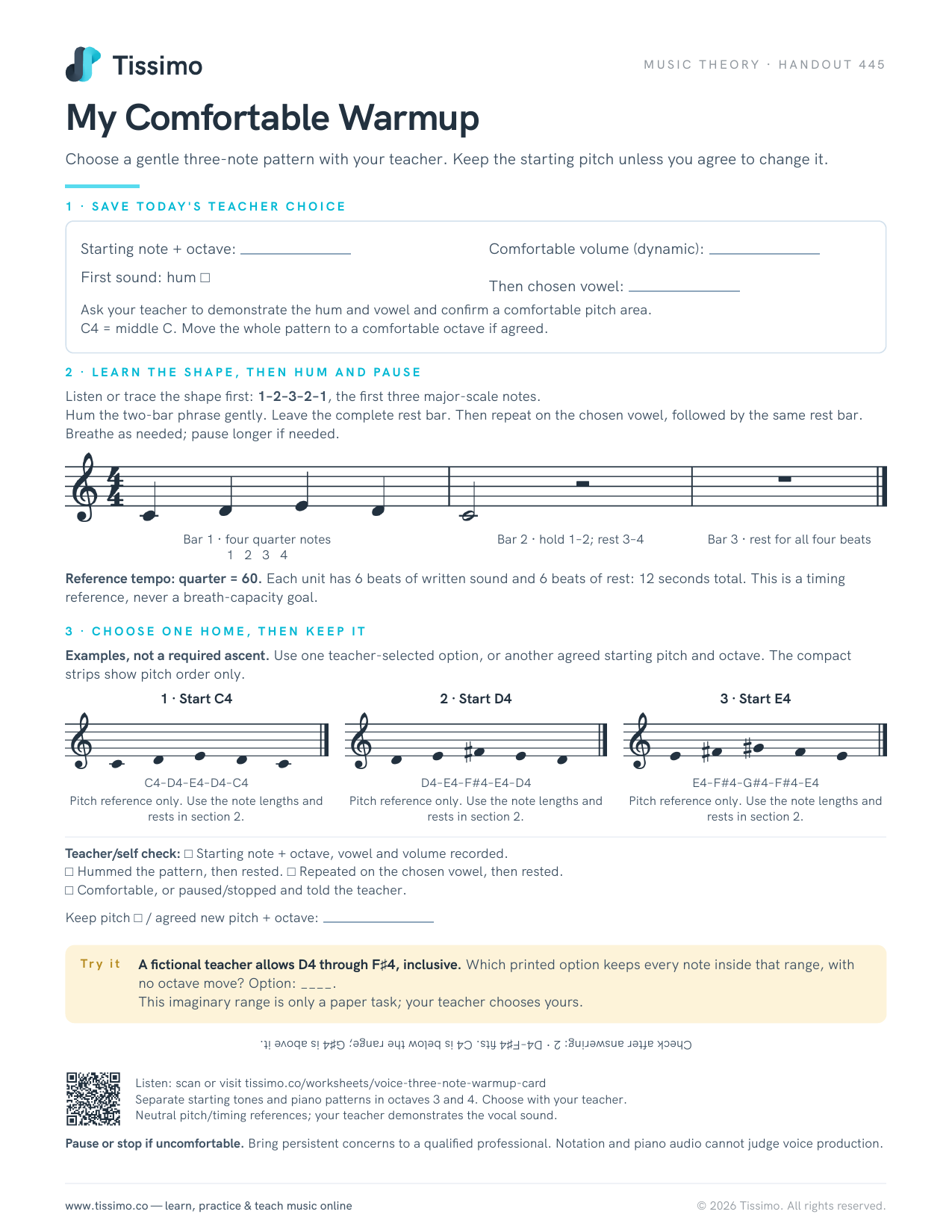 My Comfortable WarmupChoose a gentle three-note pattern with your teacher. Keep the starting pitch unless you agree to change it.
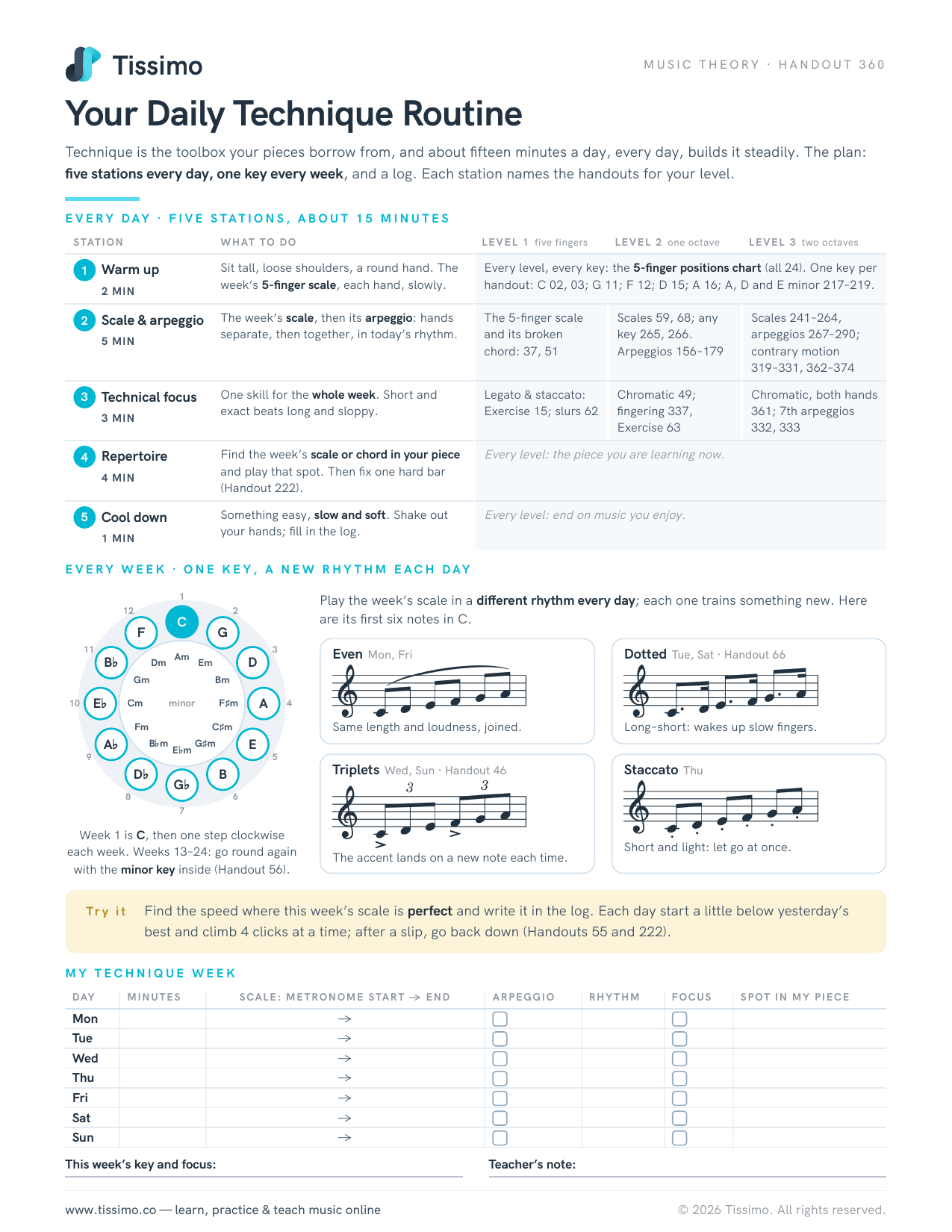 Your Daily Technique RoutineTechnique is the toolbox your pieces borrow from, and about fifteen minutes a day, every day, builds it steadily. The plan: five stations every day, one key every week, and a log. Each station names the handouts for your level.
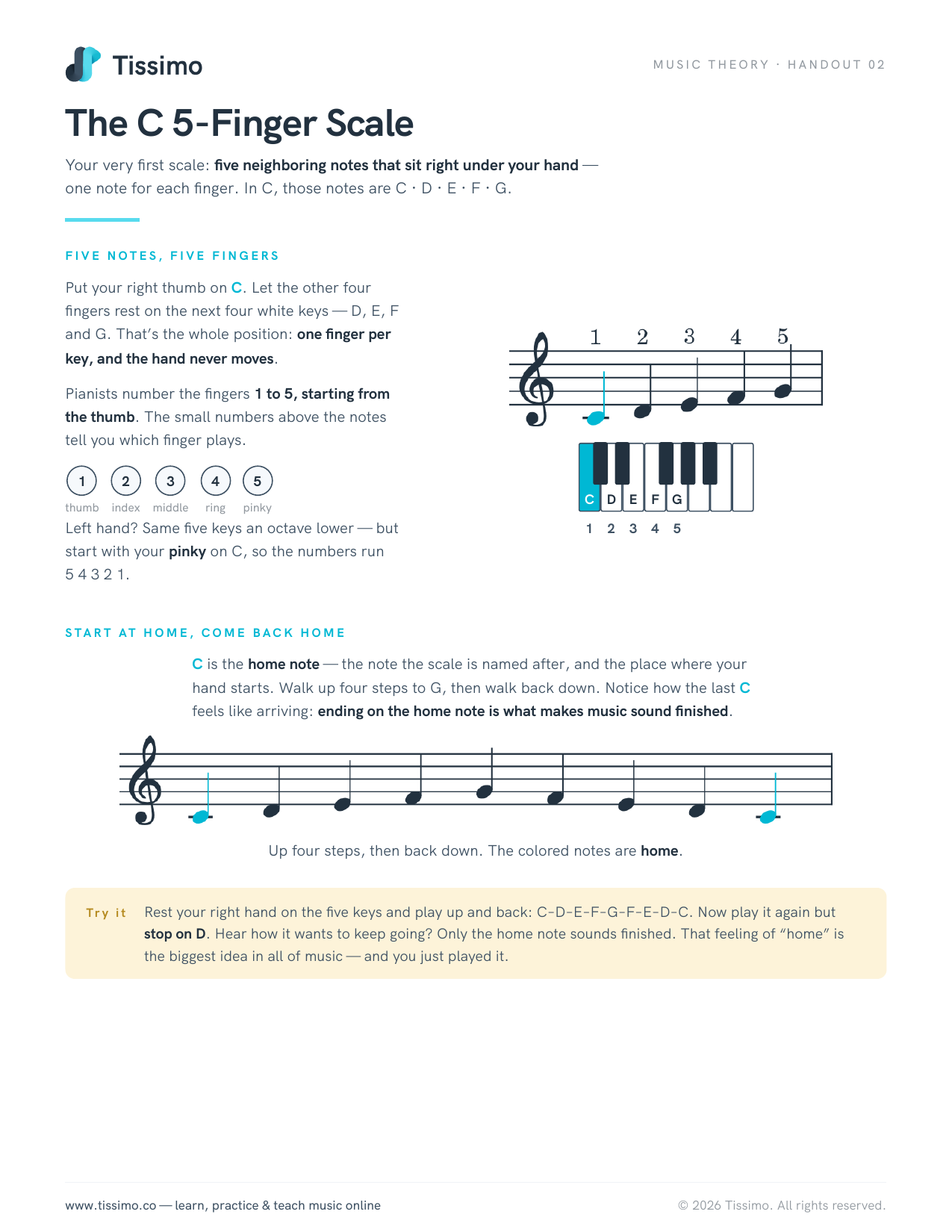 The C 5-Finger ScaleYour very first scale: five neighboring notes that sit right under your hand — one note for each finger. In C, those notes are C · D · E · F · G.