Dynamics & Expression
Decrescendo (Diminuendo)
Pronounced day-kreh-SHEN-doh (dih-min-yoo-EN-doh)Written as decresc. / dim.
A decrescendo, also called a diminuendo, is a gradual decrease in loudness. It is written as a closing hairpin (>) or as decresc. or dim., and continues until a new dynamic is reached.
Decrescendo means "decreasing" and diminuendo means "diminishing": both tell you to get gradually softer. They are written as:
- A closing hairpin, a wedge that narrows to the right, under the notes it covers.
- The words decresc., dim. or dimin., often with a dashed line, lasting until the next dynamic mark.
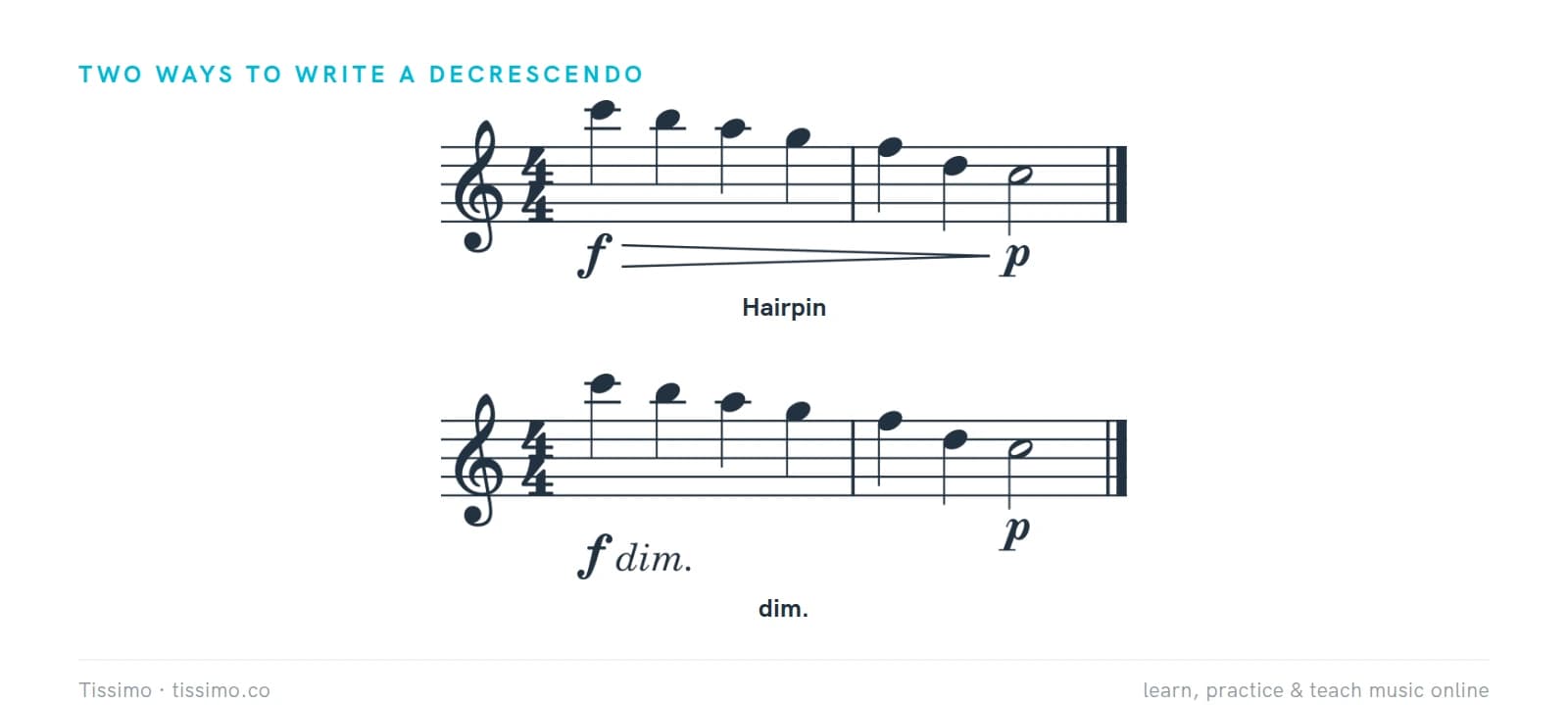
Decrescendo or diminuendo?
In practice the two words mean the same and are used interchangeably; editions of the same piece may print either one. Some musicians hear diminuendo as a little more relaxed, a fading of energy as well as volume, but that is a shade of interpretation, not a rule. Mozart's Sonata in C, K. 545, uses decresc. (see our Mozart K. 545 study); Chopin's Prelude in E minor uses dim. (see our Prelude in E minor study).
Related ways to fade
- Morendo ("dying"): fade away, usually slowing down as well.
- smorzando (smorz., "extinguishing") and perdendosi ("losing itself"): fade to nothing, again often with some slowing.
- calando ("dropping"): softer and a little slower.
How to play a good decrescendo
- Start full. A decrescendo needs somewhere to come from. Sustain the starting level before you begin to fade.
- Fade evenly. Spread the change over the whole hairpin, and keep the softest notes clear: the end of a decrescendo should still sound, not disappear.
- Shape the phrase. Most phrases rise toward a high point and fall away after it; a short decrescendo at the end of a phrase is one of the most natural gestures in music. Our Phrasing handout calls it the taper.
- Do not slow down unless the music says so. Softer and slower are separate instructions.
The opposite is the crescendo. In Match the terms: level 2 decrescendo is "gradually grow softer", and level 4 adds diminuendo as its twin.
Dynamics & Tempo Ladders asks you to choose between the two hairpins, and the Musical terms & signs chart lists decresc. and dim. together.
Common questions
What is the difference between decrescendo and diminuendo?
In practice, none: both mean getting gradually softer, and both are shown by the same closing hairpin. Some players hear diminuendo as slightly more relaxed, but composers use them interchangeably.
What does dim. mean in music?
dim. is short for diminuendo: get gradually softer until the next dynamic mark.
Practice it: free worksheets
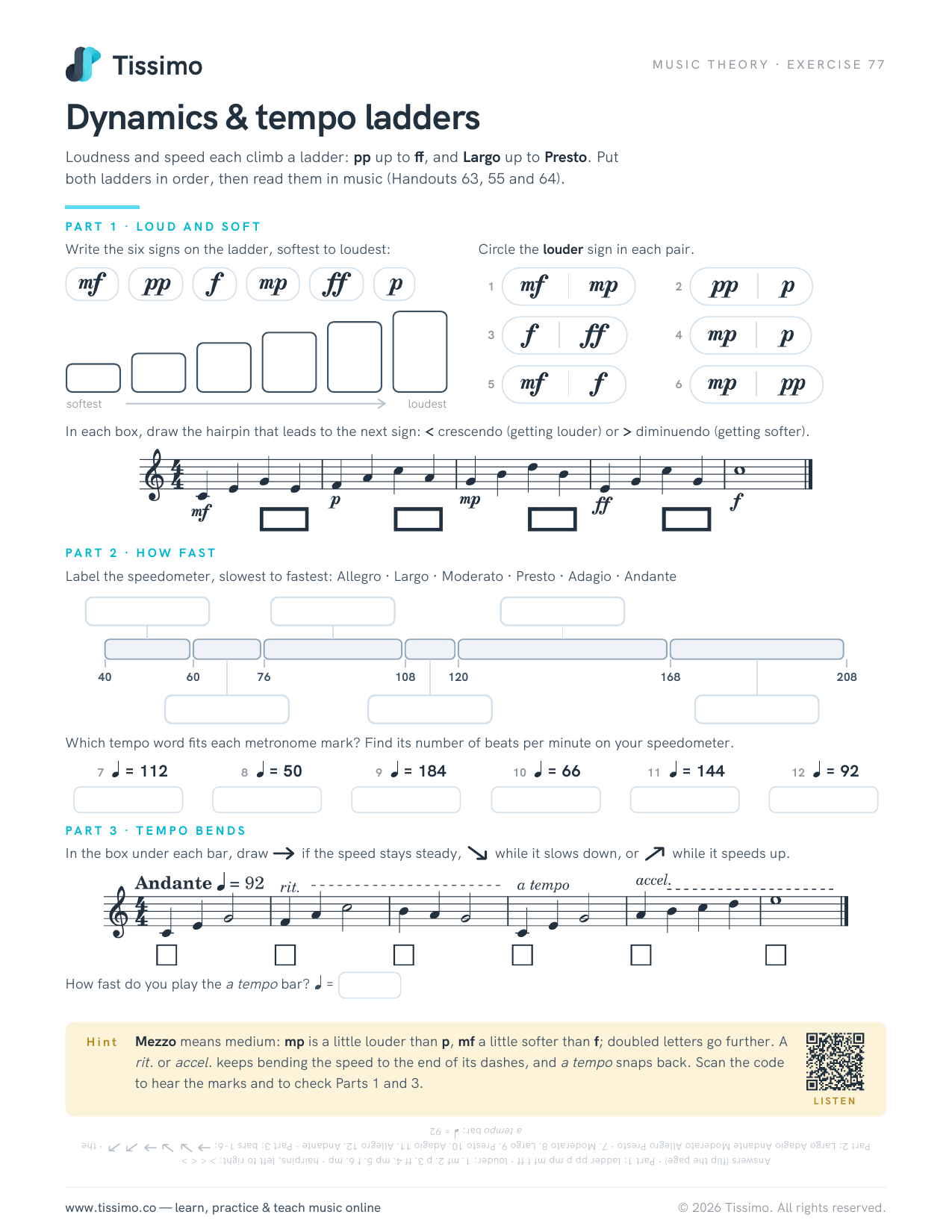 Dynamics & tempo laddersLoudness and speed each climb a ladder: pp up to ff, and Largo up to Presto. Put both ladders in order, then read them in music (Handouts 63, 55 and 64).
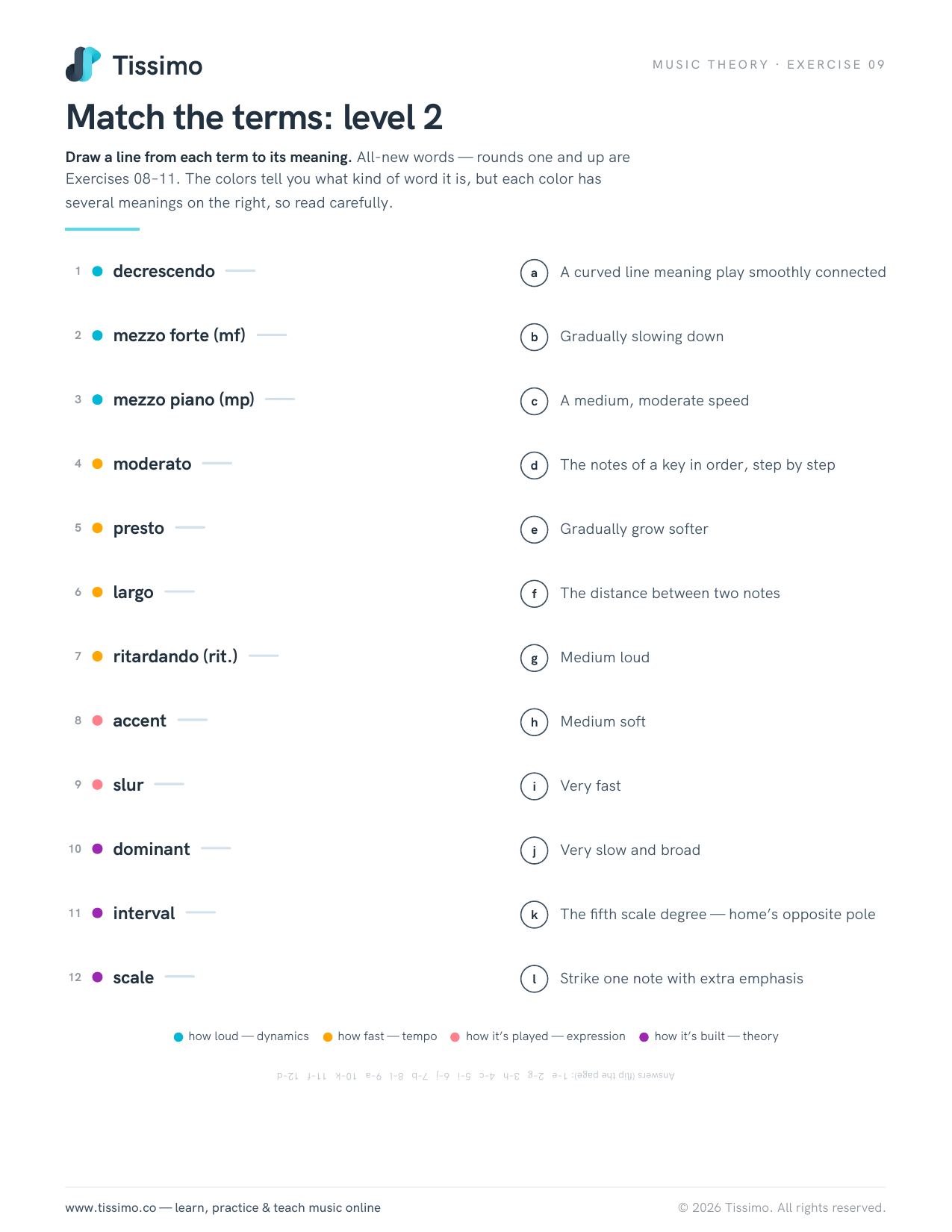 Match the terms: level 2Draw a line from each term to its meaning. All-new words — rounds one and up are Exercises 08–11. The colors tell you what kind of word it is, but each color has several meanings on the right, so read carefully.
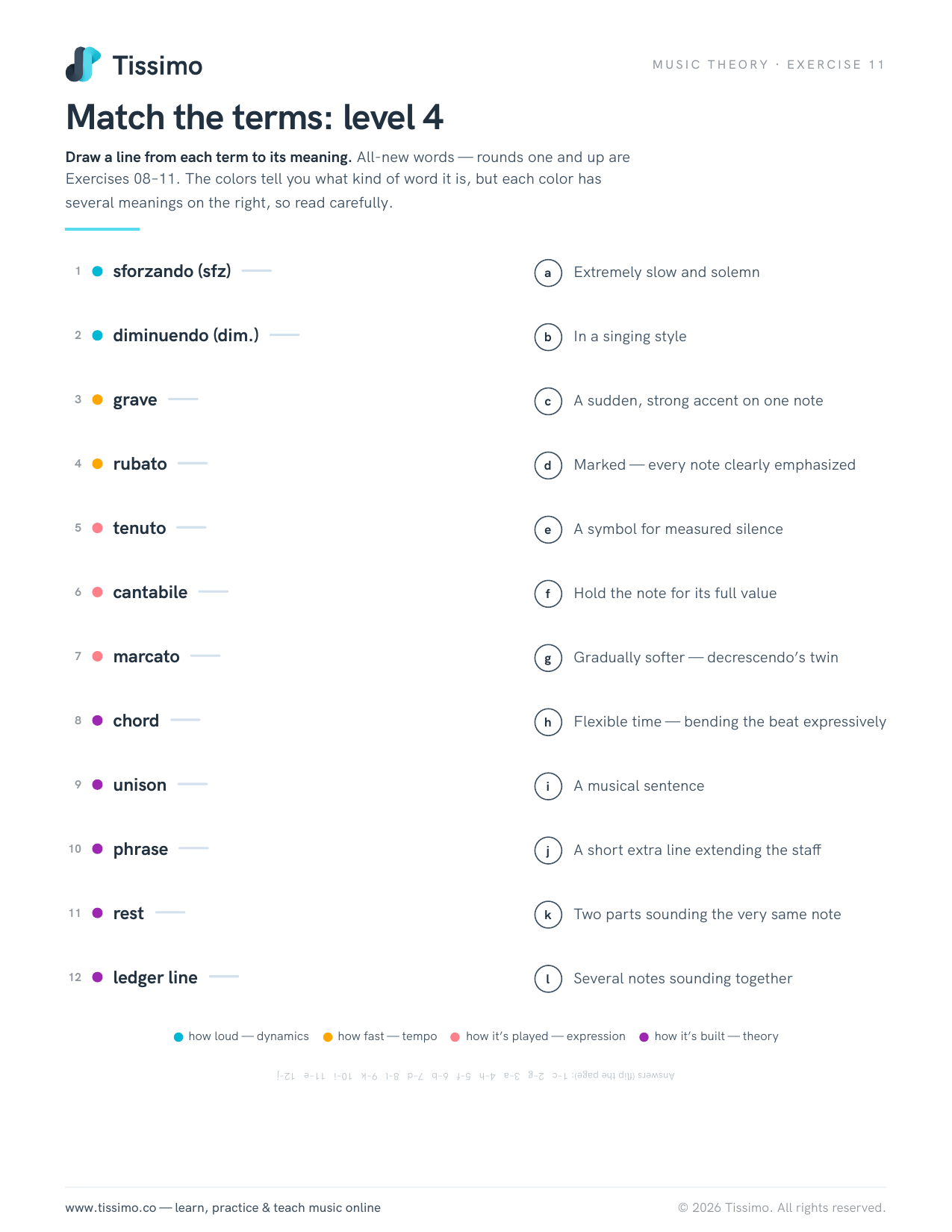 Match the terms: level 4Draw a line from each term to its meaning. All-new words — rounds one and up are Exercises 08–11. The colors tell you what kind of word it is, but each color has several meanings on the right, so read carefully.
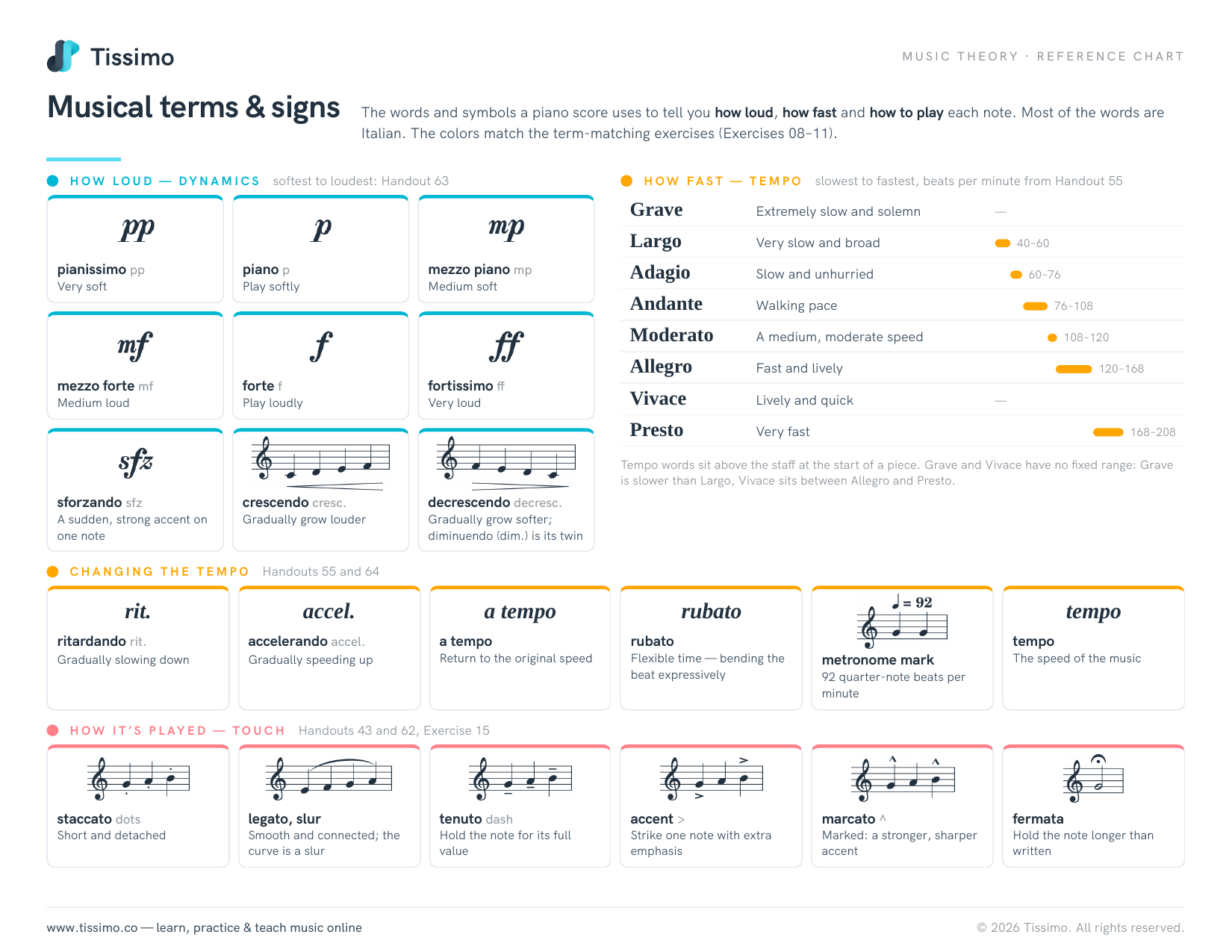 Musical terms & signsThe words and symbols a piano score uses to tell you how loud, how fast and how to play each note. Most of the words are Italian. The colors match the term-matching exercises (Exercises 08–11, 74 and 75).
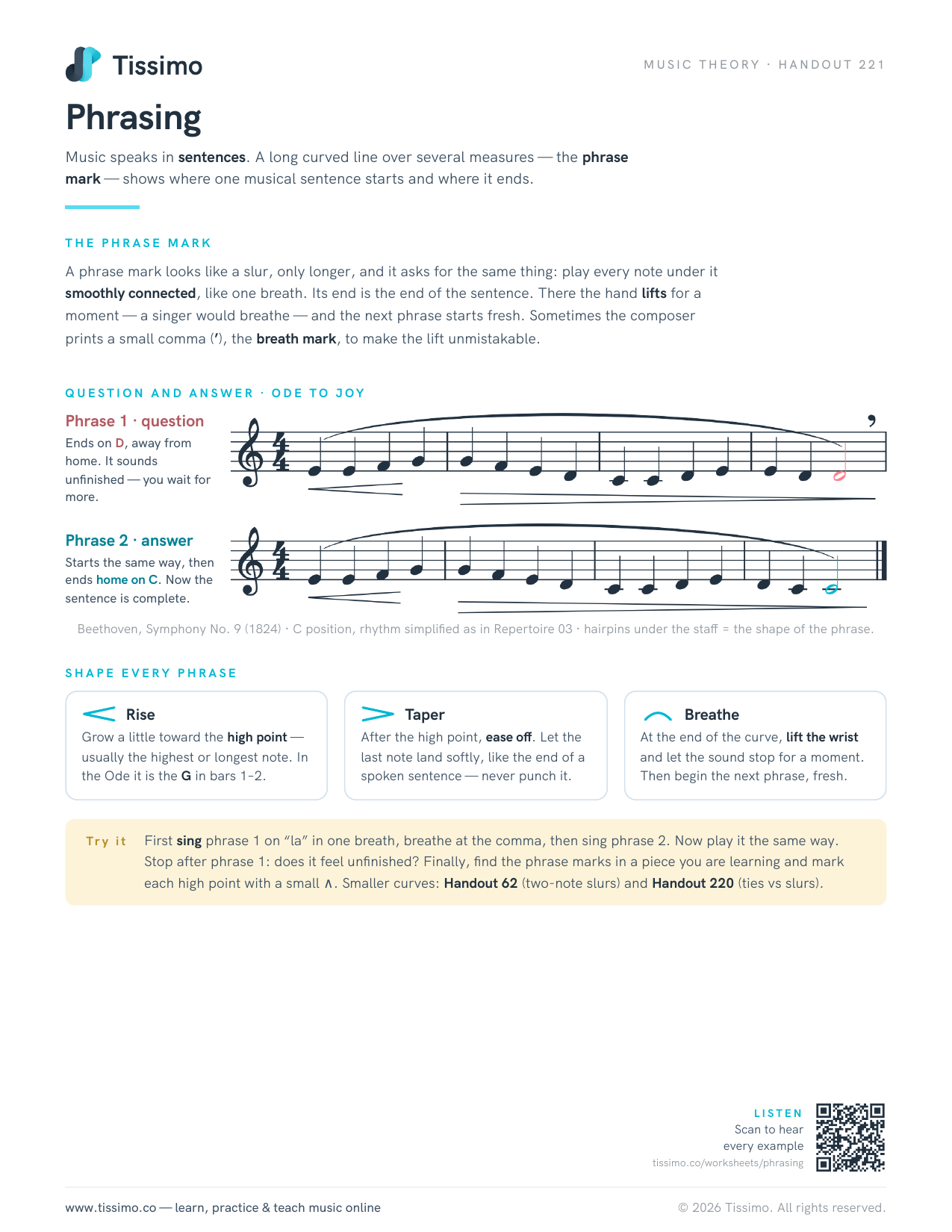 PhrasingMusic speaks in sentences. A long curved line over several measures — the phrase mark — shows where one musical sentence starts and where it ends.
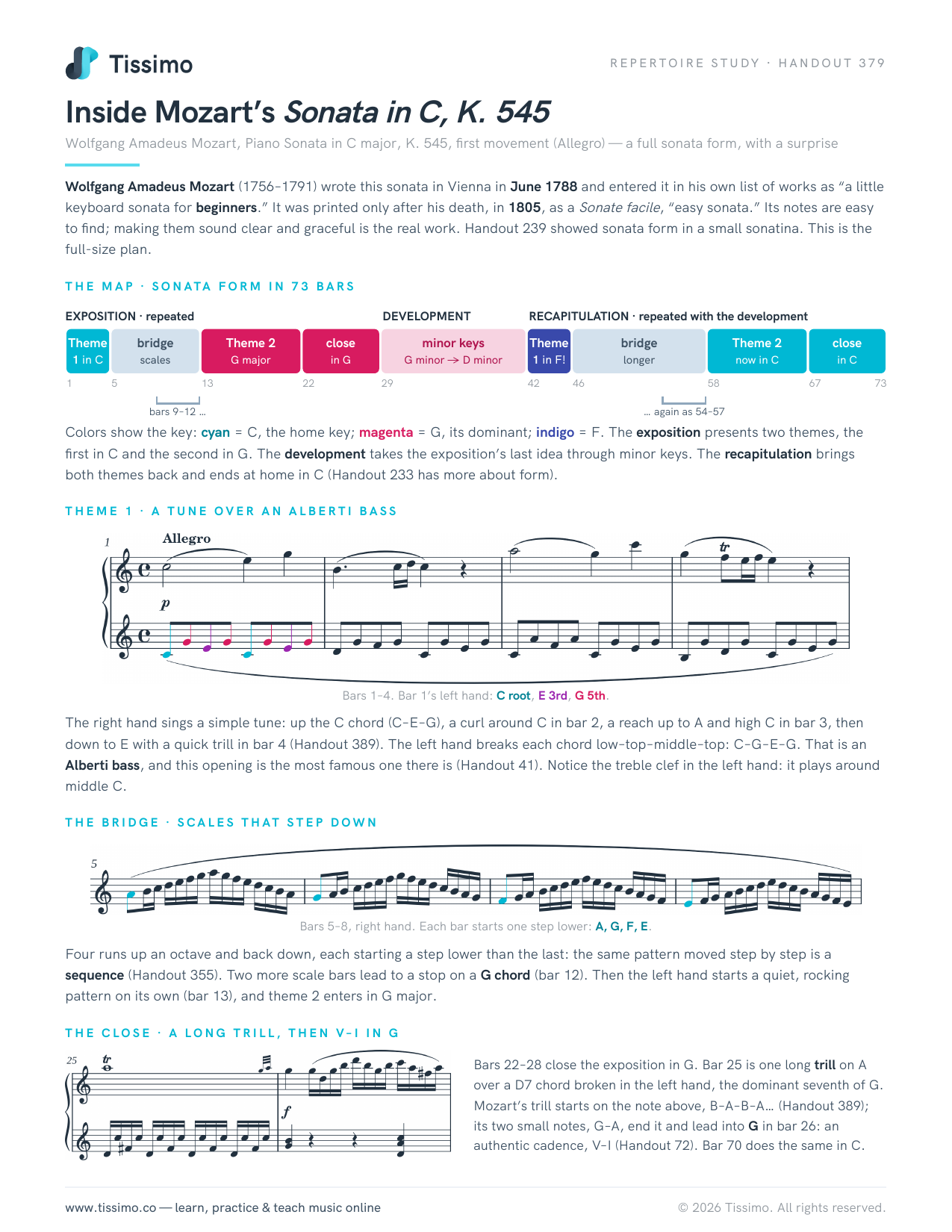 Inside Mozart’s Sonata in C, K. 545Wolfgang Amadeus Mozart, Piano Sonata in C major, K. 545, first movement (Allegro) — a full sonata form, with a surprise