Dynamics & Expression
Pianissimo (pp)
Pronounced pyah-NEES-see-mohWritten as pp
Pianissimo, written pp, means very soft. It is the superlative of piano and sits just below p on the dynamic scale; ppp and beyond ask for even softer playing.
Pianissimo is the superlative of piano: "very soft". Its sign is pp, printed below the staff. It sits one step below p on the dynamic scale, and composers who want less still write ppp or more.
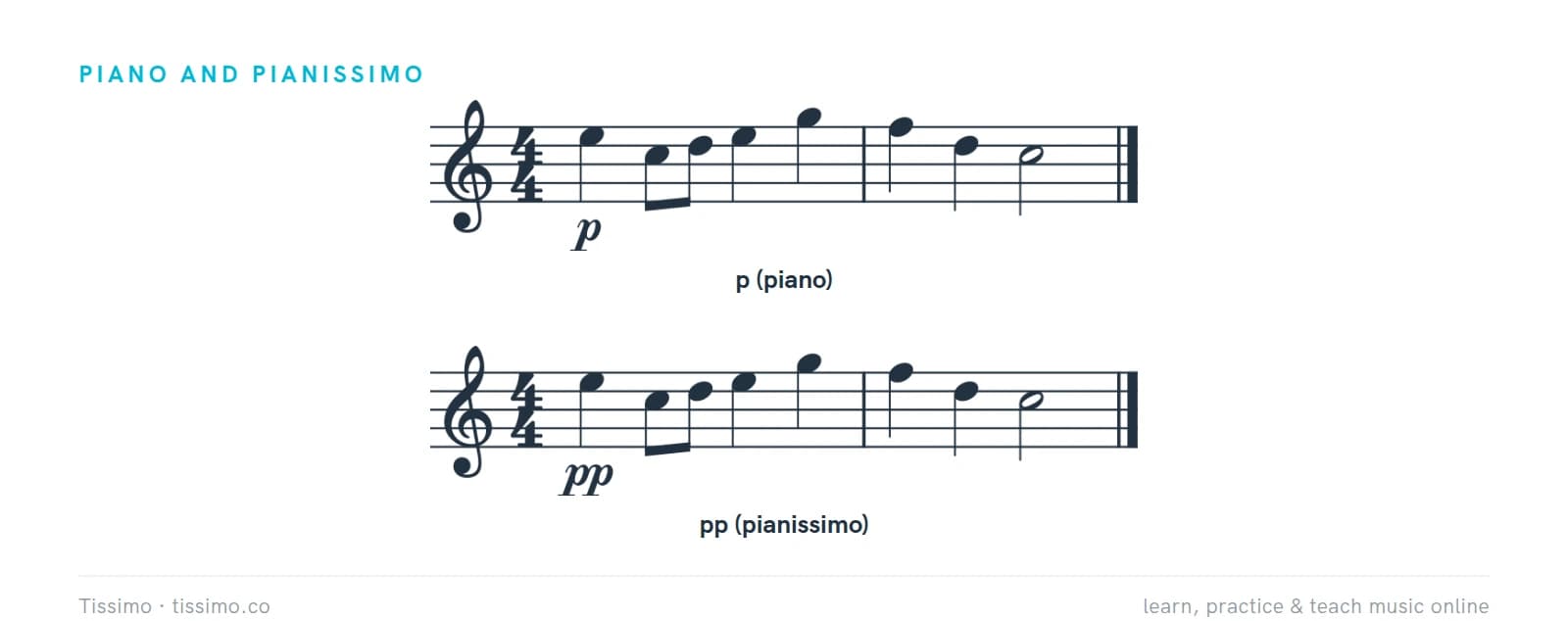
Playing pianissimo on the piano
Very soft playing is harder than loud playing, because the hammer still has to reach the string. Some tips:
- Start from the key. Keep your fingertips resting on the keys and use small, slow key strokes. A key that moves slowly makes a soft sound.
- Stay light, not stiff. Tension makes soft notes come out unevenly, or not at all.
- Listen for a singing tone. Aim for a quiet sound that still carries, not a whisper that drops out.
- Know what the left pedal does. The soft pedal (una corda) softens and veils the tone; composers sometimes ask for it with pp, but it does not replace a soft touch.
Pianissimo in real music
Beethoven's "Moonlight" Sonata asks for sempre pianissimo, always very soft, through its first movement; our Moonlight Sonata study shows how the melody still sings above the triplets at that level. Soft does not mean small: a pianissimo passage can hold great tension, and listeners lean in to hear it.
Keep pp in proportion
Like every dynamic, pianissimo is relative. In a large hall it still has to reach the back row, and in a piece that uses ppp as well, pp is the second softest level, not the softest. Save your very quietest sound for the softest mark in the piece.
pp is the bottom rung of the Dynamic Ladder. Test yourself with Dynamics & Tempo Ladders, Match the terms: level 3 and the Musical terms & signs chart.
Common questions
What does pp mean in music?
pp stands for pianissimo, "very soft": one step softer than p (piano).
Is ppp softer than pp?
Yes. Each extra p asks for a softer level: ppp (pianississimo) is softer than pp, and a few composers have written even more.
Practice it: free worksheets
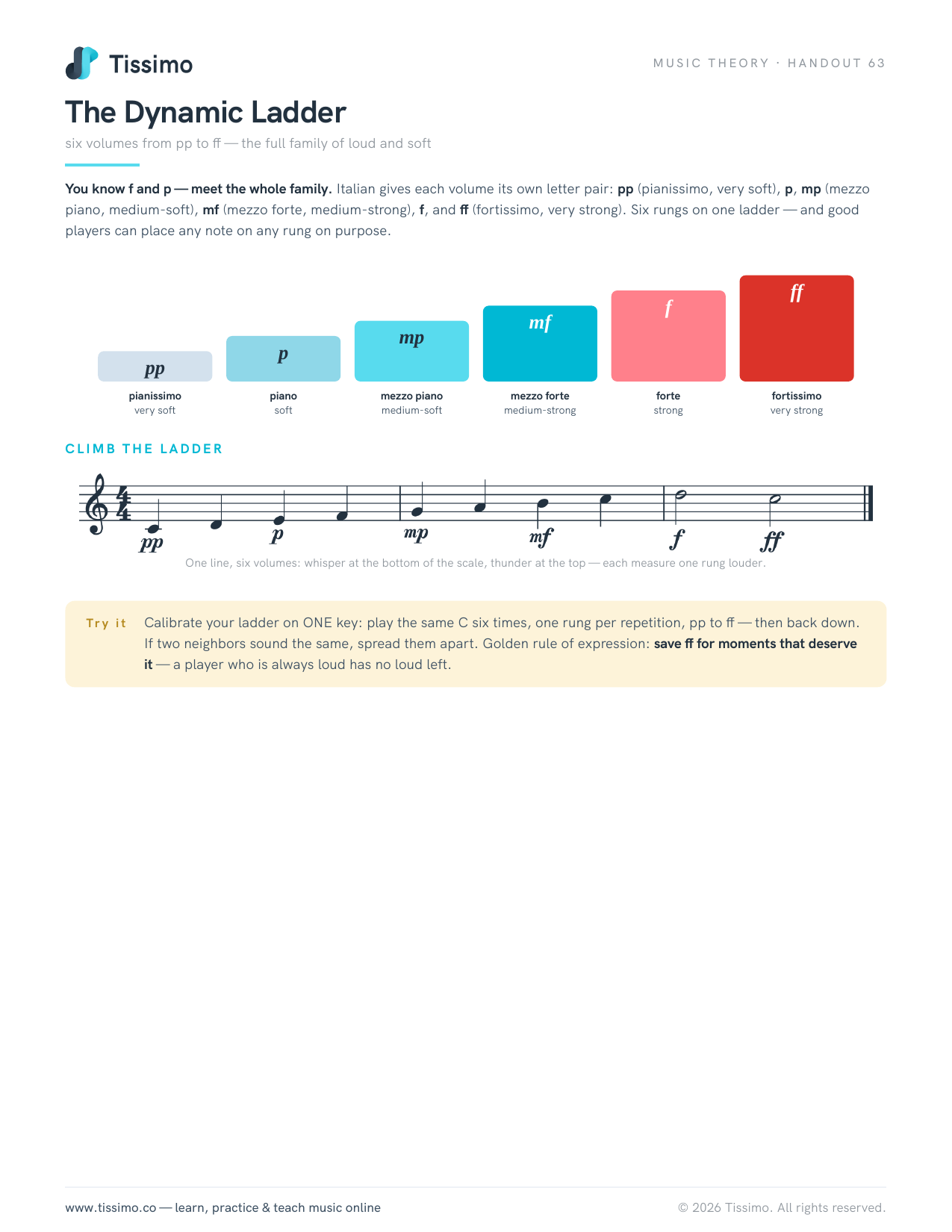 The Dynamic Laddersix volumes from pp to ff — the full family of loud and soft
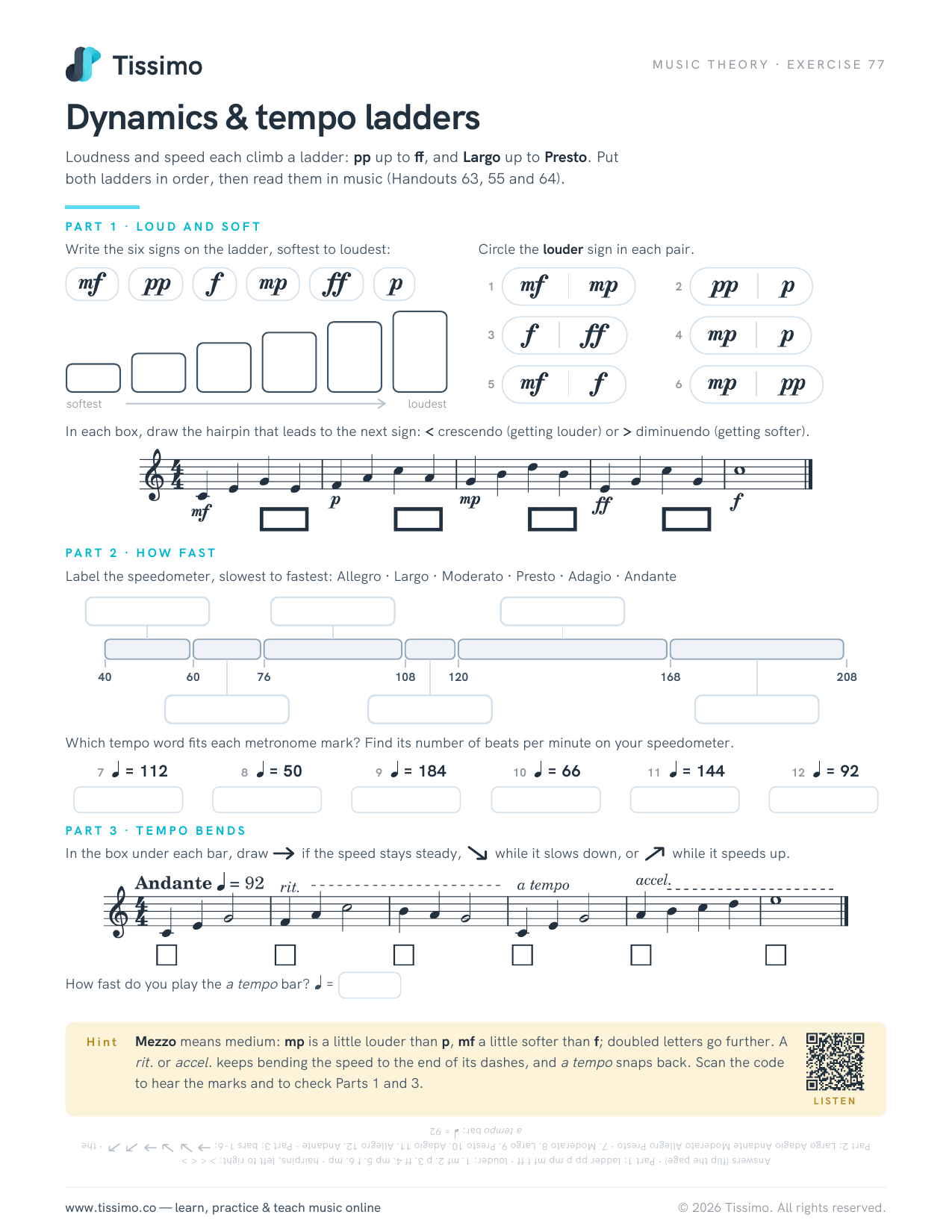 Dynamics & tempo laddersLoudness and speed each climb a ladder: pp up to ff, and Largo up to Presto. Put both ladders in order, then read them in music (Handouts 63, 55 and 64).
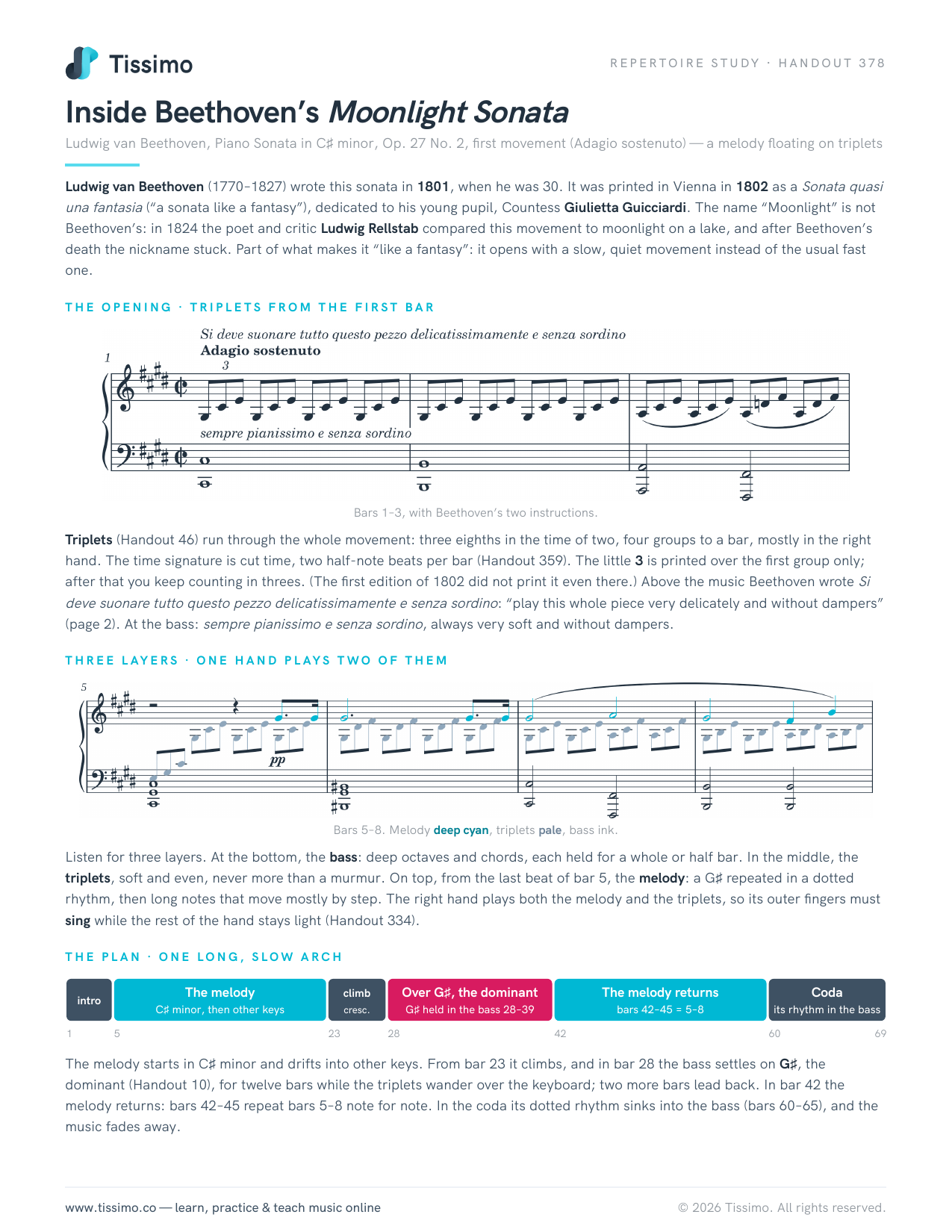 Inside Beethoven’s Moonlight SonataLudwig van Beethoven, Piano Sonata in C♯ minor, Op. 27 No. 2, first movement (Adagio sostenuto) — a melody floating on triplets
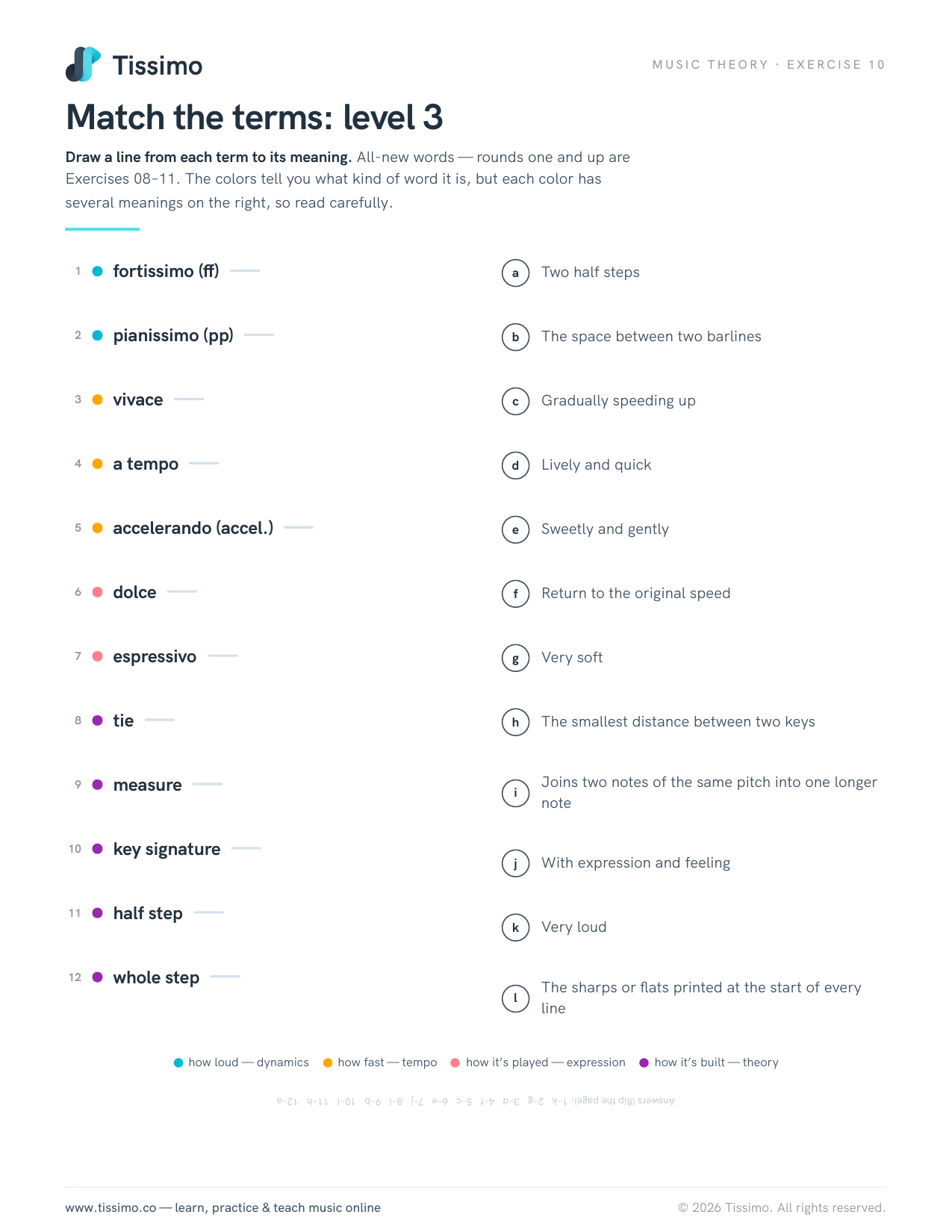 Match the terms: level 3Draw a line from each term to its meaning. All-new words — rounds one and up are Exercises 08–11. The colors tell you what kind of word it is, but each color has several meanings on the right, so read carefully.
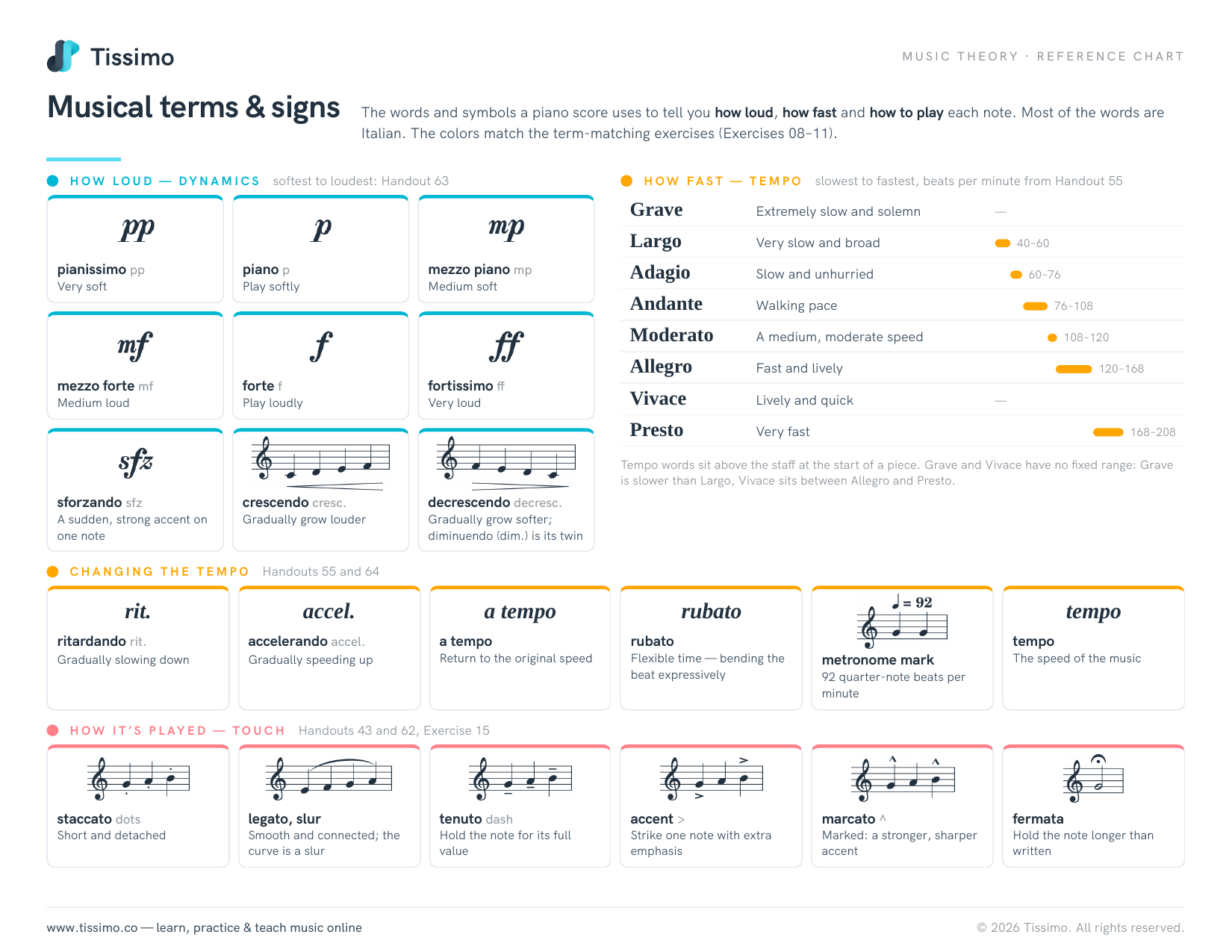 Musical terms & signsThe words and symbols a piano score uses to tell you how loud, how fast and how to play each note. Most of the words are Italian. The colors match the term-matching exercises (Exercises 08–11, 74 and 75).