Dynamics & Expression
Dolce
Pronounced DOHL-cheh
Dolce means 'sweetly': play gently and tenderly, with a warm, soft tone. It describes the character of the sound rather than an exact loudness, though dolce passages are usually soft.
Dolce means "sweet". In a score, usually printed in italics below the staff, it asks for a gentle, tender, warm sound. It is an expression word, not a dynamic: it tells you how the sound should feel, not exactly how loud it is. In practice, dolce passages are usually soft, and the word often appears beside p.
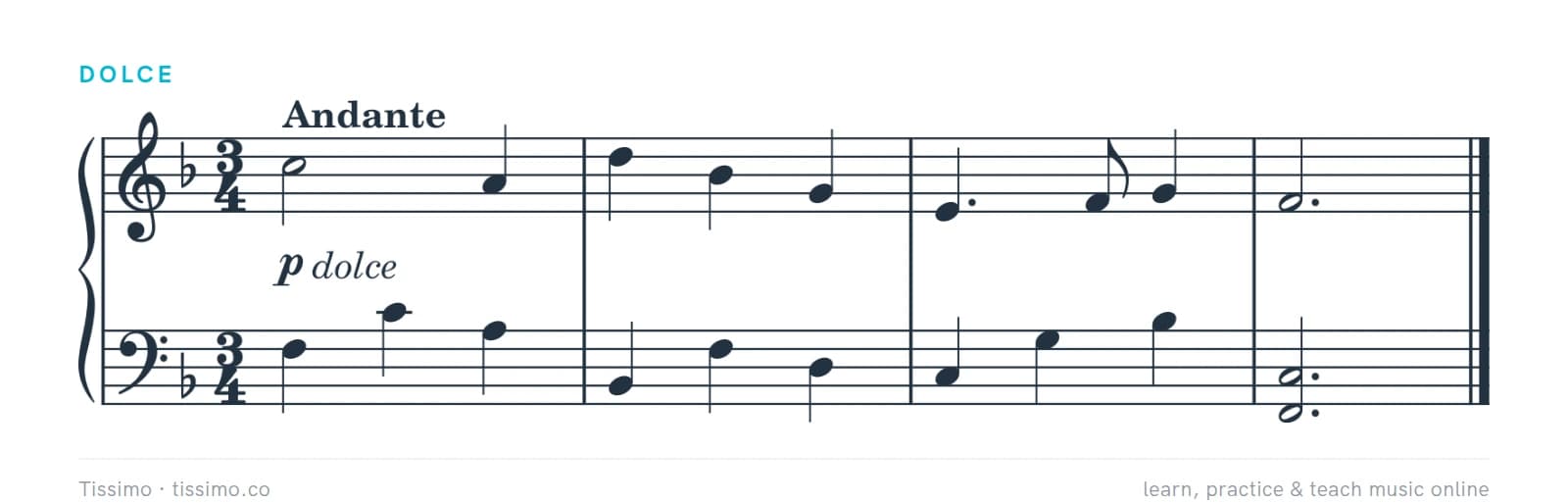
Dolce in real music
Dolce is one of the most common expression words in piano music. Chopin marks his Prelude in A major, Op. 28 No. 7, dolce (Prelude in A major study), and Burgmüller uses it in La Candeur, including dolce e poco rit., sweetly and slowing a little (La Candeur study). The superlative dolcissimo means "very sweetly".
How to play dolce
- Use a warm, round tone. At the piano, play from close to the keys with the pads of the fingers rather than the tips, and let the arm stay relaxed.
- Connect the line. Dolce melodies are usually legato: let each note lead smoothly into the next.
- Avoid accents. A sudden bump in the melody breaks the sweetness. Shape the phrase with gentle swells instead.
- Balance the hands. Keep the accompaniment softer than the melody so the tune floats on top.
A common confusion
Dolce is not the same as p. A dolce passage marked mf is still sweet, just fuller; a p passage without dolce might be soft but cool or mysterious. Read both words together. Our Match the terms: level 3 sheet defines dolce as "sweetly and gently".
The Musical terms & signs chart lists dolce with the other character words.
Common questions
Does dolce mean soft?
Not exactly. Dolce means sweetly: a gentle, warm character. Dolce passages are usually soft, but the loudness comes from the dynamic mark beside it.
Practice it: free worksheets
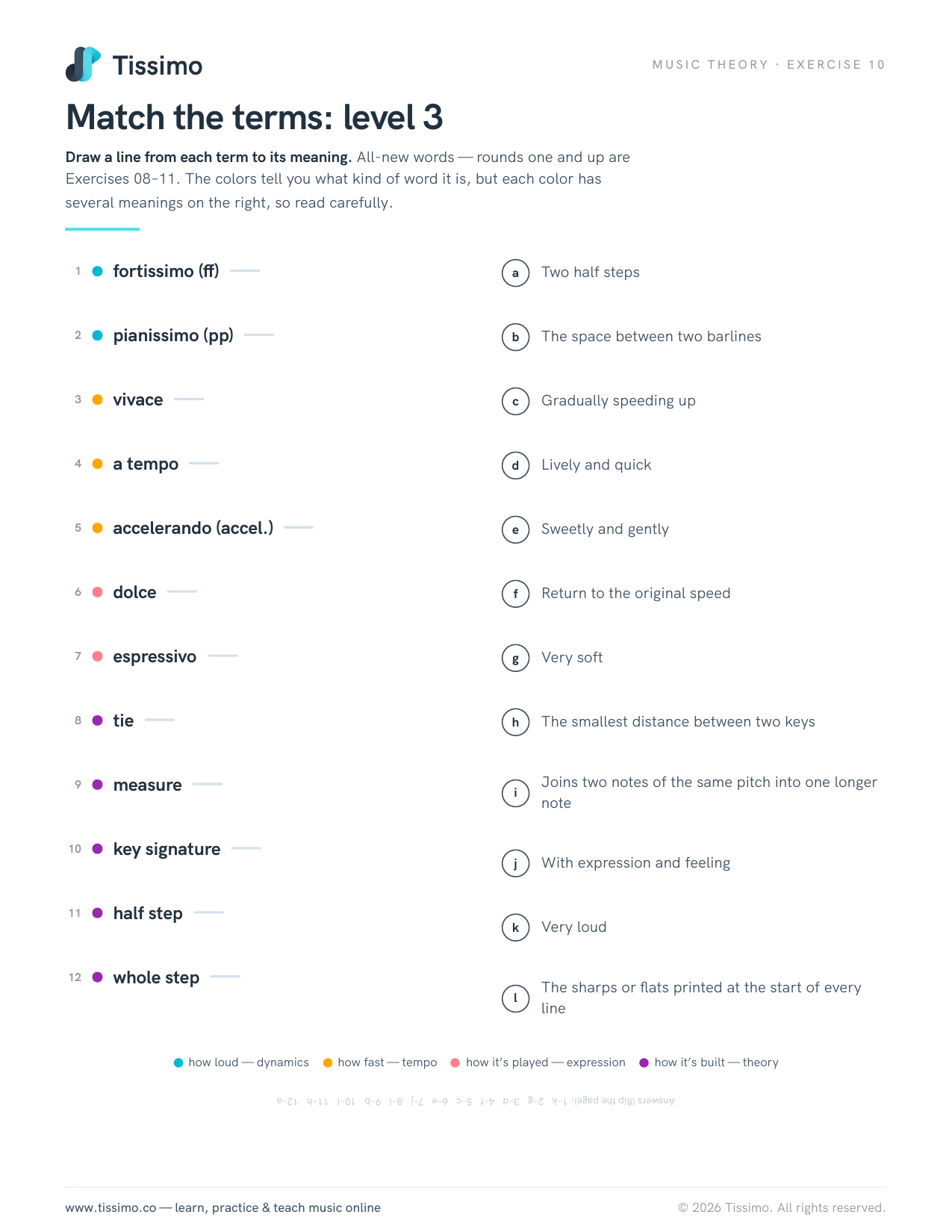 Match the terms: level 3Draw a line from each term to its meaning. All-new words — rounds one and up are Exercises 08–11. The colors tell you what kind of word it is, but each color has several meanings on the right, so read carefully.
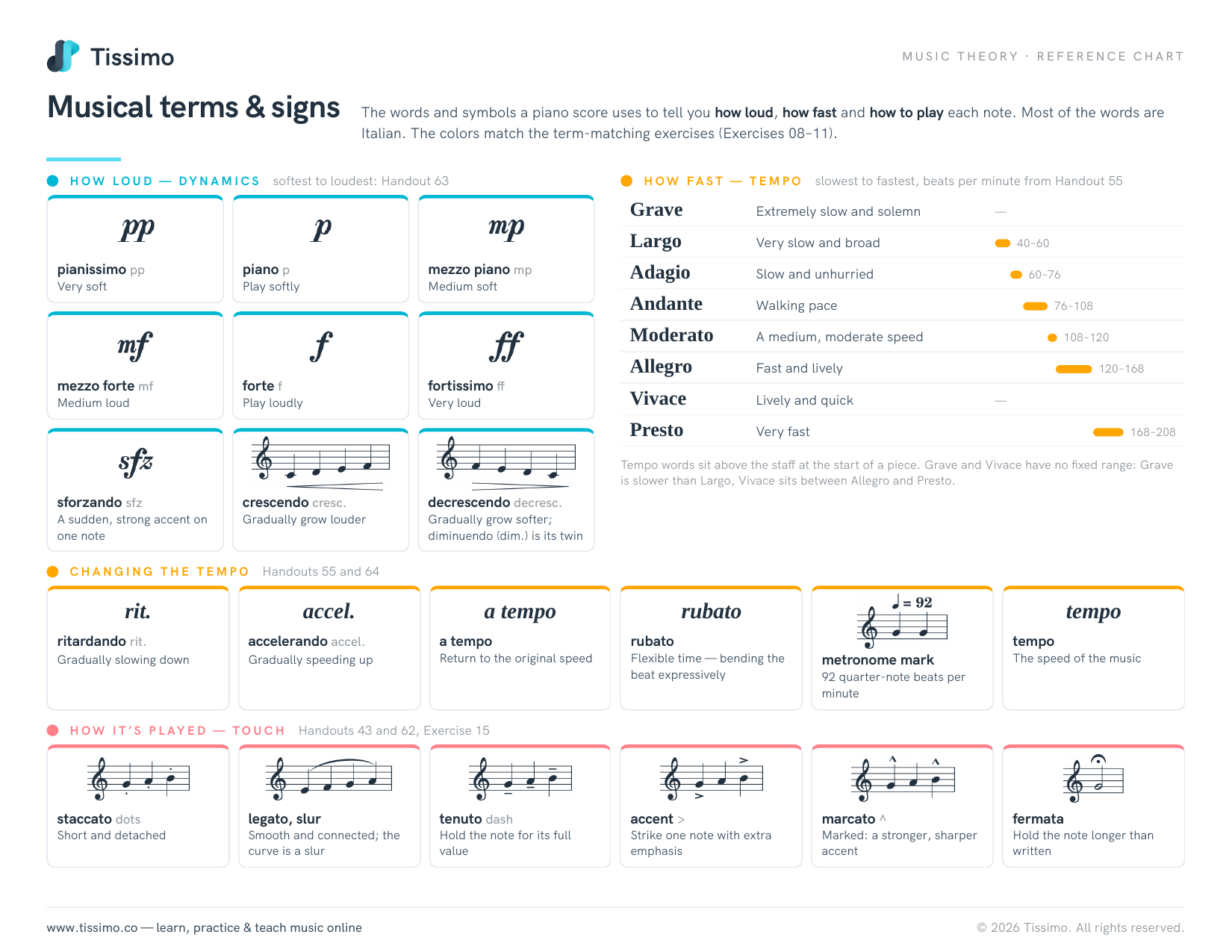 Musical terms & signsThe words and symbols a piano score uses to tell you how loud, how fast and how to play each note. Most of the words are Italian. The colors match the term-matching exercises (Exercises 08–11, 74 and 75).
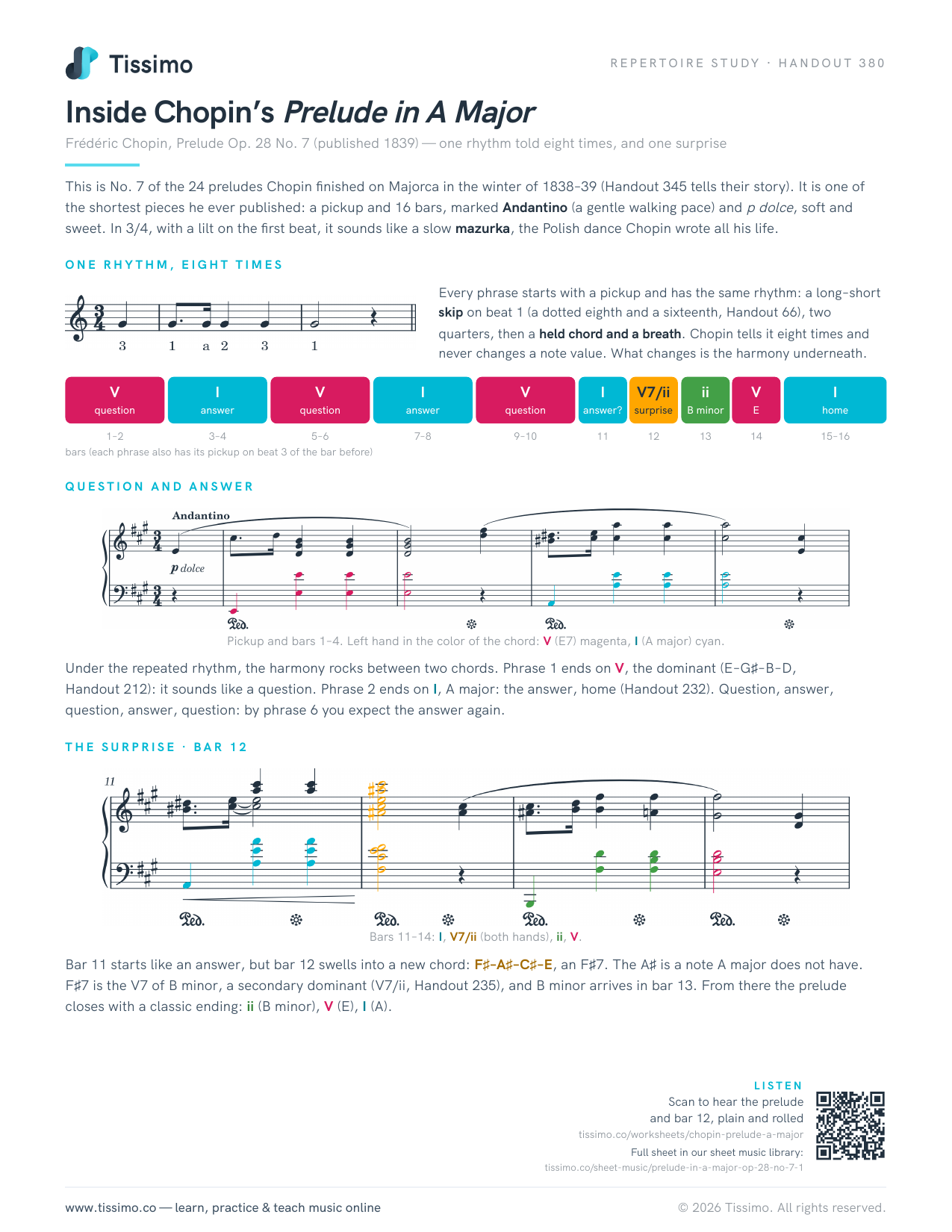 Inside Chopin’s Prelude in A MajorFrédéric Chopin, Prelude Op. 28 No. 7 (published 1839) — one rhythm told eight times, and one surprise
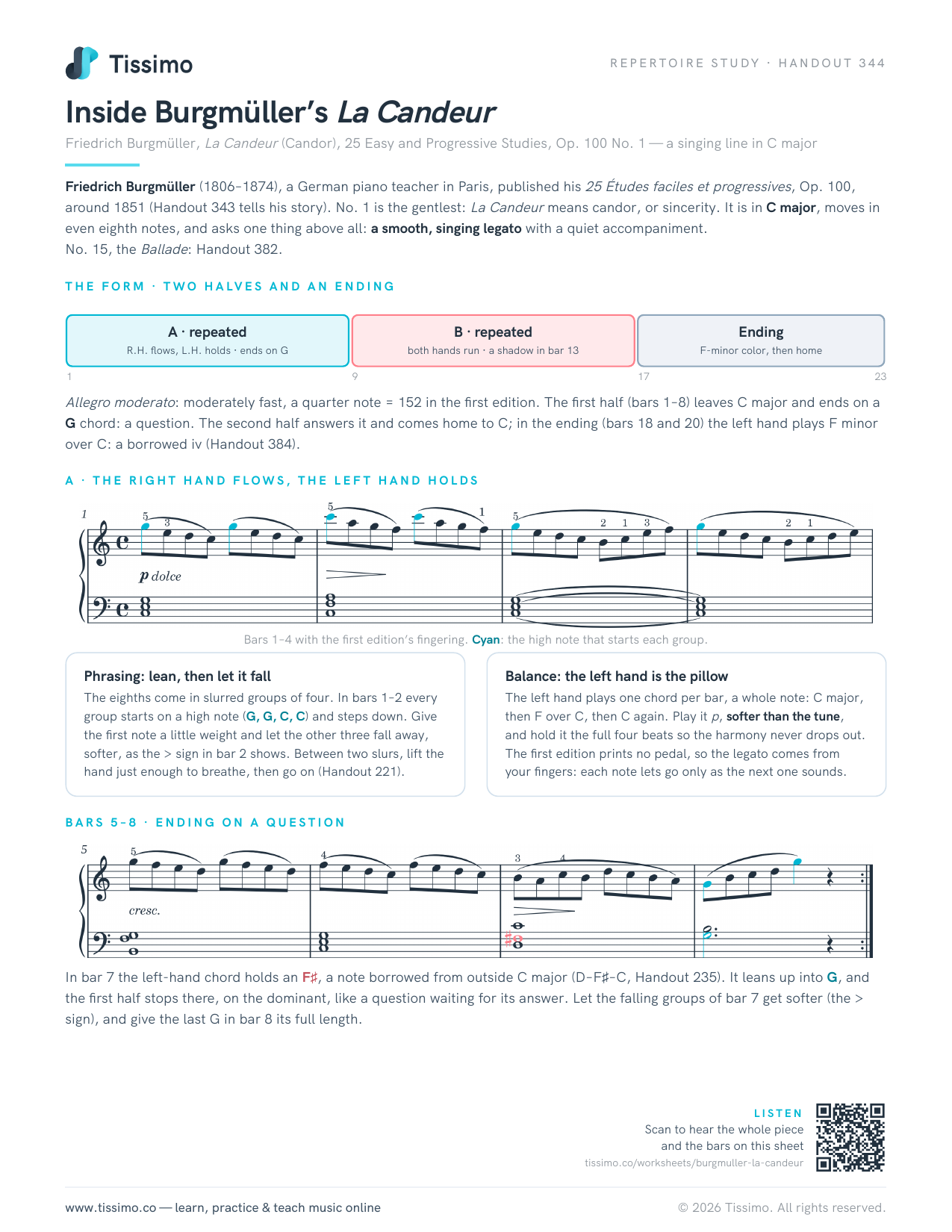 Inside Burgmüller’s La CandeurFriedrich Burgmüller, La Candeur (Candor), 25 Easy and Progressive Studies, Op. 100 No. 1 — a singing line in C major