Dynamics & Expression
Sotto Voce
Pronounced SOHT-toh VOH-cheh
Sotto voce means 'under the voice': play or sing in a hushed, subdued undertone, as if speaking confidentially. It asks for a veiled, very quiet color, not just a soft dynamic.
Sotto voce means "under the voice", that is, in an undertone. In everyday English the phrase means speaking quietly so that others cannot overhear, and in music it asks for the same quality: a hushed, subdued, inward sound, as if the music were being whispered or shared in confidence.
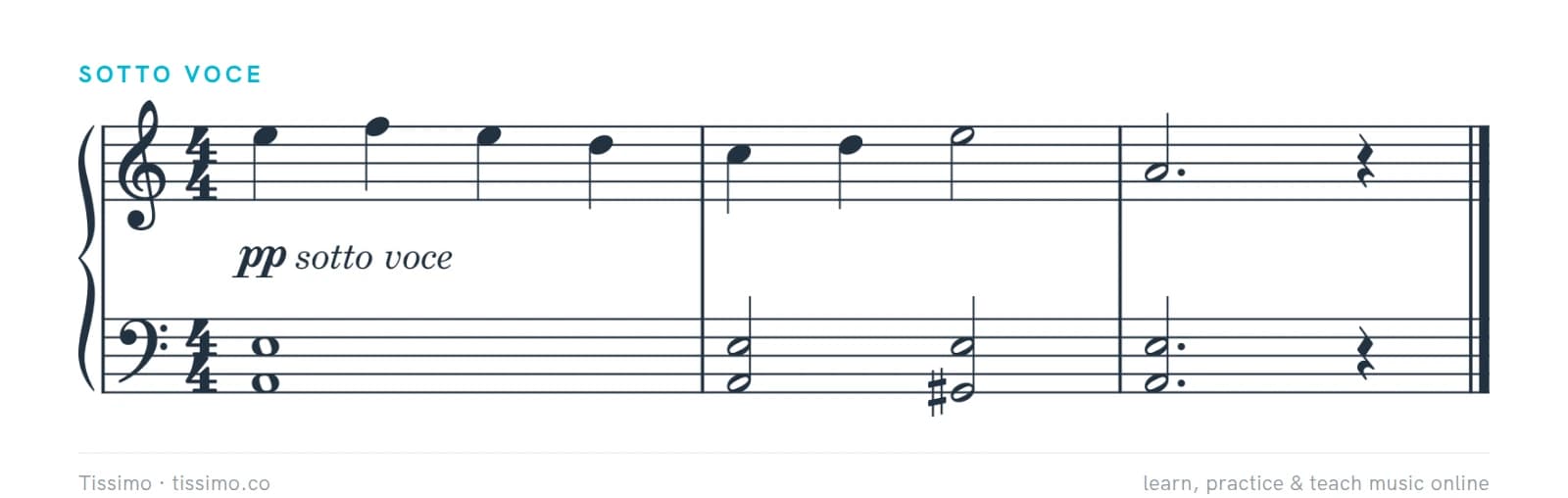
More than a dynamic
Sotto voce is usually very soft, around pp, but it is mainly about color. A plain pp can still be bright and clear; sotto voce is veiled and secretive. Composers use it for mysterious passages, quiet inner voices (see Voicing and Balance for keeping a voice in the background), and moments that should feel private. Singers produce it by lowering the volume and pulling back the brightness of the voice; instrumentalists imitate that.
Playing sotto voce at the piano
- Close to the keys. Use slow, controlled key descents, starting with the fingers resting on the keys. Softness depends on hammer speed, not simply on shallow key travel.
- Even and quiet. Keep every note at the same hushed level; one loud note breaks the spell. Calibrating your softest rungs on the Dynamic Ladder helps.
- Soften the color. The soft pedal (una corda) can help veil the tone, and light, careful use of the sustain pedal can blur the edges slightly.
- Keep the pulse. Hushed music still needs a steady rhythm; whispering is not the same as hesitating.
Related words
Pianissimo gives the level; dolce (sweet) and tranquillo (calm) are gentler moods; morendo fades away to nothing. Mezza voce, "half voice", asks for a restrained, medium volume, not as hushed as sotto voce.
Common questions
What does sotto voce mean?
In an undertone: very quietly, with a hushed, veiled color, as if speaking confidentially. In music it describes the character of the sound as well as its softness.
Practice it: free worksheets
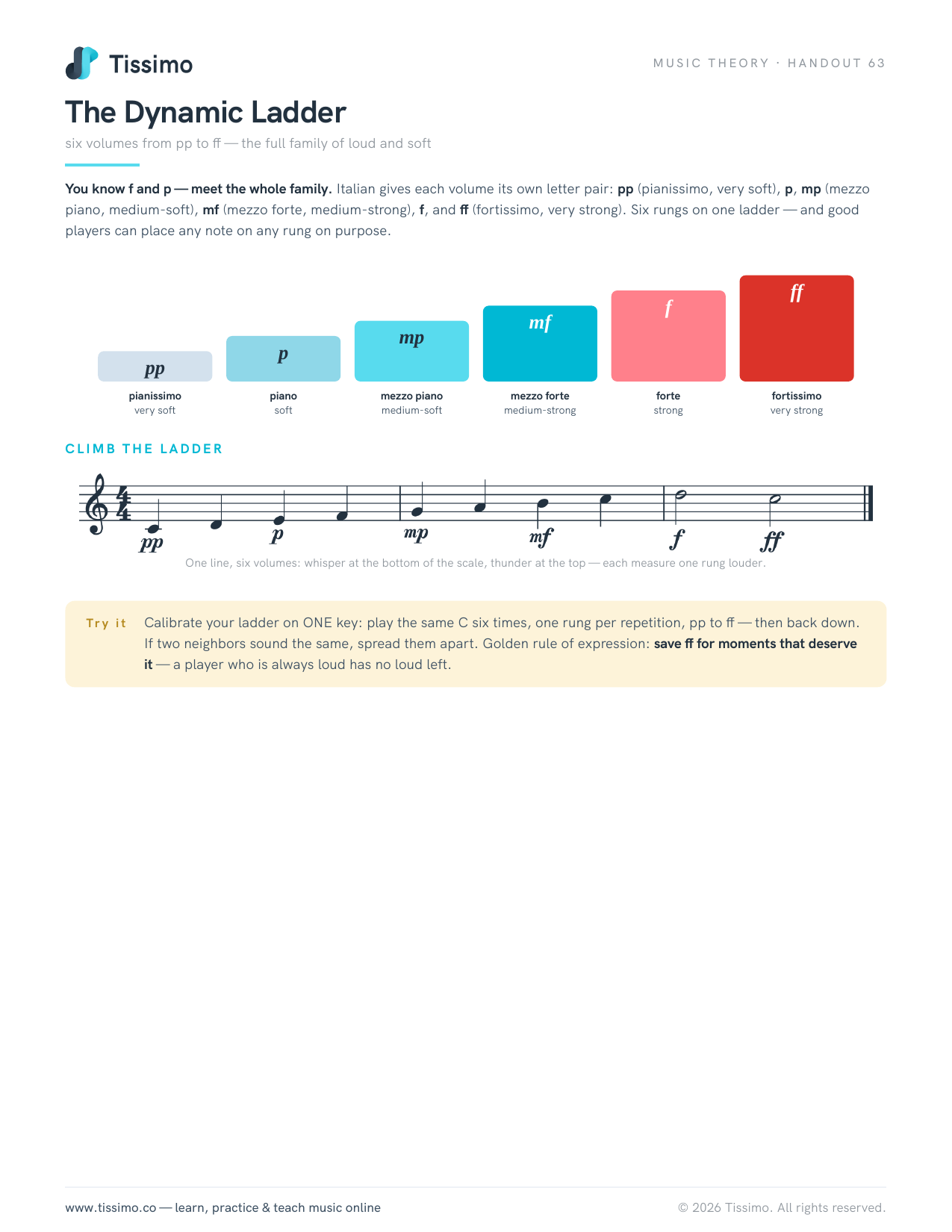 The Dynamic Laddersix volumes from pp to ff — the full family of loud and soft
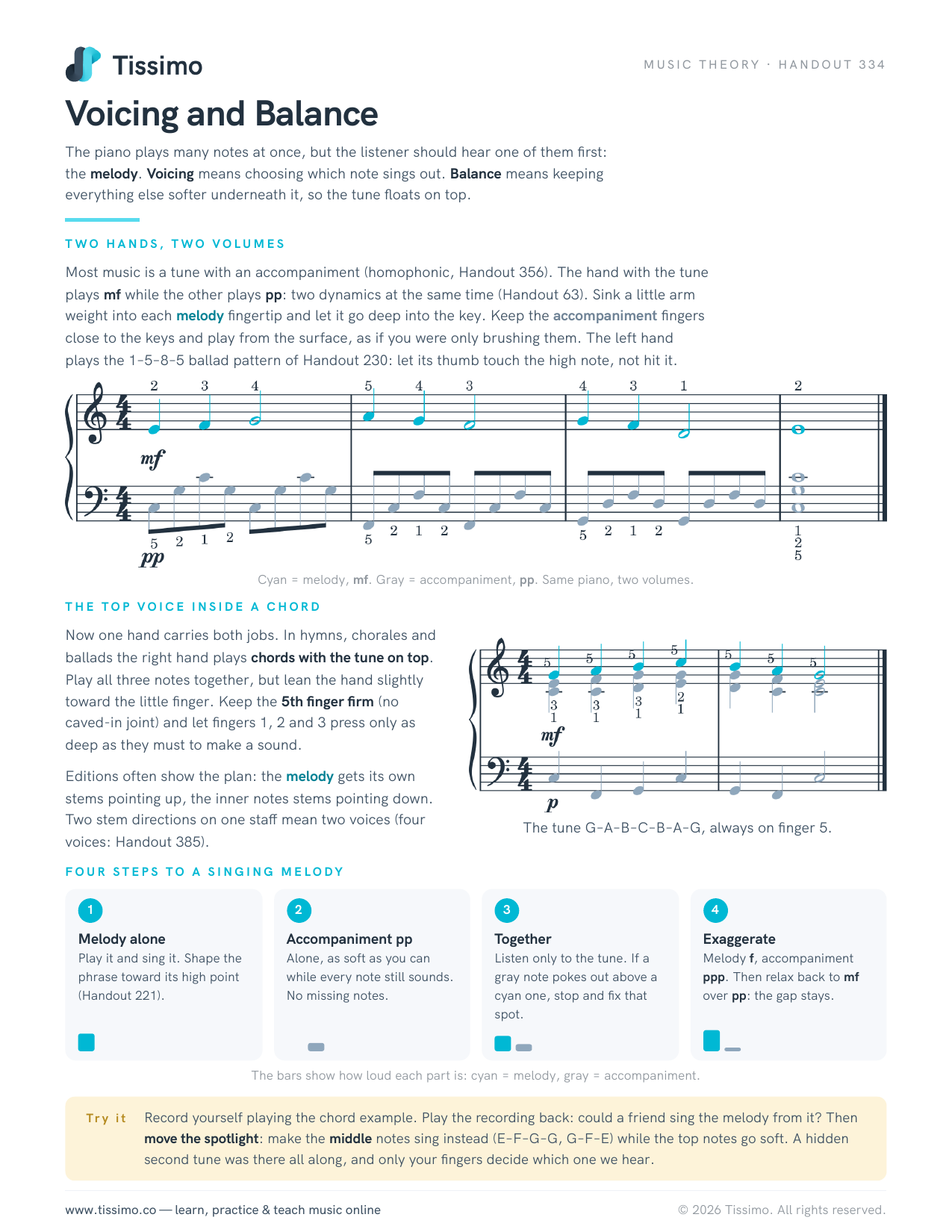 Voicing and BalanceThe piano plays many notes at once, but the listener should hear one of them first: the melody. Voicing means choosing which note sings out. Balance means keeping everything else softer underneath it, so the tune floats on top.