Dynamics & Expression
Tranquillo
Pronounced trahn-KWEEL-loh
Tranquillo means 'calmly' or 'tranquilly': play in a peaceful, unhurried way, with an even, gentle tone and no sense of pressure. It often marks a quiet section after something more active.
Tranquillo means "calm" or "tranquil". It asks for peace: an unhurried tempo, an even and gentle tone, smooth phrasing and no sense of pressure or urgency. Note the Italian spelling with a double l. It appears as an expression word below the staff or as part of a tempo heading, such as Andante tranquillo.
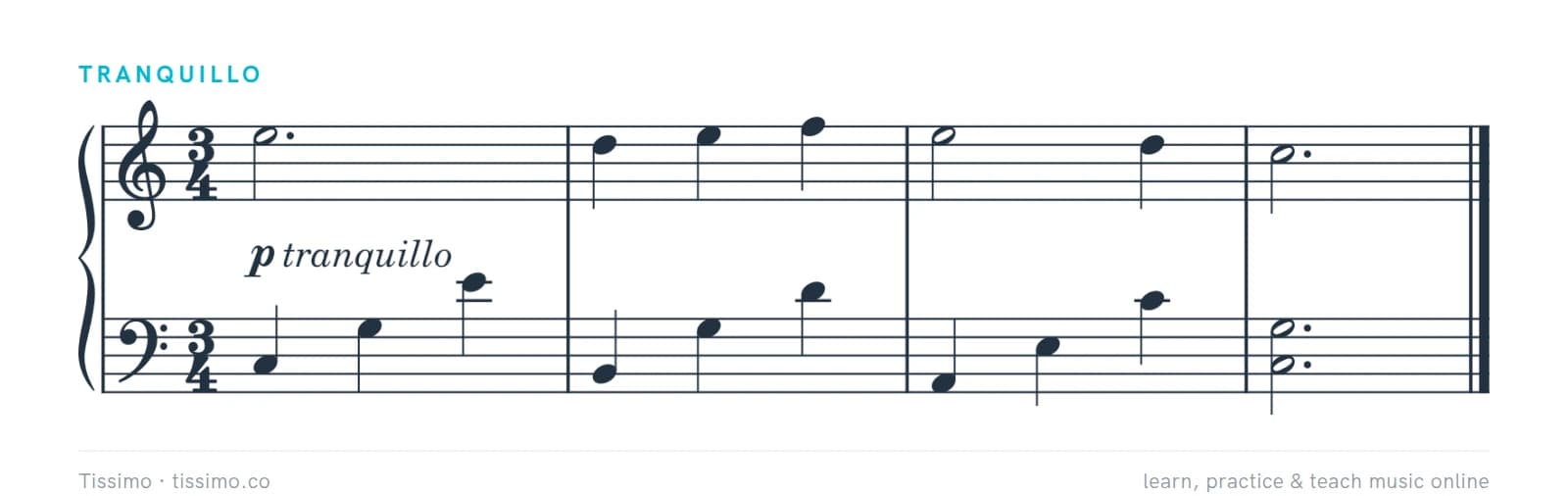
Where you find it
Composers often use tranquillo for a calm middle section after a more active passage, or for a peaceful closing. It suits slow harmonies, long notes and gentle accompaniment patterns. Because it describes mood, it can appear at any tempo: an Allegretto tranquillo is easy-going and relaxed, not slow.
Playing tranquillo
- Steady and unhurried. Calm music needs a secure, even pulse; rushing destroys the effect immediately.
- Smooth connections. Play legato, pedal cleanly with each harmony (see The Damper Pedal), and keep the accompaniment quieter than the melody, as Voicing and Balance explains.
- Gentle dynamics. Shape phrases with small swells rather than big contrasts.
- Relaxed body. Tension in the arms and shoulders shows up in the sound. Breathe with the phrases.
Related words
Dolce (sweet) and cantabile (singing) often go with tranquillo. Calmato and calmando (calmed, calming down) are close relatives. The opposites are agitato (restless) and animato (animated).
Common questions
What does tranquillo mean in music?
Calmly: play in a peaceful, unhurried way, with a smooth, even and gentle sound.
Practice it: free worksheets
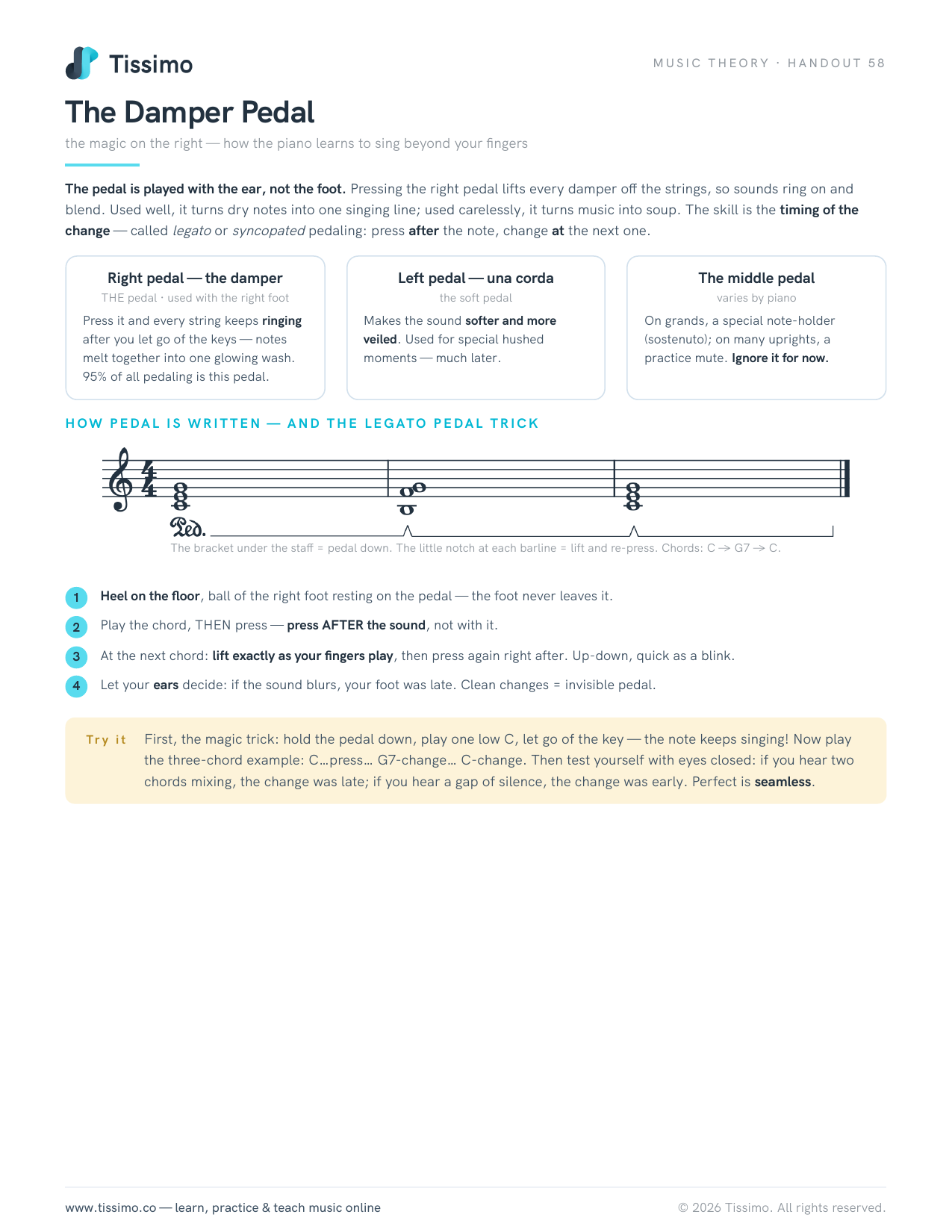 The Damper Pedalthe magic on the right — how the piano learns to sing beyond your fingers
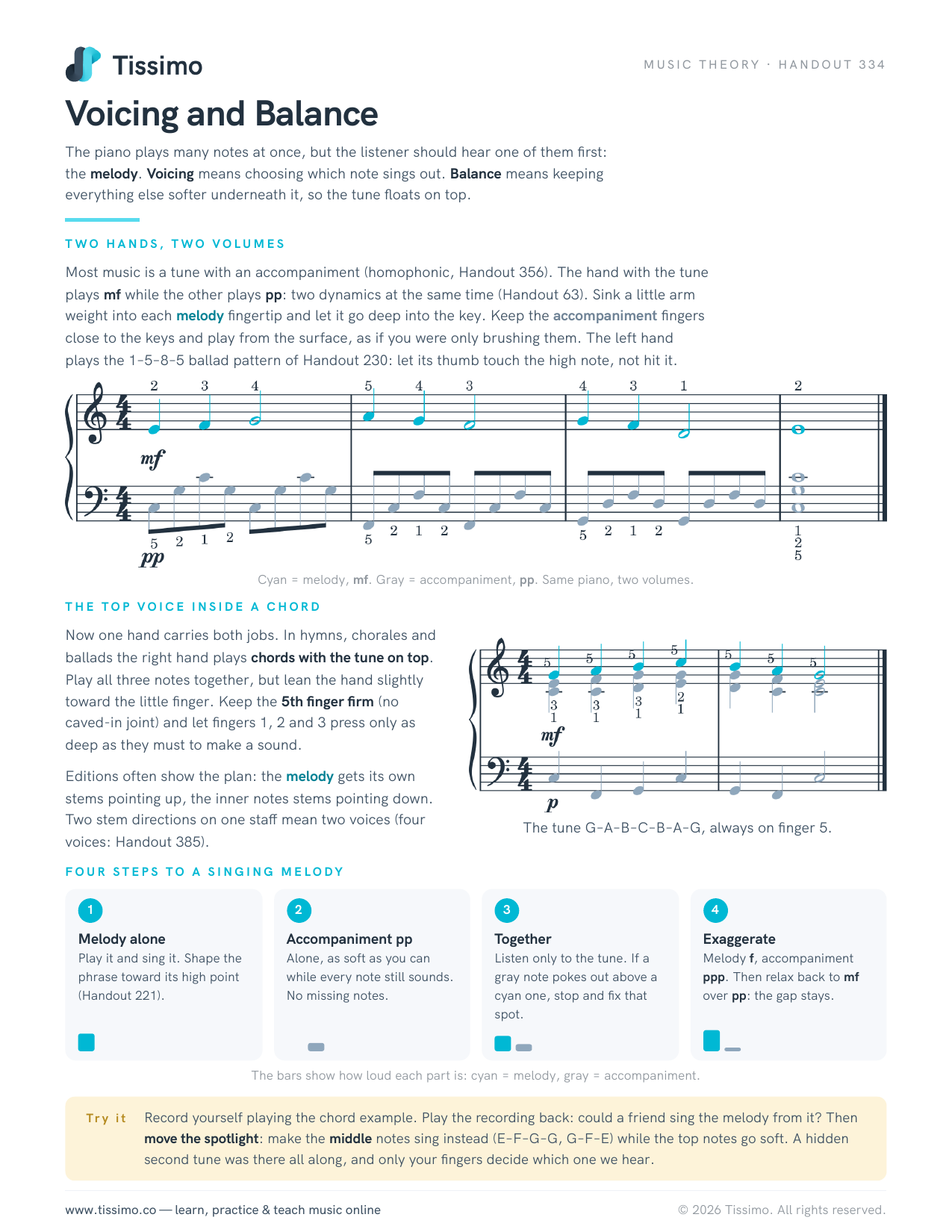 Voicing and BalanceThe piano plays many notes at once, but the listener should hear one of them first: the melody. Voicing means choosing which note sings out. Balance means keeping everything else softer underneath it, so the tune floats on top.