Technique & Performance
Transcription
A transcription is either a written version of music you have heard, such as a jazz solo written down from a recording, or a version of a piece adapted for a different instrument while keeping its original notes.
Transcribing by ear
The everyday meaning for students is listening to a recording and writing down what you hear. Jazz musicians transcribe solos to learn the language of improvisation, pop and rock musicians transcribe songs to learn them, and students transcribe melodies as ear training (called dictation when a teacher plays the music).
A practical method:
- Choose something short and clear, a few bars of melody at first.
- Listen many times before writing. Sing it until you can sing it without the recording.
- Find the key and the tonic. Where does the music feel at home?
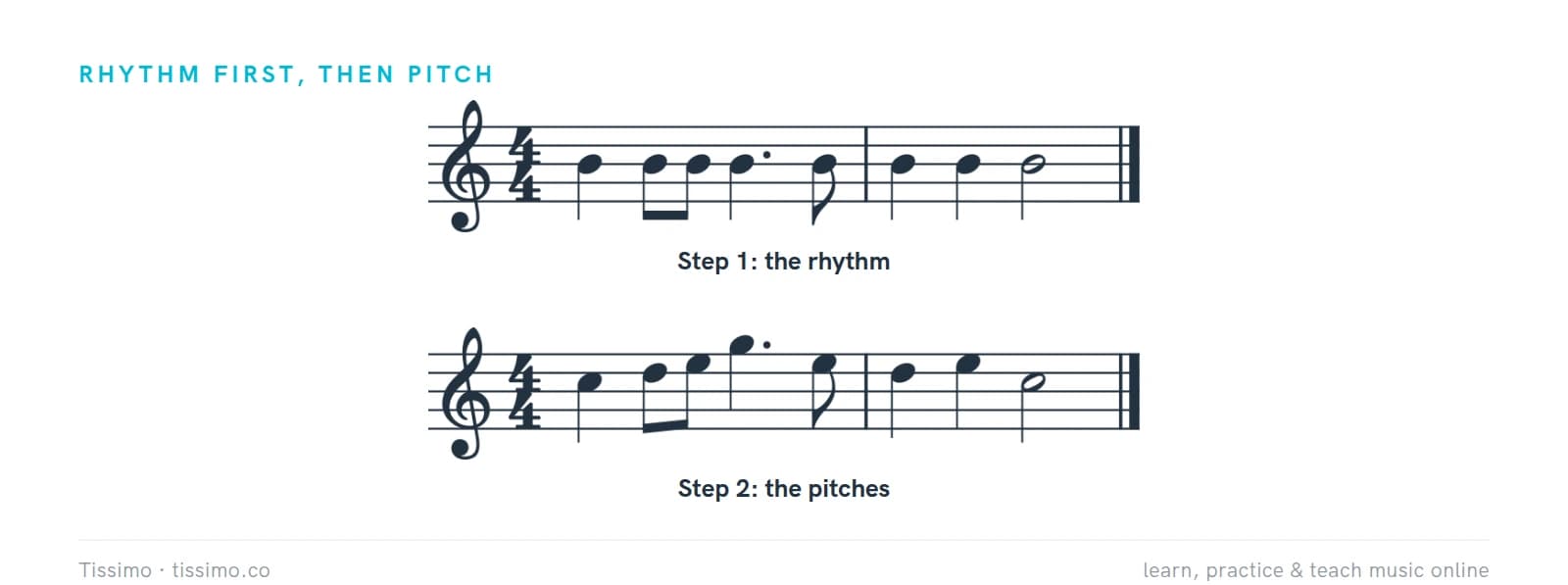
- Write the rhythm first, on a single line, and check the beats and bar lines.
- Then add the pitches, using the shape you sang: steps, skips and leaps.
- Check against the recording, phrase by phrase.
Slowing a recording down without changing its pitch, and looping a short section, makes difficult passages much easier; many audio players and every common DAW can do both.
Transcription for another instrument
The second meaning is adapting a piece for a new instrument or ensemble while keeping the original notes as closely as possible. Pianists play transcriptions of orchestral works and songs; guitarists play transcriptions of lute and keyboard music. A transcription differs from an arrangement mainly in how faithful it is: it keeps the composer's music and changes only what the new instrument requires, such as octaves, spacing, or a note that is out of range, while an arrangement may reshape the music freely.
Why it is worth the effort
Transcribing trains your ears, your rhythm reading and your sense of style all at once. Copying out a great solo or accompaniment note by note shows you exactly what makes it work, in a way no description can. Start small, transcribe regularly, and play what you transcribe along with the recording. Melodic Dictation and Ear Training: Rhythm Dictation are good first steps.
Common questions
What is the difference between a transcription and an arrangement?
A transcription keeps the original music as faithfully as possible, either writing down what you hear or moving it to another instrument. An arrangement reshapes the music, for example with new harmonies, a new texture or a new form.
How do I start transcribing music by ear?
Choose a short, clear melody, sing it until you know it, write the rhythm first and the pitches second, then check each phrase against the recording.
Practice it: free worksheets
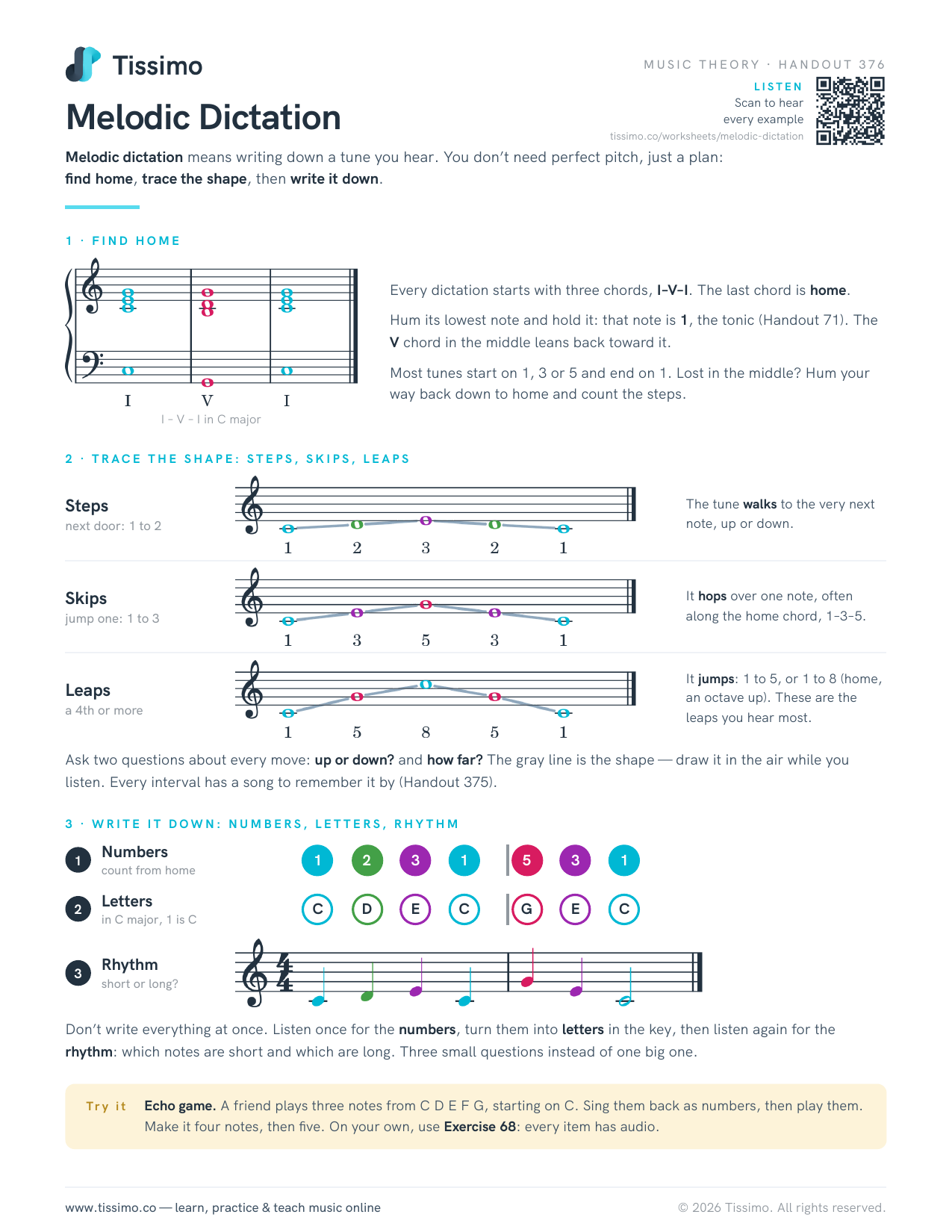 Melodic DictationMelodic dictation means writing down a tune you hear. You don’t need perfect pitch, just a plan: find home, trace the shape, then write it down.
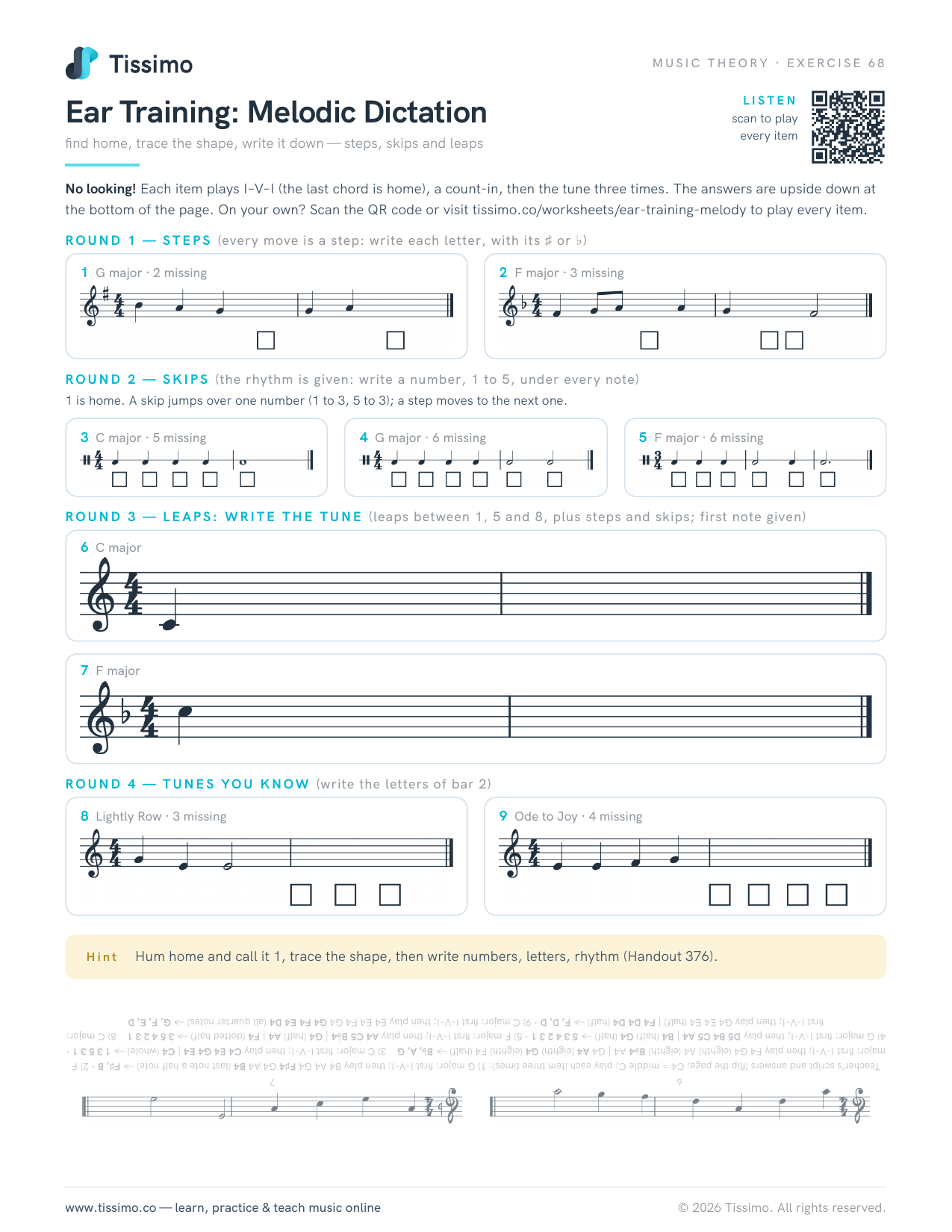 Ear Training: Melodic Dictationfind home, trace the shape, write it down — steps, skips and leaps
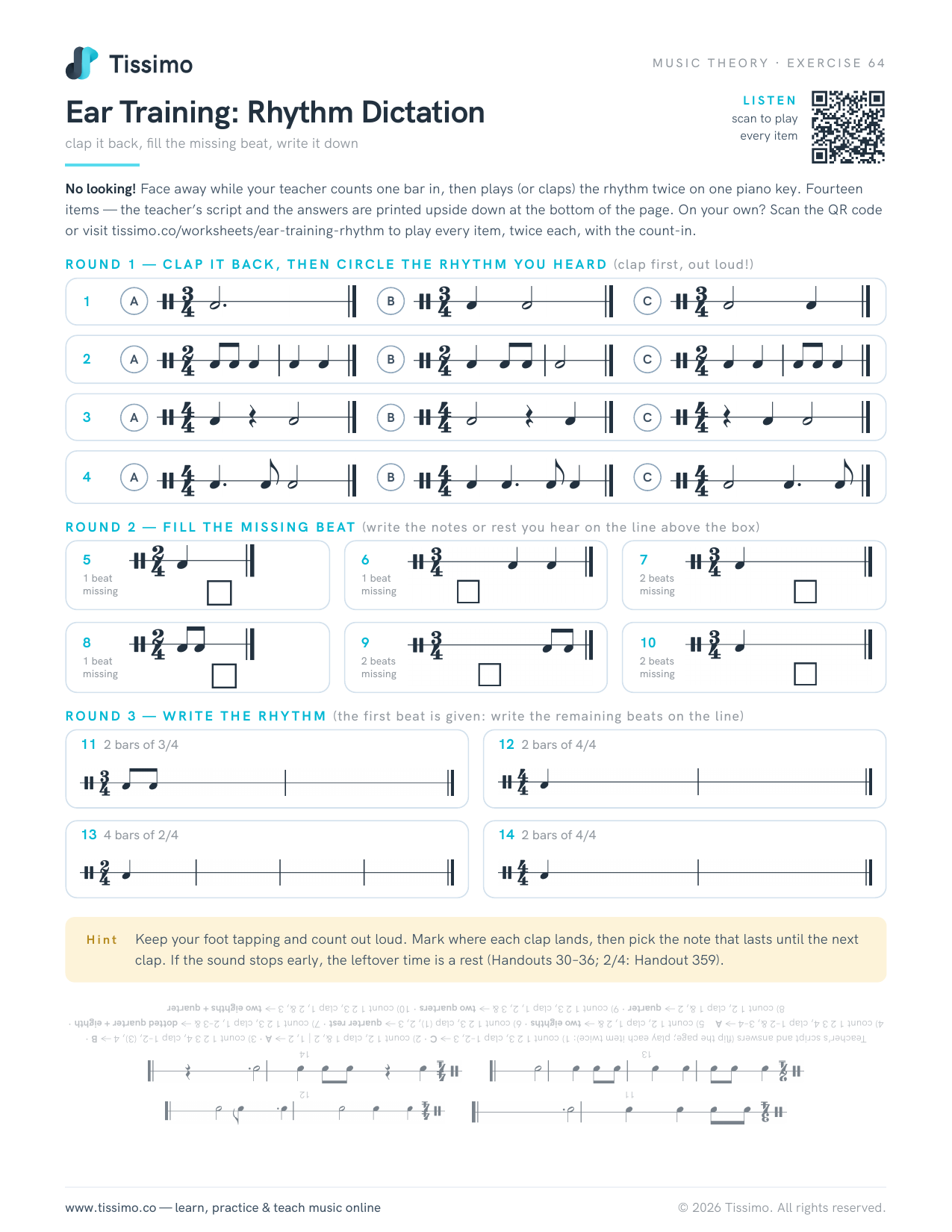 Ear Training: Rhythm Dictationclap it back, fill the missing beat, write it down