Technique & Performance
Hand Independence
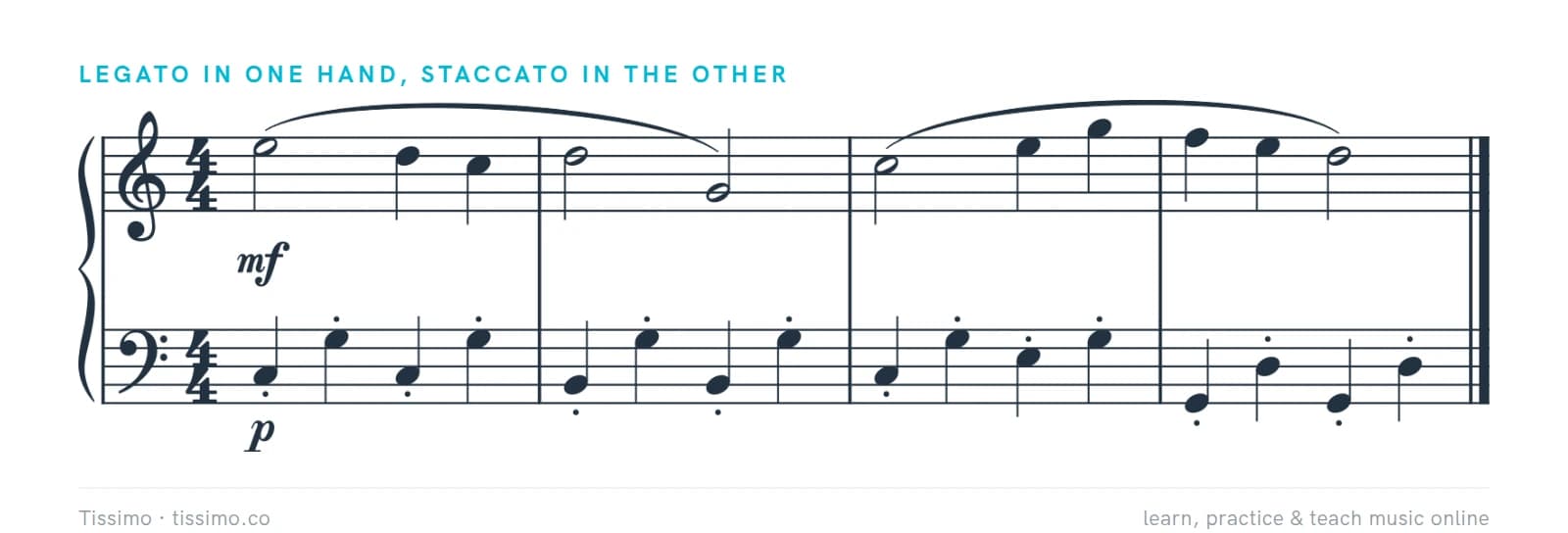
Hand independence is the ability to make each hand do something different at the same time, such as a legato melody in one hand and detached notes in the other, or two different rhythms or dynamics at once.
At the keyboard your two hands rarely do the same thing. The right hand may sing a smooth melody while the left plays short bass notes. One hand plays loudly, the other softly; one holds a long note while the other moves quickly. Hand independence is the skill of keeping both jobs going without one hand copying the other. Drummers need the same skill with hands and feet, and guitarists need it between the fretting and the plucking hand.
Why the hands want to copy each other
Your hands like to move as a pair. When one plays legato, the other tends to slur too; when one gets louder, so does the other. That is normal, and it is why playing hands together feels much harder than playing each hand alone. Independence is learned like any other skill: slowly, correctly, and many times over.
A step-by-step method
- Hands separately first. Learn each hand until it plays its notes, rhythm, articulation and dynamics without your attention.
- Find the meeting points. Mark the beats where both hands play together. These are your anchors.
- Slow hands together. Play at half speed or slower, slow enough that nothing goes wrong, and count aloud.
- Add one difference at a time. In the example, play both hands legato first. Then make the left hand staccato. Then add the dynamics: right hand mf, left hand p.
- Speed up in small steps. Use a metronome and raise it a few beats per minute only when the slower speed feels easy.
- Give the weaker hand extra work. Often the left hand is less sure and the right hand covers for it. Practice it alone until it can lead.
Exercises to try today
- Tap steady quarter notes with your left hand on your knee while your right hand taps eighth notes. Then swap hands.
- Play a C five-finger pattern in the right hand while the left hand repeats a low C on every beat.
- Play a scale hands together with the right hand forte and the left hand piano. Then reverse it.
- Once those feel secure, try two notes in one hand against three in the other, a simple polyrhythm.
Sight-Reading: Set 3 is a gentle first look at reading hands together, and How to practice explains how to structure the slow work.
Common questions
How do I get better at playing piano hands together?
Learn each hand separately until it is secure, then put them together very slowly, counting aloud and adding one difference at a time. Speed up only when the slow version feels easy.
Practice it: free worksheets
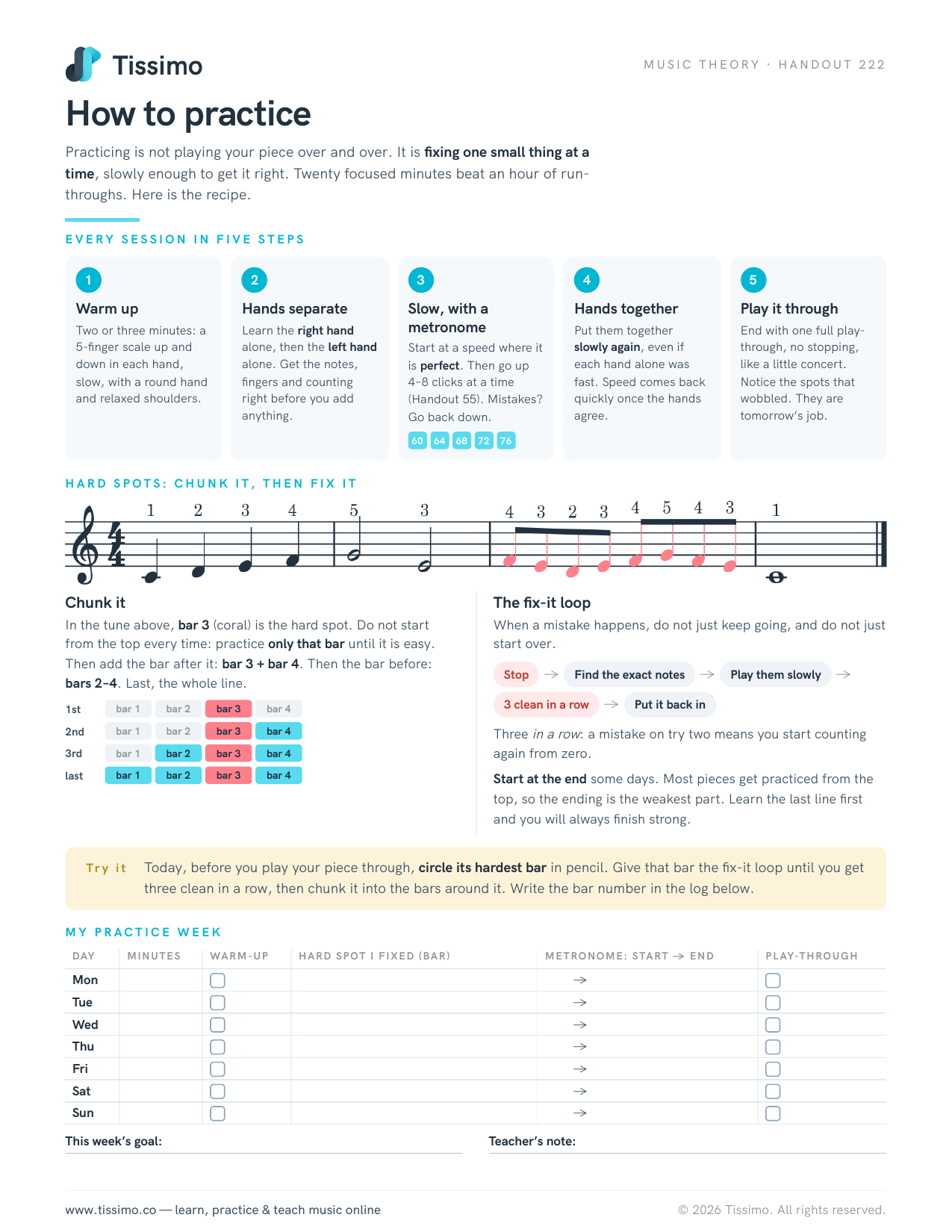 How to practicePracticing is not playing your piece over and over. It is fixing one small thing at a time, slowly enough to get it right. Aim for short, focused sessions, not hour-long run-throughs. Here is the recipe.
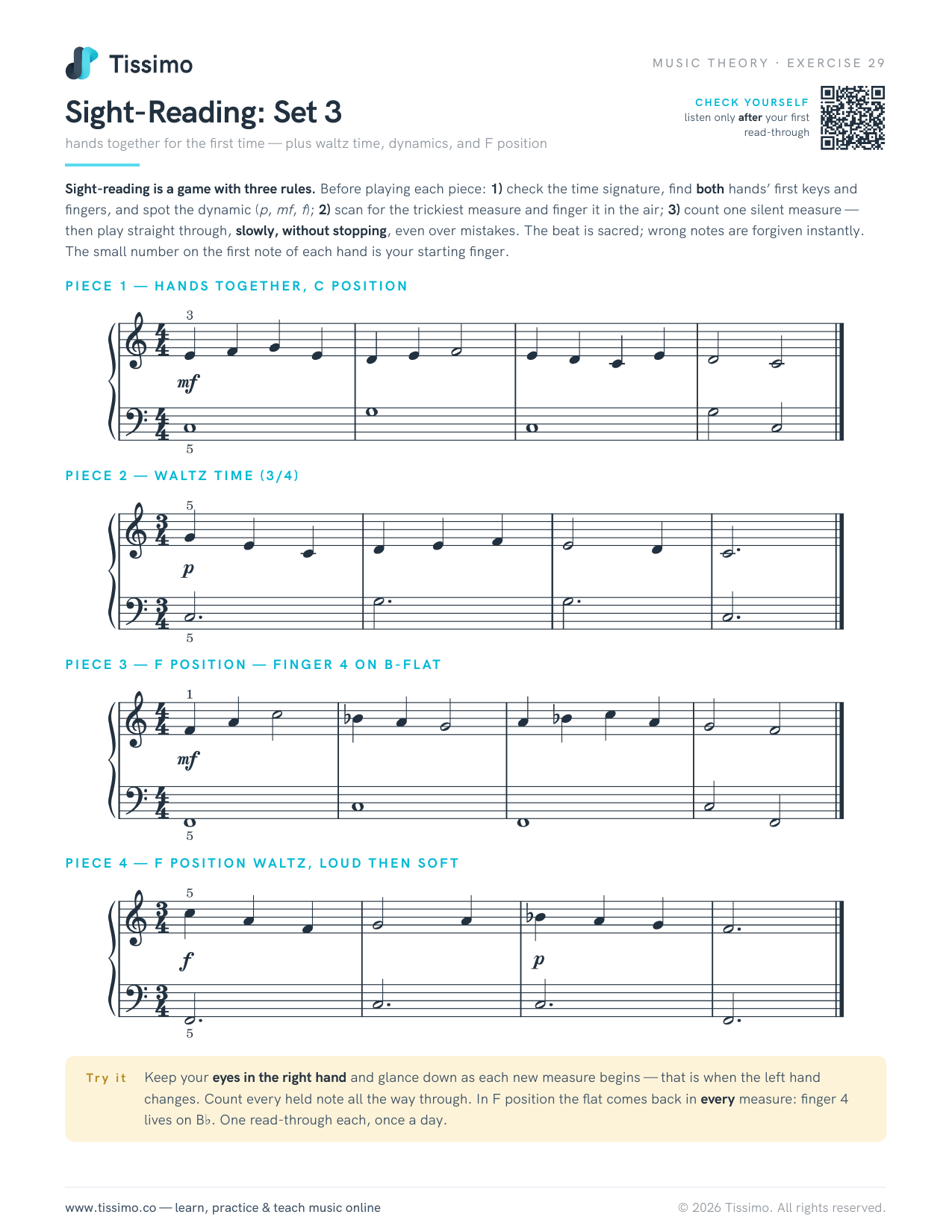 Sight-Reading: Set 3hands together for the first time — plus waltz time, dynamics, and F position
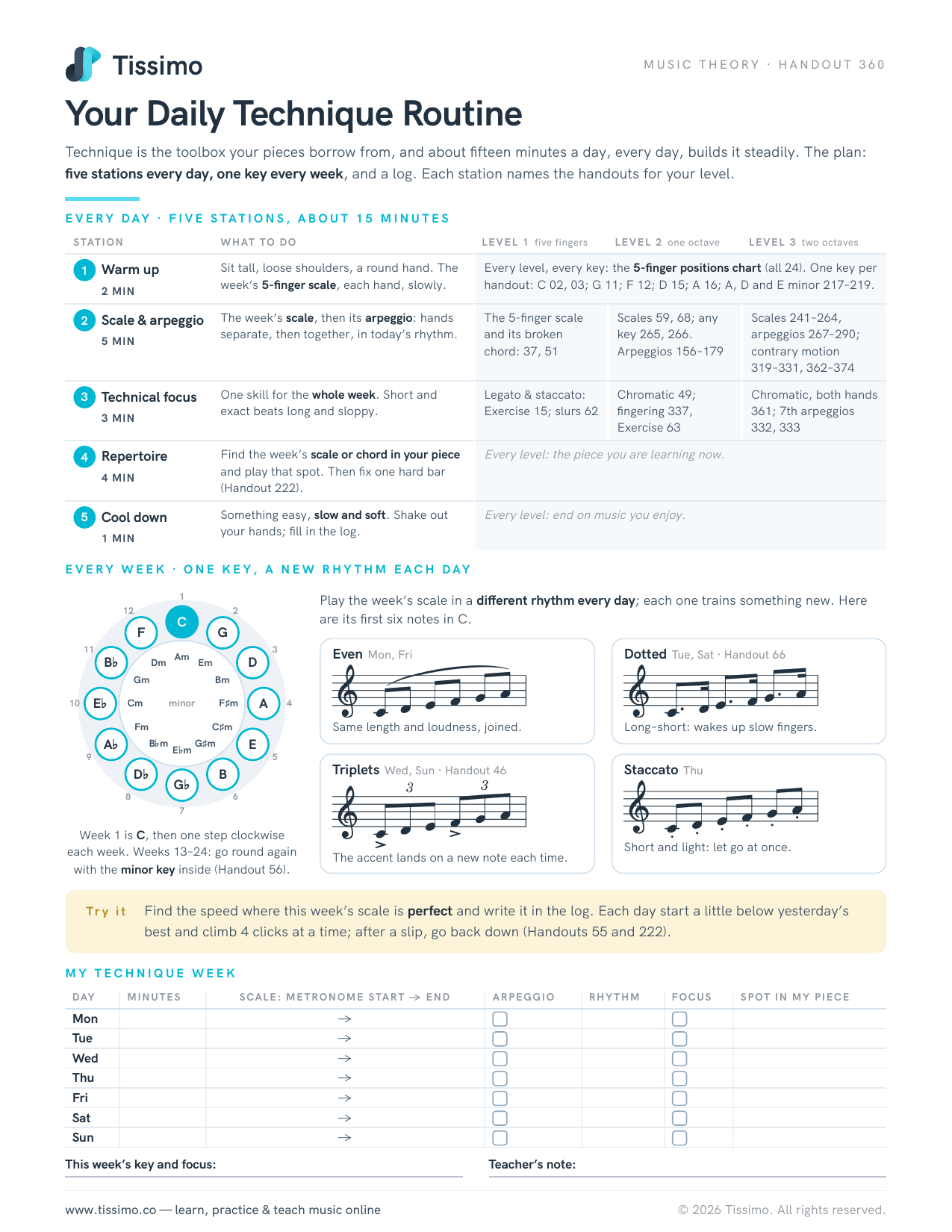 Your Daily Technique RoutineTechnique is the toolbox your pieces borrow from, and about fifteen minutes a day, every day, builds it steadily. The plan: five stations every day, one key every week, and a log. Each station names the handouts for your level.
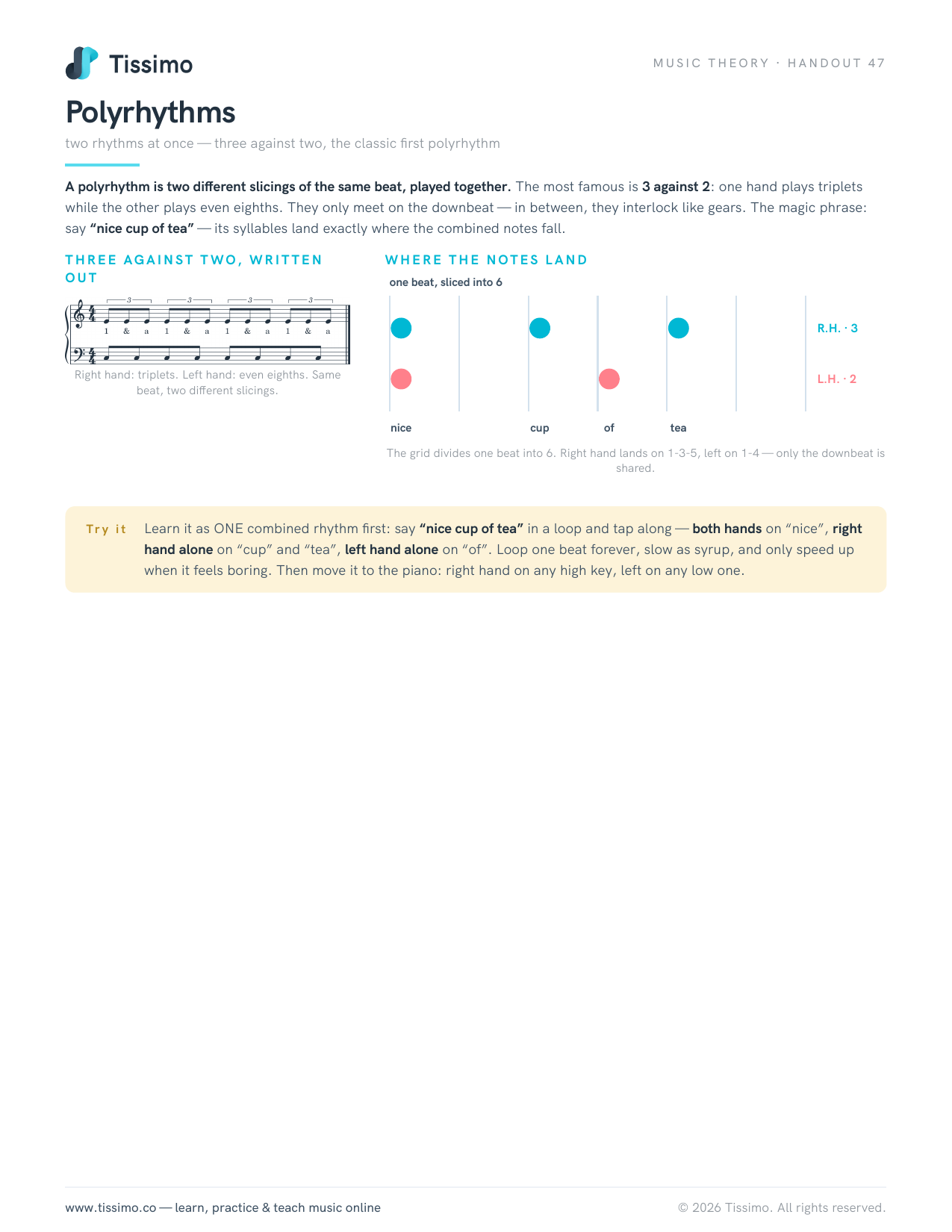 Polyrhythmstwo rhythms at once — three against two, the classic first polyrhythm