Technique & Performance
Deliberate Practice
Deliberate practice is focused, goal-directed practice: working on one specific weakness at a time, slowly enough to get it right and with immediate feedback, instead of simply playing pieces through.
Playing a piece from beginning to end again and again feels like practice, but much of it isn't. Every run-through repeats the mistakes along with everything else, and the hard bars get the same few seconds as the easy ones. Deliberate practice turns that around. The term comes from research into how experts in many fields train, and the core idea is simple: find exactly what isn't working, work on that one thing with full attention, check the result, and repeat. How to practice sets out the recipe for music students.
The four ingredients
- A specific goal. Not "practice the sonata" but "play bars 9 to 12 hands together at 80 beats per minute with the written fingering, three times in a row without a slip".
- Full attention. Short, focused sessions beat long, distracted ones. Stop or take a break when your concentration fades.
- Feedback. Listen critically, record yourself, use a metronome, and work with a teacher who can hear what you can't.
- Just beyond your comfort zone. If a passage is easy, raise the tempo or the musical demand; if it keeps falling apart, make the task smaller or slower.
Techniques that work
- Slow practice. Play slowly enough to be accurate, then speed up in small steps.
- Chunking. Work on a few beats or one bar at a time, and include the first note of the next chunk so the joins get practiced too.
- Fix it on the spot. When you make a mistake, stop, work out why, and play the spot correctly several times before moving on.
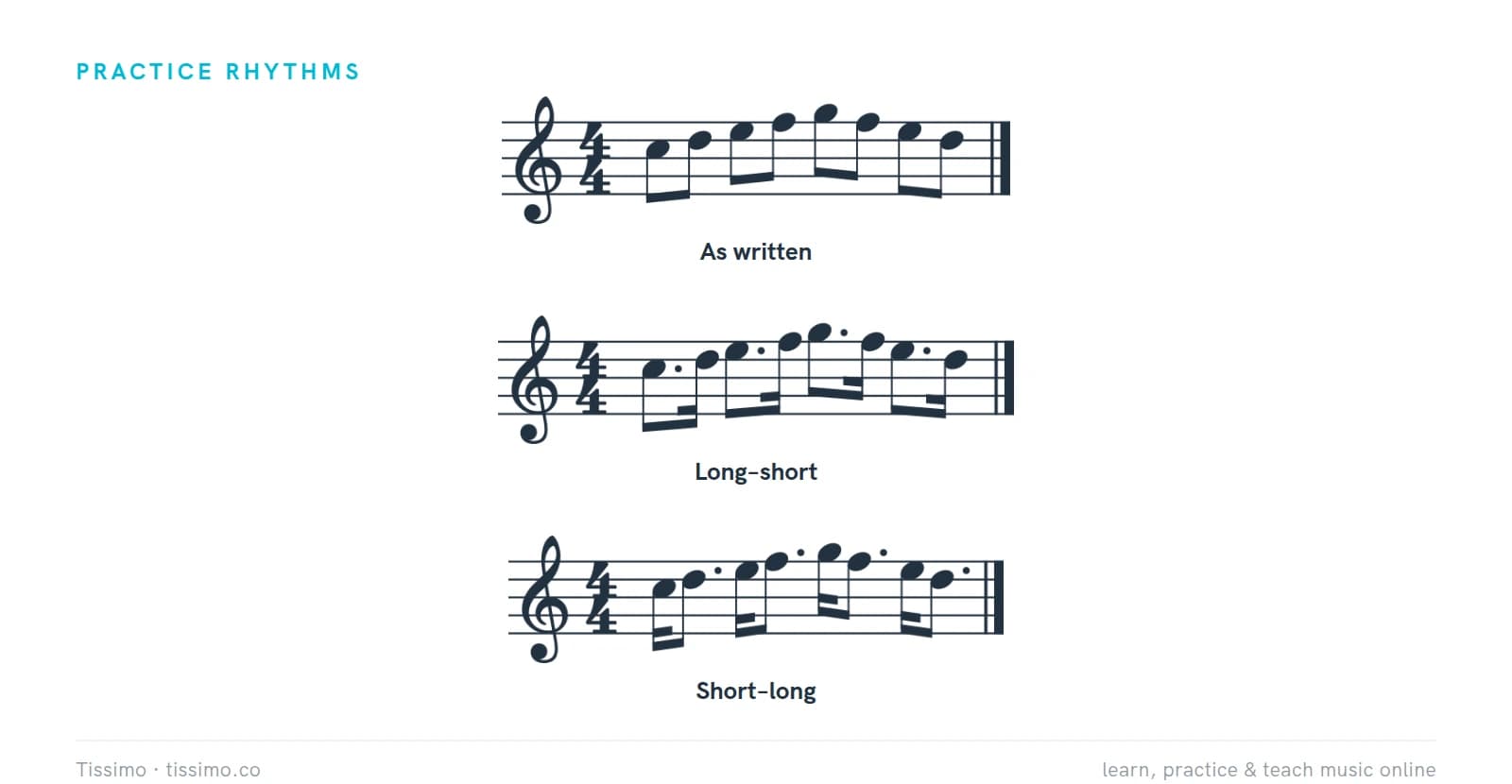
- Practice rhythms. Play an even passage in uneven rhythms, long–short and then short–long, as in the example. Each version makes you control different notes, and the even rhythm usually feels easier afterward.
- Hands separately, then together (hand independence).
- Start in different places, not only at bar 1, so the ending gets as much work as the opening. It also helps memorization.
Planning your week
Spread your practice across the week rather than cramming it into one day; regular sessions help new skills stick. A useful daily outline: a short warm-up and technique (scales, arpeggios), focused work on the hardest spots of your current piece, a little sight-reading, and finally one musical run-through to hear the whole. Keep a short practice log: what you worked on, what improved, what to do tomorrow. Your Daily Technique Routine gives you a ready-made structure, and a teacher can set goals with you in lessons.
Common questions
How long should I practice each day?
There is no single answer. Short, focused sessions often do more than long, unfocused ones; for a young beginner even 15 to 20 minutes a day can be plenty. Increase the time as your concentration and goals grow.
Is it bad to play a piece through over and over?
Not bad, just inefficient on its own. Run-throughs show you where the problems are and build stamina, but the problems themselves are fixed by slow, targeted work on short sections.
Practice it: free worksheets
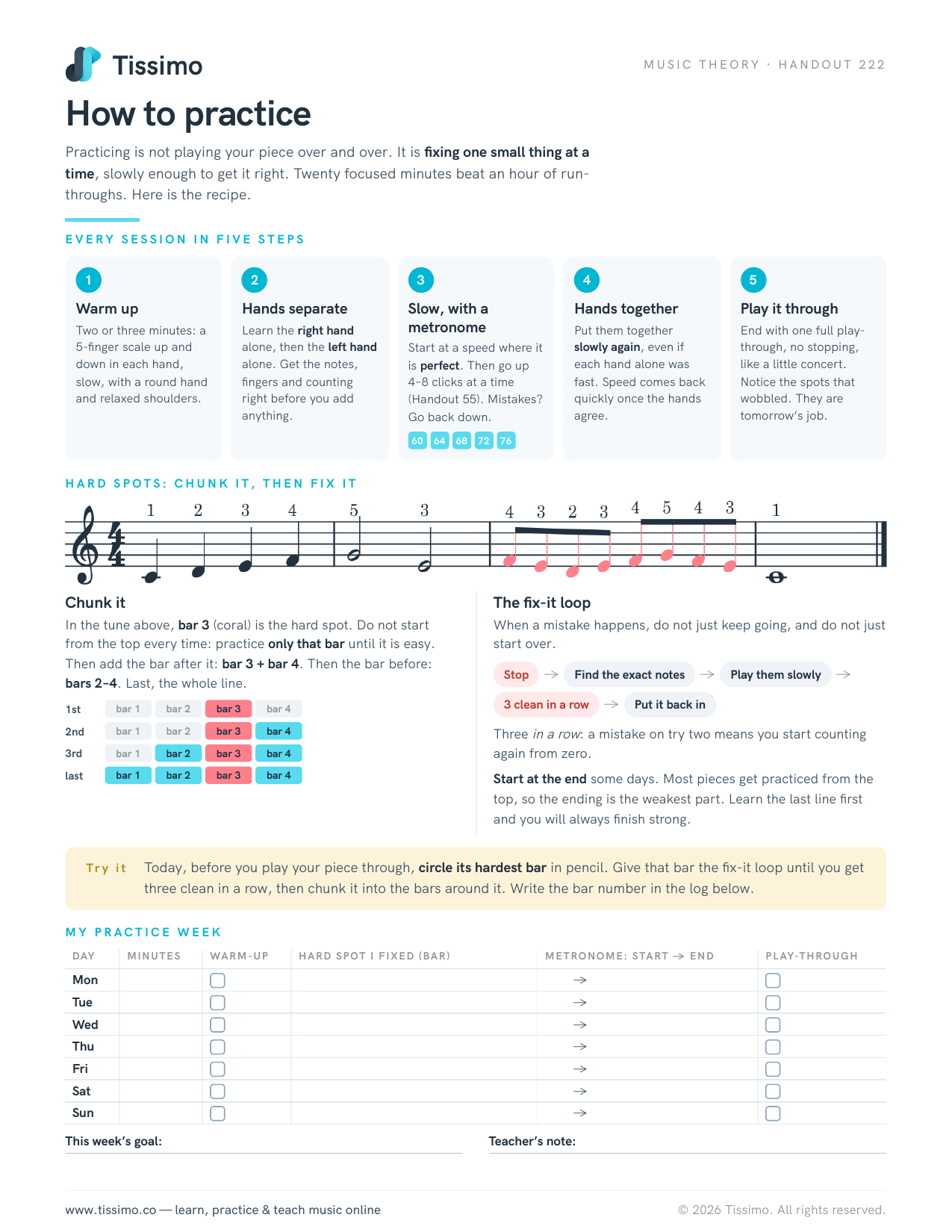 How to practicePracticing is not playing your piece over and over. It is fixing one small thing at a time, slowly enough to get it right. Aim for short, focused sessions, not hour-long run-throughs. Here is the recipe.
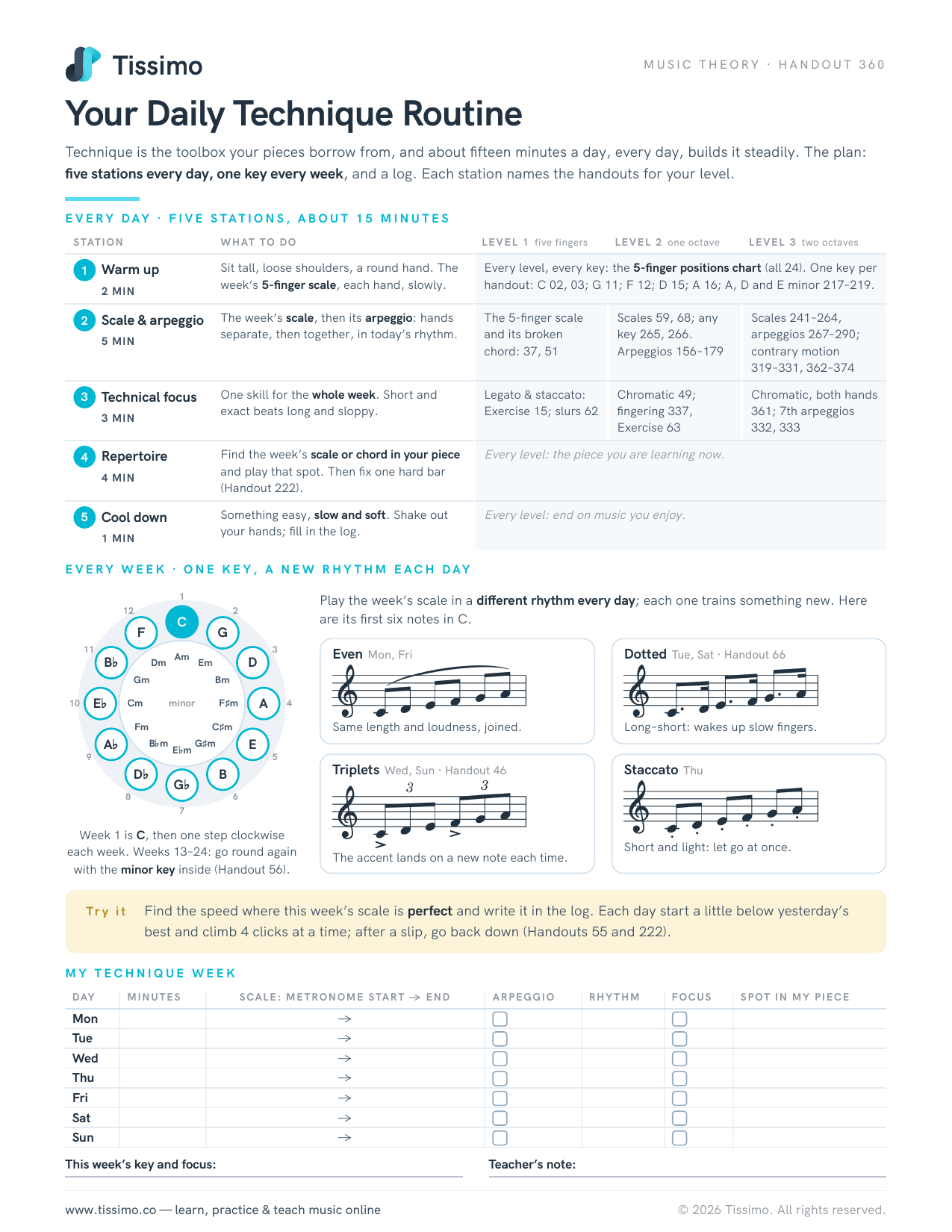 Your Daily Technique RoutineTechnique is the toolbox your pieces borrow from, and about fifteen minutes a day, every day, builds it steadily. The plan: five stations every day, one key every week, and a log. Each station names the handouts for your level.
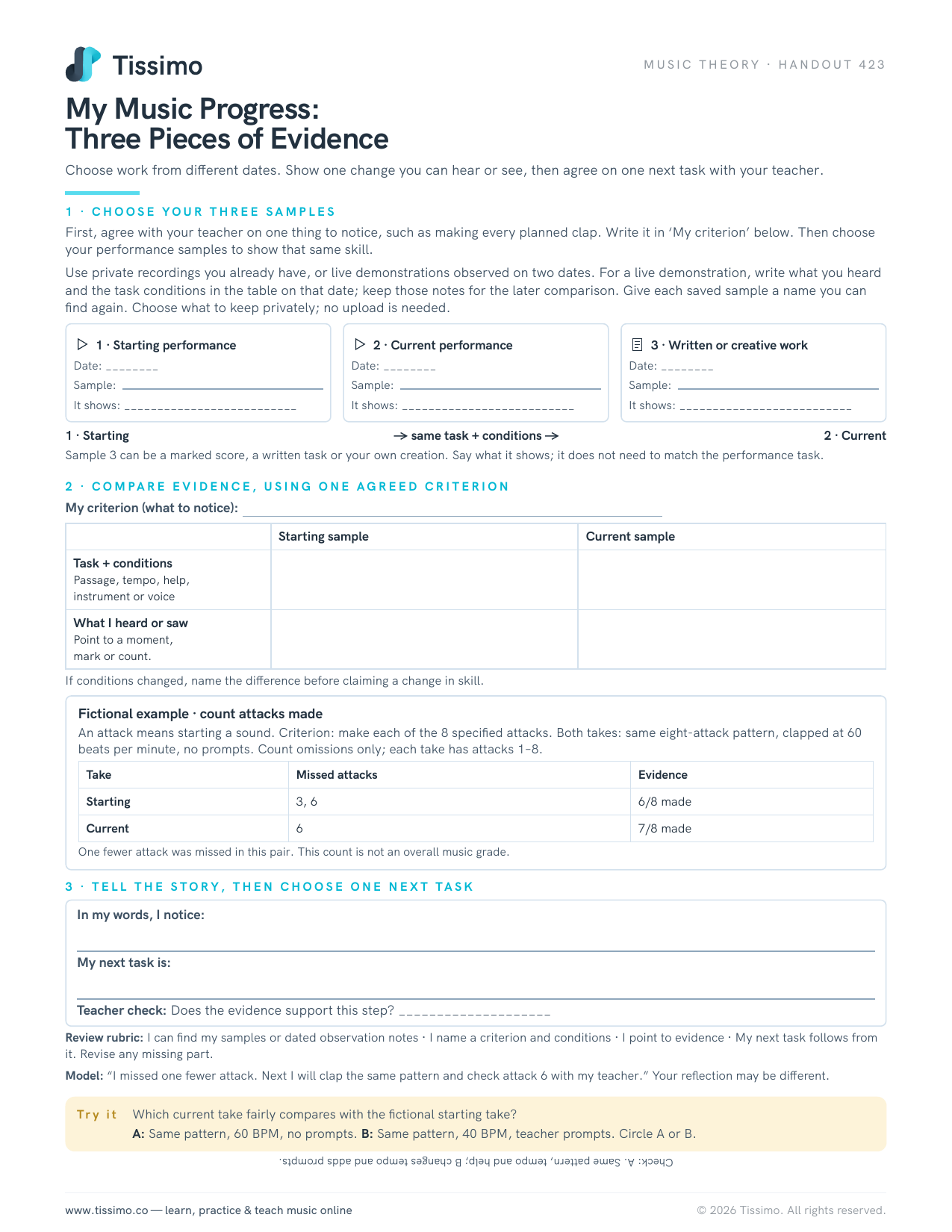 My Music Progress: Three Pieces of EvidenceChoose work from different dates. Show one change you can hear or see, then agree on one next task with your teacher.
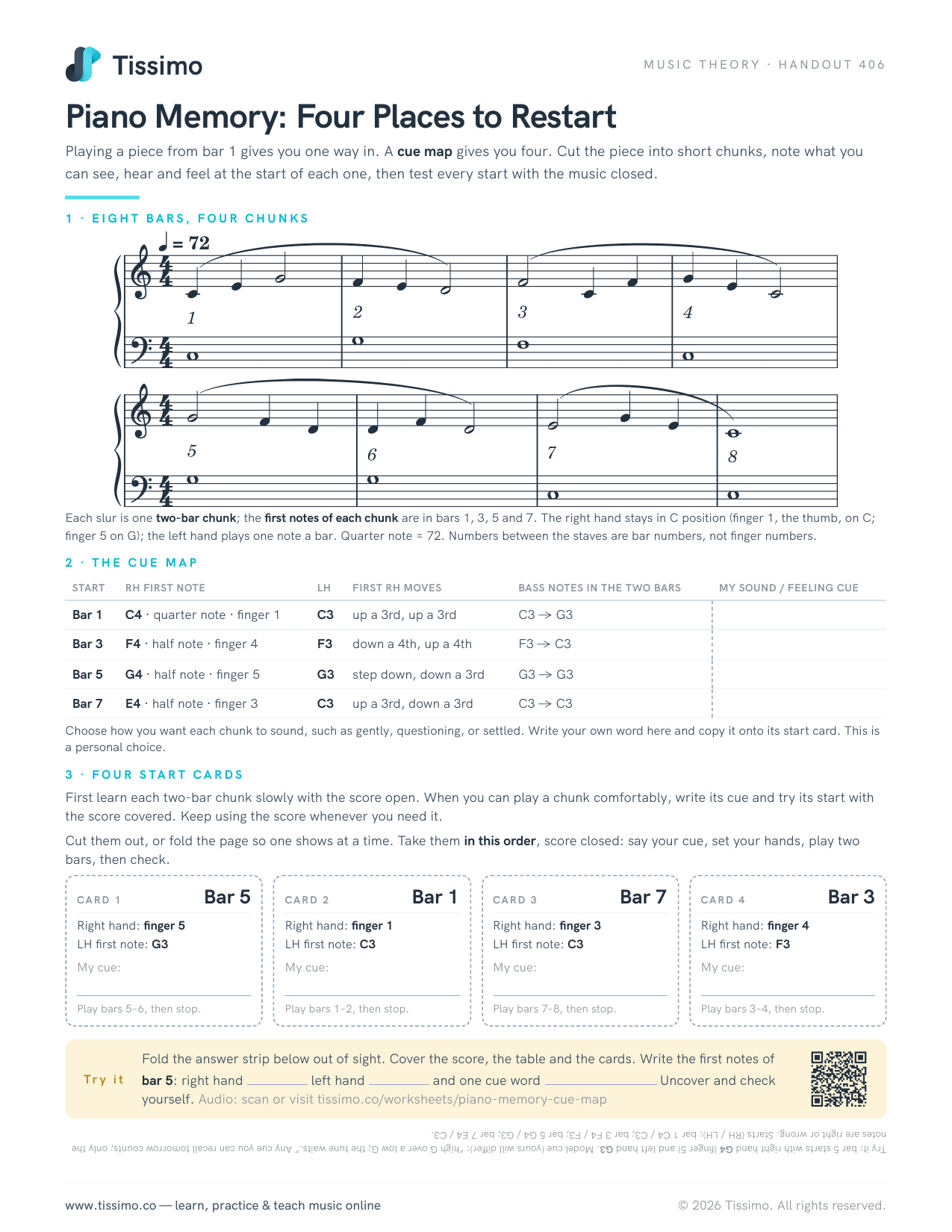 Piano Memory: Four Places to RestartPlaying a piece from bar 1 gives you one way in. A cue map gives you four. Cut the piece into short chunks, note what you can see, hear and feel at the start of each one, then test every start with the music closed.