Music Production
Delay (Echo)
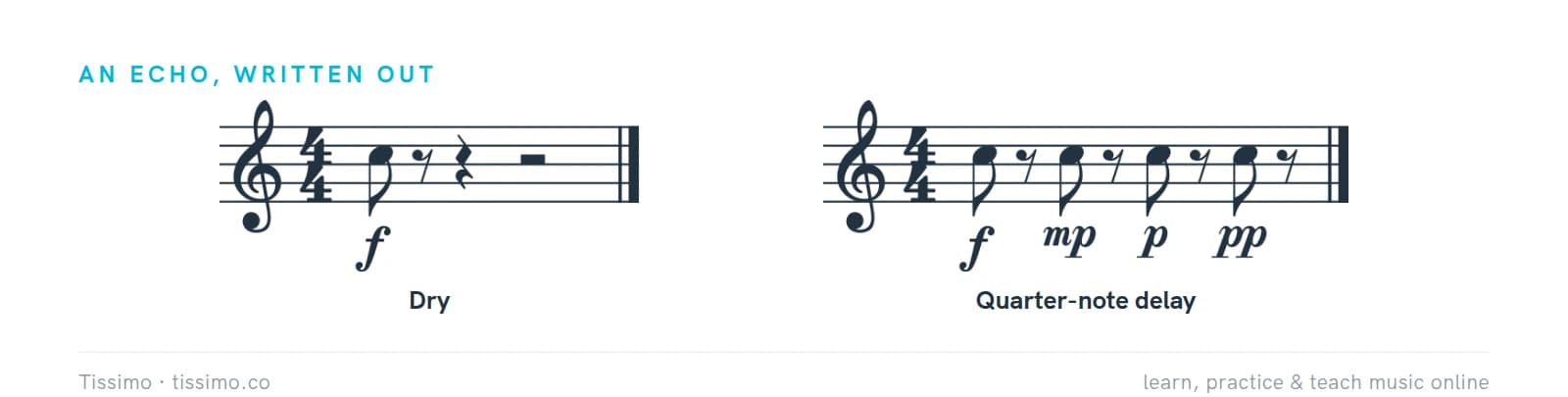
Delay is an audio effect that records a sound and plays it back a moment later, producing one or more distinct echoes. The delay time, the number of repeats and their level are adjustable, and often set in time with the tempo.
Shout toward a distant cliff and your voice comes back a moment later: an echo. A delay effect does the same thing on purpose. It stores the incoming sound and plays it back after a set time, mixed with the original. Unlike reverb, whose countless reflections blend into a smooth wash, a delay's repeats are separate and recognizable.
The controls
- Delay time: the gap between the original and the echo, in milliseconds or as a note value synced to the tempo.
- Feedback: how much of the echo is fed back in to be repeated again. Low feedback gives one or two repeats; high feedback a long trail.
- Mix (wet/dry): how loud the echoes are compared with the original.
- Filtering: many delays darken each repeat, imitating older tape and analog units and keeping the echoes in the background.
Delay times and tempo
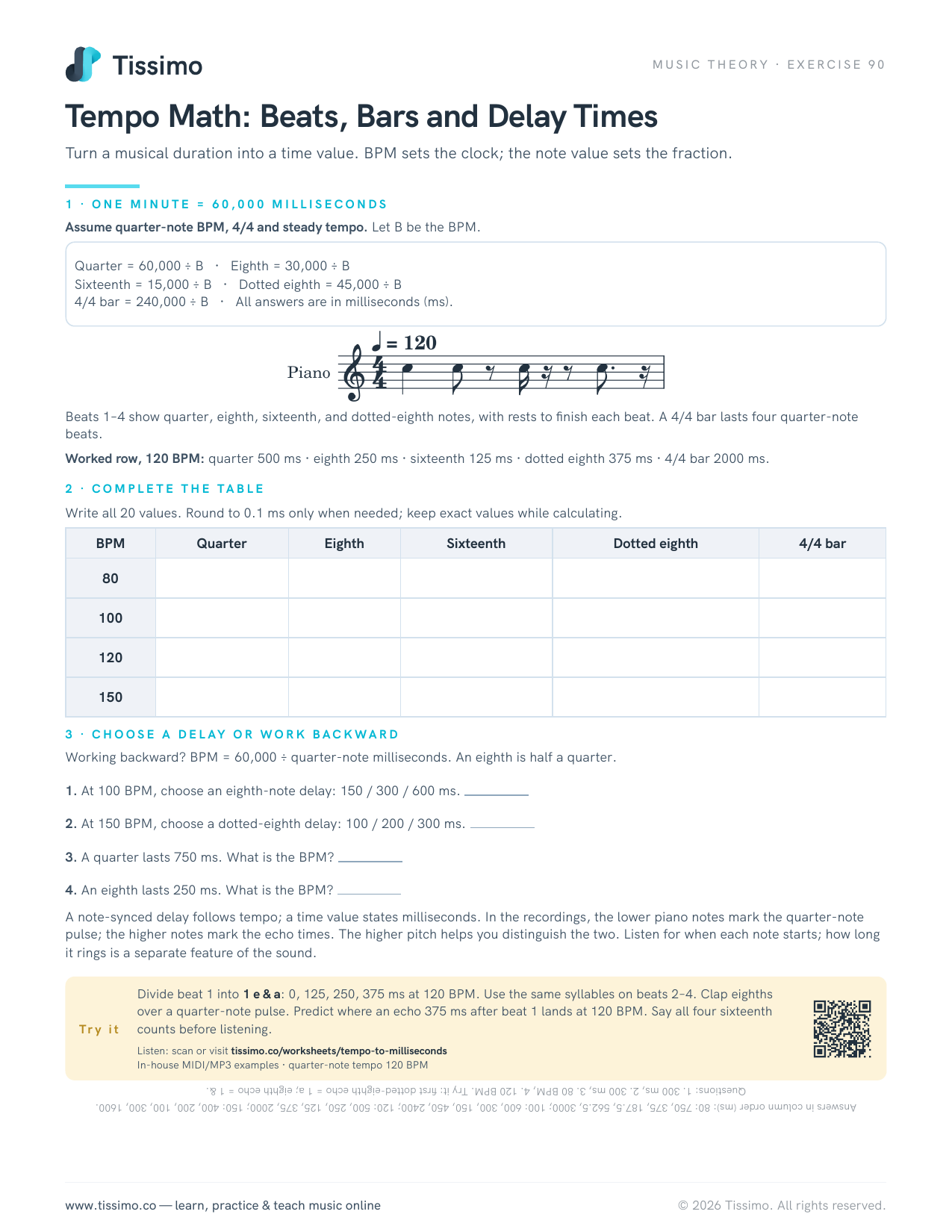
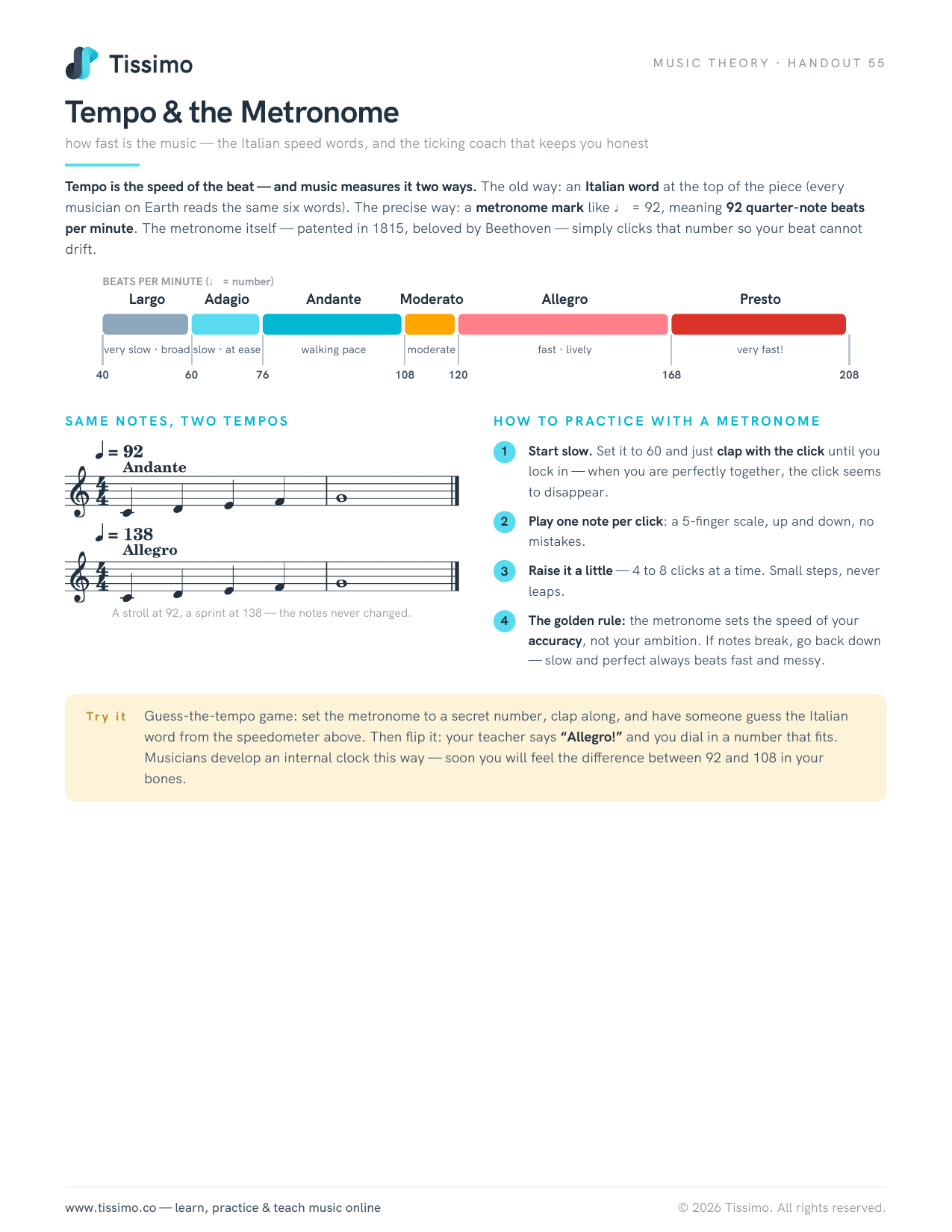
A delay that falls on the beat locks into the groove. When BPM counts quarter notes, one quarter note lasts 60,000 ÷ BPM milliseconds. If a score gives another beat unit, the same formula gives that unit's duration instead.
- At 120 BPM, a quarter note is 500 ms, an eighth note 250 ms and a dotted eighth 375 ms.
- At 90 BPM, a quarter note is about 667 ms and an eighth note about 333 ms.
Most DAWs and delay plug-ins can sync to the project tempo automatically, but knowing the arithmetic helps with hardware units and when choosing note values. Tempo Math: Beats, Bars and Delay Times practices the conversions.
Common delay styles
- Slapback: a single short, quick echo that gives a lively, doubled feel; a classic sound on vocals and guitar in early rock and roll.
- Rhythmic delays: quarter-note, eighth-note or dotted-eighth repeats that add a pulsing pattern to a guitar or synth line.
- Ping-pong: repeats that alternate between the left and right speakers (panning).
- Throws: the delay switched on for a single word or phrase, often at the end of a line.
- Very short delays, from a few milliseconds to a few tens of milliseconds, stop sounding like echoes and instead thicken or color the sound; doubling, chorus and flanging effects are built from them.
Using delay in a mix
As with reverb, put the delay on a send so several parts can share it, and filter the repeats so they don't crowd the lead (mixing). Turn the feedback down if the echoes start to blur the next phrase. In a sparse arrangement, a single well-timed echo can fill the space beautifully.
Common questions
How do I calculate delay time from BPM?
When the tempo counts quarter notes, divide 60,000 by BPM for a quarter note in milliseconds: at 120 BPM, 500 ms. An eighth is 250 ms and a dotted eighth 375 ms. For another beat unit, convert from that unit first.
Is delay the same as echo?
In everyday use, yes. Strictly, delay is the effect, and the echoes are the repeats it produces.