Music Production
Sampling
Sampling is taking a short piece of recorded sound, such as a drum hit, a vocal phrase or a bar of an old record, and reusing it as material in new music, often looped, chopped up or played from a keyboard.
A sample is any short recording used as a building block. It might be a single drum hit, one note of a piano, a breath, a sound recorded outdoors, or several bars of an existing record. A sampler, in hardware or software, stores samples and plays them back on command, usually from keys or pads. Sampling is central to hip-hop and to many styles of electronic dance music, and it is how most realistic virtual instruments work.
Ways to use a sample
- One-shots: single hits, such as a kick drum, a snare or a chord stab, triggered from pads or placed on the steps of a sequencer.
- Loops: a bar or two of a groove repeated under a new track (loop).
- Chopping: slicing a phrase into short pieces and rearranging them into a new rhythm or melody.
- Playing it across the keyboard: on a simple sampler, a higher key plays the sample faster, so it sounds higher and shorter. Modern software can also change pitch and length separately (time-stretching).
- Multisampled instruments: a virtual piano or violin is built from many recorded notes at several loudness levels, so it responds to how hard you play (velocity).
Sampling and permission
Using a recognizable part of someone else's recording is a legal question as well as a musical one. In many countries, releasing music that contains a sample of a commercial recording requires permission from the owner of the recording and from the owner of the composition, a process called clearing the sample. Sample packs made for music-making come with a license that says how you may use them, so read it. Recording sounds you create yourself avoids copying someone else's recording, but recording another person's composition or performance can still involve rights or permissions.
A second meaning
In digital audio, "sampling" also names the process of measuring a sound wave many times per second to turn it into numbers; how often that happens is the sample rate and bit depth. The two meanings are linked: a sampler plays back digitally sampled sound.
Try it
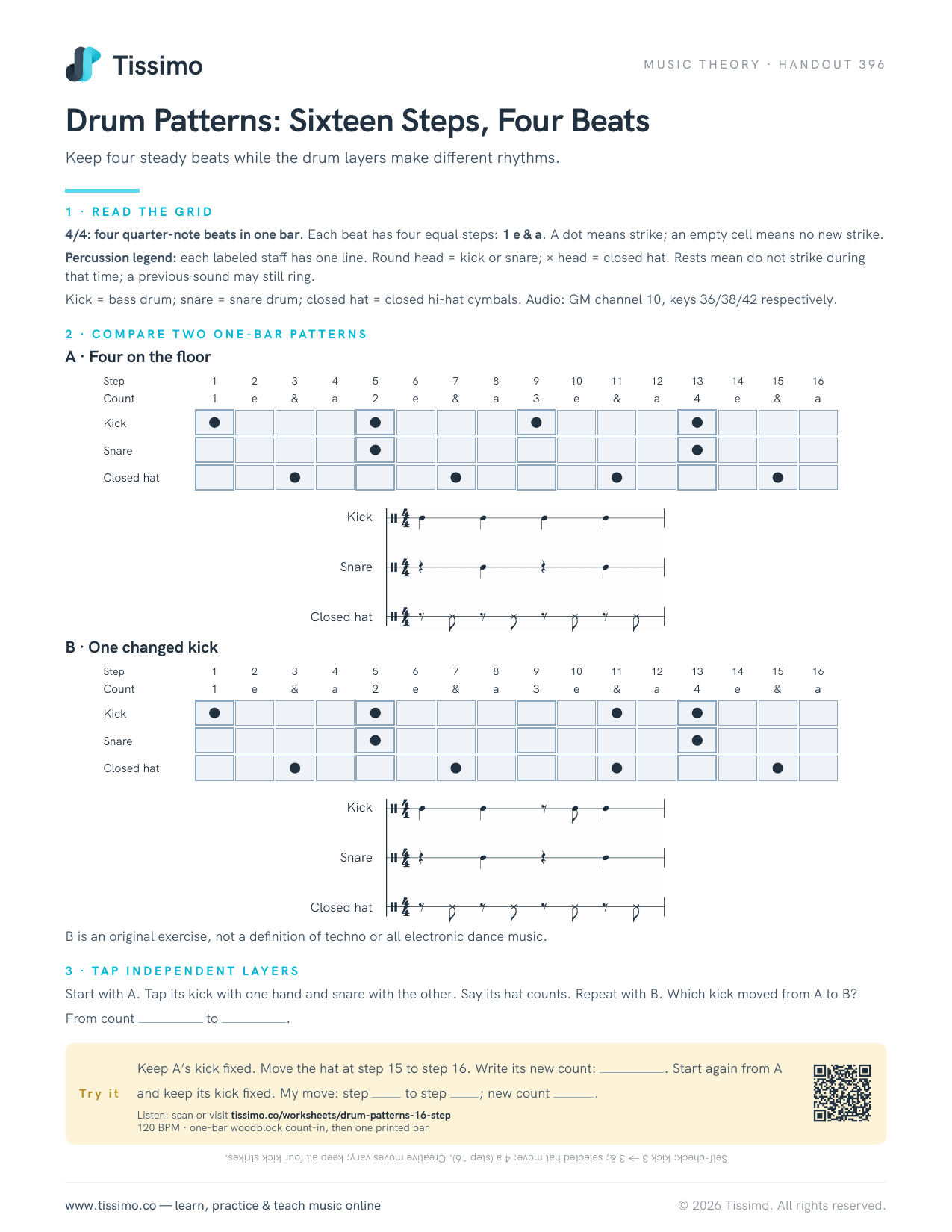
Record yourself tapping a table, clapping and saying one short word. Load the three sounds into your DAW's sampler or drum pads, and build a one-bar pattern from them, like the 16-step patterns in Drum Patterns: Sixteen Steps, Four Beats. Then pitch the word up and down across a few keys and listen to how its speed changes with its pitch.
Common questions
Is it legal to sample a song?
Releasing music with a sample of a commercial recording usually requires permission from both the recording's owner and the composition's publisher. Rules and exceptions differ by country. Check a sample pack's license and any rights in the underlying music; making your own recording does not automatically clear someone else's composition.
What is the difference between a sample and a loop?
A sample is any recorded sound used as material; a loop is a section designed to repeat seamlessly. Many loops are samples, but many samples are single hits.