Styles, Genres & Eras
Hip-Hop
Hip-hop is a culture and musical genre that began in the Bronx, New York, in the 1970s. Its music combines rhythmic rapping over beats built from samples, drum machines and turntables.
Hip-hop began in the early 1970s at block parties in the Bronx, New York, created largely by Black and Latino young people. DJs such as DJ Kool Herc noticed that dancers loved the breaks of funk and soul records, the short passages where only the drums and bass play, and began extending them by switching between two copies of the same record on two turntables. MCs rapped over these extended breaks to keep the crowd going.
Hip-hop is often described as a culture with four elements: DJing, MCing (rapping), breaking (breakdancing) and graffiti art.
The music
- Rapping: rhythmic, rhyming speech delivered over the beat. A rapper's flow, the way the words are placed against the beat, is as important as the words themselves.
- The beat: a looped instrumental track, made by a producer. Classic hip-hop beats use sampling, short pieces of existing recordings, often drum breaks or soul and jazz phrases, looped and layered.
- Drum machines, especially the Roland TR-808 with its deep, booming bass drum, and later software in a DAW.
- Turntablism: DJs use the turntable as an instrument, scratching and cutting records.
- Rhythm first: a strong backbeat, syncopated kick drum patterns and often a relaxed, laid-back feel.
A short history
"Rapper's Delight" by the Sugarhill Gang (1979) is widely credited as the first rap record to become a major hit. In the 1980s, Run-DMC, LL Cool J and Public Enemy took hip-hop into the mainstream, and the late 1980s and early 1990s are often called its golden age. Regional styles followed from the West Coast, the South and elsewhere, including trap, with its rapid hi-hats and heavy 808 bass. Today hip-hop is among the most listened-to genres in the world, and in 2018 Kendrick Lamar's album DAMN. won the Pulitzer Prize for Music.
Hip-hop and other music
Hip-hop production techniques (sampling, looping and drum machines) shaped much of pop and R&B, and hip-hop has influenced jazz, rock and musical theater, notably Lin-Manuel Miranda's Hamilton.
Making a beat
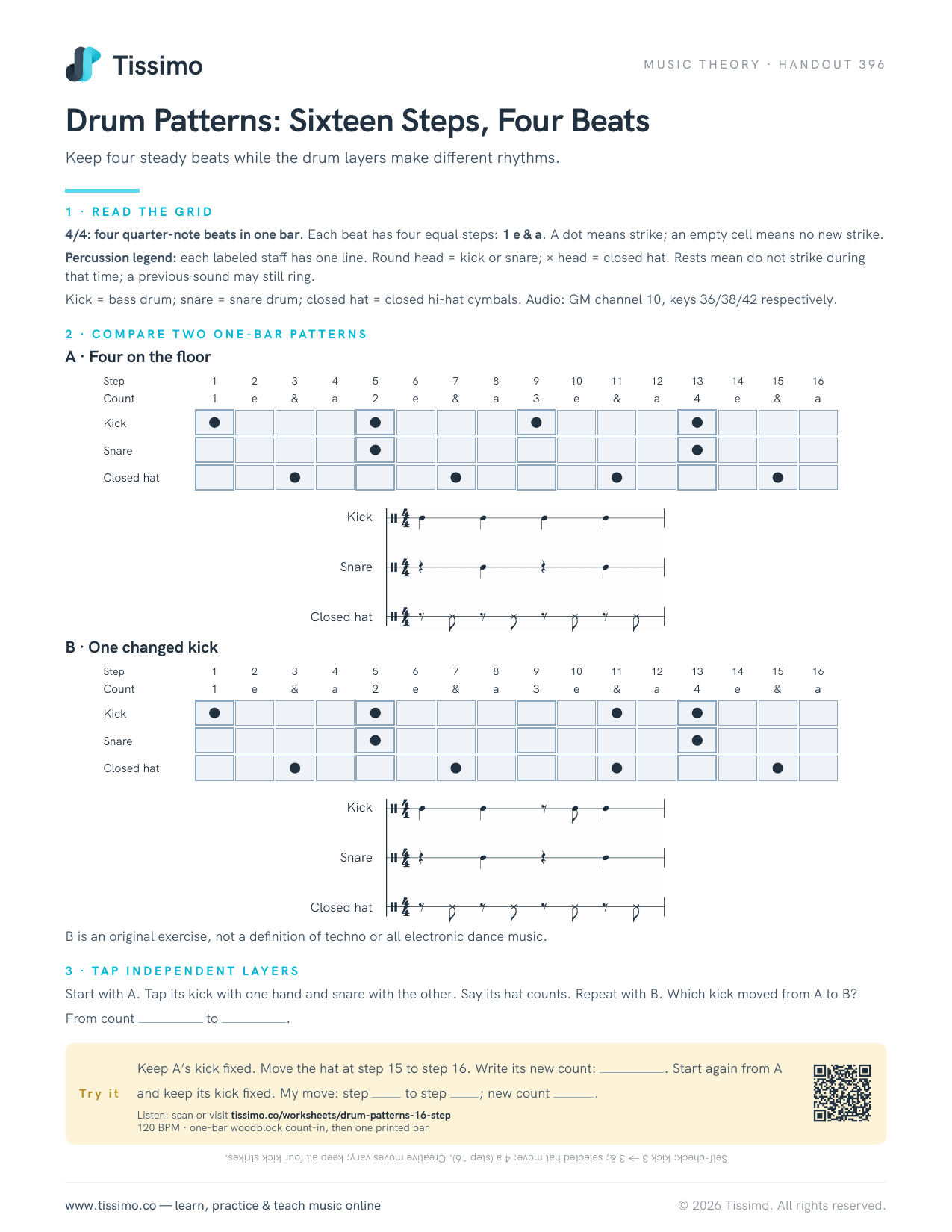
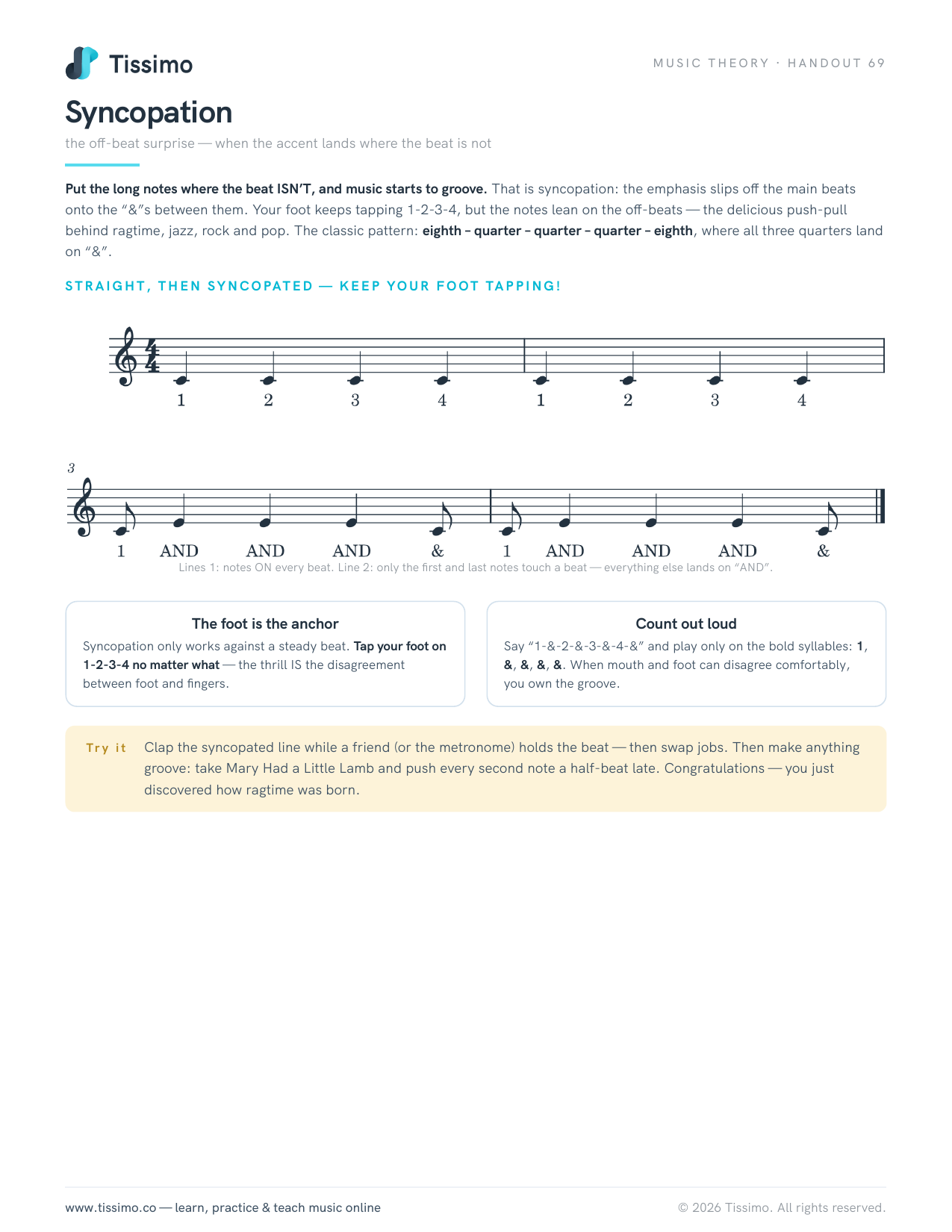
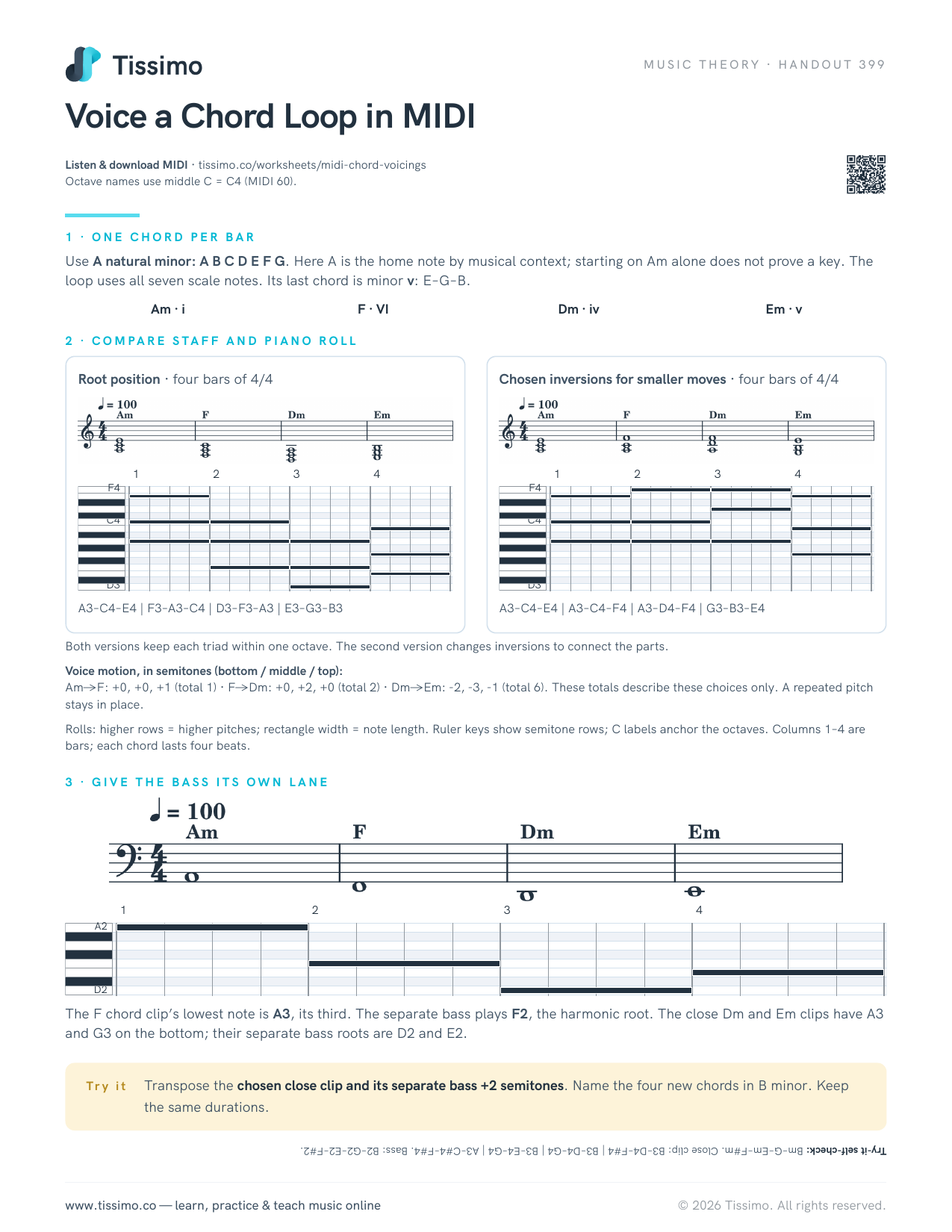
Start with a four-bar loop: program a kick and snare pattern on a 16-step grid (see Drum Patterns), add a bass line that locks with the kick, then a short chord or sample loop. Practice rapping or clapping rhythms over it to feel how syncopation against the beat creates flow.
Common questions
Where and when did hip-hop start?
In the Bronx, New York, in the early 1970s, at block parties where DJs extended the drum breaks of funk and soul records and MCs rapped over them.
What is the difference between hip-hop and rap?
Rap is the rhythmic vocal style. Hip-hop is the broader culture and musical genre, including DJing, production, breakdancing and graffiti as well as rapping.