Styles, Genres & Eras
Pop Music
Pop music is commercially oriented popular music designed for a wide audience, usually built on catchy hooks, short verse–chorus songs and polished production, and constantly absorbing other styles.
"Pop" is short for popular. In the broadest sense, popular music is any music made for a mass audience rather than for the concert hall or the folk tradition. In a narrower sense, pop music is the mainstream, chart-oriented style that has existed since the 1950s, sitting alongside (and borrowing from) rock, R&B, hip-hop, country and dance music.
Pop is defined less by particular instruments or rhythms than by its aims: songs that are immediately appealing, easy to sing along with, and short enough for radio and streaming.
Typical features
- Hooks: a short, memorable melodic or lyrical idea, usually in the chorus, often repeated many times.
- Verse–chorus form, often with a pre-chorus and a bridge.
- Songs of about three to four minutes, with an early first chorus.
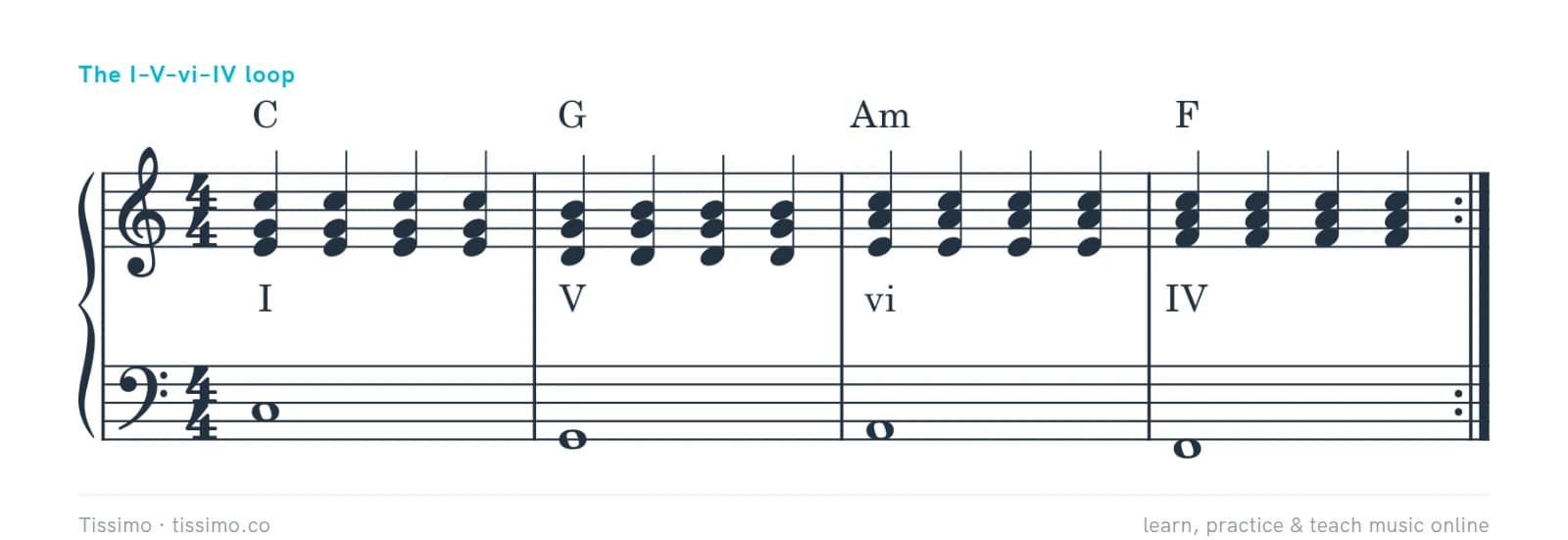
- Simple, repeating chord progressions, such as I–V–vi–IV.
- Polished production: the studio, the producer and the arrangement are as important as the song itself.
- Vocals at the center, often with harmonies and doubled lines.
A changing style
Pop has always changed with technology and taste: from the Tin Pan Alley songs and crooners of the first half of the 20th century, through the Beatles and Motown in the 1960s, disco in the 1970s, Michael Jackson and Madonna in the 1980s, to today's pop shaped by electronic production, hip-hop rhythms and streaming. What stays constant is the focus on melody and the song.
Learning pop songs
Most pop songs use three or four chords in a repeating loop. Learn the progression of each section in Roman numerals, so you can play it in any key, then work out the melody by ear. A lead sheet with chord symbols is usually all you need. The Chords & Progressions in Every Key worksheet covers the common loops, and Choosing chords for a melody helps you harmonize a tune yourself.
Common questions
What is the difference between pop and rock?
The boundary is blurry. Rock usually centers on guitar bands, live playing and a rawer sound; pop focuses on catchy songs, vocals and polished production, and borrows freely from rock and many other styles.
What is the most common chord progression in pop music?
I–V–vi–IV (in C major: C–G–Am–F) is one of the most common, along with its rotation vi–IV–I–V. Many hits loop one of these four-chord patterns throughout.
Practice it: free worksheets
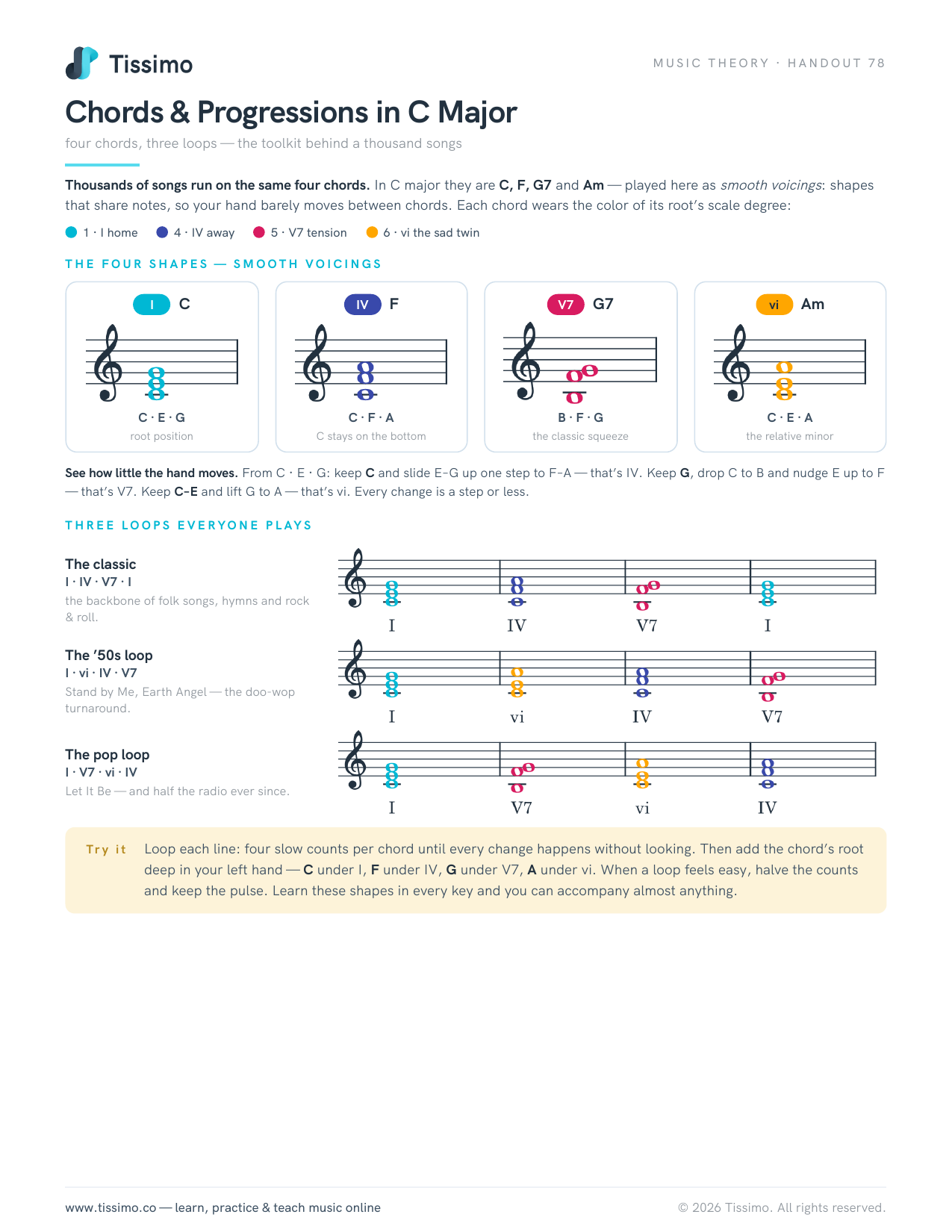 Chords & Progressions in Every KeyFour chords, three loops — the toolkit behind a thousand songs, in all 24 keys.
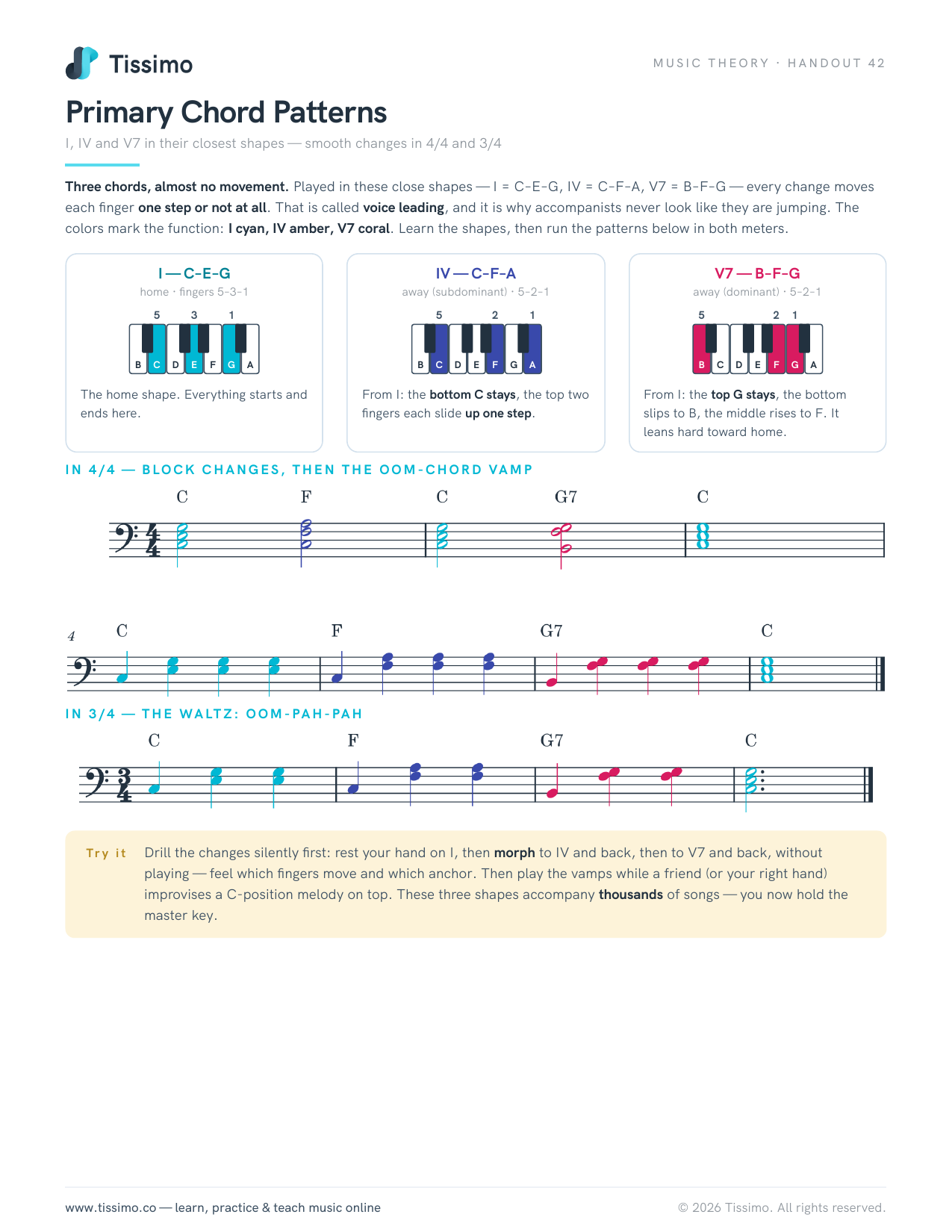 Primary Chord PatternsI, IV and V7 in their closest shapes — smooth changes in 4/4 and 3/4
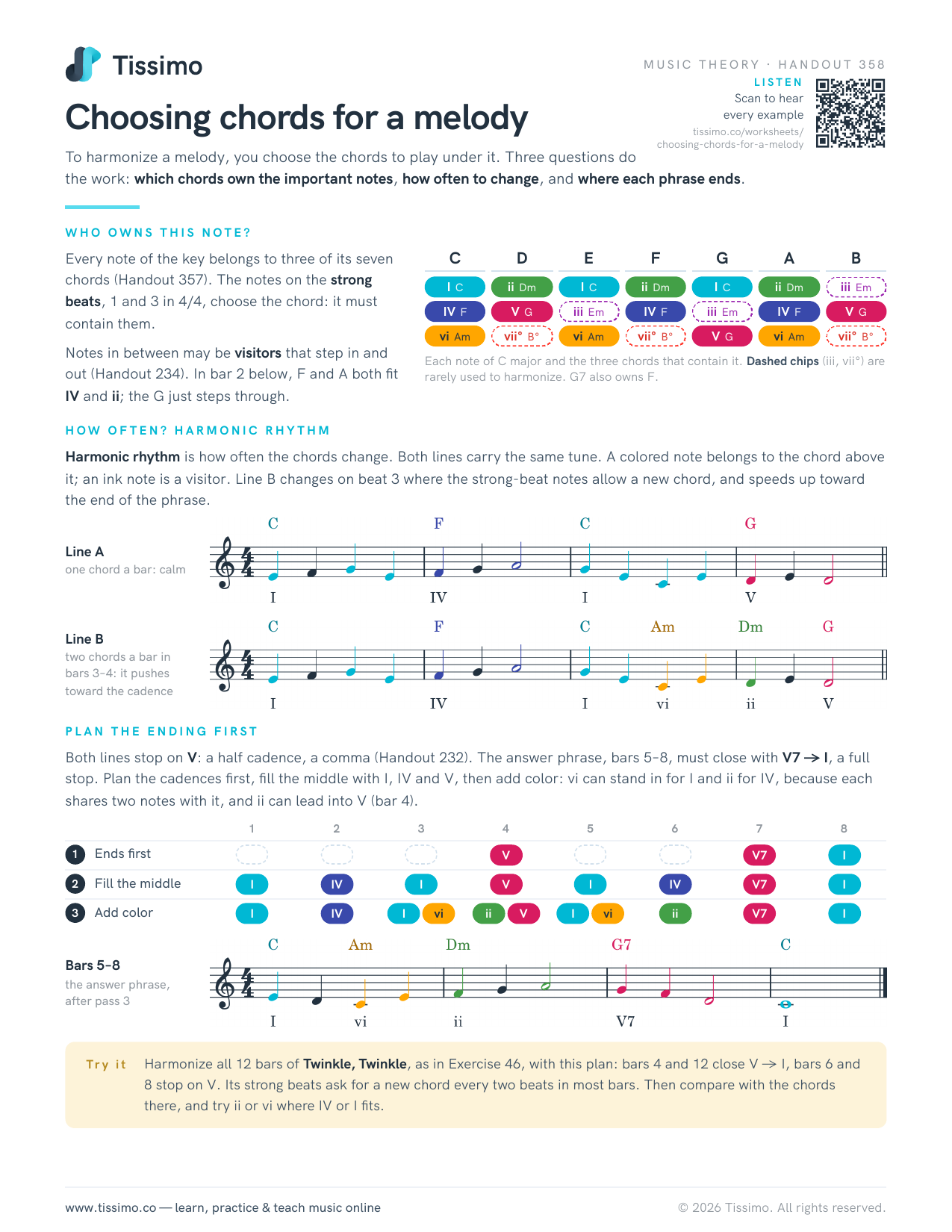 Choosing chords for a melodyTo harmonize a melody, you choose the chords to play under it. Three questions do the work: which chords own the important notes, how often to change, and where each phrase ends.
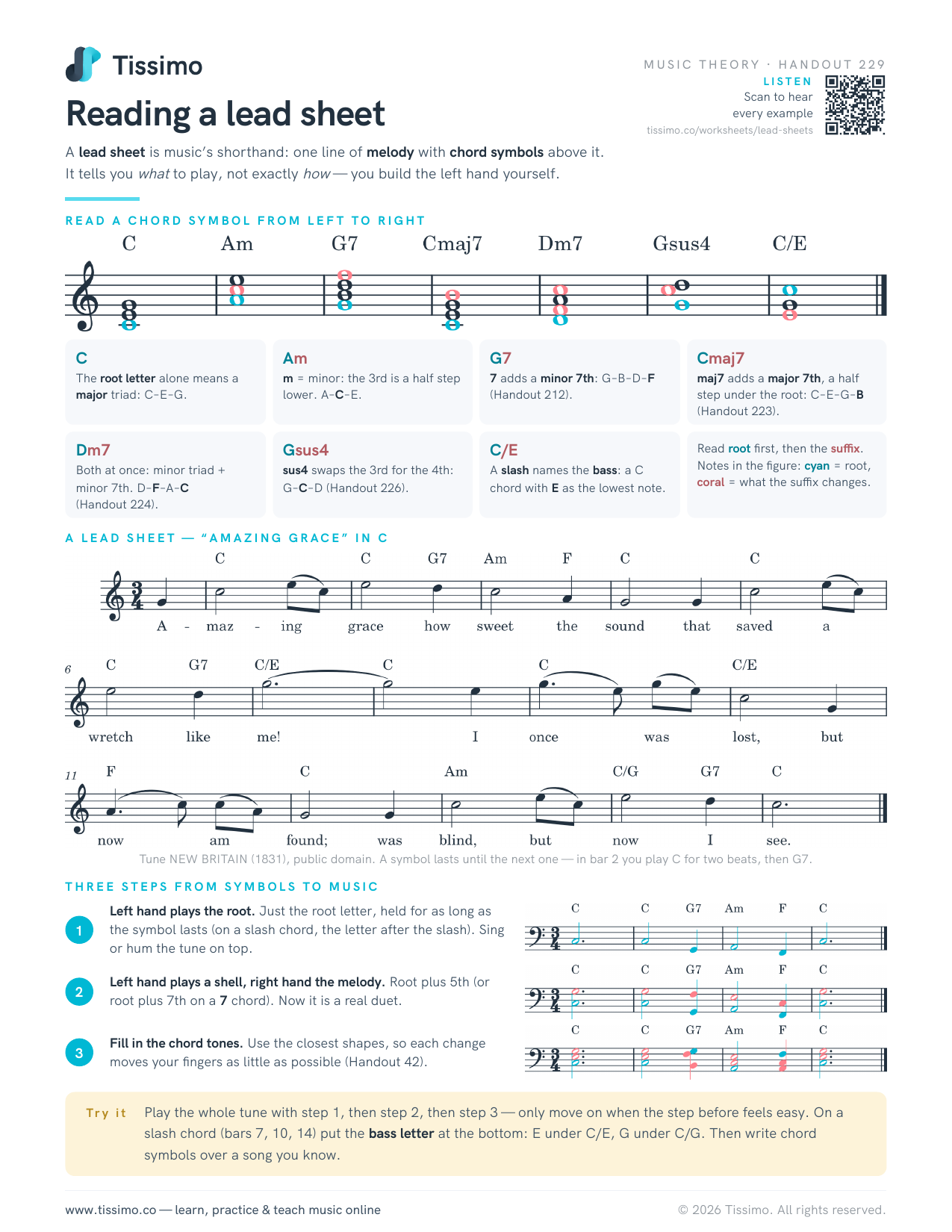 Reading a lead sheetA lead sheet is music’s shorthand: one line of melody with chord symbols above it. It tells you what to play, not exactly how — you build the left hand yourself.
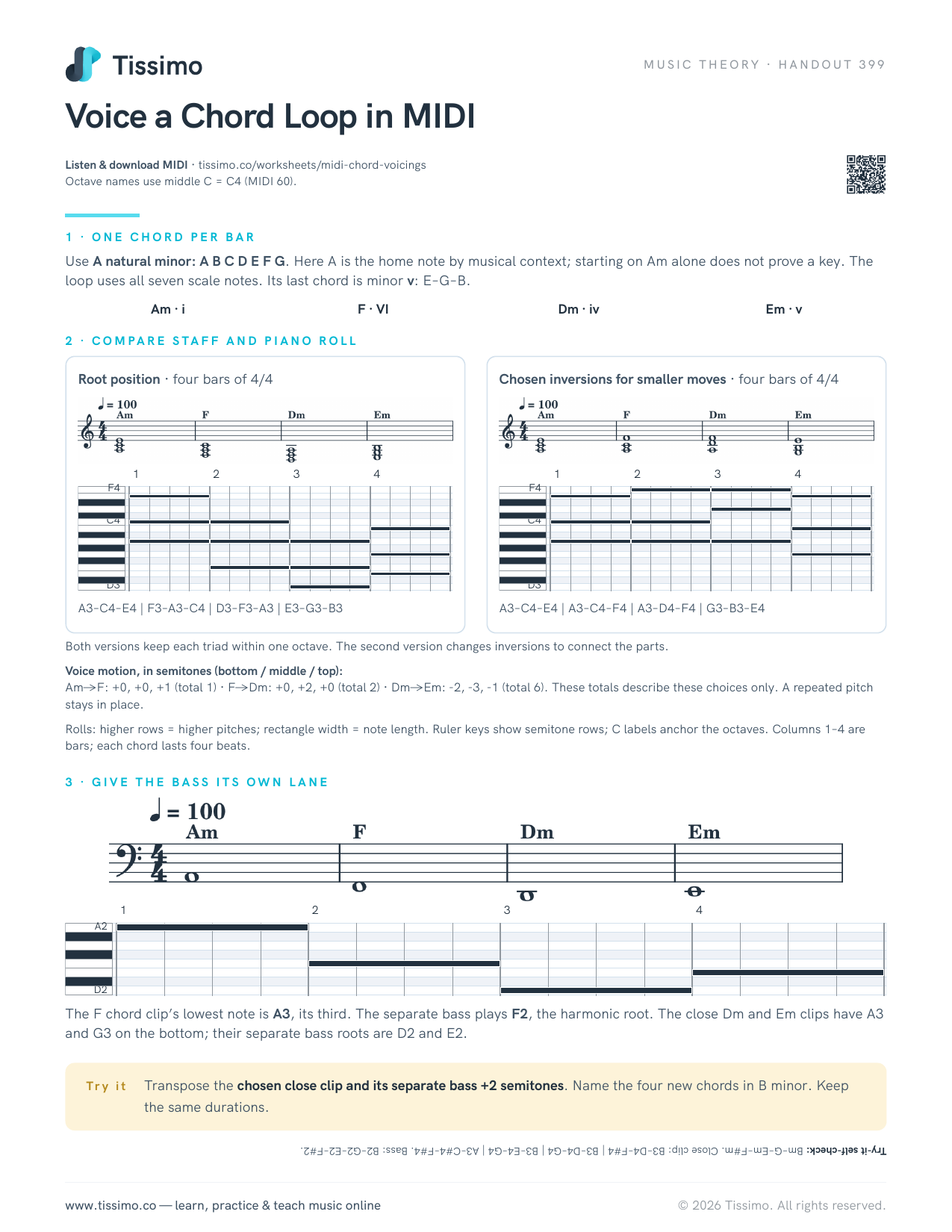 Voice a Chord Loop in MIDI