Styles, Genres & Eras
Classical Period
The Classical period is the era of Western music from roughly 1750 to 1820, the age of Haydn, Mozart and early Beethoven, known for clear melodies, balanced phrases and forms such as the sonata and symphony.
The Classical period runs roughly from 1750 to 1820, between the Baroque and Romantic eras. Its central figures, Haydn, Mozart and Beethoven, all worked in Vienna, which is why their style is sometimes called the Viennese Classical style.
Two meanings of "classical"
In everyday speech, "classical music" means all Western art music, from Bach to today. Musicians use Classical, with a capital C, for this specific period. A Chopin nocturne is classical music, but it is not from the Classical period.
What Classical music sounds like
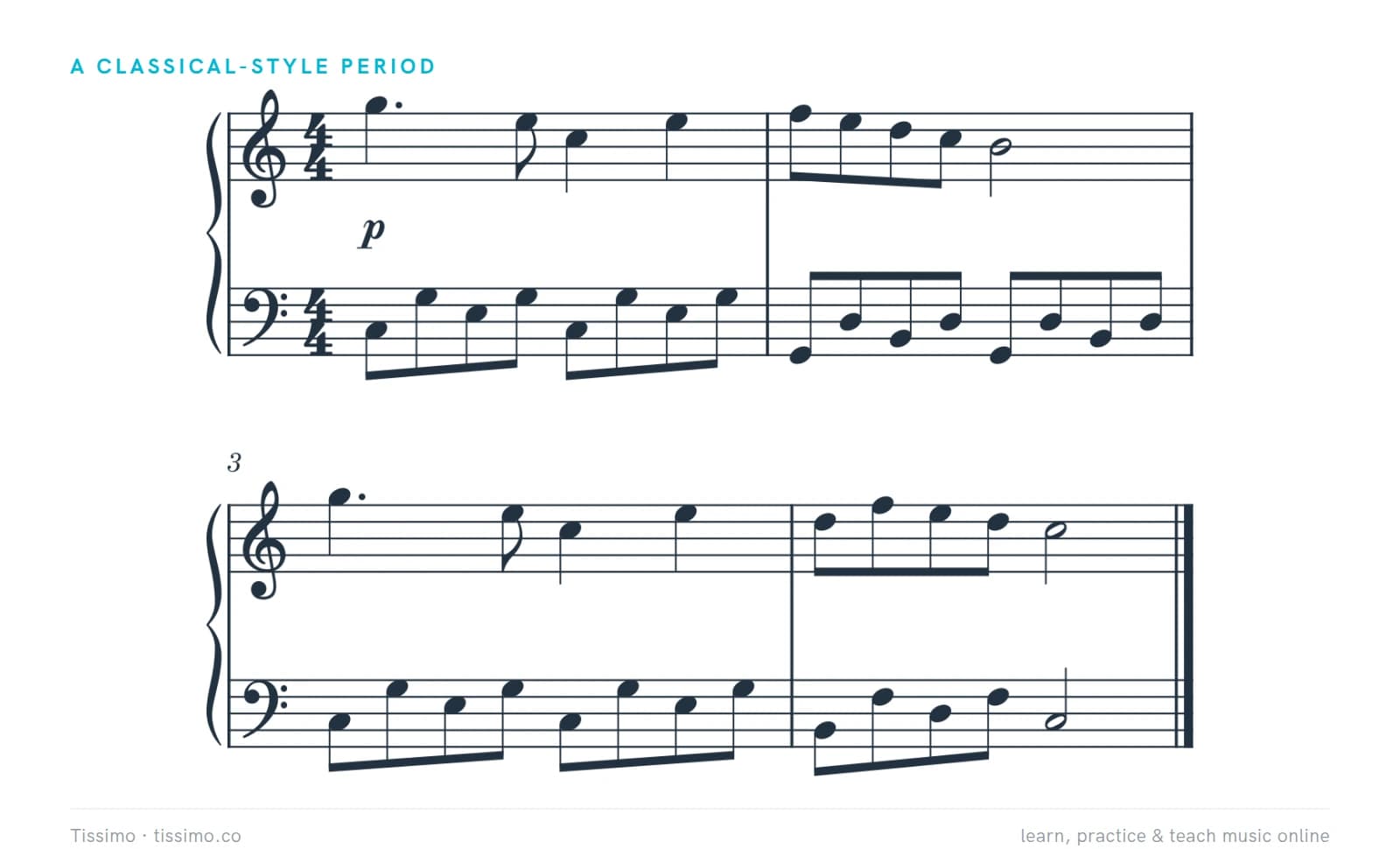
- Melody and accompaniment. One clear tune over a simpler accompaniment (homophonic texture), instead of the Baroque's interwoven lines.
- Balanced phrases. Melodies come in tidy units of two, four and eight bars, often as a question and an answer (a period).
- Light, transparent accompaniments, such as the Alberti bass, a broken-chord pattern in the left hand.
- Contrast within a movement: themes of different character and key, as in sonata form.
- Graduated dynamics: crescendos and diminuendos became increasingly prominent in scores and orchestral writing. The fortepiano brought touch-sensitive dynamics to a keyboard instrument, but singers and many instruments could already swell and soften.
Forms and genres
The Classical period established the symphony, the string quartet, the solo sonata and the Classical concerto, usually built from movements in sonata form, minuet and trio, rondo and variations. Opera flourished too, especially Mozart's.
Composers
Joseph Haydn, Wolfgang Amadeus Mozart and Ludwig van Beethoven (whose later music points toward Romanticism), along with Christoph Willibald Gluck, C. P. E. Bach, Luigi Boccherini and Muzio Clementi.
Playing Classical music
Aim for clarity and elegance: even scales, crisp articulation, a singing right hand over a quiet left hand, and dynamics that are shaped but not exaggerated. Use the pedal sparingly. Good pieces to start with are sonatinas by Clementi and Mozart's Sonata in C, K. 545: see Clementi's Sonatina in C, Mozart's K. 545 and the Alberti Bass worksheet.
Common questions
What is the difference between classical music and the Classical period?
"Classical music" is a broad name for Western art music of all eras. The Classical period is one era within it, roughly 1750 to 1820, the time of Haydn, Mozart and early Beethoven.
What are the characteristics of the Classical period?
Clear melodies over simple accompaniments, balanced four- and eight-bar phrases, gradual dynamics, and forms such as sonata form, the symphony and the string quartet.
Practice it: free worksheets
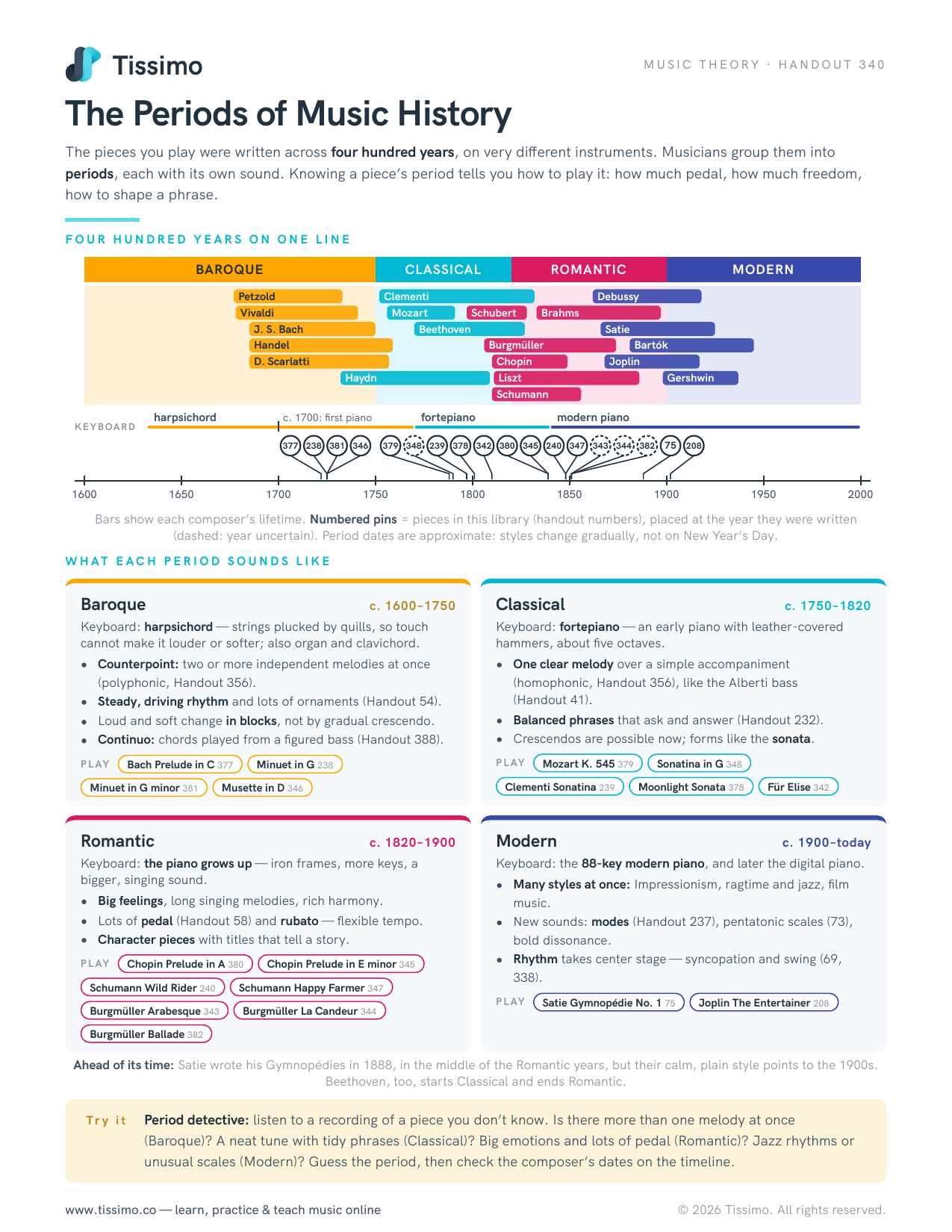 The Periods of Music HistoryThe pieces you play were written across four hundred years, on very different instruments. Musicians group them into periods, each with its own sound. Knowing a piece’s period tells you how to play it: how much pedal, how much freedom, how to shape a phrase.
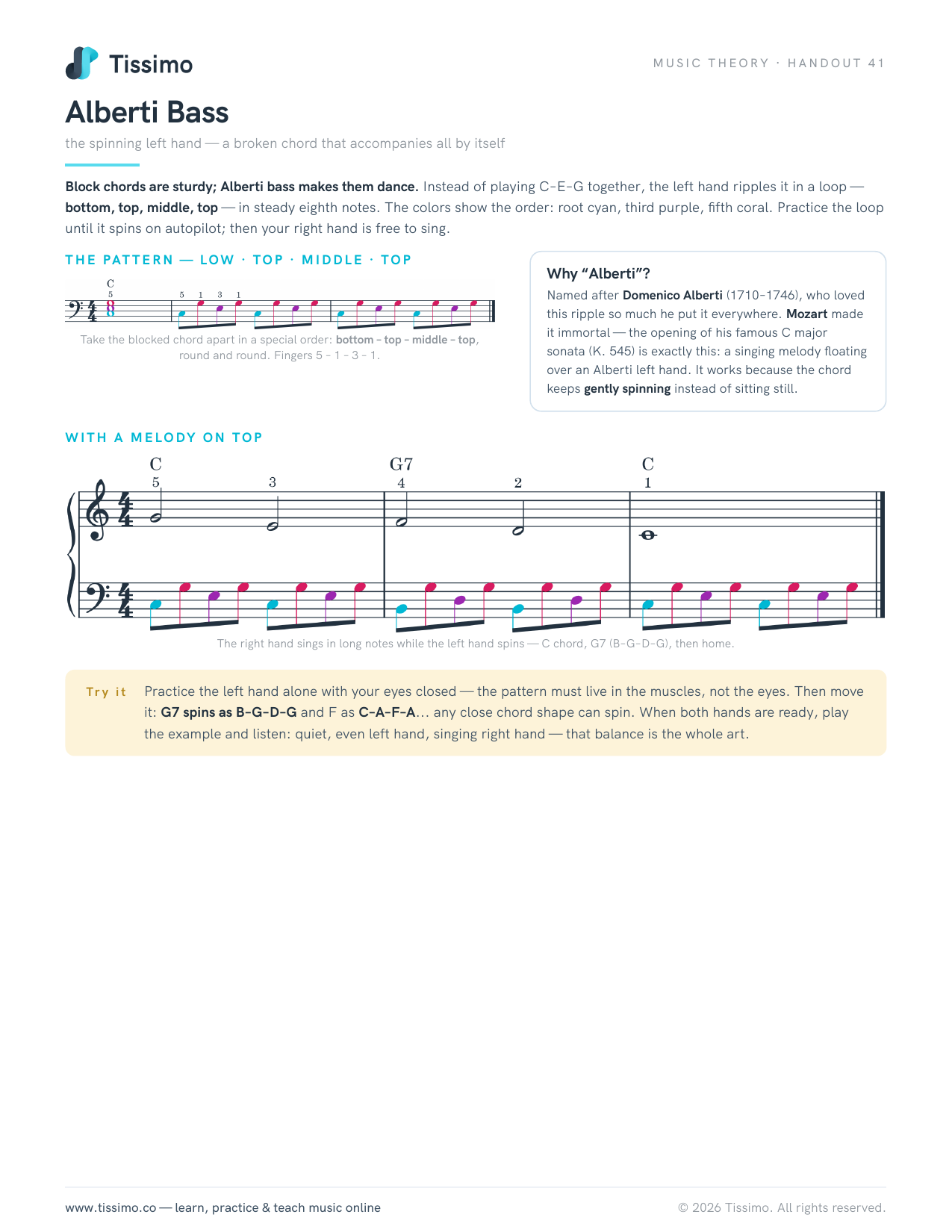 Alberti Bassthe spinning left hand — a broken chord that accompanies all by itself
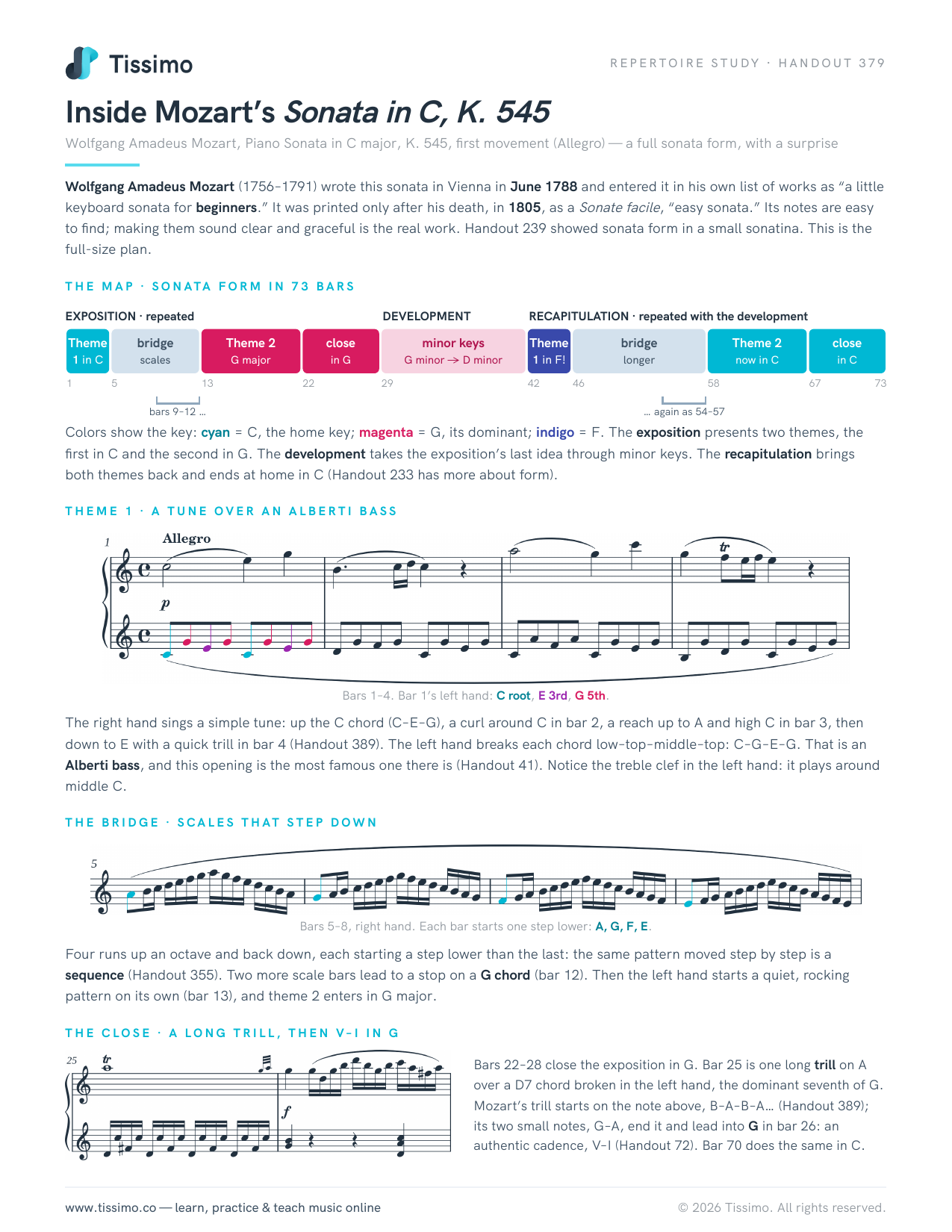 Inside Mozart’s Sonata in C, K. 545Wolfgang Amadeus Mozart, Piano Sonata in C major, K. 545, first movement (Allegro) — a full sonata form, with a surprise
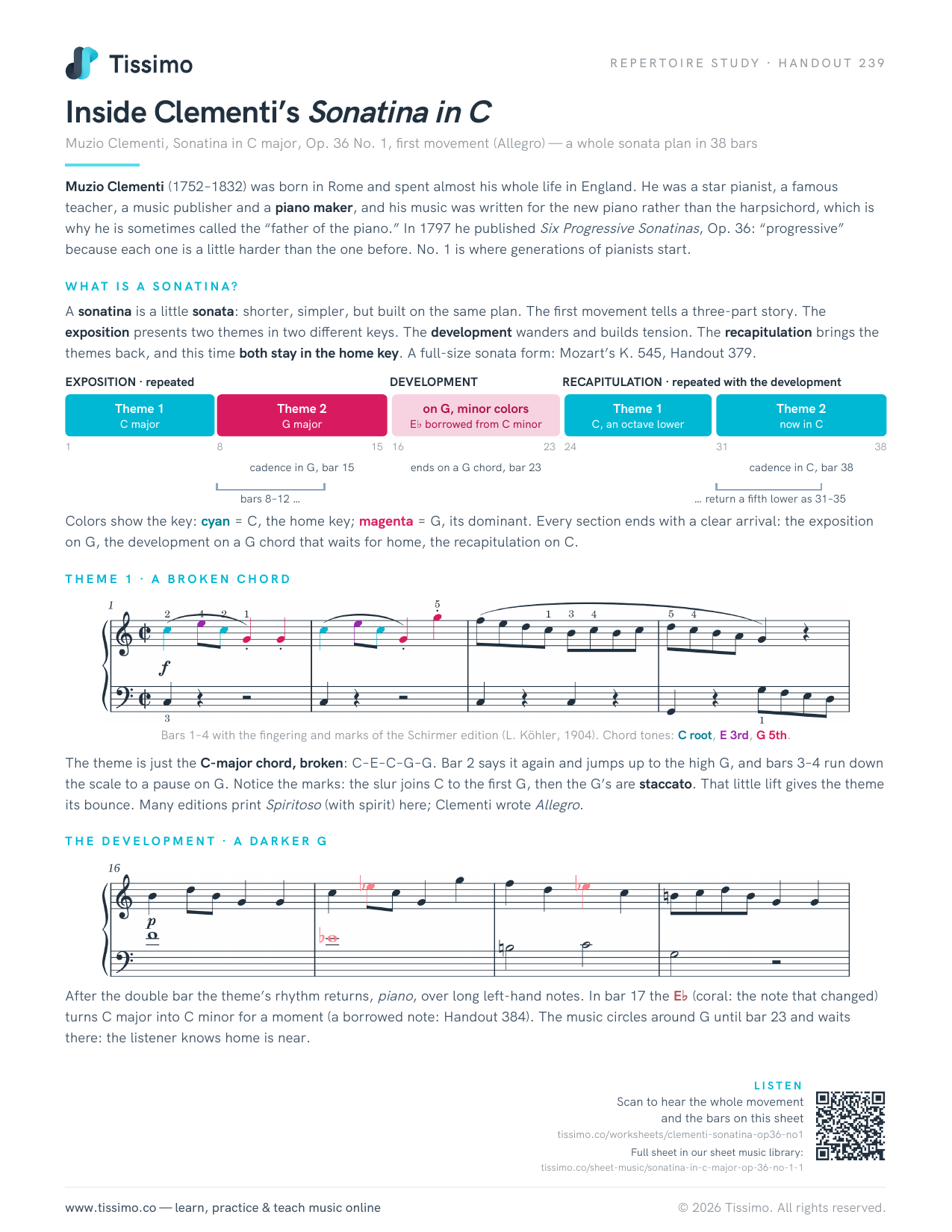 Inside Clementi’s Sonatina in CMuzio Clementi, Sonatina in C major, Op. 36 No. 1, first movement (Allegro) — a whole sonata plan in 38 bars
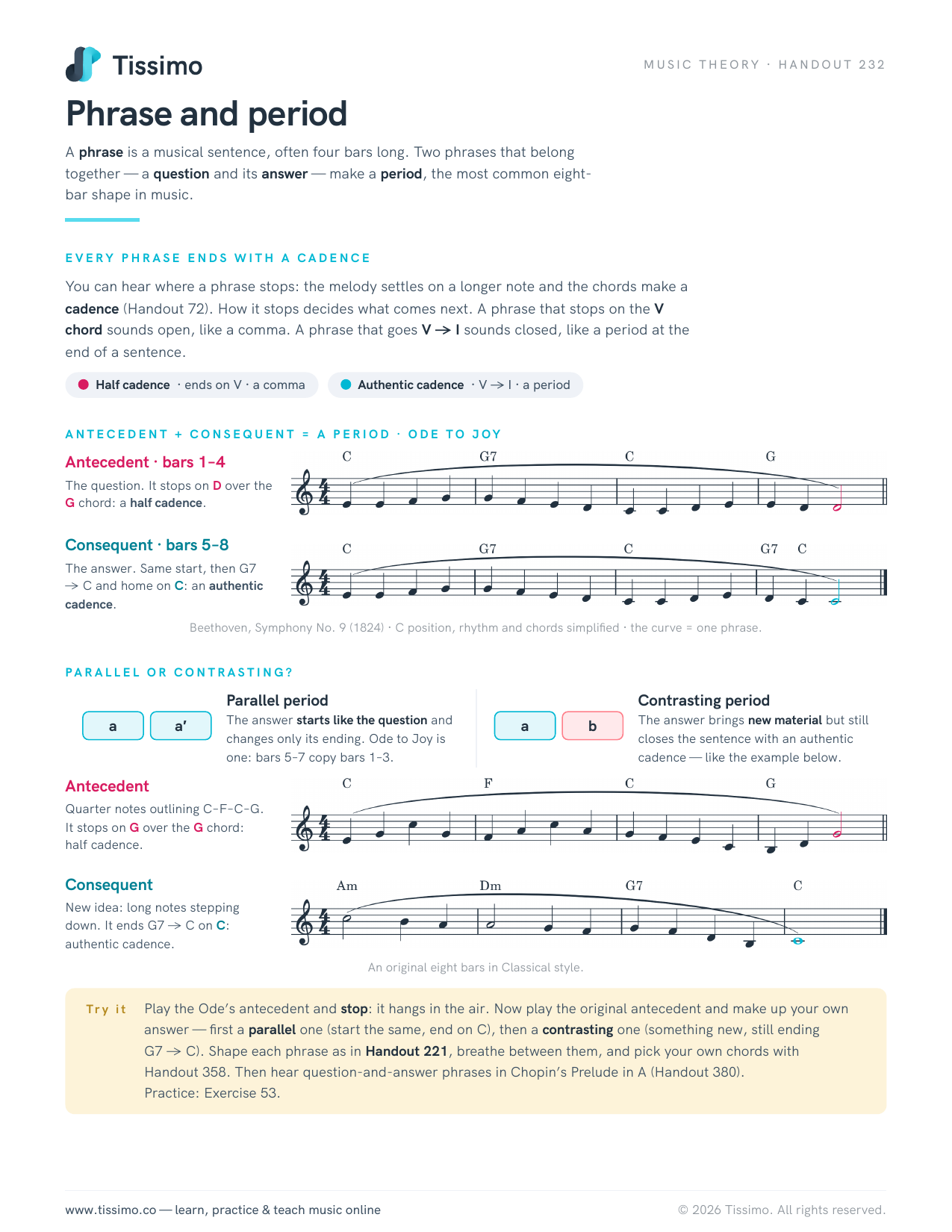 Phrase and periodA phrase is a musical sentence, often four bars long. Two phrases that belong together — a question and its answer — make a period, the most common eight-bar shape in music.
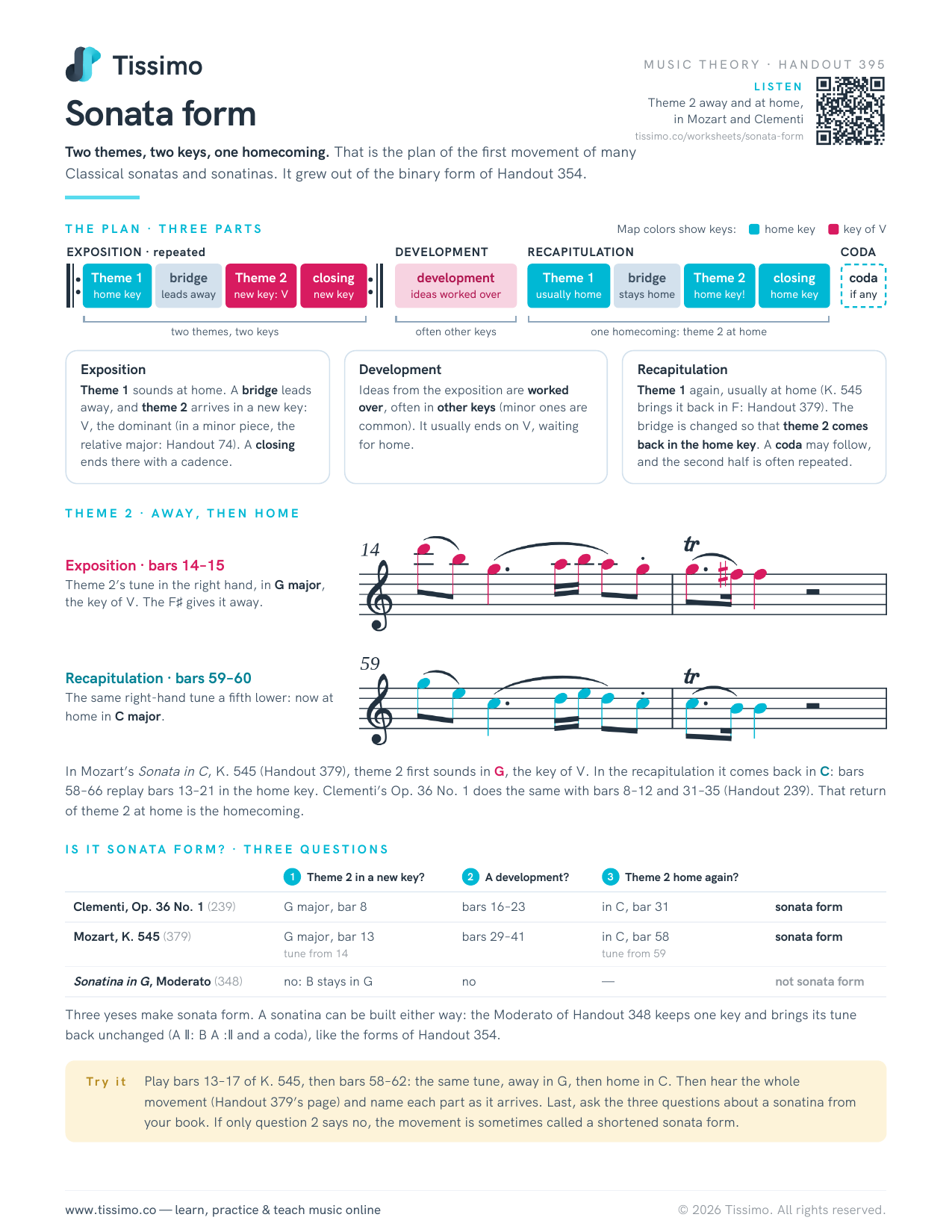 Sonata formTwo themes, two keys, one homecoming. That is the plan of the first movement of many Classical sonatas and sonatinas. It grew out of the binary form of Handout 354.